Performance, Testing & How-To’s

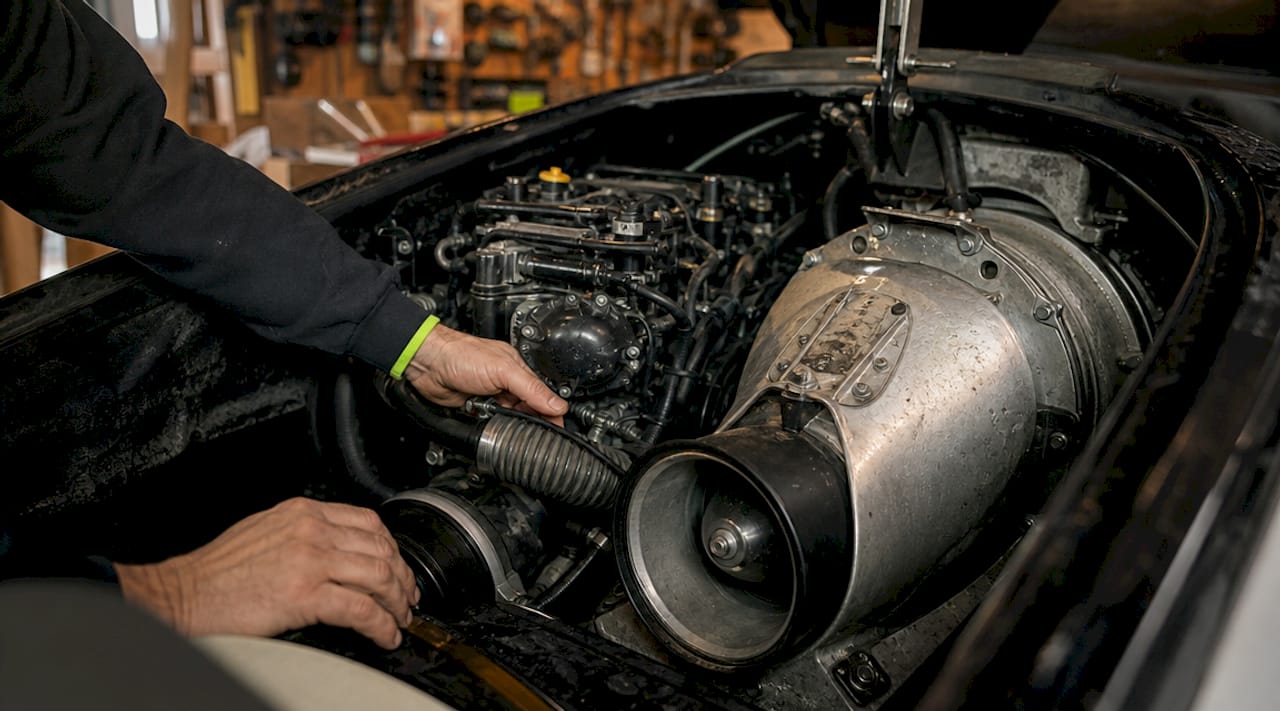
Jet ski turbocharger installed in engine bay

Jet Ski Turbo Kit Overview: Power, Speed & Gains

A jet ski turbo kit is a forced-induction system that compresses intake air with a turbocharger to increase engine horsepower and top speed beyond factory limits. This jet ski turbo kit overview covers everything performance riders need to know: core components, installation steps, real-world speed gains, and reliability factors. Brands like MAPTUN and RIVA Racing have pushed the limits of what production watercraft can do, with some setups delivering 400 horsepower and speeds above 88 mph. Whether you ride recreationally or compete, understanding how these systems work is the first step toward choosing the right upgrade.

What is a jet ski turbo kit and how does it work?

A jet ski turbo kit is a complete forced-induction package that bolts onto a stock or modified engine to increase power output. The turbocharger sits at the center of the system. It uses exhaust gases to spin a turbine, which drives a compressor wheel that forces more air into the intake manifold. More air means more fuel can be burned per combustion cycle, which directly raises horsepower and torque.

The industry term for this technology is forced induction, and it applies to both turbochargers and superchargers. Turbo kits are the aftermarket application of this principle to personal watercraft (PWC) engines. MAPTUN and RIVA Racing are the two most recognized names building production-ready kits for Sea-Doo models, and their products define the performance ceiling for most riders.
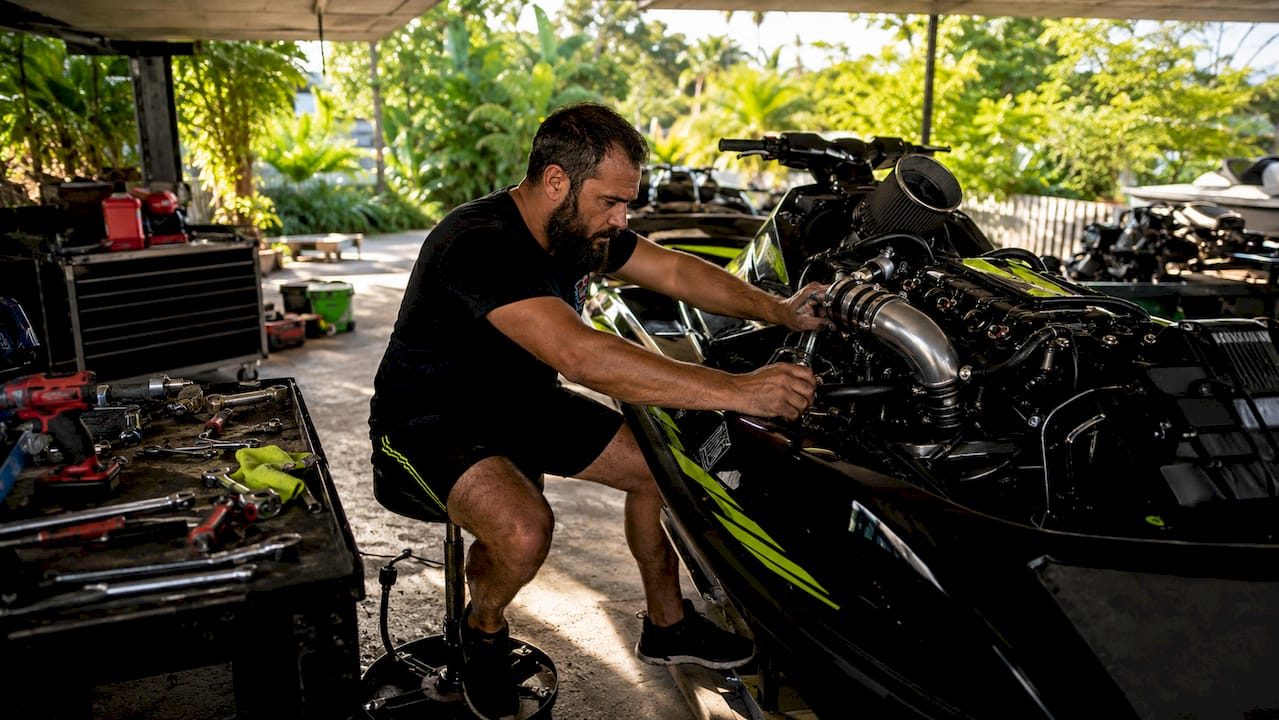
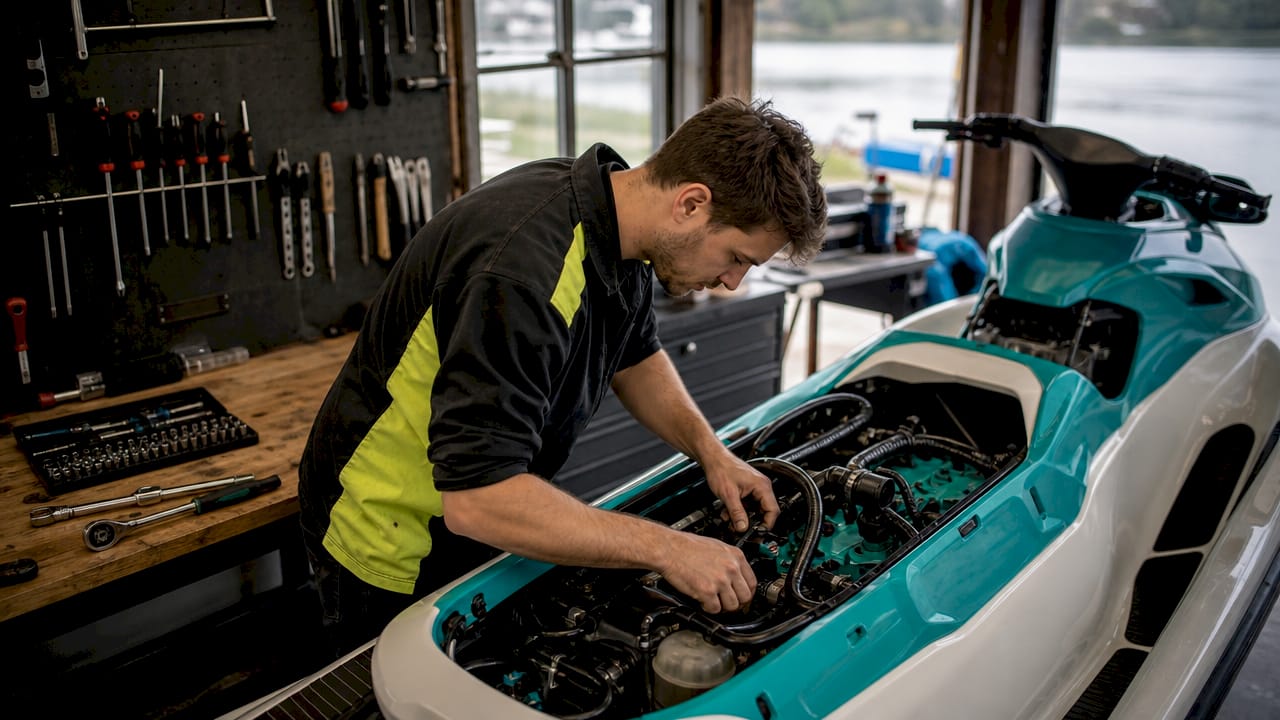
Mechanic tuning turbocharged jet ski in garage

Typical gains from a well-tuned turbo kit range from a modest speed increase on a lightweight hull to outright competition-level performance. MAPTUN’s REV3 turbo kit targets 63 mph on the Sea-Doo Spark at roughly 8.5 PSI boost. That number matters because the Spark is a budget ski that normally tops out well below that figure.

Core components inside a turbo kit

Every complete turbo kit ships with a set of matched components that must work together. Installing only part of the system is a common mistake that leads to poor performance or engine damage.

The main parts in a typical jet ski turbo kit include:

  • Turbocharger unit: The IHI turbo used in MAPTUN’s REV3 kit is a compact, marine-compatible unit sized for the Spark’s engine displacement.
  • Intercooler and piping: The intercooler cools compressed air before it enters the engine. Hot compressed air is less dense, so cooling it recovers power and protects internal components.
  • Wastegate: This valve controls maximum boost pressure. MAPTUN uses a 7.5 PSI wastegate with an 8–9 PSI boost target to keep the engine safe under sustained load.
  • Upgraded fuel injectors: Stock injectors cannot supply enough fuel at elevated boost. Larger injectors, like the Bosch 1100cc units in RIVA Racing’s Stage 3 kit, are required to match the increased airflow.
  • Oil feed and return lines: The turbocharger bearings require a continuous supply of clean engine oil. Dedicated feed and drain lines route oil from the engine to the turbo and back.
  • ECU tuning hardware: A reflashed or unlocked ECU controls fuel maps, ignition timing, and boost targets. Without proper tuning, the engine runs dangerously lean under boost.

Pro Tip: Never run a turbo kit with stock fuel injectors, even temporarily. A lean condition under boost can destroy pistons within minutes.

The intercooler deserves special attention. Compressed air exits the turbo at high temperature. Running that hot air directly into the engine reduces power and raises the risk of detonation. A properly sized intercooler drops intake temperatures significantly, which is why MAPTUN includes intercooler piping as a standard part of the REV3 kit.
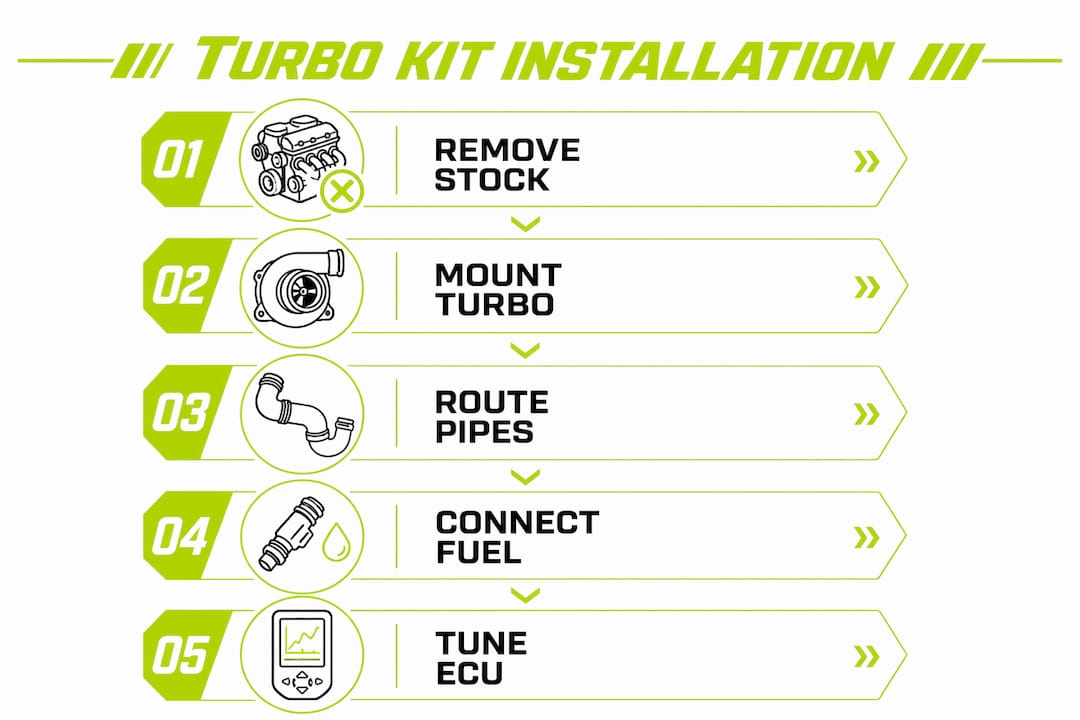
Infographic showing turbo kit installation steps

How to install a turbo kit on a jet ski

The installation sequence for a jet ski turbo kit follows a specific order. Skipping steps or reversing the sequence creates problems that are difficult to diagnose later.

A standard installation follows these steps:

  1. Disconnect the battery and remove the seat and hood for full engine access.
  2. Remove the stock intake and exhaust components to clear space for the turbo manifold.
  3. Install the turbo manifold and mount the turbocharger to the exhaust outlet.
  4. Route the intercooler and charge pipes from the turbo outlet to the intake manifold.
  5. Install upgraded fuel injectors and connect the fuel rail.
  6. Route oil feed and return lines from the engine block to the turbo bearing housing.
  7. Pre-lubricate the turbocharger before the first start to protect the bearings.
  8. Flash the ECU with a tuned map using a device like the Maptuner Nano.
  9. Perform a full system check: oil level, coolant level, boost line connections, and fuel pressure.
  10. Start the engine and monitor for leaks, unusual sounds, and boost readings.

Pro Tip: Pre-lubrication is not optional. Squirt clean engine oil directly into the turbo oil feed port before the first start. A dry start is the leading cause of early turbo failure.

Turbo failures most often result from lubrication errors at first start. Bearing damage and shaft scoring happen in seconds when oil pressure has not yet reached the turbo. Using new oil lines and a fresh oil filter before installation removes contamination that could block the feed circuit.

The table below summarizes the key installation checkpoints and their purpose:

Installation Step Purpose
Remove stock intake/exhaust Creates clearance for turbo manifold and piping
Install wastegate and boost lines Controls maximum boost to protect engine
Route oil feed/return lines Supplies lubrication to turbo bearings
Pre-lubricate turbo Prevents dry-start bearing failure
ECU flash with Maptuner Nano Matches fuel and ignition to boost level
Post-install system check Confirms no leaks and correct boost pressure

What speed and power gains can you expect?

Performance results vary significantly based on the kit stage, hull weight, and supporting modifications. Two real-world examples define the range of what turbo kits deliver.

At the entry level, MAPTUN’s Sea-Doo Spark REV3 kit targets 63 mph at 8,800–9,000 RPM with 8–9 PSI of boost. The Spark’s light hull weight amplifies the effect of forced induction. A turbocharged Spark can close the speed gap against heavier, more expensive performance skis because it carries less weight per horsepower.

At the competition end, RIVA Racing’s Stage 3 kit for the Sea-Doo 325 achieves 88 mph and 400 horsepower at approximately 9,000 RPM. That kit costs around $4,000 and includes a fully unlocked ECU, Maptuner Nano system, and Bosch 1100cc injectors. It is built for competition, not casual weekend riding.

Kit Platform Boost (PSI) Top Speed Horsepower
MAPTUN REV3 Sea-Doo Spark 8–9 63 mph Moderate gain
RIVA Racing Stage 3 Sea-Doo 325 Competition level 88 mph ~400 hp

Key factors that affect your real-world results include:

  • Hull weight: Lighter hulls like the Spark respond more dramatically to power increases.
  • Impeller selection: A matched impeller from a brand like Solas converts engine power into thrust efficiently.
  • Fuel quality: Higher octane fuel supports more aggressive timing and boost without detonation.
  • Rider weight and riding style: Aggressive acceleration runs produce different peak numbers than steady-state speed testing.

The Maptuner Nano system used in RIVA’s Stage 3 kit allows riders to flash tunes and monitor engine data via Bluetooth. That capability lets you adjust performance safely and revert to stock settings if needed, which is a practical advantage for riders who use their ski in multiple conditions.

Turbocharger vs. supercharger: which forced induction is right for you?

Both turbochargers and superchargers compress intake air to increase power, but they do it differently. Understanding the distinction helps you choose the right jet ski tuning option for your riding style.

A turbocharger uses exhaust gases to spin its turbine. This makes it more thermally efficient at high RPM, but it introduces a brief lag between throttle input and full boost delivery. A supercharger is belt-driven directly off the engine crankshaft, which means boost is available immediately at any RPM.

The practical differences for jet ski riders break down this way:

  • Throttle response: Superchargers deliver instant power, which benefits freestyle riders and those who need immediate acceleration out of tight turns.
  • Top-end power: Turbochargers often produce stronger peak power at high RPM, making them the preferred choice for straight-line speed and closed-course racing.
  • Maintenance: Superchargers require periodic rebuilds of the drive belt and internal components. Turbochargers require consistent oil changes and clean oil feed lines.
  • Reliability: Both systems are reliable when properly installed and tuned. The failure rate for either rises sharply when boost, fueling, and cooling are not matched as a complete system.
  • Cost: Turbo kits for entry-level platforms like the Sea-Doo Spark are often more affordable than supercharger upgrades for larger displacement models.

For riders focused on Sea-Doo RXP-X performance, the choice between forced-induction types often comes down to the specific stage kit available for that hull and engine combination.

Key takeaways

A complete jet ski turbo kit requires matched boost control, fuel delivery, and ECU tuning to produce reliable power gains without damaging the engine.

Point Details
Turbo kit definition A forced-induction system using a turbocharger to compress intake air and increase horsepower.
Core components Turbocharger, intercooler, wastegate, upgraded injectors, oil lines, and ECU tuning hardware must all match.
Installation order matters Pre-lubrication and ECU flash are critical final steps that prevent early turbo failure.
Real-world performance MAPTUN REV3 hits 63 mph on the Spark; RIVA Stage 3 reaches 88 mph and 400 hp on the Sea-Doo 325.
Turbo vs. supercharger Turbochargers favor top-end speed; superchargers deliver immediate throttle response at any RPM.

Why conservative tuning is the smarter play

I have watched a lot of riders chase maximum boost numbers and pay for it with cracked pistons and seized turbos. The most reliable builds I have seen share one trait: the builder left power on the table on purpose.

MAPTUN’s decision to run a 7.5 PSI wastegate with an 8–9 PSI target is not a limitation. It is an engineering choice that keeps the engine alive across hundreds of hours of use. Pushing past that threshold might add a few mph, but it also puts the bottom end under stress that stock components were never designed to handle.

The other mistake I see constantly is treating the turbocharger as a standalone upgrade. A complete forced-induction system requires synchronized boost control, ECU tuning, and fuel delivery. If any one of those three elements is out of step, you are not making more power. You are making more heat and more risk.

My honest recommendation: start with a kit from a builder who has already done the matching work, like MAPTUN or RIVA Racing. Their staged kits exist because the component selection and tuning have been validated on real hardware. Building a custom turbo setup from scratch requires dyno time, data logging, and a willingness to rebuild the engine if the tune is wrong. Most riders are better served by a proven kit than by a cheaper collection of parts that has never been tested together.

— Casey

Find the right turbo kit at Ipdracing

Ipdracing stocks performance parts for Sea-Doo, Yamaha, Kawasaki, and other PWC platforms, covering everything from entry-level jet ski performance upgrades to full competition builds. Whether you are looking for RIVA Racing stage kits or supporting hardware like impellers and ECU tuning tools, the Ipdracing shop carries the parts you need with expert guidance behind every order.
https://ipdracing.com

For riders who want hands-on support, the PWC Doctor service at Ipdracing provides professional installation and tuning assistance. If you are not sure which kit fits your hull and riding goals, the team can help you match boost level, fueling, and cooling before you buy. You can also browse RIVA Racing Sea-Doo kits directly to compare stage options and pricing.

FAQ

What does a jet ski turbo kit include?

A complete turbo kit includes a turbocharger unit, intercooler, wastegate, upgraded fuel injectors, oil feed and return lines, and ECU tuning hardware. All components must be matched to the engine’s displacement and target boost level.

How much horsepower does a turbo kit add to a jet ski?

Power gains depend on the kit and platform. MAPTUN’s REV3 kit delivers meaningful speed gains on the Sea-Doo Spark, while RIVA Racing’s Stage 3 kit pushes the Sea-Doo 325 to 400 horsepower at approximately 9,000 RPM.

Is a turbo kit hard to install on a jet ski?

Installation requires removing the stock intake and exhaust, mounting the turbo manifold, routing intercooler piping and oil lines, upgrading injectors, and flashing the ECU. The process is technical and pre-lubrication before first start is critical to avoid bearing failure.

What is the difference between a turbo and a supercharger on a jet ski?

A turbocharger uses exhaust gases to build boost and performs best at high RPM, while a supercharger is belt-driven and delivers immediate boost at any throttle position. Turbochargers favor top-end speed; superchargers favor instant throttle response.

How do i keep a jet ski turbo kit reliable long-term?

Run conservative boost targets, use matched fuel injectors, maintain clean oil feed lines, and keep the ECU tune updated. MAPTUN’s approach of targeting 8–9 PSI with a 7.5 PSI wastegate spring is a proven model for long-term reliability.
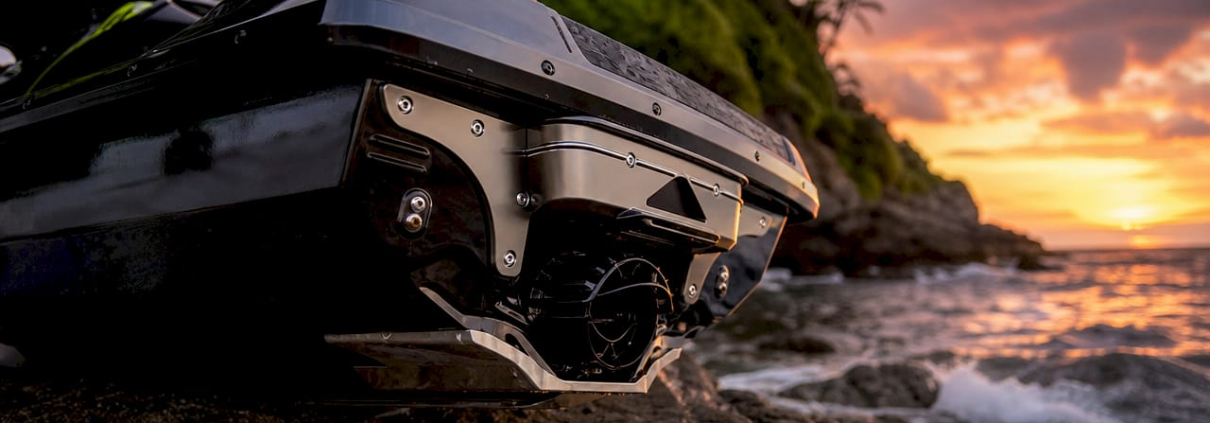
Close-up underside of jet ski ride plate

Jet Ski Ride Plate Function: Performance Guide 2026

A jet ski ride plate is defined as the reinforced plate mounted beneath the hull, directly in front of the pump intake, that controls hull attitude, water flow, and stability during operation. This component manages how the watercraft sits in the water, directly affecting handling, speed, and rider control. The jet ski ride plate function extends beyond simple hull protection. It reduces porpoising, improves cornering traction, and positions the pump intake for maximum efficiency. Whether you ride a Yamaha FX, a Kawasaki SXR, or a Sea-Doo Spark, understanding this component is the first step toward real performance gains.

How does a jet ski ride plate affect handling and speed?

The ride plate controls hull attitude by determining how much of the hull contacts the water at speed. A properly set plate keeps the bow down, reduces drag, and channels water cleanly into the pump intake. Change the plate geometry and you change the entire character of the craft.

Ride plates stabilize the craft by reducing porpoising, improving tracking in choppy water, and increasing traction in high-speed cornering. That combination matters most when you are pushing the craft hard through turns or running at full throttle in rough conditions. A stock plate is tuned for general comfort. A performance plate is tuned for control.

Jet ski rider navigating choppy water

A longer ride plate pushes the pump intake further back and can lift the hull more, directly impacting both pump efficiency and handling balance. This is why plate length is not arbitrary. Longer plates increase stern lift and can improve straight-line speed, but they also reduce the planted feel in tight corners. Shorter or angled plates keep the hull flatter and more responsive.

Here is what changes when you upgrade or adjust your ride plate:

  • Straight-line stability: A well-positioned plate reduces bow bounce and keeps the hull tracking true at high speed.
  • Cornering grip: More hull contact with water translates to better traction when leaning through turns.
  • Pump intake efficiency: A plate that positions the intake correctly prevents air ingestion, which kills thrust.
  • Porpoising reduction: The plate dampens the rhythmic bouncing that occurs when the hull skips across choppy water.

The ride plate is primarily a handling tool. Better throttle control and traction in corners are its core contributions, not raw speed alone. Speed gains come as a byproduct of improved pump efficiency and hull attitude.

What are the different types of ride plates and their functions?

Ride plates fall into three broad categories, each with distinct performance trade-offs. Knowing which type fits your riding style prevents costly mistakes.

Ride Plate Type Primary Function Best For
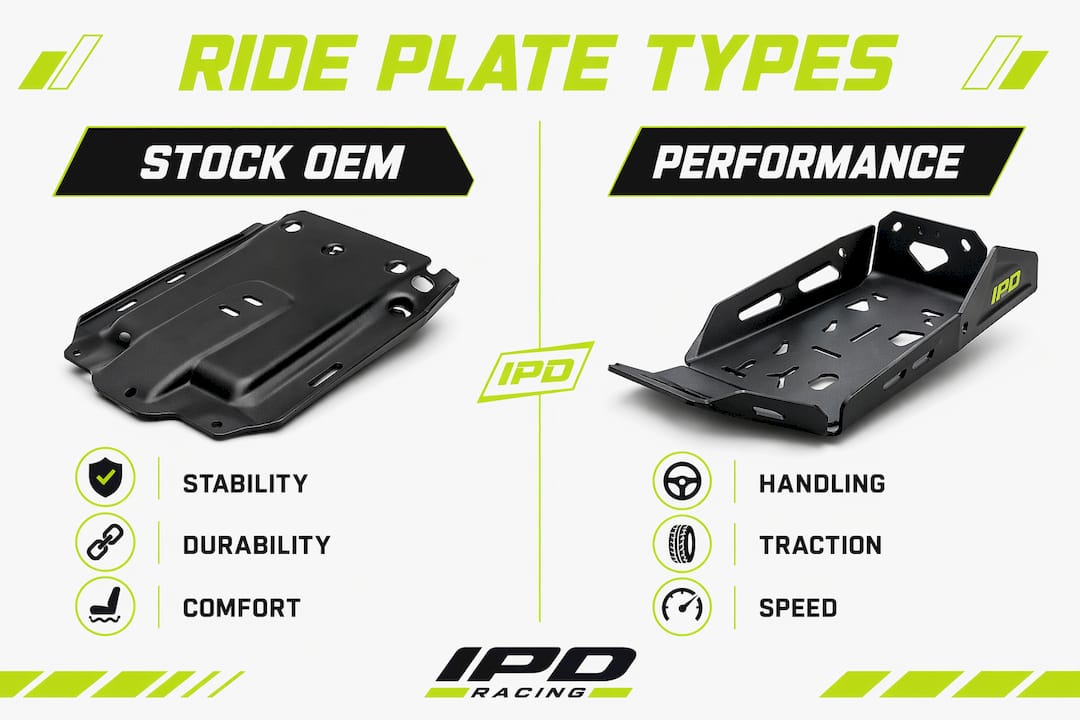
Stock OEM plate General stability and hull protection Recreational riding, casual use
Performance aftermarket plate Improved cornering grip, reduced porpoising Racing, aggressive riding
Extended plate Increased stern lift, pump repositioning Speed-focused builds, standup PWC
Angled/adjustable plate Tunable hull attitude Riders who want a customized setup

Infographic comparing stock OEM and performance ride plates

Stock plates from manufacturers like Yamaha and Kawasaki are designed to balance comfort and durability across a wide range of conditions. They work well but leave performance on the table. Performance aftermarket plates, such as those offered through ProWatercraft products, use stiffer materials and refined geometry to sharpen hull response. Extended plates are common on standup PWC builds where pump positioning is critical to thrust efficiency.

Material matters too. OEM plates are typically glass-filled nylon or ABS plastic. Aftermarket performance plates often use carbon fiber reinforced composites or high-density polyethylene, which resist flex under load and maintain their geometry at speed. Flex in a plate under hard cornering loads means inconsistent hull behavior, which is exactly what you do not want.

Pro Tip: If you are unsure which plate type suits your riding style, start with a performance plate from a known brand before committing to an extended plate. Extended plates change hull behavior significantly and require more rider adaptation.

How to adjust and maintain your jet ski ride plate

Ride plate maintenance is one of the most overlooked areas of PWC upkeep. Stress cracks or wear create turbulence that lowers pump efficiency and reduces top speed. A damaged plate does not just look bad. It actively costs you performance every time you ride.

Follow this inspection and maintenance routine to keep your plate in top condition:

  1. Inspect after every 10 hours of riding. Look for stress cracks, chips, or surface erosion near the pump intake opening. Even small cracks disrupt water flow.
  2. Check mounting bolt torque. Loose bolts allow the plate to flex and shift under load. Refer to your model’s service manual for the correct torque specification.
  3. Examine the plate surface for corrosion. Salt water accelerates corrosion on metal fasteners and can degrade composite plates over time. Rinse thoroughly after every salt water session.
  4. Test for flex by hand. With the craft out of the water, press firmly on the plate. Any noticeable flex indicates material fatigue or a loose mount.
  5. Assess pump intake alignment. The plate should sit flush with the hull and direct water cleanly into the intake grate. Any misalignment reduces pump efficiency.

For angle adjustment, some riders add washers behind mounting bolts to alter the plate angle and keep the ski’s nose down for a smoother ride. This shim method is a low-cost DIY approach, though it is less precise than installing an adjustable aftermarket plate. Adding a washer to the rear mounting bolts tilts the plate’s leading edge downward, which pushes the bow down at speed.

One sensor consideration that catches many riders off guard: modern performance ride plates may eliminate the paddle wheel speed sensor mounting point. If your craft uses a paddle wheel sensor for GPS or speedometer functions, switching to a performance plate may require upgrading to a GPS-based speed system instead.

Pro Tip: Before installing any aftermarket plate, photograph the stock plate’s mounting position and note the bolt torque values. This gives you a reliable baseline to return to if the new setup does not perform as expected.

When and why should you upgrade your ride plate?

Performance riders prioritize handling upgrades like ride plates before adding engine power, because improved handling directly improves how effectively power transfers to the water. Adding horsepower to a craft with poor hull control produces wheelspin, not speed. Getting the hull right first is the correct sequence.

The clearest signal that an upgrade is warranted is when you notice the craft porpoising at speed, losing traction in corners, or feeling unstable in choppy conditions despite proper maintenance of the stock plate. These are symptoms of a plate that cannot meet the demands of your riding style.

For Yamaha FX riders specifically, installing a performance ride plate on a 2019+ FX can increase top speed by 5 MPH when paired with ECU tuning via MaptunerX. That figure represents a meaningful gain from a single component swap, which explains why the RIVA Yamaha FX plate is one of the most discussed upgrades in the PWC community.

When planning an upgrade, consider these factors:

  • Model compatibility: Not all performance plates fit all hull designs. Confirm fitment before purchasing.
  • Riding style match: Aggressive racers benefit from stiffer, shorter plates. Recreational riders may prefer a moderate performance plate that improves handling without making the craft feel twitchy.
  • Complementary modifications: Performance ride plates work best alongside intake grates and impeller upgrades. These components work together to maximize water flow and thrust efficiency.
  • Rider adaptation: Many riders find performance plates make the craft more responsive but with a twitchy feel compared to stock. Budget time to adapt before judging the upgrade.
  • Installation nuances: Some plates require hull surface preparation or minor modifications to mounting points. Read installation instructions fully before starting.

For Yamaha-specific builds, the 4-Stroke Superjet platform offers detailed guidance on ride plate installation paired with speed limiter removal, which is relevant for riders pursuing the full performance package.

Key takeaways

The ride plate is the single most impactful handling component on a PWC, and optimizing it before adding engine power produces the most measurable performance gains.

Point Details
Core function The ride plate controls hull attitude, water flow, and pump intake position for stability and speed.
Plate type selection Match plate type to riding style: stock for recreation, performance for racing, extended for speed builds.
Maintenance priority Inspect for cracks and loose mounts every 10 hours to prevent pump efficiency loss.
Adjustment method Shim washers behind mounting bolts offer a low-cost way to tune hull attitude without a full plate swap.
Upgrade sequence Upgrade the ride plate before engine modifications to maximize power transfer and control.

Why I think most riders upgrade in the wrong order

Most riders I have seen come to performance upgrades backwards. They chase horsepower first and wonder why the craft feels unpredictable at speed. The ride plate is not glamorous. It does not have the appeal of a stage 2 ECU tune or a high-flow exhaust. But in my experience, it is the component that makes every other upgrade work better.

After switching to a performance plate on a Yamaha FX build, the first thing I noticed was not speed. It was confidence. The craft tracked straighter, held its line through corners, and stopped porpoising in chop. The speed came later, once the hull was stable enough to use the power efficiently. That sequence matters.

The twitchy feel that some riders complain about after a plate upgrade is real, but it is also temporary. Give yourself three to five sessions to recalibrate. The responsiveness that feels unsettling at first becomes an asset once you trust it. Riders who swap back to stock after one session are leaving real performance gains behind.

One thing I rarely see discussed: the maintenance side of ride plates is just as important as the upgrade side. A cracked or loose stock plate on a well-maintained craft will outperform a premium aftermarket plate that has been ignored for two seasons. Start with inspection. Upgrade from a clean baseline.

— Casey

Upgrade your PWC with quality ride plates from Ipdracing

Ipdracing stocks performance ride plates and complementary PWC upgrades for riders at every level, from weekend recreation to competitive racing.

https://ipdracing.com

Whether you are looking for a direct OEM replacement or a full performance plate upgrade for your Yamaha, Kawasaki, or Sea-Doo, the Ipdracing shop carries trusted options backed by real product knowledge. For riders exploring the full range of handling upgrades, the performance parts alternatives guide covers top-rated components for 2026, including ride plates, intake grates, and tuning accessories. Ipdracing also carries ProWatercraft components, a brand known for precision-fit performance parts designed specifically for PWC handling improvement.

FAQ

What does a jet ski ride plate actually do?

A jet ski ride plate controls hull attitude, reduces porpoising, and directs water flow into the pump intake for maximum thrust efficiency. It is the primary handling component on any PWC.

How does ride plate length affect performance?

A longer plate pushes the pump intake further back and lifts the hull more, which can improve straight-line speed but reduces cornering responsiveness. Shorter plates keep the hull flatter and more agile.

Can I adjust my ride plate without buying a new one?

Yes. Adding shim washers behind the rear mounting bolts tilts the plate’s leading edge downward, which pushes the bow down at speed for a smoother ride. This is a low-cost adjustment method, though less precise than an adjustable aftermarket plate.

Will a performance ride plate work with my existing speed sensor?

Not always. Some performance plates eliminate the paddle wheel speed sensor mounting point, requiring a switch to a GPS-based speed system. Confirm sensor compatibility before purchasing any aftermarket plate.

Should I upgrade my ride plate before or after engine modifications?

Upgrade the ride plate first. Performance riders prioritize handling components before engine power because a stable hull transfers power more efficiently to the water, making subsequent engine upgrades more effective.

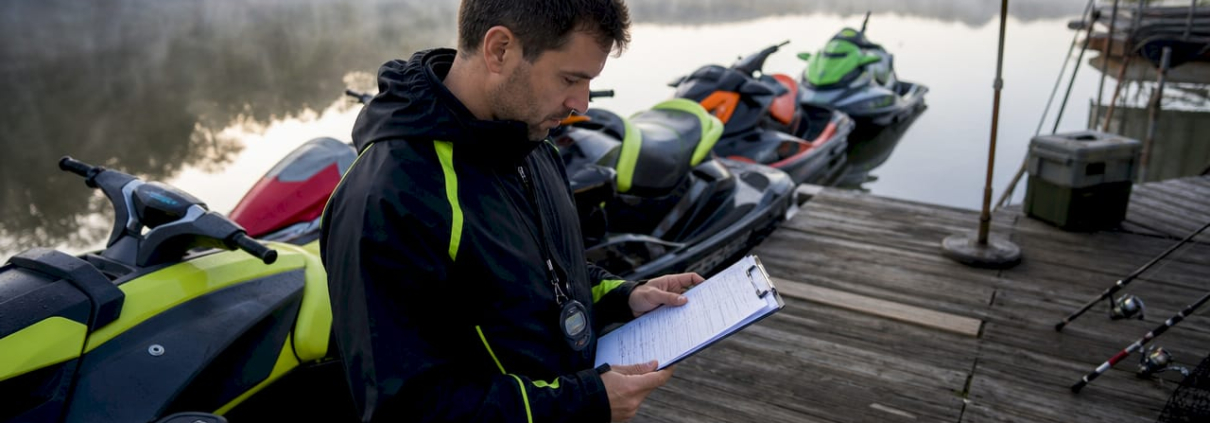
Jet ski racer inspecting craft on dock before race

Jet Ski Race Prep Checklist for Competitors

A jet ski race prep checklist is a systematic set of mechanical inspections, safety verifications, and rider readiness steps designed to put both machine and rider at peak performance on race day. Competitive PWC racing demands more than raw speed. A missed kill cord test or a skipped oil check can end your race before the starting horn sounds. This guide covers every critical step, from hull inspection to ECU tuning priorities, and includes a dedicated section on freestyle and backflip preparation for riders competing in stunt-based events. Whether you race a Yamaha SuperJet, a Sea-Doo RXP-X, or a stand-up freestyle craft, this checklist applies directly to your pre-race routine.

What does a complete jet ski race prep checklist include?

A complete race day checklist for jet skiing covers three categories: mechanical readiness, rider equipment, and performance tuning. Skipping any one of these categories creates a gap that race conditions will expose. Jet Gang Watersports recommends a minimum five-minute pre-launch checklist covering fuel, kill cord, and hull inspection as a baseline standard for all competitive riders. Five minutes is a small investment against a mechanical DNF or a safety incident on the water.

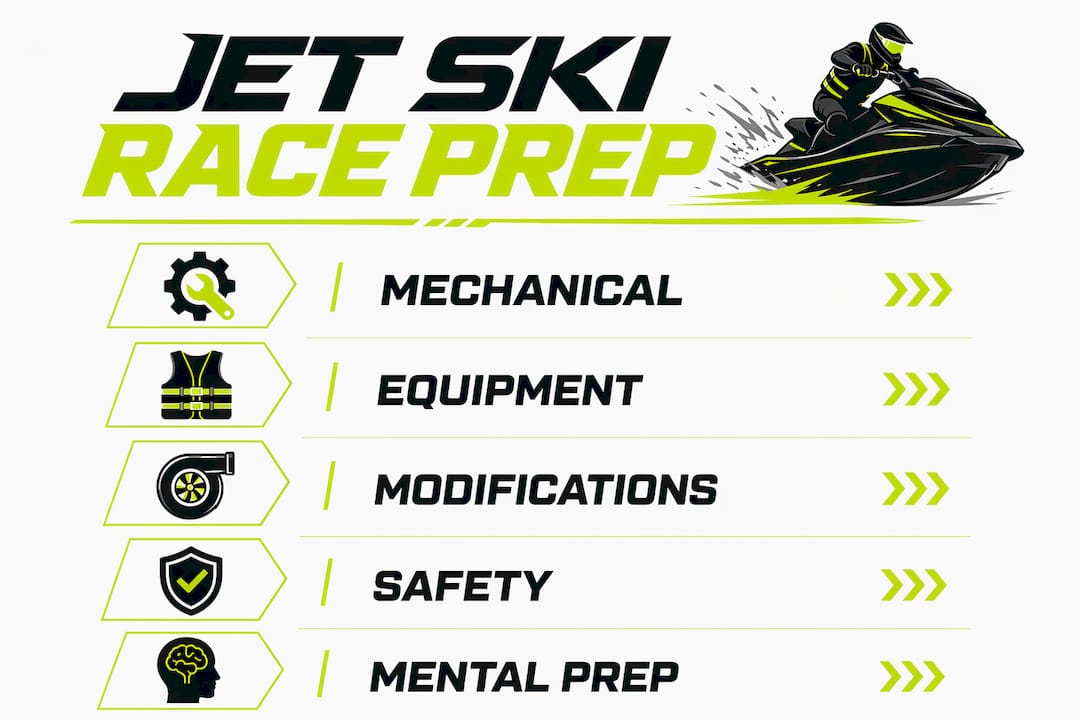
Infographic showing jet ski race preparation steps

Mechanical checks: the non-negotiables

Start with fuel. The minimum half-tank rule exists because race conditions burn fuel faster than recreational riding. Verify the level visually, not just by gauge. Next, check oil and coolant levels and look at the oil itself. Milky engine oil signals water intrusion and requires professional service before the craft goes anywhere near a race course. A strong gasoline smell in the engine bay is a fire hazard, full stop.

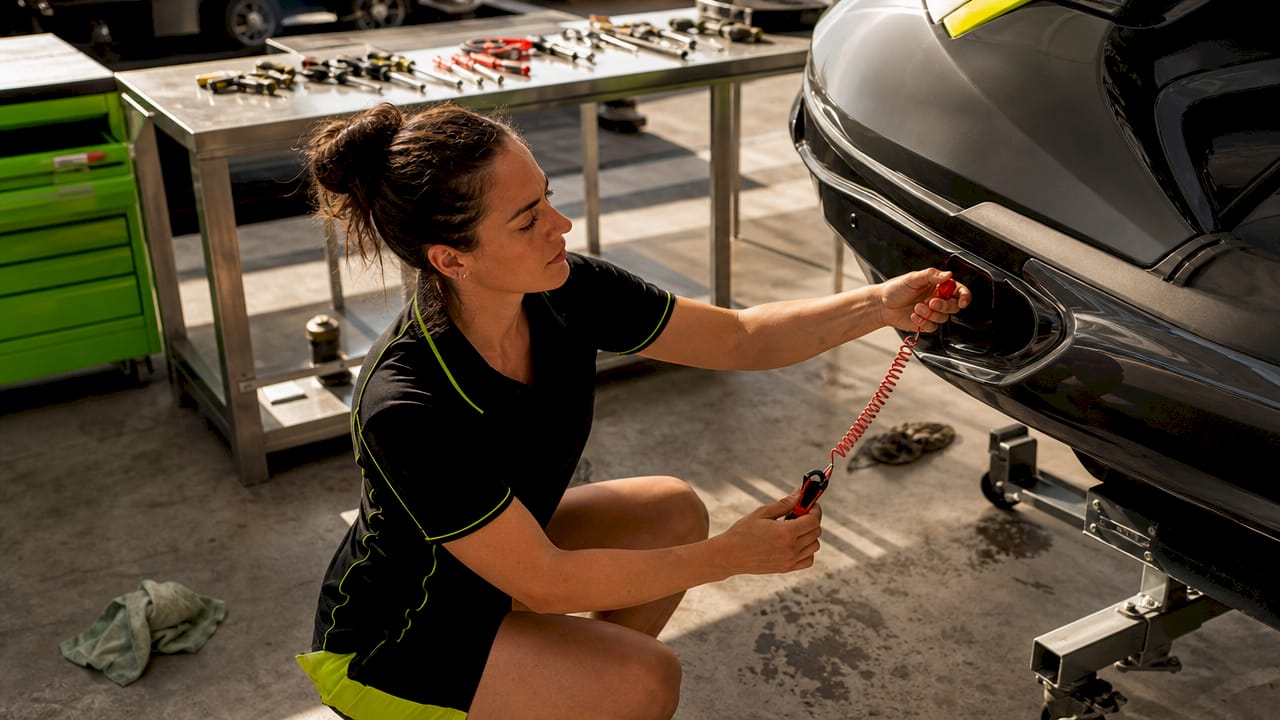
Mechanic performing kill cord test on jet ski

Hull and intake grate inspection comes next. Run your hand along the hull for cracks, and clear the intake grate of any debris. A clogged grate causes cavitation under load, which costs you throttle response exactly when you need it most.

Mechanical Check Race-Day Importance
Kill cord physical pull test Prevents runaway craft; required before every launch
Fuel level (minimum half-tank) Prevents fuel starvation during extended race heats
Oil appearance (no milky color) Detects water intrusion before engine damage occurs
Hull and intake grate inspection Eliminates cavitation and structural failure risk
Coolant level verification Prevents overheating under sustained race throttle

Pro Tip: Pro racers run this mechanical check sequence in the same order every single time. Consistent order prevents skipped steps under pre-race pressure.

What rider equipment is mandatory for jet ski races?

Pre-race preparation for jet ski competition requires Coast Guard-approved personal flotation devices, properly fitted helmets, and back braces as the core safety layer. Mandatory gear includes PFDs with correct fit, helmets certified for water sport impact resistance, and back braces for spinal protection during high-speed falls. A PFD that fits loosely will ride up on impact and fail to protect you. Check the fit before you get on the water, not at the dock.

Helmet selection matters more than most riders acknowledge. Not every helmet rated for motorsports is rated for water impact. Look for helmets specifically certified for PWC or water sport use. Impact vests worn over or under the PFD add a secondary layer of torso protection that standard life jackets do not provide.

Here is the complete must-have gear list for race day:

  • Coast Guard-approved PFD, correctly fitted and fastened
  • Water sport-certified helmet with face protection
  • Back brace or impact vest for spinal and torso protection
  • Wetsuit or rash guard appropriate for water temperature
  • Closed-toe water sport footwear with grip soles
  • Kill cord attached to wrist or PFD at all times
  • Goggles or visor for eye protection at speed

Communication protocols are a separate but equally critical part of rider readiness. Formal hand signals agreed before launch help maintain safety and coordinated group riding during races. Signals for hazard, slow down, and stop should be confirmed with every rider in your group before the race starts. A pre-race float plan that identifies emergency contact information and a designated shore contact is standard practice among experienced competitors.

Pro Tip: Write your float plan on a waterproof card and leave it with your shore contact. If you do not return within the planned window, they know exactly who to call.

How should racers approach jet ski modifications for competition?

The correct modification sequence for jet ski racing equipment follows a strict priority order: handling upgrades first, pump and seal kits second, and power modifications last. Handling upgrades such as intake grates and sponsons should be prioritized before power modifications for better race control. Adding power to a craft with poor handling increases rider fatigue and lap times. Control comes before speed.

Intake grates, sponsons, and ride plates address cornering grip and acceleration traction. These parts are the foundation of a competitive setup. Once handling is dialed in, pump and seal kits reduce cavitation and deliver consistent throttle response through the entire power band. Only after both layers are in place does it make sense to pursue ECU tuning or free-flow exhaust systems.

Modification Goal Best Accessory Choice
Cornering grip and traction Intake grates, sponsons, ride plates
Consistent throttle response Pump and seal kits
Reduced cavitation under load Impeller upgrades and wear ring kits
Power output increase ECU tuning, free-flow exhaust systems
Freestyle leverage and control Extended handlebars (2 to 4 inches)

Extended handlebars of 2 to 4 inches are standard in freestyle competition to gain control leverage for aerial maneuvers. For closed-course racing, handlebar width affects body positioning through tight turns. Match your handlebar setup to your specific race format, not a generic recommendation. Riders competing on 4-stroke SuperJet platforms will find that handling upgrades have an outsized effect on lap consistency compared to power mods alone.

Pro Tip: Test each modification layer separately before race day. Adding intake grates, sponsons, and a new impeller all at once makes it impossible to identify which change affected handling.

What preparations are specific to freestyle and backflip competition?

Freestyle jet ski competition, including backflip events, requires a separate preparation checklist that goes beyond standard race-day protocols. Effective backflip preparation includes progressive drills totaling 30 minutes daily before attempting full flips. Freestyle performance builds on technique and balance, not raw power. Riders who skip the progressive drill phase and attempt full flips too early face a significantly higher injury rate and greater equipment damage.

Freestyle jet skis often include reinforced hulls, extended handlebars, and custom exhaust systems as competition-specific modifications. These are not optional upgrades for serious freestyle competitors. A reinforced hull absorbs repeated impact from failed attempts without cracking. Custom exhaust tuning supports the throttle response needed for consistent ramp speed.

The jet ski backflip approach steps follow a specific sequence:

  1. Confirm impact vest, water sport helmet, eye protection, and secured footwear are in place before entering the water.
  2. Run 30 minutes of low-speed jump drills to calibrate ramp approach and body position.
  3. Establish consistent ramp entry speed before increasing throttle for full rotation attempts.
  4. Practice throttle cut timing at the apex of the jump to control rotation speed.
  5. Focus on body position: lean back at launch, tuck knees, and spot the water on the way down.
  6. Attempt full flips only after completing at least three consistent half-rotation practice runs.
  7. Have a spotter or safety boat positioned and visible before every full flip attempt.

Freestyle flips often require 10 or more attempts with associated physical risk and mechanical damage. Preparation includes impact mitigation gear and a recovery plan for both rider and craft. Riders competing in freestyle nozzle modifications events should verify that all nozzle and steering components are torqued to spec before each session, since repeated impact loosens hardware faster than standard riding.

Pro Tip: Film every practice session from the side. Video review reveals body position errors that are impossible to feel in real time, and it tracks your progression accurately.

Key takeaways

A complete jet ski race prep checklist covers mechanical inspection, certified rider gear, a handling-first modification sequence, and sport-specific freestyle protocols to maximize both safety and performance.

Point Details
Mechanical checks are non-negotiable Kill cord testing, oil inspection, and hull checks prevent race-ending failures.
Rider gear must be certified Coast Guard-approved PFDs, water sport helmets, and back braces are mandatory minimums.
Modifications follow a strict order Handling upgrades before pump kits before power mods reduces fatigue and improves control.
Freestyle prep requires progressive drills 30 minutes of daily low-speed practice before full flip attempts reduces injury risk significantly.
Communication protocols save lives Pre-agreed hand signals and a float plan are standard practice for competitive group riding.

Why race prep discipline separates finishers from DNFs

I have watched riders with faster machines lose races because they skipped the basics. A kill cord that was never pull-tested. An intake grate packed with weeds from the launch ramp. These are not bad luck. They are preparation failures that a five-minute checklist would have caught.

The modification sequence is where I see the most consistent mistakes among newer competitors. Riders add a big-bore kit or a performance exhaust before they have addressed handling, and then they wonder why their lap times are not improving. Power without control costs you more time than it saves. I have seen this play out at watercross events repeatedly. The riders who run R&D Racing handling components before touching their power setup consistently outperform riders with more horsepower and less grip.

Mental preparation gets underestimated at every level below the pro circuit. A float plan is not bureaucratic overhead. It is the difference between a recoverable incident and a tragedy. Agree on hand signals with every rider in your group before you launch. No exceptions, regardless of experience level.

For freestyle competitors, the discipline required to stick to progressive drills when you want to attempt full flips is the hardest part of the preparation process. The 30-minute daily drill framework exists because it works. Riders who respect it progress faster and get hurt less. That is the data, and it matches what I have observed firsthand.

Develop your own checklist based on your craft, your race format, and your modification level. Then run it every single time without shortcuts.

— Casey

Get race-ready with Ipdracing

Ipdracing stocks the performance parts that make this checklist executable, from intake grates and sponsons to pump seal kits, ECU tuning components, and freestyle-specific hardware.

https://ipdracing.com

Whether you are building a closed-course race setup or preparing a freestyle craft for backflip competition, Ipdracing carries parts for Yamaha, Sea-Doo, and all major PWC platforms. The Ipdracing shop organizes inventory by category and model, so you can find the exact handling or power upgrade your build needs. Riders looking for curated performance alternatives can also check the top performance parts guide for 2026. Stock up before your next race and go to the line with confidence.

FAQ

What is the minimum pre-launch checklist for jet ski racing?

The minimum pre-launch checklist includes a physical kill cord pull test, fuel level verification at half-tank or above, oil and coolant inspection, and a hull and intake grate check. Jet Gang Watersports sets five minutes as the standard time for this routine.

What safety gear is required for competitive jet ski racing?

Required gear includes a Coast Guard-approved PFD, a water sport-certified helmet, a back brace or impact vest, and a kill cord attached to the rider at all times. Proper fit on all items is as important as the items themselves.

What is the correct order for jet ski performance modifications?

The correct sequence is handling upgrades first (intake grates, sponsons, ride plates), then pump and seal kits, then power modifications such as ECU tuning and exhaust systems. Adding power before handling control increases rider fatigue and reduces race performance.

How do you prepare specifically for jet ski backflip competition?

Backflip preparation requires 30 minutes of daily progressive drill practice on low-speed jumps before attempting full rotations. Mandatory gear includes an impact vest, water sport helmet, eye protection, and secured footwear, with a spotter or safety boat present for every full flip attempt.

How far apart should jet ski racers stay during a race?

Riders must maintain at least 200 feet of separation at 50 mph to prevent collisions during race conditions. Pre-agreed hand signals for hazard and slow-down situations provide an additional layer of collision prevention.

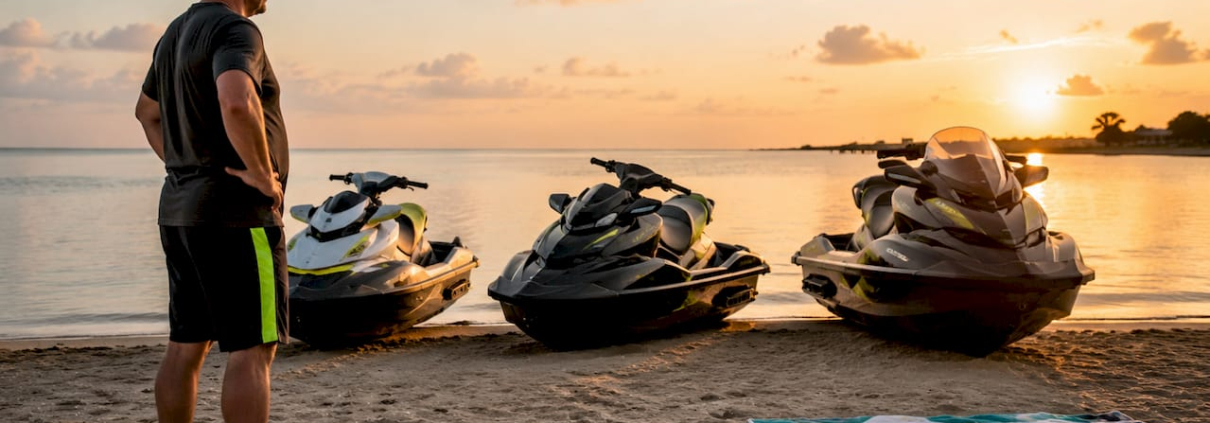
Man examining various personal watercraft types by dock

Types of Personal Watercraft Models: 2026 Buyer’s Guide

Personal watercraft (PWC) is defined as a motorized vessel under 16 feet where the rider sits, stands, or kneels on the hull rather than inside it. The market divides into six core types of personal watercraft models: rec-lite, recreational, performance, touring, tow-sports, and fishing. Kawasaki (Jet Ski), Yamaha (WaveRunner), Bombardier (Sea-Doo), and Honda (AquaTrax) each build distinct lineups targeting different riders. Knowing which category fits your riding style, skill level, and water environment is the single most important decision you will make before buying.

1. What are the main types of personal watercraft models?

Modern PWCs are marketed into five functional categories: recreational, touring, performance, tow-sports, and fishing, each tailored to specific water activities. A sixth category, rec-lite, sits below standard recreational models in power and price. Understanding these segments prevents buyers from overpaying for features they will never use or underpowering a craft for their intended activity.

Here is a breakdown of each category:

  • Rec-lite: Entry-level models with 60 to 130 HP. They typically reach 40 to 50 mph and seat one to two riders. Ideal for calm lakes and first-time buyers.
  • Recreational: Mid-range models with 130 to 170 HP. They seat two to three passengers and balance speed with comfort for weekend riders.
  • Performance: High-output models ranging from 230 to 325 HP. The Sea-Doo RXP-X 325 sits at the top of this segment, built for acceleration and top-end speed.
  • Touring: Three-passenger hulls with deep storage, adjustable seating, and premium comfort features. The Yamaha FX Cruiser HO is a benchmark touring model.
  • Tow-sports: Reinforced hulls with higher torque output for pulling wakeboarders and tubers. Stability at low speeds is a primary design priority.
  • Fishing: Specialized builds with integrated rod holders, fish finders, coolers, and trolling modes.

PWCs are categorized by horsepower into entry-level (60 to 130 HP), mid-range (130 to 170 HP), and high-performance (230 to 325 HP). That segmentation directly maps to price, maintenance cost, and the skill level required to ride safely.

2. How stand-up and sit-down personal watercraft differ

Hands sorting personal watercraft brochures on desk

The US Coast Guard classifies PWCs as Class A motor vessels under 16 feet, with two primary operating styles: stand-up and sit-down. These two formats define the riding experience more than any other single design choice.

Stand-up PWCs are built for a single rider who stands on the deck and controls the craft through body weight and throttle. Key characteristics include:

  • Single-rider capacity only
  • Agile, lightweight hull designed for quick directional changes
  • Favored for freestyle competition and closed-course racing
  • Physically demanding, requiring core strength and balance

Stand-up PWCs have a steep learning curve, with beginners typically needing three to five days to build basic confidence. That physical demand is the barrier that keeps most casual buyers in the sit-down segment.

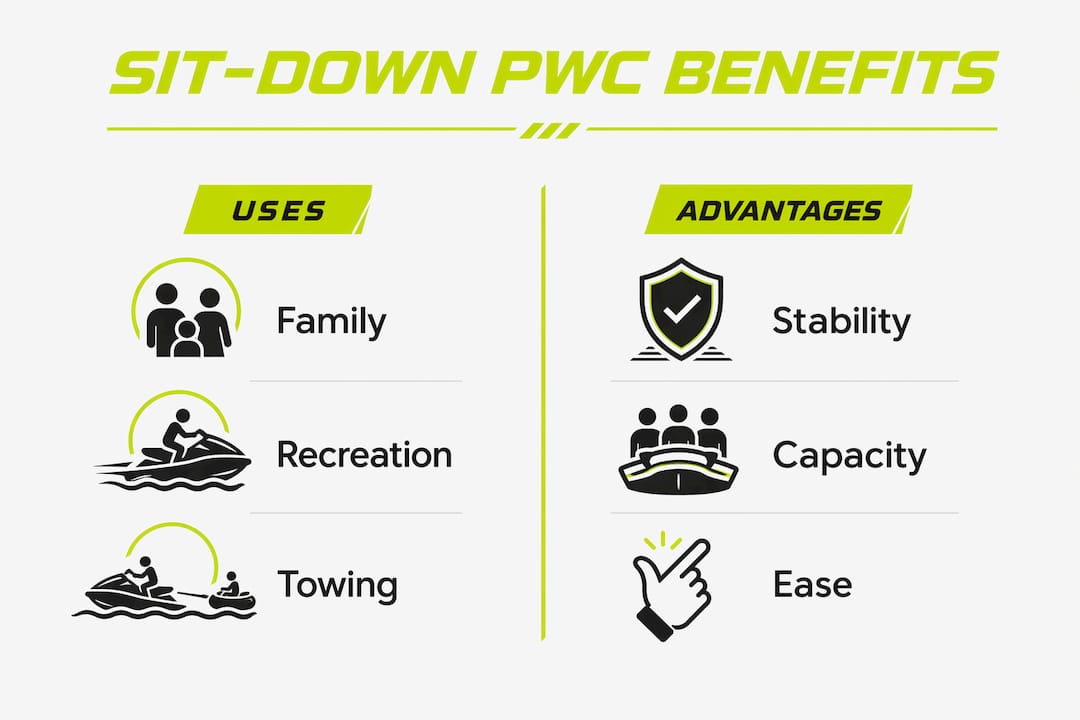
Sit-down PWCs dominate the consumer market and accommodate one to four passengers depending on hull size. They offer:

  • Stable, low-center-of-gravity hull geometry
  • Comfortable seating with lumbar support on touring models
  • Accessible throttle and steering for new riders
  • Versatility across recreation, fishing, and tow sports

Pro Tip: If you are buying your first PWC and plan to ride with passengers, a sit-down model with at least 130 HP gives you the flexibility to grow into the craft rather than outgrow it in one season. Learn more about the sit-down PWC format before committing to a hull style.

3. How to match personal watercraft models to rider skill and water conditions

Selecting the right model requires matching horsepower and hull design to both your experience level and the water you ride on most often. A mismatch in either direction creates safety risks or a frustrating ownership experience.

  1. Beginners on calm inland lakes: Choose a rec-lite or entry-level recreational model with 60 to 130 HP. The lower power ceiling reduces risk while you develop throttle control and turning instincts.
  2. Casual family riders: A mid-range sit-down model with 130 to 170 HP handles two to three passengers without overwhelming new riders. Look for intelligent braking systems and wide-beam hulls for added stability.
  3. Ocean and coastal riders: Matching PWC to local water conditions matters as much as rider skill. Deep-V hulls cut through chop and handle wave impact better than flat-bottom rec-lite designs. Touring and performance models built on deep-V geometry are the right choice for open-water riding.
  4. Experienced performance riders: Models in the 230 to 325 HP range deliver the acceleration and top-end speed that experienced riders demand. These craft require high-octane fuel and disciplined maintenance schedules.
  5. Competitive racers: Stand-up models and closed-course performance sit-downs are purpose-built for racing. Riders in this category typically modify their craft with aftermarket parts. Ipdracing stocks racing performance parts for riders competing at this level.

Pro Tip: Test ride before you buy. Most dealers offer demo days on weekends. Riding three different hull types back to back reveals handling differences that no spec sheet communicates.

Buyers often overvalue top speed over comfort features. Options like lumbar seats, adjustable steering, and intelligent braking add real value for riders spending multiple hours on the water.

Industry experts advise buyers to focus on hull design and manufacturer engineering philosophies rather than brand names alone. Each major manufacturer targets a different rider profile, and their lineups reflect that clearly.

Brand Flagship Model Strengths Best For
Kawasaki Ultra 310LX Power, acceleration, stand-up legacy Performance and racing riders
Yamaha FX Cruiser HO Reliability, balanced handling Families and recreational riders
Sea-Doo (Bombardier) RXP-X 325 Innovation, widest model range All categories from fishing to racing
Honda AquaTrax F-15X Fuel efficiency, smooth power delivery Casual and touring riders

Kawasaki built its reputation on the original Jet Ski brand name, which is now used generically but belongs exclusively to Kawasaki. Their current lineup leans toward high-displacement engines and performance-oriented hull geometry. The Kawasaki Ultra 310 series sits among the most powerful production PWCs available.

Yamaha WaveRunner models are known for consistent reliability and a broad range of options from the entry-level EX series to the performance-focused FZR. Yamaha’s hull engineering prioritizes predictable handling, making their models a strong choice for riders who want confidence at speed. Ipdracing carries a full range of Yamaha performance parts for riders looking to push their WaveRunner further.

Sea-Doo by Bombardier leads the market in model diversity. Their lineup spans the entry-level Spark, the touring GTX series, the fishing-specific Fish Pro, and the supercharged RXP-X 325. Sea-Doo’s emphasis on technology integration, including intelligent braking and electronic stability systems, sets them apart in the recreational and touring segments.

Honda AquaTrax models are no longer in production but remain popular in the used market for their fuel efficiency and smooth four-stroke power delivery. Buyers considering a used AquaTrax should factor in parts availability before purchasing.

5. Specialized personal watercraft models for fishing and tow sports

Specialized PWC models expand the market well beyond general recreation by integrating advanced marine technology directly into the hull design. These are not standard models with accessories bolted on. They are purpose-engineered from the ground up.

Fishing PWCs include features that standard recreational models do not offer:

  • Integrated rod holders positioned for casting access
  • Built-in fish finders with transducer mounts
  • Insulated storage coolers for catch and bait
  • Trolling mode that limits throttle to low-speed precision control
  • Wider, more stable hull geometry for standing and casting

Fishing PWCs come with integrated coolers, rod holders, fish finders, and trolling modes, features absent on general recreational models. The Sea-Doo Fish Pro Trophy is the most recognized dedicated fishing PWC currently in production.

Tow-sports models are built around a different set of priorities:

  • Higher torque output at mid-range RPM for consistent pull
  • Reinforced tow hooks rated for wakeboard and tube loads
  • Wider beam for stability when a rider is being pulled at an angle
  • Mirrors and rearview visibility features for the operator

Many enthusiasts achieve strong results by customizing mid-range performance models with aftermarket fishing accessories, getting better throttle responsiveness than dedicated fishing PWCs provide. That approach works well when you want fishing capability without sacrificing speed. Ipdracing’s performance parts catalog covers the upgrades most commonly applied to mid-range models being converted for dual-purpose use.

Specialized fishing and tow sports PWCs expand the market beyond general recreation by integrating advanced marine technology and accessories that were previously exclusive to full-size boats.

Key takeaways

Choosing the right PWC requires matching hull design, horsepower category, and model type to your specific riding environment and skill level before evaluating brand or price.

Point Details
Six core model categories Rec-lite, recreational, performance, touring, tow-sports, and fishing each serve distinct rider needs.
Horsepower drives segmentation Entry-level runs 60 to 130 HP; high-performance models reach 230 to 325 HP with higher operating costs.
Hull design matters for water type Deep-V hulls handle ocean chop; flat-bottom hulls suit calm inland lakes.
Stand-up vs. sit-down is a lifestyle choice Stand-ups demand fitness and skill; sit-downs offer passenger capacity and accessibility.
Specialized models are purpose-built Fishing and tow-sports PWCs integrate features that aftermarket add-ons cannot fully replicate.

What I have learned from years of watching buyers choose the wrong model

The most consistent mistake I see is buyers choosing a model based on top speed or brand prestige rather than the water they actually ride on. A 300 HP performance craft is genuinely exciting on a wide-open bay. On a crowded inland lake with a no-wake zone, it is an expensive frustration.

The second mistake is underestimating ownership costs. High-performance PWCs require high-octane fuel and increased maintenance, leading to 20 to 30% higher operating costs compared to entry-level models. That gap adds up fast over a full riding season. A mid-range model with a solid maintenance history and room for performance upgrades often delivers more value over three years than a flagship model bought at the top of budget.

My honest recommendation for most buyers is a mid-range sit-down model in the 130 to 170 HP range. It handles passengers, tolerates a range of water conditions, and accepts aftermarket upgrades when you are ready to push performance further. Specialized models like dedicated fishing PWCs are worth the premium only if fishing is your primary use. If you fish occasionally and ride recreationally the rest of the time, a versatile mid-range hull with the right accessories covers both without compromise.

Test rides are non-negotiable. Spec sheets do not communicate how a hull feels in a tight turn or how a seat holds up after two hours. Ride before you buy, and talk to other owners in your local riding community. Their real-world feedback on reliability and parts availability is more useful than any manufacturer brochure.

— Casey

Upgrade your PWC with trusted performance parts from Ipdracing

Whether you ride a Kawasaki Jet Ski, Yamaha WaveRunner, or Sea-Doo, the right performance parts make a measurable difference in how your craft handles and accelerates. Ipdracing supplies trusted components for recreational riders, racers, and freestyle enthusiasts across all major PWC platforms.

https://ipdracing.com

From engine rebuild kits to handling and control upgrades, Ipdracing covers the full spectrum of PWC performance. Browse the top performance parts alternatives for 2026, or visit the Ipdracing shop to find components matched to your specific model. Expert support is available for both recreational builds and competitive racing setups.

FAQ

What are the main types of personal watercraft models?

The six main types are rec-lite, recreational, performance, touring, tow-sports, and fishing. Each category is defined by horsepower range, hull design, seating capacity, and intended use.

What is the difference between a Jet Ski, WaveRunner, and Sea-Doo?

Jet Ski is a Kawasaki brand name, WaveRunner belongs to Yamaha, and Sea-Doo is manufactured by Bombardier. All three are personal watercraft. The term “jet ski” is commonly used as a generic label, but it is technically a registered Kawasaki trademark.

How do I choose the right personal watercraft for my skill level?

Beginners should start with a rec-lite or entry-level recreational model rated at 60 to 130 HP. Mid-range models suit casual family riders, while high-performance models in the 230 to 325 HP range are best reserved for experienced riders.

Are stand-up PWCs harder to ride than sit-down models?

Yes. Stand-up PWCs require core strength, balance, and typically three to five days of practice before a beginner builds basic riding confidence. Sit-down models are accessible to new riders from the first session.

What makes a fishing PWC different from a standard model?

Dedicated fishing PWCs include integrated rod holders, fish finders, insulated coolers, and trolling modes that limit throttle for low-speed precision. These features are not standard on recreational or touring models.

Race official reviewing jet ski classifications at marina

Types of Jet Ski Race Classes: 2026 Racer’s Guide

Jet ski race classes are defined by four core variables: engine displacement, modification level, rider eligibility, and race discipline. Sanctioning bodies like IJSBA, AJSA, and JSRA use these variables to build structured competition frameworks that keep racing fair and accessible at every level. The IJSBA Europe 2026 category list includes classes like Pro Ski Grand Prix, Pro-AM Sport GP, and Pro Runabout 2000 Grand Prix, which shows just how granular these divisions get. Whether you are a first-time competitor or a seasoned Pro, knowing the types of jet ski race classes is the first step to entering the right event and building a competitive program.

1. Types of jet ski race classes by engine size and craft category

Mechanic inspecting jet ski engine in workshop

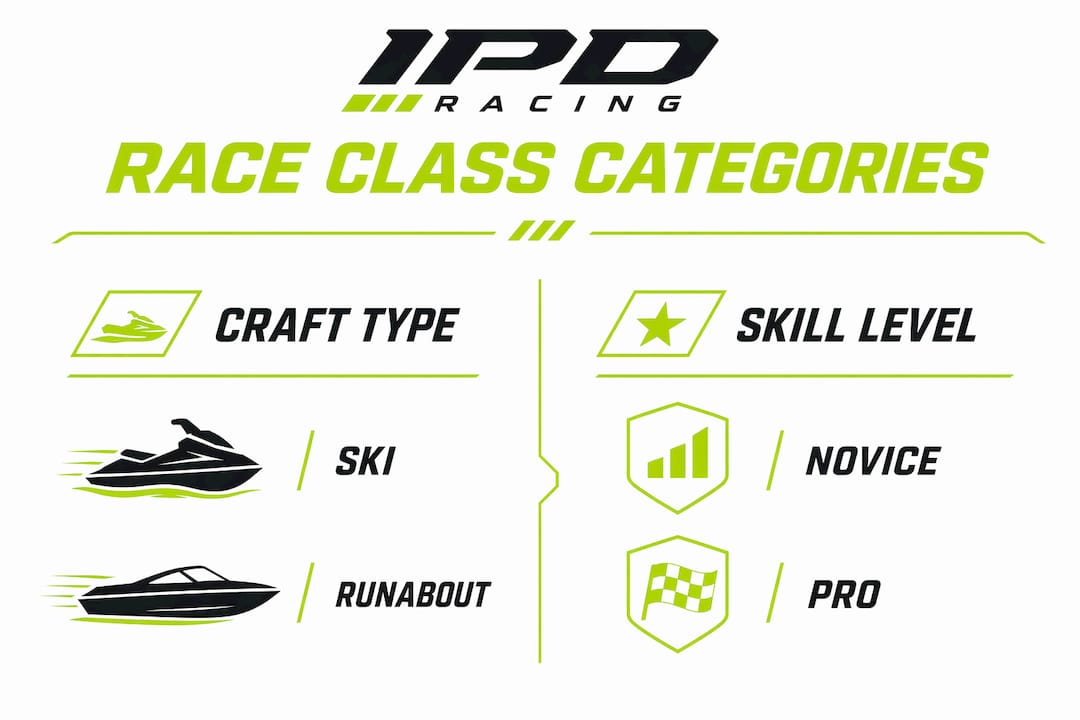
The most fundamental split in jet ski competition classes is between Ski and Runabout craft types. A Ski is a stand-up personal watercraft where the rider stands throughout the race. A Runabout is a sit-down craft. These two categories run in separate classes at virtually every sanctioned event, so your craft type determines your entire class pool before any other variable applies.

Within each craft type, engine displacement defines the specific class. Common groupings include:

  • 550cc — entry-level stand-up classes, often used in vintage and grassroots events
  • 800cc — mid-displacement Ski classes popular in regional circuits
  • 1050cc / 1100cc — AJSA’s Pro Ski 1050cc and Pro Runabout 1100cc represent the competitive core of national-level racing
  • 1500cc — high-performance Runabout classes common in IJSBA events
  • 2000cc — the Pro Runabout 2000 Grand Prix, the top-tier open-displacement Runabout class
Class Type Craft Engine Range Competition Level
Ski GP Stand-up 800cc–1100cc Pro/Expert
Runabout GP Sit-down 1500cc–2000cc Pro/Expert
Ski Lites Stand-up 550cc–800cc Amateur/Sport Spec
Spark Class Sit-down 900cc OEM Entry/Stock
Pro Runabout 2000 Sit-down Open/2000cc Pro

Model-based classes add another layer. The JSRA Seadoo Spark class is strictly limited to 2014 and newer Seadoo Spark models running OEM Rotax 900cc engines. This structure eliminates the cost of custom builds and keeps the field technically even. OEM platform classes like this are growing across all major associations because they lower the barrier to entry without sacrificing competitive integrity.

2. How skill and eligibility levels segment jet ski race classes

Rider classification runs parallel to craft classification. Every major sanctioning body divides competitors by experience and age, and these divisions directly affect which engine classes you can enter.

The standard rider tiers used by IJSBA and AJSA are:

  1. Pro — licensed professionals competing for national and world championship points
  2. Pro-Am — experienced amateurs stepping toward professional competition
  3. Expert — advanced amateurs with multiple seasons of competitive experience
  4. Amateur — intermediate riders with basic race experience
  5. Novice — first and second-year competitors new to sanctioned racing
  6. Junior — youth competitors, typically under 16 with age-specific restrictions
  7. Veteran — masters-division riders, typically 40 and older

Age rules are strictly enforced. Nautiwater Racing’s 2026 rules set 14 as the minimum amateur age, with a 13-year-old exception requiring explicit approval. These age thresholds exist to prevent unsafe mixing of youth and adult competitors on the same course at the same time. Age grouping and rider eligibility rules maintain balanced competition fields and protect younger riders from physical risk.

Championship eligibility also ties directly to rider class. A Novice competitor cannot accumulate Pro championship points, and moving up in class typically requires either a set number of podium finishes or a formal upgrade request to the sanctioning body.

Pro Tip: If you are entering your first sanctioned event, register as Novice even if you feel ready for Amateur. Most associations allow you to move up mid-season after demonstrating consistent results, but moving down is rarely permitted.

3. Race discipline classes and their defining features

Beyond craft type and rider skill, the race format itself creates a separate class dimension. The main discipline categories in jet ski racing are closed circuit, endurance, freestyle, slalom, and offshore.

Closed circuit (sprint) racing is the most common format. Riders complete multiple laps around a buoy-marked course, typically ranging from 10 to 20 minutes per heat. Classes like Pro Ski Grand Prix and Pro-AM Sport GP run in this format. Sprint classes reward raw speed, precise cornering, and aggressive starts.

Endurance racing operates on a completely different logic. The Mark Hahn Memorial Havasu 300 Mile Team Endurance Championships runs seven classes simultaneously, with teams managing fuel stops and rider changes across hundreds of miles of open water. Endurance race strategy extends beyond craft specs to include fuel and rider substitution tactics that adapt to course conditions. This format tests mechanical reliability and team coordination as much as rider skill.

Freestyle classes are judged rather than timed. Riders perform tricks and maneuvers within a set time window, scored on execution, difficulty, and variety. Freestyle has its own class structure entirely separate from circuit racing, and the craft modifications allowed differ significantly. Nozzle and pump modifications, for example, are critical in freestyle but restricted in many sprint classes. Ipdracing covers freestyle nozzle modifications in detail for riders building toward that discipline.

Slalom classes require riders to navigate a precise gate course, testing technical control over raw speed. Offshore and long-distance classes, while less common, appear at specialty events and typically run open-class rules with fewer modification restrictions.

4. How technical regulations define class boundaries

Technical rules are where class definitions get precise and where race preparation gets serious. The three primary modification tiers across most sanctioning bodies are Stock, Sport Spec (sometimes called Economy), and Pro.

Stock classes require craft to remain as close to factory specification as possible. Permitted changes are limited to safety equipment, approved exhaust, and minor handling components. Sport Spec classes allow a defined list of performance upgrades, typically including aftermarket intake, exhaust, and limited engine work. Pro classes operate with open or near-open modification rules, where the craft is purpose-built for maximum performance.

Compression limits are a direct tool for enforcing class boundaries. For 2026, the Ski Lites compression limit is set at 185 psi, with a base gasket thickness rule taking effect in 2027 to reduce demand for exotic fuels. This reflects a broader cost-control effort across Stock and Economy classes. Keeping compression and fuel requirements within defined limits prevents wealthy competitors from buying performance advantages that smaller budgets cannot match.

Technical inspections enforce these rules at the event level. Tech inspection for Ski Lites includes spark plug removal to check compression and gasket thickness measurement. Racers must arrive with the correct tooling and pre-check their own craft before presenting for inspection. A failed tech check means a DNS (Did Not Start), regardless of how well you qualified.

Pro Tip: Download the current rulebook from your sanctioning body before purchasing any performance parts. The 2026 IJSBA rule changes affect compression limits and fuel specs in ways that can make last year’s legal build illegal this season. Staying current on exhaust and engine regulations saves money and avoids disqualification.

5. How to choose the right jet ski race class

Selecting the right class requires matching three factors simultaneously: your rider eligibility, your craft’s technical specifications, and the race discipline you want to compete in. Getting one wrong means either a disqualification or a mismatch that puts you against competitors at a very different performance level.

Start with these questions:

  • What is your experience level? First-year competitors belong in Novice. Riders with two or more seasons of regional racing can consider Amateur or Expert depending on results.
  • What craft do you own or plan to purchase? A stock Seadoo Spark fits directly into the JSRA Spark class or AJSA entry-level categories. A modified Yamaha Superjet targets stand-up Ski classes. The Yamaha platform options at Ipdracing cover a range of class-appropriate configurations.
  • What is your modification budget? Stock and Economy classes cap spending through technical rules. Pro classes require significant investment. OEM platform classes allow dealer-purchased watercraft without custom builds, which accelerates entry and skill development for new racers.
  • What race format suits your strengths? Sprint racing rewards aggression and speed. Endurance rewards consistency and mechanical preparation. Freestyle rewards technical skill and creativity.

Always verify class eligibility directly with the sanctioning body running your target event. IJSBA, AJSA, and JSRA each maintain their own rulebooks, and class names that sound identical can have different technical requirements across organizations.

Key takeaways

Jet ski race classes are multi-dimensional, combining craft type, engine displacement, modification level, rider eligibility, and race discipline into a single class designation.

Point Details
Craft type determines class pool Ski (stand-up) and Runabout (sit-down) classes never mix at sanctioned events.
Engine displacement sets the tier Classes range from 550cc entry-level to 2000cc open-displacement Pro categories.
Rider eligibility is mandatory Pro, Expert, Amateur, Novice, Junior, and Veteran tiers control championship access and race entry.
Technical rules enforce class limits Compression caps like the 185 psi Ski Lites limit prevent equipment-based advantages in Stock classes.
OEM classes lower the entry barrier Model-specific classes like the JSRA Spark class allow stock dealer-purchased craft to compete without custom builds.

Why class selection is more complex than most racers expect

I have watched riders show up to events with a fast craft and a confident attitude, only to discover they entered the wrong class entirely. Not the wrong skill level. The wrong class dimension. They focused on engine size and ignored the modification tier, or they matched the craft type but missed the rider eligibility requirement. Class selection in PWC racing is genuinely multi-dimensional, and that complexity trips up even experienced competitors moving to a new association.

The trend I find most significant heading into 2026 is the cost-control push in Stock and Economy classes. The Ski Lites compression cap and the upcoming gasket thickness rule are not minor tweaks. They signal that the major associations are actively trying to keep racing affordable at the grassroots level. That matters for the sport’s long-term health. If the only way to be competitive is to spend at Pro-level, the Amateur and Novice fields shrink, and the pipeline of future Pro riders dries up.

The other development worth watching is the expansion of OEM platform classes. The AJSA’s racer-first focus and the JSRA Spark class both point toward a future where a rider can buy a craft from a local dealer, show up to a sanctioned event, and compete on equal terms with everyone else in the class. That is genuinely good for accessibility. For newcomers, I would say this directly: start in an OEM class, learn the race craft, and upgrade your class designation as your results justify it. The technical complexity of Pro-level builds will still be there when you are ready for it.

— Casey

Get race-ready with Ipdracing

https://ipdracing.com

Ipdracing stocks performance parts and OEM components for Yamaha, Seadoo, and Kawasaki platforms across every major race class. Whether you are building a Ski Lites-legal stand-up or sourcing Seadoo Spark components for an entry-level class, the Ipdracing shop covers class-specific requirements with parts that meet current technical inspection standards. The team understands the difference between Stock, Sport Spec, and Pro build requirements, so you get the right part for your class, not just the fastest part available. Explore the full performance parts catalog or check the top performance alternatives for 2026 class builds.

FAQ

What are the main types of jet ski race classes?

Jet ski race classes are organized by craft type (Ski or Runabout), engine displacement (550cc to 2000cc), modification level (Stock, Sport Spec, Pro), rider eligibility (Novice through Pro), and race discipline (sprint, endurance, freestyle). Each sanctioning body like IJSBA, AJSA, and JSRA applies these variables to create their specific class structures.

What is the difference between Ski and Runabout classes?

Ski classes are for stand-up personal watercraft where the rider stands throughout the race, while Runabout classes are for sit-down craft. These two categories never compete against each other in sanctioned events, and each has its own engine displacement tiers and modification rules.

How do I qualify for beginner jet ski racing classes?

Most associations place first-year competitors in a Novice class regardless of age, with Junior divisions for riders under 16. Nautiwater Racing’s 2026 rules set 14 as the minimum amateur age, with younger riders requiring special approval. Checking the specific rulebook of your target sanctioning body confirms exact eligibility requirements.

What is a model-based jet ski race class?

A model-based class restricts competition to a single craft model with OEM specifications. The JSRA Seadoo Spark class limits entry to 2014 and newer Seadoo Spark models with stock Rotax 900cc engines, keeping costs low and the technical playing field level.

How do compression limits affect jet ski race class eligibility?

Compression limits define the upper boundary of engine modification in classes like Ski Lites, where the 2026 limit is 185 psi. Exceeding this limit during tech inspection results in disqualification, so racers must verify their engine build against current rules before each event season.

Jet ski racer wearing safety gear on marina dock

Jet Ski Racing Safety Gear List: Race-Ready Guide

A complete jet ski racing safety gear list starts with a U.S. Coast Guard-approved personal flotation device (PFD), a certified helmet, a back brace, a kill switch lanyard, and emergency signaling equipment. These are not optional additions. They are the baseline for competing safely in any sanctioned personal watercraft (PWC) event. 80% of drowning victims in jet ski accidents were not wearing a PFD, which makes the vest the single most consequential piece of gear you can own. This guide covers every item on the required safety checklist for water racing, with specific advice on selection, fit, and maintenance for serious competitors.

1. What personal flotation devices are best for jet ski racing?

A competition-grade PFD is the foundation of any watercraft racing gear setup. Not all life vests meet racing standards, and the difference between a recreational vest and a race-ready one is significant in both design and protection level.

Retail-store PFDs often lack the race-ready approval labels required for sanctioned events, which means they may provide inadequate buoyancy under impact conditions. For racing, look for vests carrying USCG Type III approval or ISO 50N certification at minimum. These ratings confirm the vest meets defined buoyancy and durability standards for active water use.

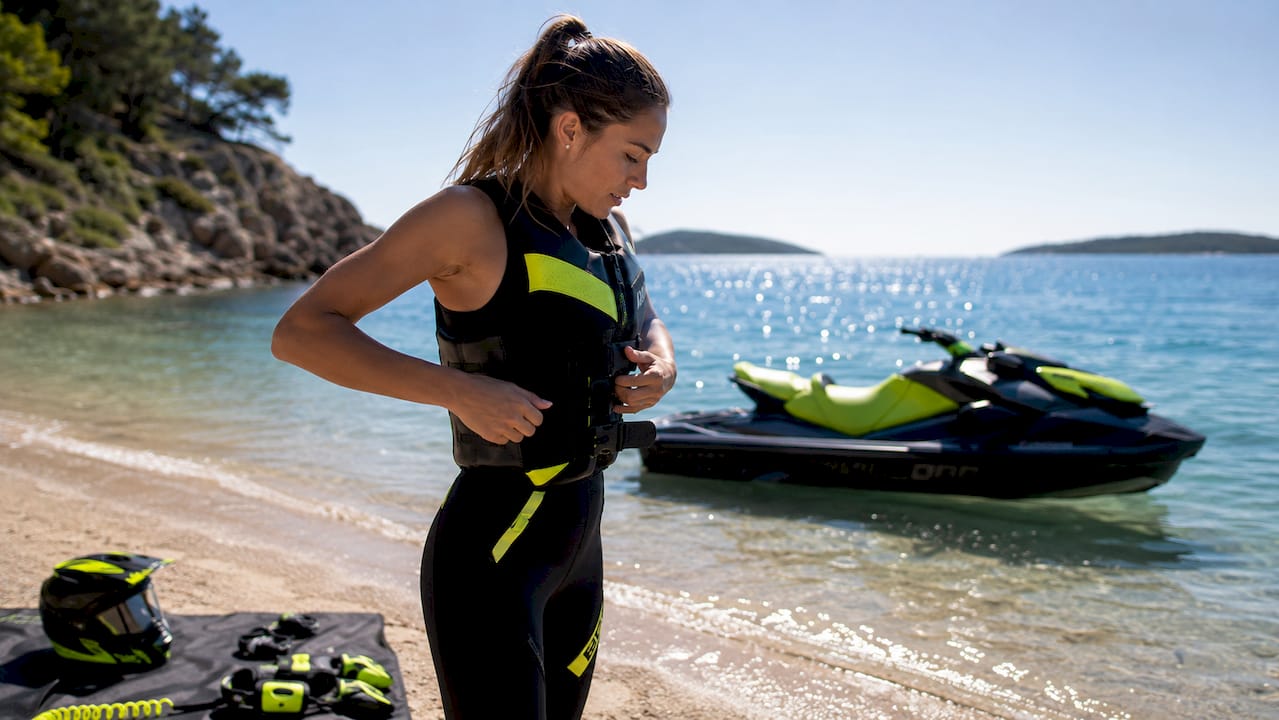
Female racer adjusting jet ski racing life vest indoors

Competition-grade vests feature side-entry designs and quick-release buckles optimized for racing. This matters because a vest that rides up on impact or restricts arm movement directly affects your control and safety. Experienced racers prefer multi-buckle side-entry designs for quick removal and an adjustable, secure fit during aggressive maneuvers.

Key features to evaluate when selecting a racing PFD:

  • USCG or ISO 50N approval label visible on the vest interior
  • Side-entry construction for faster donning and removal
  • Quick-release buckles that function even when wet or under pressure
  • Impact foam panels rated for collision protection, not just buoyancy
  • Snug torso fit that does not ride up when arms are raised overhead

Professional racing vests designed to lock in and provide a secure fit improve rider energy and focus by eliminating distracting movement during a race. Salt spray and sun exposure degrade foam and straps rapidly, so rinse your vest with fresh water after every session and inspect stitching and buckles monthly.

Pro Tip: Raise both arms above your head while wearing your vest. If the vest rises above your chin, it does not fit correctly for racing and will not protect you on impact.

2. Selecting and maintaining jet ski racing helmets

A helmet rated for jet ski racing is the second non-negotiable item on any gear for jet ski competitions checklist. The industry standard terms here are DOT (Department of Transportation), SNELL, and CE certifications, all of which apply to watercraft helmets depending on the sanctioning body.

Full-face jet ski helmets provide impact resistance without vision obstruction and include ventilation channels that prevent fogging and overheating during extended race heats. Open-face helmets offer more airflow but leave the jaw and face exposed, which is a meaningful trade-off at racing speeds where water surface contact can cause serious facial injury.

When evaluating helmets for PWC racing, prioritize these specifications:

  • DOT, SNELL, or CE certification matched to your sanctioning body’s requirements
  • Full-face shell construction for maximum facial and jaw protection
  • Ventilation ports that allow airflow without compromising structural integrity
  • Secure chin strap system with a double-D ring or ratchet buckle
  • UV-resistant outer shell to prevent material degradation from sun exposure
  • Buoyant liner material so the helmet does not pull your head underwater after a fall

Material durability is a practical concern that many racers overlook. Polycarbonate shells resist UV degradation better than ABS plastic, and EPS foam liners should be replaced after any significant impact, even if no visible cracking appears.

Pro Tip: Inspect the interior foam liner before every race day. Compressed or cracked EPS foam no longer absorbs impact energy at rated levels, even if the outer shell looks undamaged.

Helmet maintenance is straightforward. Rinse with fresh water after saltwater use, store away from direct sunlight, and never hang a helmet by its chin strap, which stresses the attachment points over time.

3. Why back braces and back protection vests matter

Back protection is the most underrated item in jet ski racing protective wear. Spinal injuries from PWC collisions and falls are severe, and a back protector rated to IJSBA (International Jet Sports Boating Association) standards is mandatory in many sanctioned race classes.

Pro-level back protection dissipates impact energy, which is critical for serious racers who regularly experience high-speed falls and collisions with wakes, buoys, and other craft. The protection works by spreading the force of an impact across a wider surface area, reducing the peak load on any single vertebra.

Back protectors are often layered under or attached to life vests, yet compliance with sanctioning body specs is mandatory to compete safely in racing events. Check your specific race series rulebook before purchasing, since IJSBA, APBA (American Power Boat Association), and regional bodies each publish their own gear specifications.

Practical steps for fitting and wearing back protection correctly:

  1. Position the protector so the top edge sits at the base of the neck, not mid-back.
  2. Confirm the protector does not gap away from the spine when you lean forward into a riding position.
  3. Verify that your life vest buckles do not compress the protector in a way that shifts it out of position.
  4. Check all attachment points or straps for wear before each race day.
  5. Replace the protector after any direct spinal impact, regardless of visible damage.

Pro Tip: Wear your back protector during practice sessions, not just race day. Fit issues become obvious at speed, and adjusting gear before competition day prevents last-minute problems.

4. Kill switch lanyards and tow loops

The kill switch lanyard is the most critical mechanical fail-safe on any jet ski. It connects your wrist or vest to the engine cutoff switch, stopping the craft immediately if you fall off. A runaway jet ski at full throttle is a direct cause of severe accidents for other racers and bystanders.

Kill switch lanyards are the most critical fail-safe and should be inspected monthly and replaced annually. The inspection process takes under two minutes: attach the lanyard, start the engine at idle, then pull the lanyard free and confirm the engine cuts immediately. If there is any delay or failure, replace the lanyard before the next session.

Tow loops are a separate but equally important piece of required safety gear for jet ski racing. A tow loop is a reinforced attachment point on the bow of the craft used by safety boats to recover a disabled or capsized PWC during a race. Many sanctioning bodies require a tow loop of specified diameter and breaking strength. Verify the specification in your rulebook and inspect the loop for fraying or UV damage before each event.

5. Emergency signaling and communication devices

Emergency signaling gear is the category most racers pack last and inspect least. That is a mistake. A pea-less whistle is audible up to 1 mile away, making it one of the most effective and lowest-cost items on the entire safety checklist for water racing.

Flares provide critical visual signaling visible up to 7 miles, but expiration dates and storage conditions require regular checks. Expired flares are unreliable and may be illegal to carry in some jurisdictions. Check expiration dates at the start of each race season and replace as needed.

Device Range Key Requirement
Pea-less whistle Up to 1 mile Mandatory on most PWC; attach to vest
Visual flare (handheld) Up to 7 miles Check expiration date annually
Smoke signal Short range, high visibility Useful in daylight, open water
VHF marine radio 5 to 25 miles Waterproof rating IPX7 minimum
PLB (Personal Locator Beacon) Satellite coverage Register with NOAA before use

Key features to look for in signaling and communication gear:

  • Waterproof construction rated IPX7 or higher for all electronic devices
  • Compact form factor that fits in a vest pocket or attaches to a D-ring
  • Pre-race functionality check for all battery-powered devices
  • Dedicated storage pouch that keeps gear accessible but protected from impact

Emergency whistles are inexpensive but critical tools that many riders overlook despite their proven effectiveness in rescue situations. Attach the whistle directly to your PFD so it is always within reach, even if you are separated from your craft.

6. Protective clothing and additional gear

Protective clothing rounds out the jet ski racing safety gear list and directly affects endurance and performance over a full race day. Wetsuits protect against hypothermia, sunburn, and abrasions, enhancing rider comfort and endurance across multiple race heats.

Additional protective gear worth including in your race-day kit:

  • Wetsuit or drysuit: A 2mm to 3mm wetsuit suits most racing conditions; a drysuit is appropriate for cold-water events below 60°F water temperature.
  • Neoprene boots or water shoes: Protect feet from impact, provide traction on wet surfaces, and prevent foot injuries during boarding and dismounting.
  • Gloves: Neoprene or grip-reinforced gloves reduce handlebar vibration fatigue and protect hands from abrasion during falls.
  • UV-protective eyewear: Polarized, wrap-around sunglasses with a retention strap prevent glare-induced visibility loss and protect eyes from spray at speed.
  • Rash guard or compression layer: Worn under a wetsuit, a rash guard prevents neoprene chafing during long race days.

You can browse Yamaha-specific gear and model-matched accessories at Ipdracing to confirm compatibility with your specific craft before purchasing.

Key takeaways

A complete jet ski racing safety gear list requires a USCG-approved PFD, a certified full-face helmet, IJSBA-compliant back protection, a kill switch lanyard, and emergency signaling devices as the non-negotiable core of any race-day setup.

Point Details
PFD is non-negotiable Choose USCG Type III or ISO 50N approved vests with side-entry and quick-release buckles.
Helmet certification matters DOT, SNELL, or CE-rated full-face helmets provide the best protection at racing speeds.
Back protection saves spines IJSBA-compliant back protectors must be layered correctly and replaced after any direct impact.
Kill switch lanyards need monthly checks Inspect and test the lanyard before every session; replace annually regardless of condition.
Signaling gear expires Check flare expiration dates each season and attach a pea-less whistle directly to your PFD.

What I’ve learned after years of watching racers get gear wrong

I have seen experienced racers show up to sanctioned events with retail-store life vests, no back protection, and a kill switch lanyard that had not been tested in months. The gear looked fine from a distance. It would not have performed under real conditions.

The most common mistake is treating safety gear as a compliance checkbox rather than a performance system. A vest that fits poorly does not just fail you in an emergency. It distracts you during a race, restricts your movement, and drains energy you need for control. The same logic applies to helmets. A loose chin strap or a fogged visor affects your reaction time before any collision happens.

My recommendation is to run a full gear inspection using a structured monthly checklist, similar to the routine inspection processes used in other powersports disciplines. Test the kill switch lanyard at idle. Check PFD buckles under tension. Compress the helmet foam with your thumbs. These checks take ten minutes and they reveal problems that visual inspection misses.

Invest in pro-grade gear from the start. The cost difference between a recreational vest and a competition-grade vest is real, but the performance difference in fit, buoyancy, and impact protection is larger. Racers who upgrade to purpose-built gear consistently report better confidence and less fatigue over a full race day. That is not a coincidence. It is engineering.

— Casey

Gear up with Ipdracing for your next race

Ipdracing stocks performance-focused PWC gear for racers at every level, from weekend competitors to IJSBA-class athletes. Whether you need a USCG-approved racing vest, a certified full-face helmet, or back protection that meets sanctioning body specs, the Ipdracing shop carries gear matched to serious racing demands.

https://ipdracing.com

Ipdracing also carries top-rated performance parts and accessories for Yamaha, Kawasaki, Sea-Doo, and Hydrospace models, so you can upgrade your safety setup and your craft’s performance in one place. Browse by brand or model to find gear built for your specific PWC.

FAQ

What PFD type is required for jet ski racing?

A USCG Type III or ISO 50N-approved vest is the minimum standard for most sanctioned jet ski racing events. Competition-grade vests with side-entry designs and quick-release buckles are strongly preferred over recreational models.

How often should a kill switch lanyard be replaced?

Kill switch lanyards should be inspected monthly and replaced at least once per year. Test the lanyard at engine idle before every session to confirm the cutoff function works correctly.

Are full-face helmets required for PWC racing?

Full-face helmets are required or strongly recommended by most sanctioning bodies including IJSBA and APBA. They provide impact resistance for the jaw and face that open-face helmets cannot match at racing speeds.

What emergency signaling gear do I need on a jet ski?

At minimum, carry a pea-less whistle attached to your PFD and at least one visual flare with a valid expiration date. A waterproof VHF marine radio or a registered PLB significantly increases your rescue chances in open-water events.

Do wetsuits count as required safety gear for jet ski racing?

Wetsuits are not universally required by rule, but they are strongly recommended for all racing conditions. They protect against hypothermia, abrasion, and sunburn, and they improve rider endurance across multiple race heats.

Racer reviewing guide next to jet ski on beach

Jet Ski Race Classes Explained: 2026 Competitor Guide

Jet ski race classes are structured divisions that group competitors by rider skill level, craft type, and technical specifications to create fair and competitive racing. The industry term for this system is “class structure,” and it governs every sanctioned event from local club races to world championships. Organizations like IJSBA Europe, AJSA, and Pro Watercross each publish their own class frameworks, but all three share the same core logic: match the rider and machine to the right competitive tier. Understanding jet ski race classes explained through these frameworks is the fastest way to choose the right category, avoid disqualification, and build a credible racing career.

What are the main jet ski race classes and how are they categorized?

Jet ski competition classes divide first by craft type, then by skill level, then by technical specification. The two primary craft categories are Ski (stand-up) and Runabout (sit-down). Stand-up skis demand more physical skill and balance, while Runabouts prioritize raw speed and cornering precision. IJSBA Europe publishes 29 race categories organized across these dimensions, making it one of the most detailed class systems in the sport.

Skill tiers run from Novice at the entry level through Amateur, Expert, and Pro-Am up to Pro. Each tier reflects prior race results, licensing status, and competitive history. A rider who finishes in the top three at the Novice level cannot re-enter that class, which forces merit-based progression through the ranks.

Group of racers discussing jet ski classes on dock

Technical specification categories add another layer. Stock classes restrict modifications to keep costs low and competition tight. Superstock allows limited upgrades. Lites classes cap engine displacement, typically targeting smaller, lighter craft. Engine size thresholds vary by organization but commonly appear at 800cc, 1050cc, and 1100cc.

Class Type Craft Skill Tier Key Spec Constraint
PRO Ski Grand Prix Stand-up Pro Engine and moto restrictions
PRO-AM Runabout 1100 Open Sit-down Pro-Am 1100cc displacement cap
Junior Ski Lites Stand-up Junior Age and displacement limits
Stock Runabout Sit-down Amateur/Expert OEM-only modifications
Novice Ski Stand-up Novice No prior top-3 finishes
  • Stand-up Ski classes reward technical riding skill and physical fitness
  • Sit-down Runabout classes favor high-speed tactics and mechanical setup
  • Stock and Superstock categories control costs and keep fields competitive
  • Junior classes carry strict age limits and cross-entry restrictions

Pro Tip: If you own a Yamaha SuperJet or similar stand-up model, start by identifying which Ski class matches your engine size before worrying about skill tier. Craft eligibility eliminates options faster than skill level does.

How do race rules and event formats affect jet ski race classes?

Race format directly shapes how you approach each class. Most sanctioned events use a multi-moto structure where each class runs multiple shorter races, called motos, with combined scores determining the final result. IJSBA uses 3 to 4 motos per class, while Pro Watercross combines 2 motos per day across a two-day event. That aggregated scoring means a single crash or mechanical failure does not end your podium chances.

Infographic comparing jet ski race classes by craft and skill

Pro Watercross events like the 2026 Sebring round attract over 100 riders from multiple countries, with stand-up skis reaching speeds above 70 mph and Runabouts exceeding 85 mph. The format rewards consistency as much as outright speed. A rider who finishes second in every moto often beats a rider who wins one and crashes out of another.

AJSA adds an endurance layer on top of standard class formats. The Super Course Endurance Racing format runs at select rounds within the Pro/Am 300 class, testing mechanical reliability and rider stamina alongside sprint speed. This is a meaningful structural difference from IJSBA events, which focus on sprint motos.

  • Multi-moto scoring: total points from all motos determine the podium
  • Single-day sprint formats favor aggressive, high-risk riding
  • Two-day combined formats reward mechanical preparation and consistency
  • Endurance formats test craft durability and rider pacing strategy

Pro Tip: Study the specific moto count for your target class before race day. A PRO Ski Grand Prix runs 4 motos while a PRO-AM Sport GP runs 3. That difference changes how hard you push in moto one.

What are the eligibility and registration requirements for entering jet ski race classes?

Eligibility rules exist to protect competitive balance and rider safety. The IJSBA Competition License is the baseline requirement for participation at any IJSBA-sanctioned event. Without it, you cannot enter regardless of skill level or craft type. IJSBA World Finals competitors must also show participation in at least two events during the current season, which means the championship is not open to first-time entrants.

Age restrictions apply most strictly to junior categories. Junior classes carry both minimum and maximum age limits, and cross-entry into adult classes is restricted. Adult classes also carry age floors in some organizations. Checking the specific rulebook for your target sanctioning body before purchasing a race entry is non-negotiable.

Registration timing affects your cost and your options. IJSBA Europe pre-registration runs from May 10 to July 1, 2026, with late fees applying after that window closes. On-site registration carries the highest fees and is not always available. Classes with fewer than five registered participants may be canceled outright, so early registration also protects your race day.

  1. Obtain the required competition license for your target sanctioning body before registering
  2. Confirm your age meets the minimum for your chosen class
  3. Check your prior race results to verify you are not barred from re-entering a lower tier
  4. Register before the pre-registration deadline to avoid late fees
  5. Monitor class entry counts to confirm your category will run

Pro Tip: Sanctioning bodies strictly regulate class entry based on prior results. If you placed top-3 as a Novice, that class is permanently closed to you. Know your history before you register.

How do the major sanctioning bodies’ class systems compare?

IJSBA Europe, AJSA, and Pro Watercross each structure their jet ski racing categories differently, and those differences affect which organization suits your goals. IJSBA Europe operates the most granular system, with 29 detailed categories covering everything from PRO Ski Grand Prix to junior Lites classes. The depth of that system means experienced riders find a precise match for their craft and skill level, but newcomers can find it overwhelming.

AJSA takes a different approach. The organization emphasizes OEM-based class platforms to reduce barriers for new racers. Classes like Pro Ski 1050cc, Pro Runabout 1100cc, and Junior Ski Futures allow common retail models without expensive modifications. That philosophy makes AJSA the most accessible entry point for riders coming directly from recreational riding. The addition of Super Course Endurance Racing at select rounds also gives experienced riders a fresh competitive challenge within familiar class structures.

Pro Watercross sits between the two in terms of complexity. Its division structure uses craft type, engine size, and rider skill as primary filters, matching the logic of IJSBA but with fewer total categories. The two-day, four-moto format at events like Sebring gives it a distinct competitive character.

Sanctioning Body Class Depth Craft Focus Key Feature
IJSBA Europe 29 categories Ski and Runabout Most granular class system globally
AJSA Moderate OEM platforms Accessibility for new racers
Pro Watercross Moderate Ski and Runabout Two-day combined moto scoring
IJSBA World Finals Full spectrum All types World championship, license required

The IJSBA World Finals draws competitors from 33 countries and covers stand-up, sit-down, freestyle, and crossover WGP-1 divisions. It represents the broadest single-event class offering in the sport. Riders targeting the Finals need to understand that the class list there may differ slightly from regional IJSBA events.

What practical steps should racers take when choosing the right class?

Choosing the right class starts with an honest assessment of your results, not your ambitions. If you have placed top-3 in Novice, you are legally required to move up. If you have never raced, Novice or the equivalent entry tier in your target organization is the correct starting point regardless of how fast you ride recreationally.

Craft eligibility is the second filter. Your engine displacement, modification level, and craft platform must match the class rules. A heavily modified Runabout will not qualify for a Stock class. Check whether your craft qualifies for OEM-based platforms if you want to minimize prep costs while still competing at a credible level.

Event-specific class availability adds a practical constraint that many newcomers overlook. Categories with fewer than 5 registered participants may be canceled before the event runs. If you are targeting a niche class, confirm that enough other riders are registered before traveling to the venue.

  • Match your class choice to documented results, not self-assessed skill
  • Verify craft eligibility before modifying your machine for a specific class
  • Check minimum participant requirements for your target category
  • Register early to lock in your spot and avoid late fees
  • Plan a two-to-three season progression path from entry tier to target class

Pro Tip: Reviewing race conditions and course formats before selecting your class gives you a clearer picture of whether your craft setup is genuinely competitive in that division.

Key takeaways

Jet ski race classes are defined by craft type, rider skill tier, and technical specifications, and selecting the correct class requires matching all three dimensions to your current situation.

Point Details
Class structure is multi-dimensional Every class encodes craft type, skill tier, and spec constraints simultaneously.
Sanctioning bodies differ meaningfully IJSBA Europe offers 29 categories; AJSA prioritizes OEM accessibility for newcomers.
Multi-moto formats reward consistency Combined scoring across 3 to 4 motos means one bad race does not end your podium run.
Eligibility rules are strict and permanent A top-3 Novice finish bars re-entry to that class, so progression is mandatory.
Early registration protects your race day Classes with under 5 entrants get canceled, and late fees apply after pre-registration closes.

Why most newcomers pick the wrong class first

I have watched a lot of riders show up to their first sanctioned event in the wrong class, and the pattern is almost always the same. They pick based on what sounds right rather than what the rulebook actually requires. A rider who has been running a modified Runabout on a local lake assumes they belong in an Expert class because they feel fast. Then they discover their craft does not meet the Stock spec, or that their prior results from an unsanctioned event do not count toward IJSBA eligibility.

The other common mistake is ignoring the sanctioning body differences. AJSA and IJSBA Europe are not interchangeable systems. A class name that sounds identical can carry different engine rules, moto counts, and eligibility criteria. Riders who do their homework on one organization and then enter an event run by another often get caught off guard by format differences, especially the endurance layers that AJSA has introduced.

Multi-moto scoring also changes how you should race, and most newcomers do not account for it. Treating a four-moto event like a single sprint race is a strategic error. The riders who consistently podium in multi-moto formats are the ones who manage risk across the full day, not just the first race. That mindset shift takes time to develop, but understanding it before your first event puts you ahead of most of the field.

The best advice I can offer is to read the full rulebook for your target organization before you register, not after. The IJSBA Europe participation guide and the AJSA season preview both contain the specific details that determine whether your entry is valid and whether your class will actually run.

— Casey

Get race-ready with Ipdracing

https://ipdracing.com

Whether you are preparing for your first Novice class or building a Pro Ski setup, having the right parts makes a measurable difference in competitive performance. Ipdracing stocks performance upgrades, engine rebuild kits, and handling components for both Ski and Runabout classes across all major sanctioning body platforms. From OEM replacements that keep Stock class eligibility intact to top performance parts alternatives for riders pushing into higher tiers, the catalog covers the full range of race prep needs. Browse the Ipdracing shop to find parts specific to your craft model and class requirements, or use the brand filter to locate components for your exact platform.

FAQ

What are the main jet ski race classes?

Jet ski race classes divide by craft type (Ski or Runabout), skill tier (Novice through Pro), and technical specification (Stock, Superstock, Lites, or engine displacement). IJSBA Europe alone publishes 29 distinct categories covering this full range.

Do I need a license to enter jet ski competition classes?

An IJSBA Competition License is required to participate in any IJSBA-sanctioned event, including regional rounds and the World Finals. AJSA and Pro Watercross have their own licensing or registration requirements that must be confirmed before entry.

Can I re-enter a Novice class after finishing in the top three?

No. Experienced riders who placed top-3 in a Novice class cannot re-enter that tier. This rule prevents sandbagging and enforces merit-based progression through the skill tiers.

How does multi-moto scoring work in jet ski racing?

Multi-moto formats run 3 to 4 shorter races per class, with points from each moto combined to determine the final podium. Pro Watercross uses 2 motos per day over 2 days, rewarding consistency across the full event rather than a single fast run.

What happens if my class does not have enough entrants?

Classes with fewer than 5 registered participants may be canceled before the event runs. IJSBA Europe specifically notes this threshold for categories 26 through 29, so early registration and monitoring entry counts is critical for niche class competitors.

Man seated on sit-down PWC in water at dawn

What Is a Sit-Down PWC? Features, Uses, and More

A sit-down PWC is a motorized watercraft where the rider operates the vessel from a seated position, typically carrying 2 to 3 passengers and powered by an inboard jet-drive engine. The industry term for this style is “runabout,” though most riders simply call them sit-down personal watercraft. Brands like Yamaha WaveRunner, Sea-Doo, and Kawasaki Jet Ski all produce sit-down models, which is why brand names often cause confusion when buyers try to identify the actual type of craft they want. Understanding the distinction between rider position and brand name is the first step toward choosing the right PWC for your needs.

What is a sit-down PWC and how does it work?

A sit-down PWC is defined by its seated riding position, wider hull, and inboard engine system. The rider straddles a padded seat mounted above the hull, similar to sitting on a motorcycle, with handlebars for steering directly in front. Sit-down models typically seat 2 to 3 people, and some larger runabout configurations accommodate up to 4 riders. That passenger capacity alone separates them from stand-up models, which are strictly single-rider craft.

The propulsion system is the core mechanical feature that defines how a sit-down PWC moves. Inboard engines drive a pump-jet or hydrojet system, drawing water through an intake grate on the hull bottom and expelling it at high pressure through a steerable nozzle at the stern. Turning the handlebars redirects that nozzle, which is how the craft steers. There are no external propellers, which makes the design safer around swimmers and in shallow water.

Close-up of sit-down PWC engine and jet pump assembly

Engine size and hull design

Sit-down PWCs run larger 4-stroke engines with wider hulls built for stability rather than agility. Engine displacement on popular models ranges from roughly 900cc on entry-level units to over 1,800cc on performance-oriented runabouts. The wider hull lowers the center of gravity, which directly reduces the balance demands on the rider. That design choice is why sit-down models feel forgiving and predictable, especially for new riders.

Key design features of a sit-down PWC include:

  • Padded multi-rider seating with ergonomic contouring for long-distance comfort
  • Wide, stable hull with a deep-V or flat-bottom profile depending on intended use
  • Extended swim platform at the stern for easy re-boarding after a swim
  • Integrated storage compartments for gear, safety equipment, and personal items
  • Tow hook or tow eye mounted at the stern for pulling water sports equipment

Pro Tip: When evaluating hull width on a sit-down PWC, wider is more stable but slightly less responsive in tight turns. If you plan to use the craft mostly for cruising or towing, prioritize hull width over agility.

What are the main uses and advantages of sit-down PWCs?

Sit-down PWCs are the most practical choice for recreational use, towing, and family outings on the water. Their stability and passenger capacity make them suitable for touring open water, lake cruising, and coastal exploration. A rider can cover long distances without the physical fatigue that comes with standing on a narrower craft. That comfort factor is a genuine advantage for anyone spending more than an hour on the water.

Infographic showing sit-down PWC uses and advantages

The towing capability of sit-down models sets them apart from virtually every other PWC type. Towing-ready features like extended swim platforms and dedicated tow hooks allow riders to pull wakeboarders, water-skiers, and towable tubes without any aftermarket modification. This versatility makes a single sit-down PWC a practical replacement for a small tow boat in many recreational settings.

Common practical uses for sit-down PWCs:

  1. Recreational cruising with one or two passengers across lakes, bays, and coastal waterways
  2. Towing water sports including wakeboarding, water skiing, and inflatable tubes
  3. Family outings where beginner riders or children ride as passengers
  4. Touring and exploration over longer distances where comfort matters
  5. Entry-level racing on closed-course circuits where runabout classes are offered

Pro Tip: Before towing a wakeboarder, confirm your sit-down PWC’s tow rating and engine output. Models below 110 horsepower may struggle to generate enough pull for adult riders at wakeboarding speeds.

The easier learning curve of a sit-down PWC also makes it the preferred choice for beginners. The seated position lowers the rider’s center of gravity, and the wider hull absorbs chop without requiring constant balance correction. Families with younger riders benefit from this stability, since a passenger can hold on to the rider rather than needing to manage their own balance independently.

How do sit-down PWCs compare with stand-up models?

The difference between sit-down and stand-up PWCs goes well beyond rider position. Stand-up models prioritize agility, tricks, and solo riding with narrower hulls and smaller engines, while sit-down runabouts focus on comfort, capacity, and towing. Choosing between them depends entirely on what you plan to do on the water.

Stand-up PWCs are the choice for freestyle competition and technical riding. They respond instantly to body weight shifts, which is what makes tricks possible but also what makes them physically demanding. Sit-down models do not offer that level of agility, but they compensate with stability, storage, and the ability to carry passengers. Performance goals should guide the choice between the two types, not brand preference or price alone.

Feature Sit-down PWC Stand-up PWC
Rider position Seated, motorcycle-style Standing, balance-dependent
Passenger capacity 2 to 4 riders 1 rider only
Hull width Wide, stable Narrow, agile
Engine size 900cc to 1,800cc+ (4-stroke) Typically 800cc or less
Primary use Cruising, towing, family recreation Freestyle tricks, racing, solo riding
Learning curve Beginner-friendly Requires balance and skill
Towing capability Yes, with tow hook and platform Not designed for towing
Typical brands Yamaha WaveRunner, Sea-Doo, Kawasaki Jet Ski Kawasaki SX-R, Yamaha SuperJet

The table above shows that neither type is objectively better. A rider focused on freestyle competition or stand-up racing will find a sit-down model too wide and too heavy for technical maneuvers. A family looking for a weekend on the lake will find a stand-up model impractical and physically exhausting. Matching the craft type to the actual use case is the decision that matters most.

What should you consider when choosing a sit-down PWC?

Choosing the right sit-down PWC starts with defining how many people will ride and what activities you plan to do. A two-person model with a 110-horsepower engine handles casual cruising well, but falls short if you regularly tow wakeboarders or carry three adults at speed. Larger runabout models with 180 to 300 horsepower provide the power margin needed for towing and performance riding.

Key factors to evaluate before purchasing:

  • Passenger capacity: Confirm the rated capacity matches your typical group size, not just the maximum allowed
  • Engine output: Higher horsepower directly improves towing performance and acceleration in choppy water
  • Hull stability: Wider hulls handle rough water better; narrower sit-down models trade some stability for responsiveness
  • Storage volume: Evaluate whether the onboard storage fits your gear, safety equipment, and personal items for a full day out
  • Tow hook integration: Evaluating platform design for tow hook integration is critical if water sports towing is a priority

Pro Tip: Do not rely on brand names alone to identify a sit-down PWC. Confirming the seated riding position and passenger capacity is the most reliable way to verify you are buying the right type of craft, regardless of what the model is called.

Maintenance costs on sit-down models are generally higher than stand-ups due to larger engines and more complex hull systems. Budget for annual service intervals, impeller inspections, and hull maintenance. Models from Yamaha, Sea-Doo, and Kawasaki all have established dealer networks, which makes parts and service accessible. Checking parts availability for your specific model before purchase avoids frustration later.

One common misconception worth addressing: many buyers assume “Jet Ski” means any sit-down PWC. Jet Ski is a Kawasaki trademark. Sea-Doo belongs to BRP, and WaveRunner is Yamaha’s brand. Sit-down versus stand-up refers to rider position and model design, not brand ownership. Knowing this distinction helps you search for the right product and compare models across manufacturers without getting locked into one brand’s terminology.

Key takeaways

A sit-down PWC is the most practical and versatile personal watercraft type for recreational riders, families, and anyone who needs passenger capacity or towing capability.

Point Details
Definition and design A sit-down PWC uses a seated riding position, wide hull, and inboard jet-drive engine for stability and capacity.
Passenger capacity Most sit-down models carry 2 to 3 riders; some larger runabouts accommodate up to 4.
Primary advantages Stability, beginner-friendly operation, towing capability, and multi-passenger comfort set sit-down models apart.
Stand-up comparison Stand-up PWCs offer agility and trick potential but sacrifice capacity, comfort, and towing ability.
Buying guidance Evaluate engine output, hull width, tow hook integration, and storage before purchasing any sit-down model.

Why sit-down PWCs are the right starting point for most riders

I have spent years working with PWC enthusiasts across every skill level, from first-time buyers to competitive racers, and the question I hear most often is some version of “which type should I get?” My honest answer is almost always the same: start with a sit-down model unless you already know you want to compete in freestyle or stand-up racing.

The reason is simple. A sit-down PWC gives you room to grow. You can take a friend out on day one, learn the handling characteristics at your own pace, and then decide later whether you want to upgrade to a higher-performance engine or add aftermarket parts. Stand-up models demand skill from the first ride. There is no passenger seat to hold onto, no wide hull to catch you when you lean too far. That is a real barrier for most people who are new to the water.

What I tell buyers who are on the fence: test ride before you commit. Most dealers offering Yamaha WaveRunner or Sea-Doo models will let you do a short demo. Pay attention to how the hull feels in a turn and how quickly the craft responds to throttle. Those two sensations tell you more about fit than any spec sheet. If you are considering performance upgrades down the road, check out the ProWatercraft performance parts available through Ipdracing to understand what customization is possible on your target model.

The biggest mistake I see is buyers choosing a craft based on brand recognition rather than rider position and use case. A Kawasaki Jet Ski can be either a sit-down or stand-up model depending on the specific product line. Knowing what you actually need, seated comfort and capacity versus agility and tricks, cuts through that confusion immediately.

— Casey

Find the right sit-down PWC and gear at Ipdracing

Ipdracing carries performance products, parts, and accessories for sit-down PWC riders across every discipline, from weekend recreation to competitive racing. Whether you ride a Yamaha WaveRunner, Sea-Doo, or Kawasaki, the Ipdracing catalog covers engine upgrades, handling components, and maintenance parts built for your specific model.

https://ipdracing.com

Browse the full selection at the Ipdracing shop to find parts matched to your sit-down PWC. If you ride a Yamaha, the dedicated Yamaha product page breaks down compatible upgrades by model and engine type. The team at Ipdracing supports riders at every level, from first-time buyers comparing runabout models to experienced racers looking for the next performance gain.

FAQ

What is a sit-down PWC?

A sit-down PWC is a personal watercraft operated from a seated position, typically carrying 2 to 3 passengers and powered by an inboard jet-drive engine. The industry term for this style is “runabout,” and major brands include Yamaha WaveRunner, Sea-Doo, and Kawasaki Jet Ski.

How is a sit-down PWC different from a stand-up model?

Sit-down PWCs have wider hulls, larger engines, and multi-rider seating, making them stable and beginner-friendly. Stand-up models use narrower hulls and smaller engines designed for agility, tricks, and solo riding only.

Can a sit-down PWC tow a wakeboarder or water-skier?

Yes. Most sit-down PWCs include a tow hook and extended swim platform specifically for pulling wakeboarders, water-skiers, and towable tubes. Models with 130 horsepower or more provide the most reliable towing performance for adult riders.

Is “Jet Ski” the same as a sit-down PWC?

No. Jet Ski is a Kawasaki trademark that applies to both sit-down and stand-up models in their product line. The terms sit-down and stand-up describe rider position and hull design, not brand ownership.

Are sit-down PWCs good for beginners?

Sit-down PWCs are considered the most beginner-friendly personal watercraft type. The seated position lowers the center of gravity and the wide hull reduces balance demands, allowing new riders to focus on throttle and steering control rather than staying upright.