
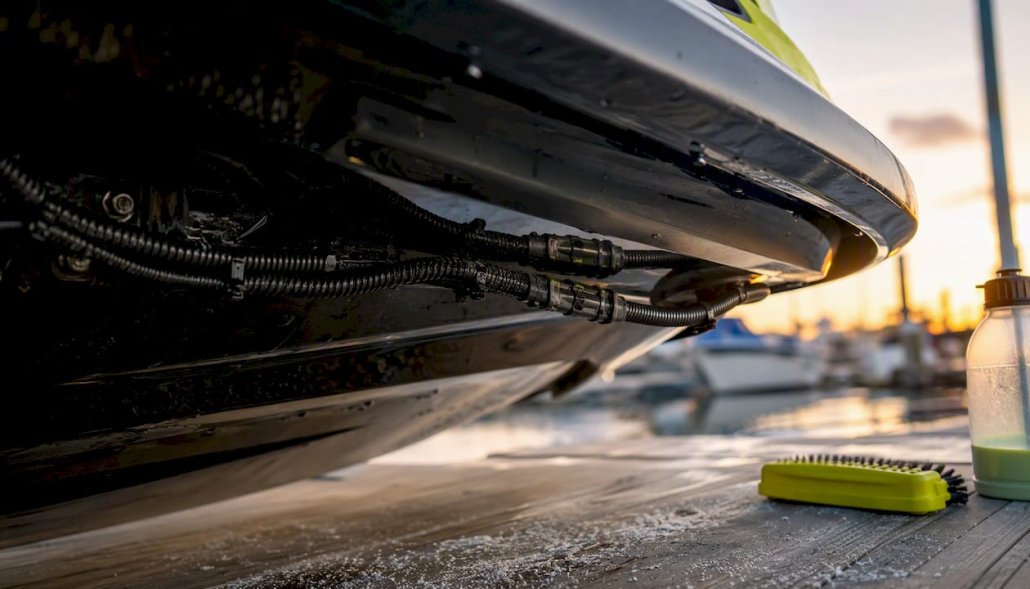
PWC Audio System Upgrade Options for Owners
For most PWC owners, the best audio system upgrade options are purpose-built marine pod speakers, factory-fit plug-and-play kits, or adhesive-mounted no-drill pods. The right choice depends on your mounting points, alternator capacity, and saltwater exposure.
Quick match by rider type:
- Cruising/passenger: Factory-style integrated pods (RIVA/Wet Sounds, Sea-Doo OEM) for clean wiring and high output
- Weekend rider/party: No-cut bracket systems (PWCBrackets) or adhesive pods (WaveAudia) for easy installs
- Freestyle/racing: Lightweight bracket mounts with marine-grade wiring; skip heavy enclosures
- Single-rider/portable: Submersible Bluetooth speakers for zero-modification simplicity
Before you buy, check these four things:
- Available mounting cleats or hull space for pods
- Whether your craft has a factory audio harness
- Battery and alternator capacity to support an amplifier
- Whether storage covers or a garage will clear the pod height
| Approach | Mounting | Typical RMS | Install Difficulty | Cost Range |
|---|---|---|---|---|
| Adhesive pod kit (WaveAudia) | Pod / adhesive | — | Easy (DIY) | a moderate price range |
| No-cut bracket system (PWCBrackets) | Pod / bracket | high power output | Easy–Moderate | — |
| OEM upgrade kit (Sea-Doo 80W Platinum) | Helm / integrated | dual 80W speakers total output | Moderate | — |
| Factory-style integrated (RIVA/Wet Sounds) | Pod / plug-and-play | high wattage | Moderate | a typical mid-range price |
| Custom full install | Custom / tower | — | Complex (pro) | premium price range |
Cost snapshot: Entry-level adhesive kits run a moderate price range. OEM and premium pod systems land at a typical mid-range price. Full custom installs with amplifier and battery upgrades can exceed $1,500–$2,000.
Brand overviews for the comparison: Wet Sounds builds marine-grade coaxial speakers and integrated amplifier pods engineered for saltwater environments. Fusion (Garmin) produces helm-mount head units with Bluetooth, AUX, and NMEA 2000 network integration suited to cruising builds. Rockford Fosgate offers marine-rated speakers and compact amplifiers with corrosion-resistant grilles for mid-range installs. JL Audio is the go-to for high-fidelity marine speakers and amplifiers where sound quality at speed is the priority. Kicker supplies weather-resistant coaxials and tower speakers popular in party and passenger configurations. Boss Marine covers the entry-level bracket with affordable, IP-rated speakers for budget-conscious first-time buyers.
The RIVA/Wet Sounds Yamaha FX system integrates a powerful amplifier directly into the speaker pods, uses marine-grade coaxial speakers with dome tweeters, and connects via a plug-and-play harness on 2022+ Yamaha FX models. It carries a limited warranty and is saltwater-rated. The Sea-Doo 80W Platinum Audio System delivers dual 80W channels (dual 80W speakers total output) with DSP processing, Bluetooth, and a fully submersible speaker design for BRP craft with an existing Premium Audio System. PWCBrackets supplies no-cut, no-drill model-specific brackets with installed pod options claiming up to high wattage output. The WaveAudia system uses 3M VHB adhesive mounting, requires a 24-hour cure before reattaching heavy components, and reviewed at approximately $441. Full Wave Marine documents amplifier placement in front storage compartments, silicone adhesive mounting, and wiring routing best practices for shop-quality installs.
Table of Contents
- IPD Racing has the parts to support your install
- Key Takeaways
- What most guides miss about PWC audio installs
IPD Racing has the parts to support your install
IPD Racing stocks performance hardware and accessory kits that support audio installs directly: mounting hardware, wiring kits, and battery-adjacent electrical components across Sea-Doo, Yamaha, Kawasaki, and other major PWC brands. The ProWatercraft product line covers handling and accessory hardware that pairs with bracket-mount audio builds. Compatibility resources and PWC tuning guides are available to help you confirm electrical capacity before adding an amplifier. Browse the Hot Products catalog at IPD Racing to find in-stock parts matched to your model.
Key Takeaways
The strongest PWC audio upgrades balance marine-grade durability, correct electrical capacity, and a mounting solution that fits your hull without permanent modification.
| Point | Details |
|---|---|
| Match upgrade to rider type | Plug-and-play pods suit cruisers; adhesive kits suit weekend riders; skip heavy enclosures for racing. |
| Verify electrical capacity first | Confirm your battery and alternator can support the amplifier’s RMS draw before purchasing. |
| IP rating and saltwater protection | Choose components rated for saltwater immersion; rinse with fresh water after every salt-water session. |
| Cost scales with complexity | Adhesive kits start at a moderate price range; OEM/premium systems run a typical mid-range price; custom installs exceed $1,500. |
| IPD Racing for parts and hardware | IPD Racing stocks mounting hardware, wiring kits, and electrical components for major PWC brands. |
What most guides miss about PWC audio installs
The plug-and-play marketing on pod kits is accurate for the speaker side. The electrical side is where most installs go wrong. A powerful amplifier on a stock PWC battery will drain power fast at idle or low speed, and that problem does not show up until you are on the water.
The adhesive cure step is the other overlooked detail. Waiting a full 24 hours after applying 3M VHB adhesive before reattaching heavy speaker components is not optional. Rushing it causes pods to sag or pull away from the hull under vibration.
Pro Tip: Route all wiring through split-loom conduit and use waterproof heat-shrink connectors at every junction. Standard crimp connectors corrode quickly in saltwater environments and are the most common cause of audio system failure within the first season.
For racers and freestyle riders, the calculus is different. A heavy pod system adds weight and changes the craft’s balance. A lightweight bracket with a compact, high-efficiency amplifier is the smarter build for competitive use. Weekend riders and cruisers have more flexibility, but they also spend more time at low throttle where battery drain matters most.
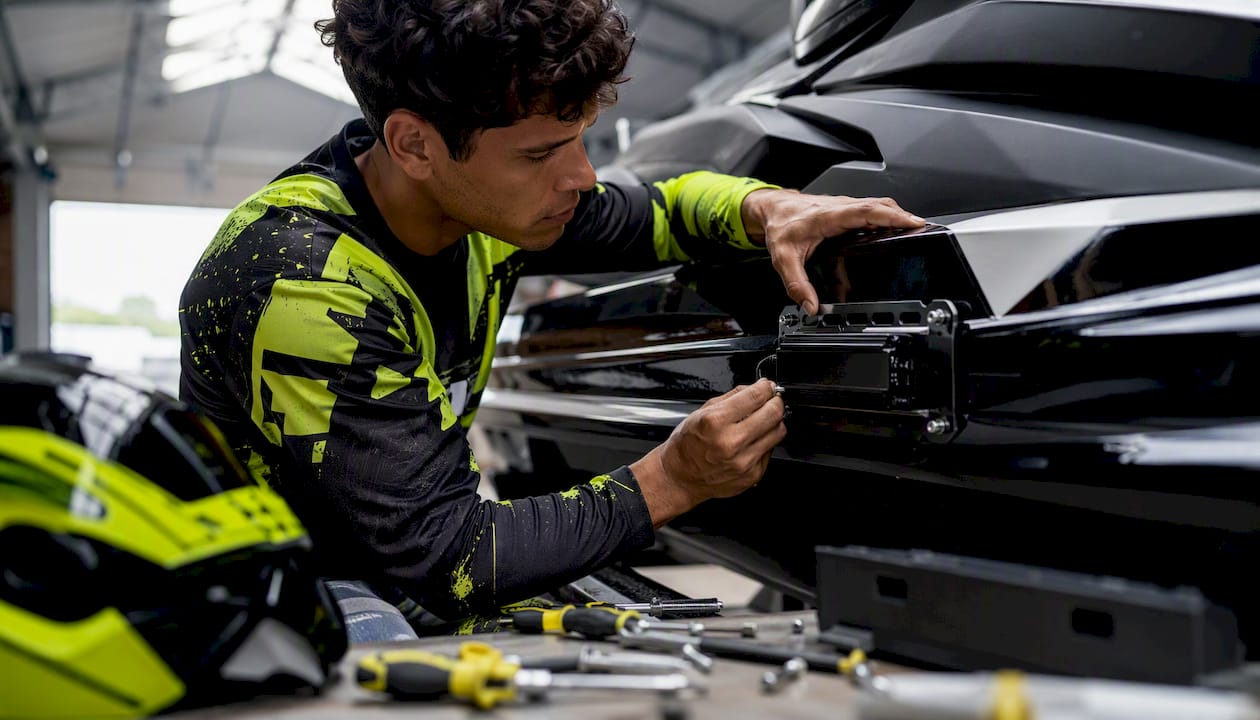
Amplifier placement inside the front storage compartment, secured with silicone adhesive and proper wiring strain relief, is the standard shop approach for a reason: it keeps the amp protected, accessible, and out of the spray zone.

