
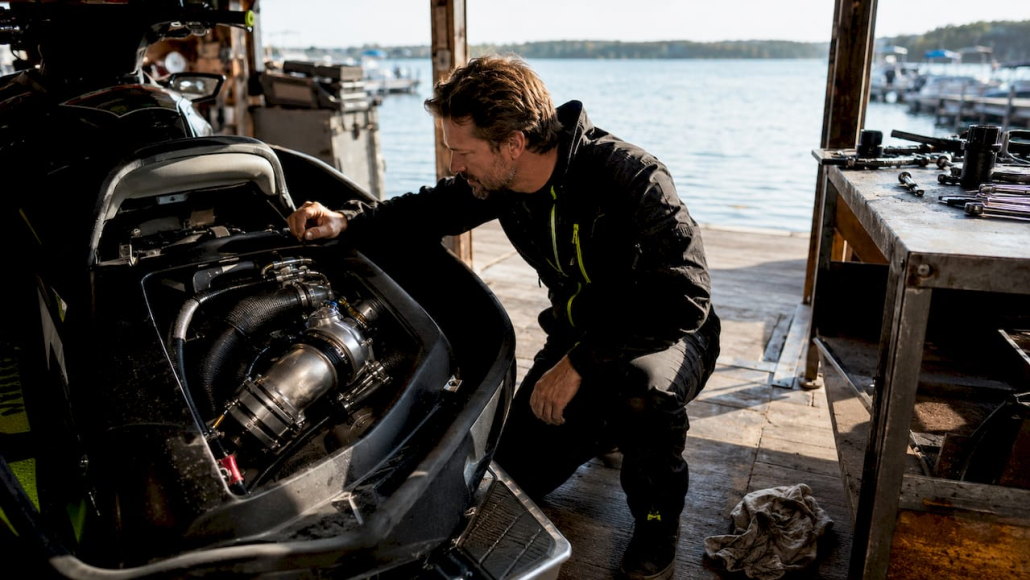
Jet Ski Turbo Kit Overview: Power, Speed & Gains
A jet ski turbo kit is a forced-induction system that compresses intake air with a turbocharger to increase engine horsepower and top speed beyond factory limits. This jet ski turbo kit overview covers everything performance riders need to know: core components, installation steps, real-world speed gains, and reliability factors. Brands like MAPTUN and RIVA Racing have pushed the limits of what production watercraft can do, with some setups delivering 400 horsepower and speeds above 88 mph. Whether you ride recreationally or compete, understanding how these systems work is the first step toward choosing the right upgrade.
What is a jet ski turbo kit and how does it work?
A jet ski turbo kit is a complete forced-induction package that bolts onto a stock or modified engine to increase power output. The turbocharger sits at the center of the system. It uses exhaust gases to spin a turbine, which drives a compressor wheel that forces more air into the intake manifold. More air means more fuel can be burned per combustion cycle, which directly raises horsepower and torque.
The industry term for this technology is forced induction, and it applies to both turbochargers and superchargers. Turbo kits are the aftermarket application of this principle to personal watercraft (PWC) engines. MAPTUN and RIVA Racing are the two most recognized names building production-ready kits for Sea-Doo models, and their products define the performance ceiling for most riders.
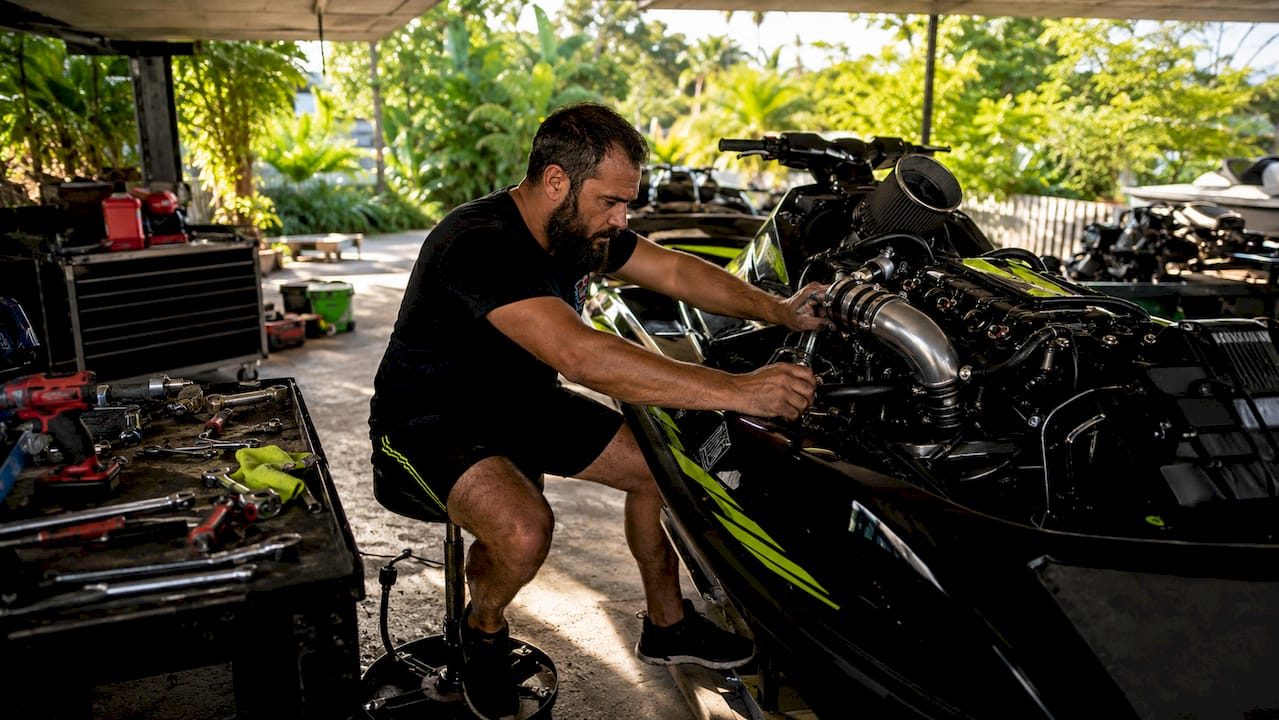
Typical gains from a well-tuned turbo kit range from a modest speed increase on a lightweight hull to outright competition-level performance. MAPTUN’s REV3 turbo kit targets 63 mph on the Sea-Doo Spark at roughly 8.5 PSI boost. That number matters because the Spark is a budget ski that normally tops out well below that figure.
Core components inside a turbo kit
Every complete turbo kit ships with a set of matched components that must work together. Installing only part of the system is a common mistake that leads to poor performance or engine damage.
The main parts in a typical jet ski turbo kit include:
- Turbocharger unit: The IHI turbo used in MAPTUN’s REV3 kit is a compact, marine-compatible unit sized for the Spark’s engine displacement.
- Intercooler and piping: The intercooler cools compressed air before it enters the engine. Hot compressed air is less dense, so cooling it recovers power and protects internal components.
- Wastegate: This valve controls maximum boost pressure. MAPTUN uses a 7.5 PSI wastegate with an 8–9 PSI boost target to keep the engine safe under sustained load.
- Upgraded fuel injectors: Stock injectors cannot supply enough fuel at elevated boost. Larger injectors, like the Bosch 1100cc units in RIVA Racing’s Stage 3 kit, are required to match the increased airflow.
- Oil feed and return lines: The turbocharger bearings require a continuous supply of clean engine oil. Dedicated feed and drain lines route oil from the engine to the turbo and back.
- ECU tuning hardware: A reflashed or unlocked ECU controls fuel maps, ignition timing, and boost targets. Without proper tuning, the engine runs dangerously lean under boost.
Pro Tip: Never run a turbo kit with stock fuel injectors, even temporarily. A lean condition under boost can destroy pistons within minutes.
The intercooler deserves special attention. Compressed air exits the turbo at high temperature. Running that hot air directly into the engine reduces power and raises the risk of detonation. A properly sized intercooler drops intake temperatures significantly, which is why MAPTUN includes intercooler piping as a standard part of the REV3 kit.
How to install a turbo kit on a jet ski
The installation sequence for a jet ski turbo kit follows a specific order. Skipping steps or reversing the sequence creates problems that are difficult to diagnose later.
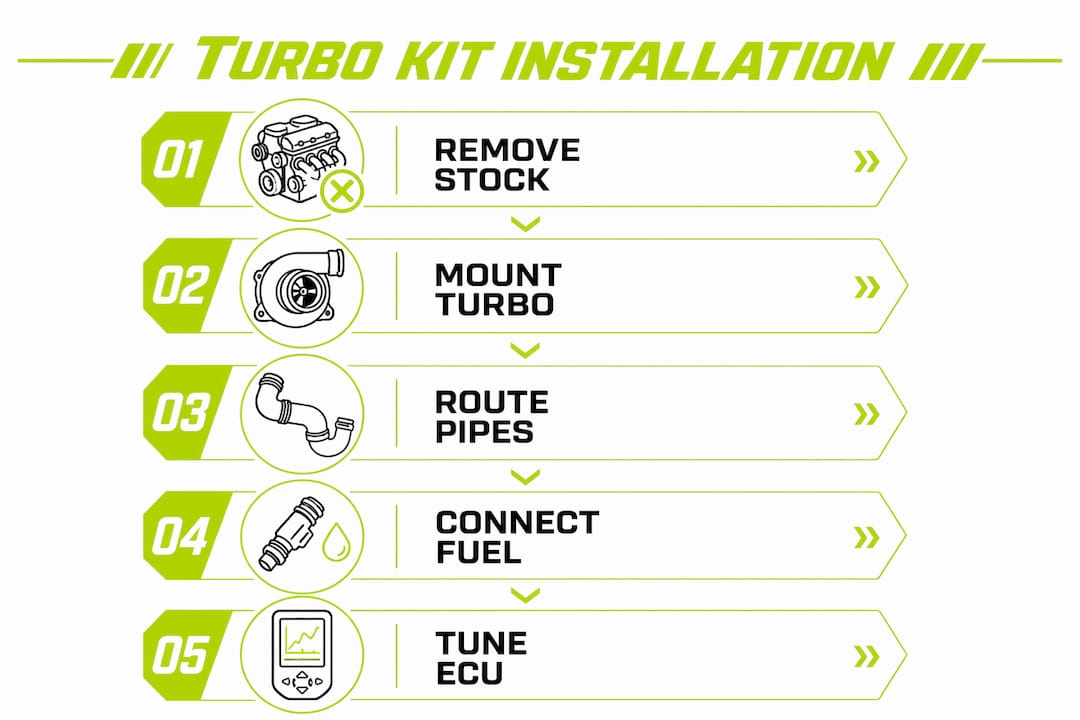
A standard installation follows these steps:
- Disconnect the battery and remove the seat and hood for full engine access.
- Remove the stock intake and exhaust components to clear space for the turbo manifold.
- Install the turbo manifold and mount the turbocharger to the exhaust outlet.
- Route the intercooler and charge pipes from the turbo outlet to the intake manifold.
- Install upgraded fuel injectors and connect the fuel rail.
- Route oil feed and return lines from the engine block to the turbo bearing housing.
- Pre-lubricate the turbocharger before the first start to protect the bearings.
- Flash the ECU with a tuned map using a device like the Maptuner Nano.
- Perform a full system check: oil level, coolant level, boost line connections, and fuel pressure.
- Start the engine and monitor for leaks, unusual sounds, and boost readings.
Pro Tip: Pre-lubrication is not optional. Squirt clean engine oil directly into the turbo oil feed port before the first start. A dry start is the leading cause of early turbo failure.
Turbo failures most often result from lubrication errors at first start. Bearing damage and shaft scoring happen in seconds when oil pressure has not yet reached the turbo. Using new oil lines and a fresh oil filter before installation removes contamination that could block the feed circuit.
The table below summarizes the key installation checkpoints and their purpose:
| Installation Step | Purpose |
|---|---|
| Remove stock intake/exhaust | Creates clearance for turbo manifold and piping |
| Install wastegate and boost lines | Controls maximum boost to protect engine |
| Route oil feed/return lines | Supplies lubrication to turbo bearings |
| Pre-lubricate turbo | Prevents dry-start bearing failure |
| ECU flash with Maptuner Nano | Matches fuel and ignition to boost level |
| Post-install system check | Confirms no leaks and correct boost pressure |
What speed and power gains can you expect?
Performance results vary significantly based on the kit stage, hull weight, and supporting modifications. Two real-world examples define the range of what turbo kits deliver.
At the entry level, MAPTUN’s Sea-Doo Spark REV3 kit targets 63 mph at 8,800–9,000 RPM with 8–9 PSI of boost. The Spark’s light hull weight amplifies the effect of forced induction. A turbocharged Spark can close the speed gap against heavier, more expensive performance skis because it carries less weight per horsepower.
At the competition end, RIVA Racing’s Stage 3 kit for the Sea-Doo 325 achieves 88 mph and 400 horsepower at approximately 9,000 RPM. That kit costs around $4,000 and includes a fully unlocked ECU, Maptuner Nano system, and Bosch 1100cc injectors. It is built for competition, not casual weekend riding.
| Kit | Platform | Boost (PSI) | Top Speed | Horsepower |
|---|---|---|---|---|
| MAPTUN REV3 | Sea-Doo Spark | 8–9 | 63 mph | Moderate gain |
| RIVA Racing Stage 3 | Sea-Doo 325 | Competition level | 88 mph | ~400 hp |
Key factors that affect your real-world results include:
- Hull weight: Lighter hulls like the Spark respond more dramatically to power increases.
- Impeller selection: A matched impeller from a brand like Solas converts engine power into thrust efficiently.
- Fuel quality: Higher octane fuel supports more aggressive timing and boost without detonation.
- Rider weight and riding style: Aggressive acceleration runs produce different peak numbers than steady-state speed testing.
The Maptuner Nano system used in RIVA’s Stage 3 kit allows riders to flash tunes and monitor engine data via Bluetooth. That capability lets you adjust performance safely and revert to stock settings if needed, which is a practical advantage for riders who use their ski in multiple conditions.
Turbocharger vs. supercharger: which forced induction is right for you?
Both turbochargers and superchargers compress intake air to increase power, but they do it differently. Understanding the distinction helps you choose the right jet ski tuning option for your riding style.
A turbocharger uses exhaust gases to spin its turbine. This makes it more thermally efficient at high RPM, but it introduces a brief lag between throttle input and full boost delivery. A supercharger is belt-driven directly off the engine crankshaft, which means boost is available immediately at any RPM.
The practical differences for jet ski riders break down this way:
- Throttle response: Superchargers deliver instant power, which benefits freestyle riders and those who need immediate acceleration out of tight turns.
- Top-end power: Turbochargers often produce stronger peak power at high RPM, making them the preferred choice for straight-line speed and closed-course racing.
- Maintenance: Superchargers require periodic rebuilds of the drive belt and internal components. Turbochargers require consistent oil changes and clean oil feed lines.
- Reliability: Both systems are reliable when properly installed and tuned. The failure rate for either rises sharply when boost, fueling, and cooling are not matched as a complete system.
- Cost: Turbo kits for entry-level platforms like the Sea-Doo Spark are often more affordable than supercharger upgrades for larger displacement models.
For riders focused on Sea-Doo RXP-X performance, the choice between forced-induction types often comes down to the specific stage kit available for that hull and engine combination.
Key takeaways
A complete jet ski turbo kit requires matched boost control, fuel delivery, and ECU tuning to produce reliable power gains without damaging the engine.
| Point | Details |
|---|---|
| Turbo kit definition | A forced-induction system using a turbocharger to compress intake air and increase horsepower. |
| Core components | Turbocharger, intercooler, wastegate, upgraded injectors, oil lines, and ECU tuning hardware must all match. |
| Installation order matters | Pre-lubrication and ECU flash are critical final steps that prevent early turbo failure. |
| Real-world performance | MAPTUN REV3 hits 63 mph on the Spark; RIVA Stage 3 reaches 88 mph and 400 hp on the Sea-Doo 325. |
| Turbo vs. supercharger | Turbochargers favor top-end speed; superchargers deliver immediate throttle response at any RPM. |
Why conservative tuning is the smarter play
I have watched a lot of riders chase maximum boost numbers and pay for it with cracked pistons and seized turbos. The most reliable builds I have seen share one trait: the builder left power on the table on purpose.
MAPTUN’s decision to run a 7.5 PSI wastegate with an 8–9 PSI target is not a limitation. It is an engineering choice that keeps the engine alive across hundreds of hours of use. Pushing past that threshold might add a few mph, but it also puts the bottom end under stress that stock components were never designed to handle.
The other mistake I see constantly is treating the turbocharger as a standalone upgrade. A complete forced-induction system requires synchronized boost control, ECU tuning, and fuel delivery. If any one of those three elements is out of step, you are not making more power. You are making more heat and more risk.
My honest recommendation: start with a kit from a builder who has already done the matching work, like MAPTUN or RIVA Racing. Their staged kits exist because the component selection and tuning have been validated on real hardware. Building a custom turbo setup from scratch requires dyno time, data logging, and a willingness to rebuild the engine if the tune is wrong. Most riders are better served by a proven kit than by a cheaper collection of parts that has never been tested together.
— Casey
Find the right turbo kit at Ipdracing
Ipdracing stocks performance parts for Sea-Doo, Yamaha, Kawasaki, and other PWC platforms, covering everything from entry-level jet ski performance upgrades to full competition builds. Whether you are looking for RIVA Racing stage kits or supporting hardware like impellers and ECU tuning tools, the Ipdracing shop carries the parts you need with expert guidance behind every order.
For riders who want hands-on support, the PWC Doctor service at Ipdracing provides professional installation and tuning assistance. If you are not sure which kit fits your hull and riding goals, the team can help you match boost level, fueling, and cooling before you buy. You can also browse RIVA Racing Sea-Doo kits directly to compare stage options and pricing.
FAQ
What does a jet ski turbo kit include?
A complete turbo kit includes a turbocharger unit, intercooler, wastegate, upgraded fuel injectors, oil feed and return lines, and ECU tuning hardware. All components must be matched to the engine’s displacement and target boost level.
How much horsepower does a turbo kit add to a jet ski?
Power gains depend on the kit and platform. MAPTUN’s REV3 kit delivers meaningful speed gains on the Sea-Doo Spark, while RIVA Racing’s Stage 3 kit pushes the Sea-Doo 325 to 400 horsepower at approximately 9,000 RPM.
Is a turbo kit hard to install on a jet ski?
Installation requires removing the stock intake and exhaust, mounting the turbo manifold, routing intercooler piping and oil lines, upgrading injectors, and flashing the ECU. The process is technical and pre-lubrication before first start is critical to avoid bearing failure.
What is the difference between a turbo and a supercharger on a jet ski?
A turbocharger uses exhaust gases to build boost and performs best at high RPM, while a supercharger is belt-driven and delivers immediate boost at any throttle position. Turbochargers favor top-end speed; superchargers favor instant throttle response.
How do i keep a jet ski turbo kit reliable long-term?
Run conservative boost targets, use matched fuel injectors, maintain clean oil feed lines, and keep the ECU tune updated. MAPTUN’s approach of targeting 8–9 PSI with a 7.5 PSI wastegate spring is a proven model for long-term reliability.

