
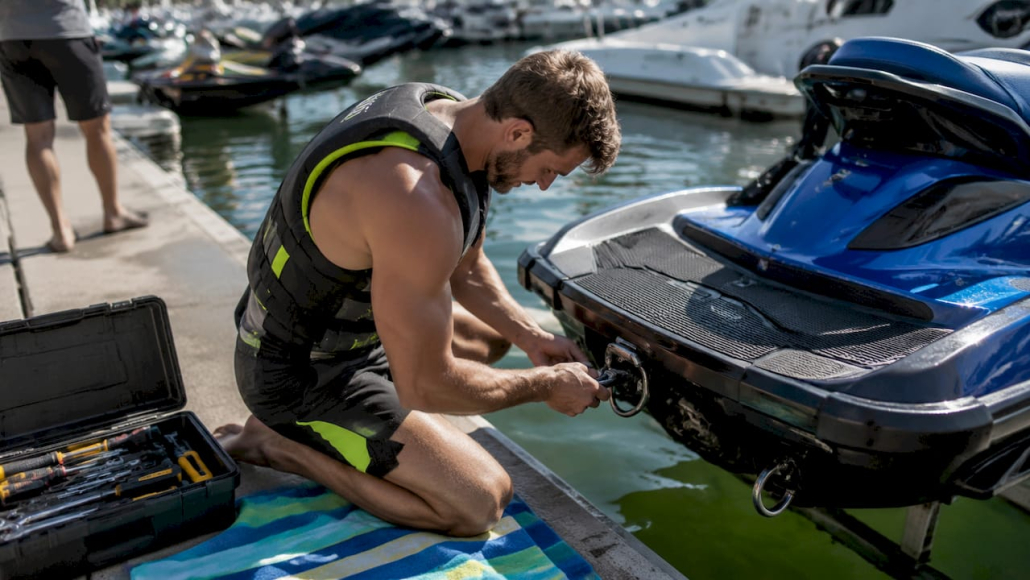
What Is a Jet Ski Sub-Hook? Rider’s Guide
A jet ski sub-hook is an informal rider term for a secondary or auxiliary attachment point on a personal watercraft, used primarily for towing ropes or securing the ski when docking. The phrase does not appear in any factory owner’s manual or OEM parts catalog. Instead, it circulates in PWC forums, accessory discussions, and rider communities as a catch-all label for hardware like tow hooks, tow taps, and mooring hooks. Understanding what this term actually refers to, and which specific fitting it describes on your model, is the first step toward using it safely and effectively.
What is a jet ski sub-hook, exactly?
A sub-hook on a jet ski is not a standardized factory term. It describes any secondary attachment point that riders use when the primary hull grip or handlebar area is not the right connection spot. In practice, the term most often refers to either a tow tap, a tow cleat, or a mooring hook depending on context and the rider using it.
The distinction matters because each fitting serves a different function. A tow tap handles the tension load of pulling a tuber or wakeboarder. A mooring hook holds a dock line when you tie up at a slip. Treating them as interchangeable is a common mistake that leads to hardware failure or rope entanglement.
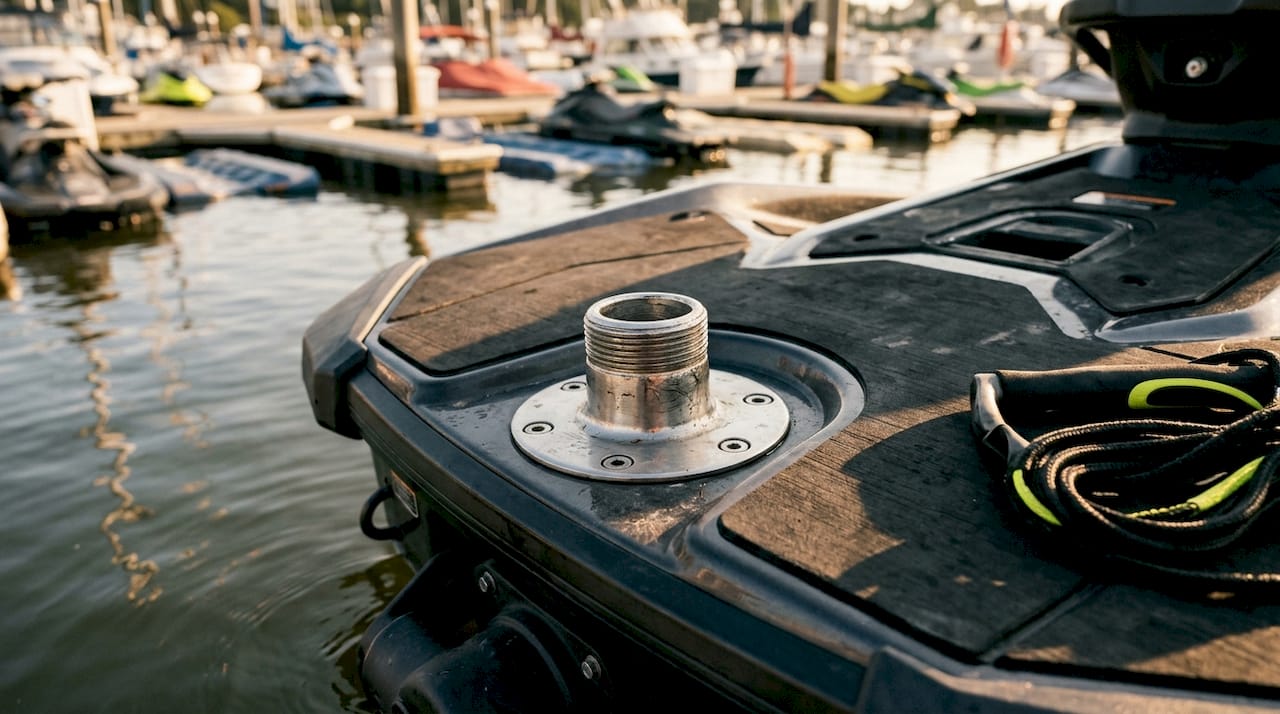
Rider and accessory discussions confirm that “sub-hook” typically means whichever secondary hook is relevant to the task at hand, whether that is a tow cleat at the rear platform or a mooring hook near the handlebars. The term varies among riders, often indicating a smaller or secondary hook used when the main tow hook is not suitable for the job.
Types and locations of sub-hooks on jet skis
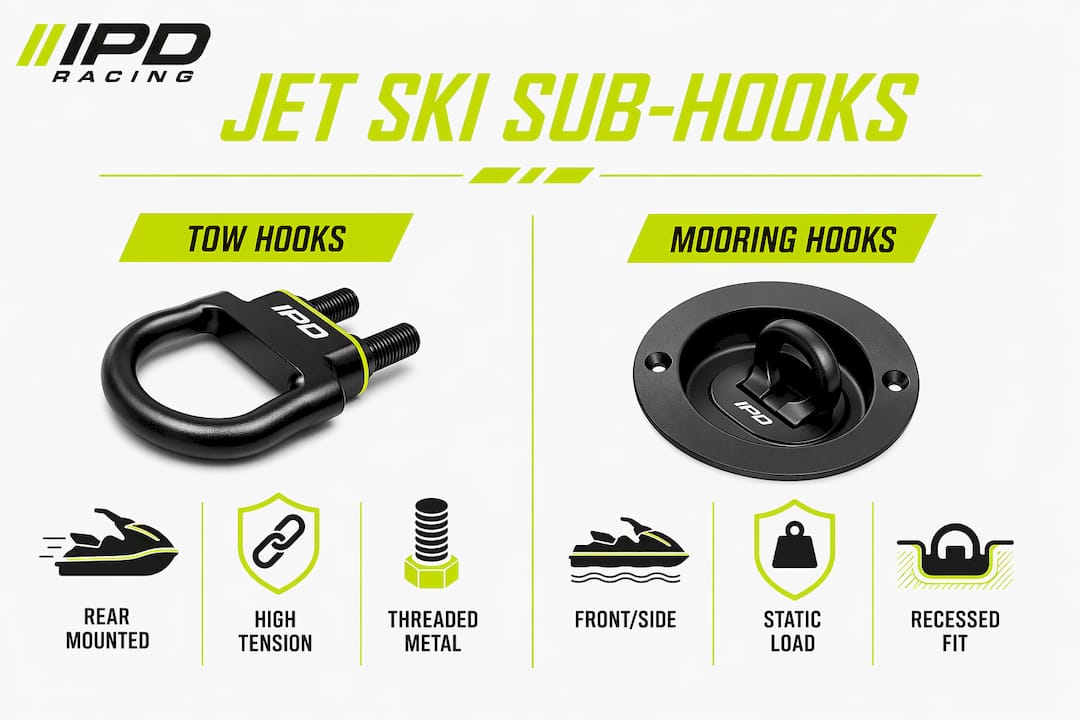
Jet ski attachment hardware falls into two primary categories: tow hooks and mooring hooks. Each has a distinct location on the watercraft and a specific load rating.
Tow hooks and tow taps sit at the rear of the ski, typically on or just above the swim platform. Tow taps are reinforced fittings designed to handle the tension from towing activities like tubing, wakeboarding, or water skiing. They are strategically placed at the rear to keep the tow rope centered and maintain balance during acceleration. The design keeps the fitting flush to the hull to prevent snagging on reboarding or storage.
Mooring hooks serve a completely different purpose. Some jet skis have specialized mooring hooks near or under the steering handlebar for docking convenience. Yamaha’s FX HO series, for example, offers a factory mooring hook position that works with bungee dock lines for quick securing at a slip. This placement keeps the bow from swinging wide when you tie up.
The table below summarizes the key differences:
| Type | Typical Location | Primary Function | Common Hardware |
|---|---|---|---|
| Tow hook / tow tap | Rear platform or transom | Towing tubes, boards, skiers | Threaded metal fitting, tow cleat |
| Mooring hook | Near handlebars or bow | Docking, securing to slip | OEM hook, bungee cleat |
| Aftermarket sub-hook | Varies by install | Secondary tow or mooring | Strap loop, bolt-on cleat |
Manufacturer differences are significant. Yamaha jet ski models like the FX series include OEM mooring hook provisions, while older stand-up models may have no factory mooring point at all. Kawasaki and Sea-Doo models each position their tow hardware differently, which affects which aftermarket parts will fit without modification.
How sub-hooks improve towing safety and docking control
Using the correct attachment point changes both safety outcomes and handling quality on the water. When you tow from a properly positioned rear hook, the rope angle stays low and centered. This geometry reduces the risk of the ski spinning sideways under load, which is a real hazard when a tuber falls and the rope goes slack then snaps taut.
Tow taps are threaded metal or reinforced fittings designed to resist tension and stay flush to prevent snagging. That flush design also means the fitting does not catch on your leg when you reboard from the water, a detail most riders overlook until it causes a problem.
Mooring hooks deliver a different kind of safety benefit. Users report better handling of dock lines with factory mooring hooks compared to improvising with handlebar wraps. A dedicated hook keeps the line from jamming around the throttle or brake lever, which is a genuine risk when you wrap a dock line around the bar in a hurry.
Here are the best practices for attaching tow ropes and mooring lines safely:
- Inspect the hook or tow tap before every session. Look for cracks, corrosion, or loose mounting hardware.
- Use only the designated tow point for towing loads. Never clip a tow rope to a handlebar, grab handle, or storage latch.
- Verify connection by tugging the rope firmly before the rider enters the water. The fitting should show zero movement.
- For mooring, use a bungee dock line or a line with a loop end that seats cleanly in the hook. Avoid knots that jam under load.
- Clear the hook of debris, sand, or salt buildup after each use. Salt corrosion is the leading cause of hook failure on coastal skis.
Pro Tip: If your ski has both a tow tap and a mooring hook, never use the mooring hook for active towing. Mooring hooks are rated for static dock loads, not the dynamic tension of pulling a rider at speed.
Installation and compatibility considerations
Adding or modifying a sub-hook on your jet ski requires more planning than most riders expect. Aftermarket mooring hooks may not fit older models, and some riders resort to strap loops or bungee cord alternatives when OEM hardware is unavailable. Those workarounds carry real trade-offs in load capacity and long-term durability.
Hull integrity is the primary concern with any mounting modification. Drilling into the hull to install a bolt-on hook creates a potential water ingress point if the sealant fails. Modifying jet ski hardware to add sub-hooks requires considering hull integrity and manufacturer warranty implications. Using incompatible OEM parts from a different model year can stress the mounting surface and cause hairline cracks over time.
Before you purchase any aftermarket hook or tow cleat, run through this checklist:
- Confirm the part number matches your specific model year and hull configuration.
- Check whether the install location requires drilling or uses existing bolt holes.
- Verify the load rating of the fitting against the towing activity you plan to use it for.
- Review your manufacturer’s warranty terms. Some modifications void coverage on the hull.
- Source parts from a supplier that stocks model-specific hardware, such as the ProWatercraft accessories line, which covers a range of PWC fitments.
Pro Tip: Always cross-reference your owner’s manual and consult your dealer before drilling or bolting any new hardware to the hull. A five-minute call can prevent a costly repair.
How to safely attach ropes to jet ski sub-hooks
Attaching a tow rope or dock line correctly takes less than two minutes when you know the process. The steps below apply to both rear tow hooks and mooring hooks, with notes on where the process differs.
- Select the right rope for the job. Polypropylene ropes float and work well for towing tubes or boards. Nylon dock lines stretch slightly and absorb shock, making them better for mooring.
- Thread the rope through or around the hook according to the fitting’s design. Most tow taps use a loop-over method. Mooring hooks typically accept a snap hook or loop end.
- Use quick connect systems and bridles designed for jet skis to reduce attachment time and improve safety. A bridle distributes load across two points and reduces lateral pull on the ski.
- Confirm the rope cannot slip off the hook under slack conditions. A rope that seats loosely will release when tension drops suddenly.
- Signal the rider in the water before accelerating. Sudden starts with a loose connection are the most common cause of rope separation accidents.
The table below matches rope types to their best use cases:
| Rope Type | Best Use Case | Key Property |
|---|---|---|
| Polypropylene | Tubing, wakeboarding | Floats on water surface |
| Nylon | Mooring, dock lines | Stretches to absorb shock |
| Polyester | Ski tow, general towing | Low stretch, high strength |
| Bungee dock line | Quick mooring at slips | Elastic, easy to hook and release |
Proper rope routing through the tow hook prevents entanglement and maintains stable towing performance during turns and acceleration. A rope that crosses under the hull or wraps around the jet pump intake is a serious hazard. Always confirm the rope runs clear of the pump intake before you throttle up.
Key takeaways
A jet ski sub-hook is an informal term for a secondary attachment point, either a tow tap at the rear for active towing or a mooring hook near the handlebars for docking, and using the correct fitting for each task is the single most important safety decision you make on the water.
| Point | Details |
|---|---|
| Sub-hook is an informal term | It describes tow taps, tow cleats, or mooring hooks depending on context and model. |
| Location determines function | Rear tow hooks handle towing loads; handlebar-area mooring hooks are for docking only. |
| Model compatibility matters | OEM parts vary by year and manufacturer; confirm fitment before purchasing aftermarket hardware. |
| Rope selection affects safety | Match rope type to the activity: polypropylene for towing, nylon for mooring. |
| Inspect before every session | Check for corrosion, cracks, and loose mounts to prevent in-water hardware failure. |
What riders get wrong about sub-hooks
Most riders I talk to assume any hook on the ski can handle any load. That assumption is wrong, and it is the source of most tow-related incidents I have seen on the water. A mooring hook rated for a static dock line will deform or pull free under the dynamic load of a 200-pound rider on a tube at 25 mph. The physics are not complicated, but the consequences are.
The other misconception is that improvised solutions are fine for occasional use. Wrapping a tow rope around a grab handle or clipping it to a storage latch might hold once. It will not hold consistently, and it will fail at the worst possible moment. The jet ski racing safety gear community has documented this pattern repeatedly: improvised attachment points fail under repeated load cycles even when the initial connection feels solid.
What I find most interesting about the sub-hook conversation is how much variation exists between model years. A 2019 Yamaha FX HO and a 2024 version of the same ski have different mooring hook provisions. Riders who upgrade or buy used skis often inherit hardware configurations they do not fully understand. Taking 20 minutes to read the hardware section of your owner’s manual and cross-reference it with your actual fittings is time well spent. It tells you exactly what you have, what it is rated for, and what you are missing.
— Casey
Upgrade your jet ski hardware at Ipdracing
Ipdracing stocks a full range of jet ski accessories and performance parts for riders at every level, from recreational towing setups to competition-grade hardware. Whether you need a replacement tow tap, a mooring hook kit, or a complete towing bridle system, the Ipdracing shop carries model-specific options across major PWC brands.
Ipdracing also carries the ProWatercraft line of accessories, which includes docking hardware and towing components built for PWC-specific load requirements. Every product is sourced for fit, function, and durability. If you are unsure which fitting works for your model year, the Ipdracing team can point you to the right part before you buy.
FAQ
What does “sub-hook” mean on a jet ski?
Sub-hook is an informal rider term for a secondary attachment point on a jet ski, typically a tow tap at the rear or a mooring hook near the handlebars. The term is not used in factory documentation but is common in PWC forums and accessory discussions.
Can i use a mooring hook for towing a tube or wakeboarder?
No. Mooring hooks are rated for static dock line loads only and are not designed to handle the dynamic tension of active towing. Always use a dedicated rear tow hook or tow tap for pulling riders.
How do i know if my jet ski has a factory sub-hook?
Check your owner’s manual under the towing or accessories section. Models like the Yamaha FX HO series include OEM mooring hook provisions, while older or stand-up models may require aftermarket installation.
What rope type works best with a jet ski tow hook?
Polypropylene rope is the standard choice for towing tubes and boards because it floats and stays clear of the jet pump intake. For mooring, use a nylon or bungee dock line that absorbs shock and seats cleanly in the hook.
Is it safe to install an aftermarket sub-hook myself?
It can be safe if you use a model-compatible part, follow the manufacturer’s installation instructions, and avoid drilling into structural hull areas. Consult your dealer and review warranty terms before any modification to confirm the install will not compromise hull integrity.

