
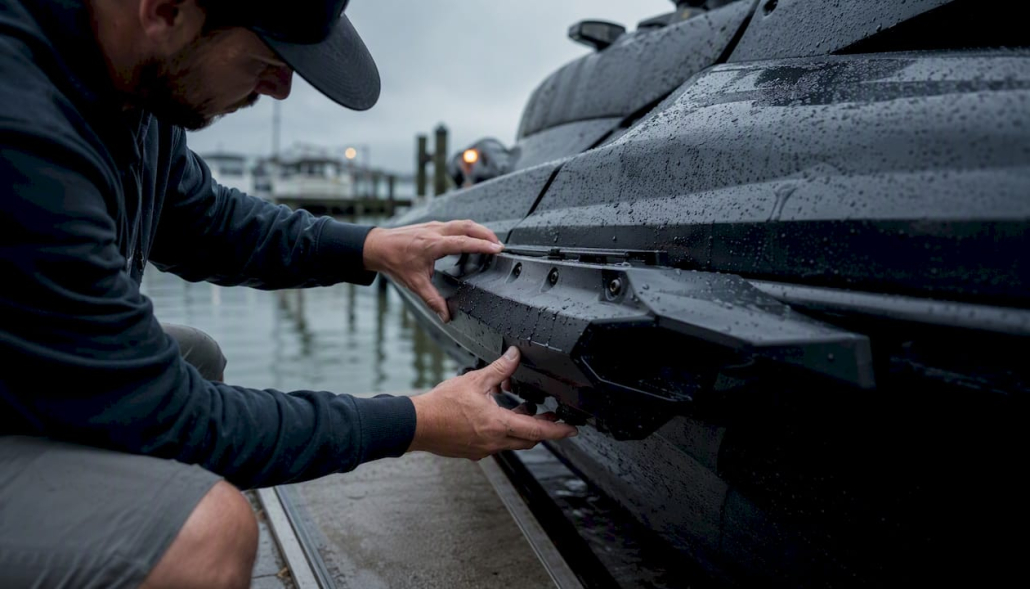
Sponson Function Explained for Watercraft and PWC Riders
A sponson is a fixed or mounted projection extending from the side of a hull, aircraft fuselage, or vehicle body, and its core job is to add stability and buoyancy while shaping how the craft moves through water, air, or terrain. On boats and personal watercraft, that means more lateral stability, less porpoising, and sharper cornering. The mechanics rely on basic hydrodynamics: added surface area changes lift, drag, and where a hull pivots, and it also shifts the metacentric height (GM) that governs how a vessel resists rolling. IPD Racing builds and sells performance sponsons for exactly this reason: small shape and placement changes produce outsized handling gains.
Here’s what sponsons primarily do, across nearly every application:
- Increase lateral stability and buoyancy by adding displaced volume at the sides of a hull or fuselage.
- Reduce porpoising and bow rise by keeping the front end planted during acceleration.
- Improve corner “bite,” giving the rider a predictable pivot point instead of a sliding, unpredictable turn.
- Provide mounting points or storage space, particularly on military and land vehicles where buoyancy is not the goal at all.
Key Takeaways
Sponson function comes down to one mechanical fact: added hull surface changes lift, lateral grip, and pivot point, and every design choice trades some of one benefit for another.
| Point | Details |
|---|---|
| Core function | Sponsons add stability, buoyancy, and lift while shaping where a hull pivots in a turn. |
| Type matters | Block, winged, blade, and inflatable sponsons each optimize for a different mix of stability and grip. |
| Tuning rule | Change one variable, mounting height, offset, or blade angle, at a time and test before adjusting again. |
| Trade-off to expect | More bite and stability usually cost some top speed and can stiffen low-speed handling. |
| Where to start | IPD Racing’s ProWatercraft handling parts offer sponson options across major PWC brands for riders ready to tune. |
Table of Contents
- What Is Sponson Function on Boats and PWCs?
- What Are the Common Types of Sponsons?
- How Do Sponsons Work on Aircraft?
- What Do Sponsons Do on Land and Military Vehicles?
- How Do Shape and Placement Change Sponson Performance?
- What Are the Benefits and Trade-offs of Adding Sponsons?
- What Does Research Say About PWC Sponson Tuning?
- How Have Sponsons Evolved Over Time?
- How Do You Maintain Sponsons for Long-Term Durability?
- Why Sponson Function Matters More Than Riders Assume
- Ready to Upgrade Your PWC’s Handling?
- Frequently Asked Questions
- Sources
What Is Sponson Function on Boats and PWCs?
The key claim is simple: sponsons add planing surface and lift that keeps the bow down, cuts porpoising, and relocates where the craft rotates in a turn. A personal watercraft without sponsons tends to skip and slide through a hard turn because the hull has less surface gripping the water on the outside edge. Add a sponson, and that outside edge suddenly has something to push against.
Three mechanisms explain most of what riders feel on the water:
- Added planing surface. More wetted area at the rear quarters means the hull rises onto plane faster and holds that lift more consistently at speed.
- Angled leading edges that behave like small wings. A sponson’s leading edge generates lift as water flows across it, which is why shape changes at the nose of the sponson matter more than most riders expect.
- Vertical blades acting like rudders. These bite laterally into the water, resisting the sideways slide a hull wants to do mid-turn.
On a small runabout, the difference shows up mostly at acceleration. The bow stays down instead of rising and slapping. On a PWC, the difference is sharper: cornering changes from a wide, sliding arc to a tight pivot, because the added lift and running surface at the rear changes both planing behavior and where the hull wants to rotate. A labeled diagram showing sponson mounting points relative to the hull’s chine and rocker line makes this far easier to visualize than text alone, and it’s worth sketching out before you buy or swap parts.
What Are the Common Types of Sponsons?
Not every sponson does the same job, and matching the shape to your riding style matters more than brand loyalty. Four shapes cover most of what’s on the market:
- Block sponsons are the simplest design, adding basic lift and stability with minimal shaping. They’re stable but blunt in feel.
- Winged or hooked sponsons curve or “hook” at the trailing edge, which sharpens corner grip and gives the rider a defined pivot point.
- Blade or rudder-style sponsons use a vertical fin for sharp lateral bite, favored by racers who want aggressive, tunable handling.
- Inflatable or safety sponsons add temporary buoyancy, often used on smaller craft or as an emergency stability aid rather than a performance upgrade.
Each option trades something for something else. Block shapes are forgiving and cheap but don’t offer much tuning range. Winged and blade designs deliver real performance gains but demand more careful installation and add complexity if something needs adjusting mid-season.
| Type | Primary function | Typical craft |
|---|---|---|
| Block | Basic lift and stability | Recreational runabouts, entry-level PWCs |
| Winged/hooked | Corner grip, defined pivot point | Performance PWCs, freestyle riders |
| Blade/rudder | Sharp lateral bite, fine tuning | Race-class PWCs |
| Inflatable | Temporary buoyancy, safety margin | Small boats, emergency stability |
How Do Sponsons Work on Aircraft?
On seaplanes and amphibious aircraft, sponsons increase buoyancy, add lateral stability while sitting or taxiing on water, and often house fuel, retracted landing gear, or fairings that would otherwise sit exposed. Early flying boats used sponsons to keep wingtips clear of the water during takeoff runs, letting the hull ride higher and reduce drag at the critical moment of lift-off, a role the aircraft literature on sponsons still references as one of the design’s earliest practical uses.
The trade-off on aircraft is aerodynamic. A sponson shaped purely for water stability can add drag or disturb airflow once the craft is airborne, so designers test shapes carefully to avoid destabilizing flight. That balancing act, buoyancy on the water against clean airflow in the sky, is why aircraft sponsons go through far more wind-tunnel and float-tank testing than a typical boat fitting.
What Do Sponsons Do on Land and Military Vehicles?
Here the meaning shifts entirely. On land and military platforms, a sponson usually refers to a projection carrying weapons, armor plating, or an observation post rather than anything related to buoyancy.
- Gun mounts. Early tanks and armored vehicles used side sponsons as fixed positions for cannons or machine guns.
- Storage or crew stations. Enclosed sponson compartments have housed ammunition, equipment, or an extra crew position on larger armored vehicles.
- Protection over tracks or wheels. Sponson-style armor plating shields vulnerable running gear from small-arms fire.
Don’t conflate this with the marine role. A general definition of sponson covers both uses, but the function couldn’t be more different: one keeps a boat upright, the other protects a crew or mounts a weapon. Modern armored vehicle design has moved away from the term somewhat, but the projections themselves, now often called side skirts or hull extensions, still serve similar armor and mounting purposes.
How Do Shape and Placement Change Sponson Performance?
Small changes in placement and angle affect pivot point, grip, and porpoising behavior more than raw size does. A larger sponson bolted in the wrong spot can perform worse than a smaller one placed correctly relative to the hull’s rocker line.
A few variables drive most of the difference:
- Leading edge camber. More curve at the front edge increases lift earlier in the acceleration curve.
- Blade camber versus a flat vertical blade. Cambered blades bite more aggressively; flat blades track straighter and feel more neutral.
- Block height. Taller blocks add lift sooner but can also add drag once the craft is fully on plane.
- Fore-and-aft mounting location. Moving a sponson even an inch forward or backward relative to the hull’s rocker can shift the pivot point noticeably.
Material choice affects both performance and longevity. Reinforced plastics and molded composites are common on stock PWC sponsons because they balance weight and stiffness. Fiberglass and aluminum show up more often on aftermarket and race parts, where stiffness under load and resistance to impact matter more than shaving grams. Stiffer materials transmit more feedback to the rider but wear differently over time, so the “best” material depends on whether you’re racing or cruising.
Pro Tip: Change one variable at a time, whether that’s blade angle, mounting height, or fore/aft position, and test each change in calm water before stacking another adjustment on top. Sponson tuning compounds fast, and if you change three things at once, you won’t know which one actually fixed or broke your handling.
What Are the Benefits and Trade-offs of Adding Sponsons?
Sponsons improve handling and safety in most cases, but they aren’t free. More wetted surface means more drag, which can shave a little off top speed. Oversized or overly aggressive blade sponsons can make a hull feel stiff and twitchy at low speed, particularly for a rider who isn’t used to that much bite.
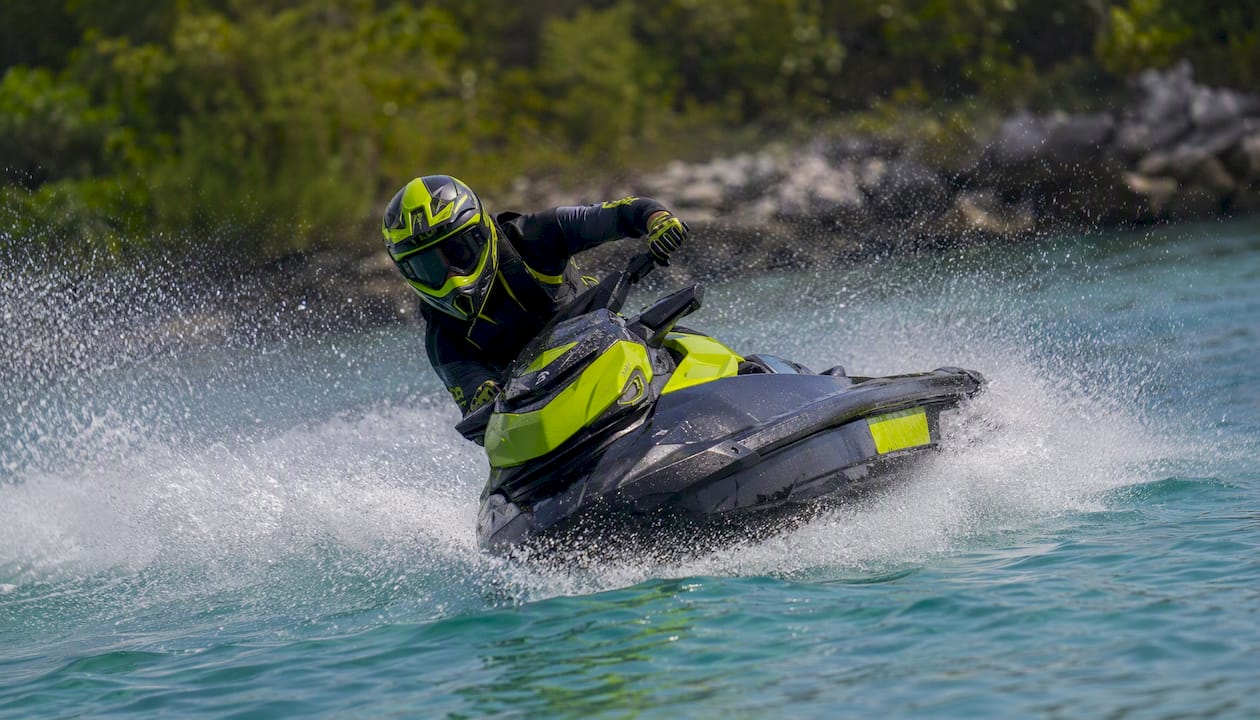
The upside list is real: better stability, less porpoising, and sharper, more predictable cornering. The downside list deserves equal attention: increased side drag, a possible top-speed penalty, and unpredictable behavior if a sponson is installed off-angle or mismatched to the hull.
A few safety habits matter more than most riders realize:
- Torque mounting hardware to the manufacturer’s spec, not by feel.
- Check metal mounting points for galvanic corrosion, especially where aluminum sponsons meet stainless hardware in saltwater.
- Test any new sponson setup at moderate speed in calm water before pushing it hard.
High-performance sponson setups, especially blade-style or heavily hooked designs, should go on with professional mounting and alignment. A sponson installed a few degrees off-square can make a fast PWC feel unpredictable exactly when you need it most, in a hard turn at speed.
What Does Research Say About PWC Sponson Tuning?
Properly designed and correctly positioned sponsons are among the most consequential handling components on a modern PWC, and they can be tuned to change both pivot behavior and corner characteristics in ways an engine or exhaust upgrade never will. Documented effects include reduced porpoising, raised lift at the rear of the hull, sharper corner bite, and a pivot point that advanced sponson design can actually relocate to wherever the rider wants it. Vertical blade height and angle largely determine how much lateral grip you get versus how twitchy the craft feels off-throttle.
A practical tuning checklist for riders working through adjustments:
- Start with mounting height, since it affects both lift and drag before anything else changes.
- Adjust fore/aft offset next, since this shifts the pivot point relative to your body weight and riding stance.
- Fine-tune blade angle last, since it has the most direct effect on cornering bite.
- Record water conditions, speed, and rider feedback after each change so you can trace what actually caused an improvement.
Pro Tip: Tune for a predictable pivot point, not maximum bite. A craft you can predict under load, corner after corner, will out-lap one that feels aggressive for a single hot lap but turns unpredictable once you’re tired or the water gets choppy.
How Have Sponsons Evolved Over Time?
Sponsons started as a purely functional fix on early 20th-century vessels and flying boats, blunt, block-shaped additions meant to keep a hull from tipping or a float plane’s wingtip from catching water on takeoff. Military engineers adapted the same side-projection concept for tank turret mounts and gun positions well before recreational boating manufacturers gave the shape any real attention.
Personal watercraft changed that trajectory. As PWCs moved from slow, stable recreational craft into genuine racing platforms through the 1980s and 1990s, manufacturers realized that sponson shape directly controlled cornering behavior, not just stability. That shift pushed design from flat, blocky lift aids toward winged, hooked, and blade profiles engineered for a specific pivot point and grip level. What used to be an afterthought bolted to the hull became one of the most tunable parts on a race-ready PWC, and aftermarket sponsons are now designed with the same attention to camber and angle that hull builders once reserved for the chine and rocker line alone.
How Do You Maintain Sponsons for Long-Term Durability?
Sponsons take repeated impact, abrasion, and saltwater exposure, so they wear differently depending on material and riding conditions. Composite and reinforced plastic sponsons hold up well against minor impacts but can crack under sustained stress if a mounting bolt works loose and lets the sponson flex against the hull. Aluminum and fiberglass units resist that kind of fatigue better but need regular checks for corrosion, especially at bolt holes where dissimilar metals meet.
A short maintenance routine catches most problems before they become failures:
- Inspect mounting hardware every few outings for looseness, since a slightly loose sponson flexes and accelerates wear at the mounting points.
- Rinse aluminum and metal-hardware sponsons with fresh water after every saltwater run to slow galvanic corrosion.
- Check leading edges and blade tips for chips or gouges from debris strikes, since a damaged leading edge changes lift characteristics.
- Replace worn mounting gaskets or seals promptly. A small gap lets water intrude and can loosen the whole assembly over time.
Why Sponson Function Matters More Than Riders Assume
Most riders treat sponsons as a set-and-forget accessory, something you bolt on once and never think about again. That’s the wrong way to look at them. A sponson is closer to a suspension component on a car: it’s constantly working, constantly loaded, and small changes to it change how the whole craft behaves.
What gets underestimated is how much placement matters compared to size. Riders often assume a bigger sponson equals more stability, when in practice a smaller sponson mounted a half-inch differently along the hull’s rocker line can outperform a larger one bolted in a generic spot. That’s not intuitive, and it’s exactly why incremental, one-variable-at-a-time testing beats guessing every time.
The other underrated point is that sponson tuning is really about predictability, not raw grip. A hooked, aggressive sponson that bites hard in every turn sounds appealing until you’re tired on lap fifteen and the same aggressiveness turns unpredictable. IPD Racing’s approach to handling parts reflects that priority: build components that let a rider trust the craft’s behavior first, then chase outright bite once the fundamentals are dialed in.
Ready to Upgrade Your PWC’s Handling?
If everything above made you realize your current sponsons are either stock, mismatched, or just old, IPD Racing carries performance sponsons and handling parts built for exactly the kind of incremental tuning this article covers, without the guesswork of piecing together mismatched aftermarket parts from multiple sellers.
Whether you’re chasing sharper corner bite for racing or just want a more predictable ride on choppy water, the ProWatercraft handling parts collection covers block, winged, and blade-style sponsons across major PWC brands. Riders looking for race-proven components can check the Watercross of Texas performance parts lineup, built specifically for competitive handling demands. If you’re also planning engine work alongside handling upgrades, pairing sponson tuning with marine ECU tuning is worth understanding, since power delivery and hull handling interact more than most riders expect. This isn’t a sponsored product review, just a practical next step for anyone ready to move from reading about sponson function to actually tuning one. Browse the current handling parts inventory and find the sponson style that matches your riding goals.
Frequently Asked Questions
What is sponson function on a boat or PWC?
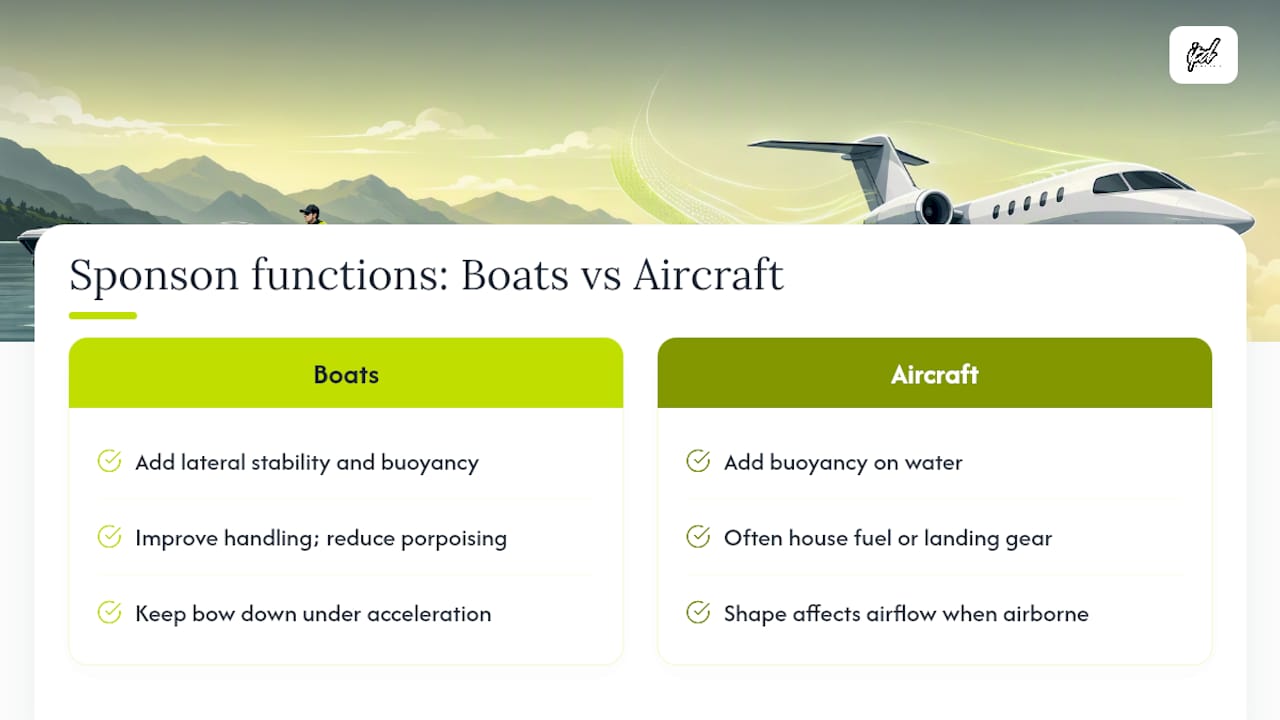
A sponson’s function is to add lateral stability and buoyancy while improving handling. It reduces porpoising, keeps the bow down under acceleration, and gives the hull a defined pivot point in turns.
How do sponsons work differently on aircraft versus boats?
On boats, sponsons mainly manage stability and cornering. On aircraft, they add buoyancy on water and often house fuel or landing gear, with far more attention paid to how the shape affects airflow once the craft is airborne.
Do sponsons slow down a PWC?
Added wetted surface can cost a small amount of top speed, but the trade-off usually favors better cornering and stability, which matters more for most riders than a marginal top-speed loss.
What sponson type is best for racing?
Blade or rudder-style sponsons offer the sharpest, most tunable lateral bite, which is why they’re common on race-class PWCs, though they require more careful setup than block-style designs.
How often should I inspect my sponsons?
Check mounting hardware every few outings, rinse metal components after saltwater use, and inspect leading edges for chips after any hard impact with debris.
Sources
- Sponson
- Gallery: Understanding Fluid Dynamics In Relation to Superior Sponson Design – The Watercraft Journal
- sponson definition – Cambridge Dictionary
- Autopaintrepairs

