

PWC Free-Riding vs Recreational Riding: Key Differences
Free-riding is performance and freestyle focused; recreational riding is built for leisure and cruising. That single distinction drives everything else: which craft you buy, how you move your body on the water, and how much risk you’re managing on any given day. IPD Racing works with both crowds daily, and the gap between a Sea-Doo RXP-X owner chasing tighter carves and a family running a Yamaha FX Cruiser out to a sandbar is bigger than most new buyers expect.
- Primary objective: free-riding chases speed, tricks, and aggressive handling; recreational riding prioritizes comfort, stability, and passenger space.
- Typical craft and power: freeride machines often exceed 200 horsepower with performance hulls; recreational models usually run 90 to 180 horsepower with wider, more forgiving hulls.
- Skill and safety implications: freeride requires active throttle control and weight-shift skill; recreational riding demands less technique but still carries real off-throttle steering risk.
If you’re new to PWCs or riding mostly with family, start recreational and build skill before touching performance hardware. If you already ride confidently and want more responsiveness under you, free-riding (and the parts that support it) is where progression naturally leads.
Key Takeaways
Free-riding demands performance craft and active technique; recreational riding prioritizes comfort and requires far less specialized skill to ride safely.
| Point | Details |
|---|---|
| Define your style first | Decide whether you want performance carving or relaxed cruising before shopping for a craft. |
| Match craft to category | Choose Rec-Lite or Recreation for leisure use, Performance for free-riding, based on the horsepower ranges covered above. |
| Prioritize off-throttle awareness | Practice throttle control drills since most PWCs lose steering the moment you release the throttle. |
| Master weight-shift before upgrading | Learn inside-lean carving and standing stance on stock hardware before adding sponsons or engine mods. |
| Sequence your upgrades | Add handling parts like sponsons and footholds first; IPD Racing’s parts catalog is built around that same progression. |
Table of Contents
- What Do PWC Free-Riding and Recreational Riding Actually Mean?
- Which PWC Models Fit Each Riding Style?
- How Does Riding Technique Differ Between the Two Styles?
- What Safety Rules Apply to Free-Riding and Recreational Riding?
- How Do You Choose Between a Recreational and Free-Ride PWC?
- Which Parts Actually Change Handling When You Move Toward Free-Riding?
- Why IPD Racing Cares About Both Riding Styles
- Ready to Upgrade Your Ride? Here’s Where to Start
- Frequently Asked Questions
- Sources
What Do PWC Free-Riding and Recreational Riding Actually Mean?
Free-riding refers to performance-oriented riding: carving hard turns, chopping the throttle to snap the bow around, launching wake jumps, and pushing a craft’s handling limits. It overlaps with freestyle riding and borders on the skills used in competitive PWC racing, though most free-riders never race. The goal is control at speed, not just speed itself.
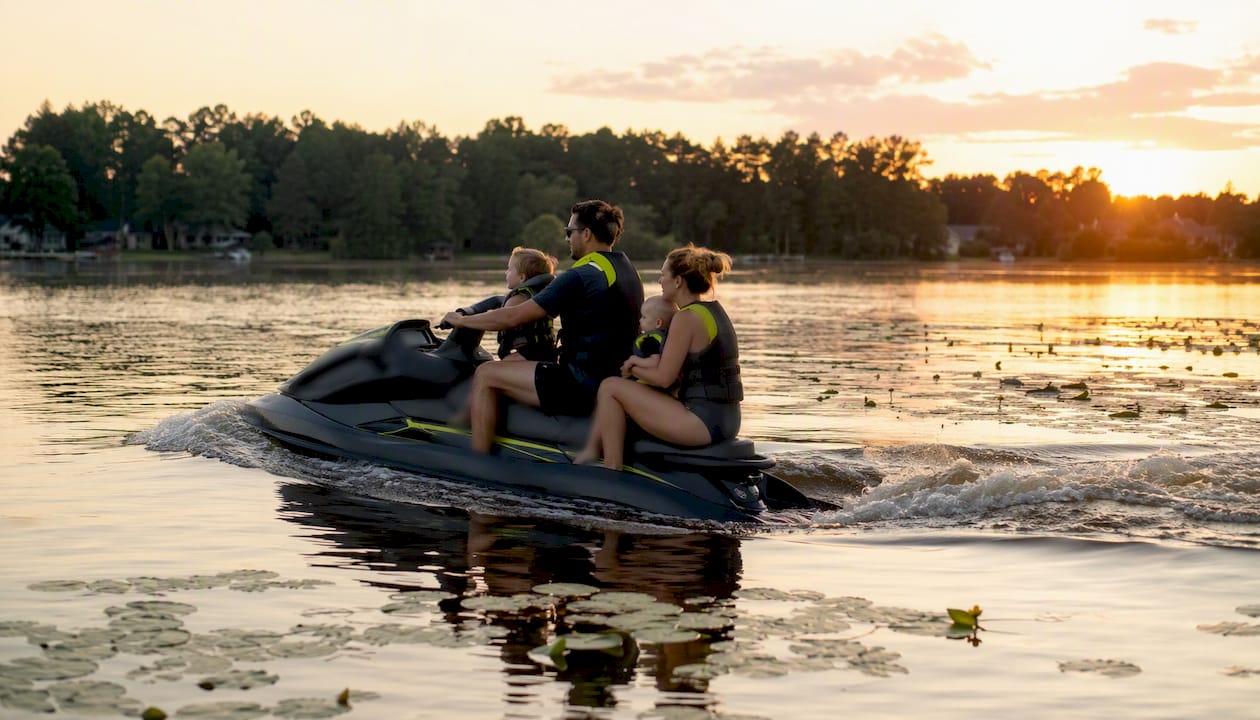
Recreational riding covers everything else most owners actually do: cruising a lake, towing a tuber, running to a restaurant dock, or taking the kids out for an hour. There’s no scoring, no trick attempts, and no need to push the hull past its comfort zone.
A typical free-ride session looks like laps around a cove, working on tighter turn radius and standing through chop. A typical recreational day looks like a slow cruise, a stop to swim, then a tow-sport run with a passenger in back. Riders who want to develop technique or eventually compete gravitate toward free-riding. Riders who want low-stress family time, fishing access, or long-range touring stay recreational, often for the craft’s entire ownership life.
Which PWC Models Fit Each Riding Style?
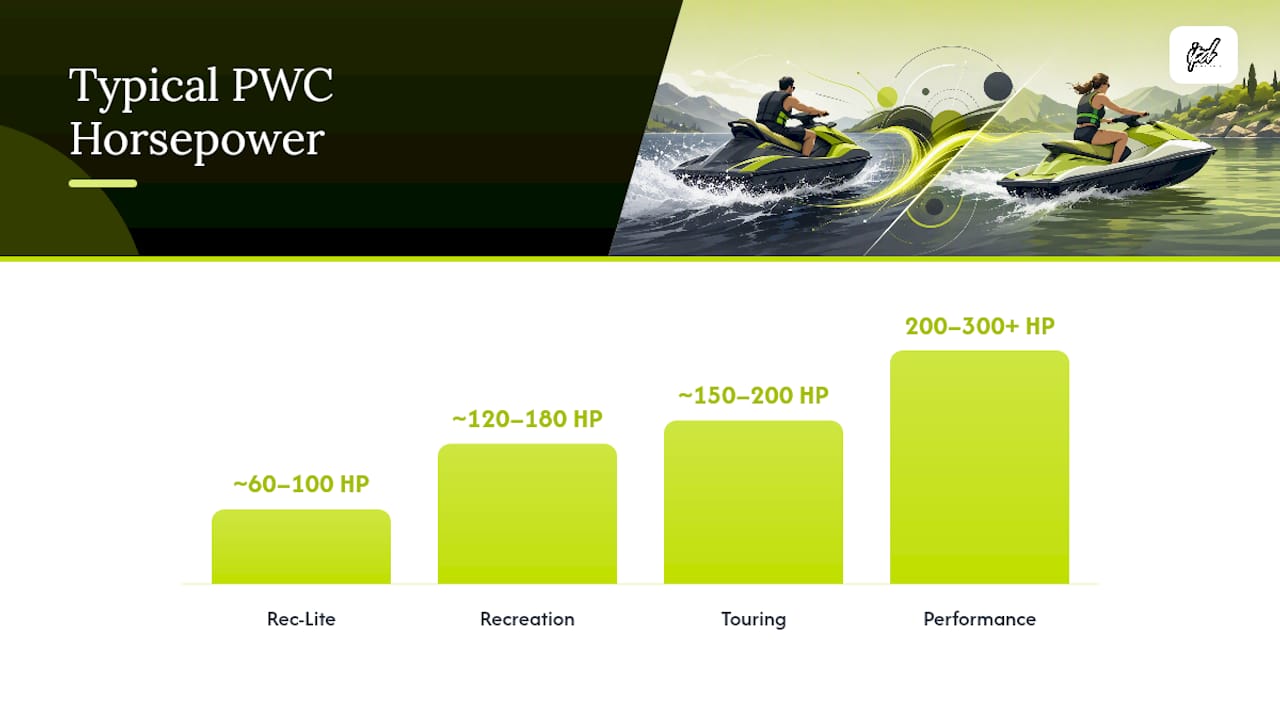
Manufacturers split personal watercraft into categories that map almost directly onto these two riding styles. Sea-Doo’s own buying guide breaks the market into Rec-Lite, Recreation, Touring, and Performance lines, each built around a different use case rather than a one-size-fits-all hull.
Rec-Lite models typically have lower horsepower and top speeds suited for lighter use, while Recreation models offer moderate power with more storage and comfort. Performance machines provide the highest horsepower with features aimed at aggressive handling and acceleration, as detailed by Boattest’s PWC buyer’s guide. Stand-up models continue as a niche category focused on freestyle and competition.
Beyond horsepower, a few features separate the styles more than the spec sheet suggests:
- Hull length and sponsons change how sharply a craft carves and how it handles rough water.
- Adjustable trim and nozzle settings let free-riders fine-tune bow angle for acceleration versus top speed.
- Brake and reverse systems vary widely; some older and entry-level models rely entirely on water resistance to slow down.
- Storage and seating matter far more for recreational and touring riders hauling gear or passengers.
Pro Tip: If you’re shopping used, ask specifically whether the model has an intelligent brake/reverse system. It changes low-speed handling more than almost any other single feature.
| Category | Best For | Typical HP Range | Core Handling Features |
|---|---|---|---|
| Rec-Lite | New riders, light day use | ~60–100 HP | Lightweight hull, easy handling, lower cost |
| Recreation | Family outings, general cruising | ~120–180 HP | Balanced stability, more storage, moderate speed |
| Touring | Long-range trips, multiple passengers | ~150–200 HP | Extra storage, comfort seating, fuel range |
| Performance | Free-riding, aggressive carving | 200–300+ HP | Sport hull, sponsons, adjustable trim/nozzle |
| Stand-up | Freestyle, competition | Varies widely | Lightweight, athletic handling, no seat |
How Does Riding Technique Differ Between the Two Styles?
Free-riding demands active weight-shift, a standing or partial-standing stance, and throttle-on steering through every turn. Recreational riding stays mostly seated, with gentle throttle inputs and a relaxed body position. That difference in body mechanics is the real skill gap between the two styles, more than horsepower ever is.
- Set up the carve early. Look through the turn before you enter it, not at the water in front of the bow.
- Chop the throttle briefly on entry. A short reduction plants the bow into the water for a tighter arc, then reapply throttle to hold the line, a technique detailed in PWC riding and turning techniques.
- Shift weight to the inside of the turn. Lean your hips and shoulders in, not just your head.
- Stand through rough water. A partial crouch absorbs chop far better than sitting rigid in the seat.
- Reapply throttle smoothly. Jerky throttle inputs unsettle the hull mid-turn and cost you the line.
Riders new to freeride technique commonly make two mistakes. The first is releasing the throttle entirely during an unexpected wake or near-miss, which kills steering on most jet-drive craft at exactly the wrong moment. The second is tunnel vision, locking focus on the turn ahead and losing 360-degree awareness of other boats and riders.
Small inside-lean adjustments and foot placement can change a hull’s cornering behavior more than most riders realize. Recreational riders rarely need this level of input. Free-riders can’t ride well without it.
Pro Tip: Practice throttle-on steering drills in open, empty water before you ever try to carve near a shoreline or dock. Muscle memory here is what keeps you safe when a turn goes wrong.
What Safety Rules Apply to Free-Riding and Recreational Riding?
A PWC counts as a boat under most jurisdictions’ boating laws, which means lifejacket requirements, minimum age rules, no-wake zone limits, and operator education mandates all apply regardless of which style you ride. Free-riding adds an extra layer: many waterways specifically restrict freestyling to gazetted or designated zones.
Two PWC-specific risks matter more than most new riders expect. Off-throttle steering loss is the big one: releasing the throttle on a jet-drive craft removes your primary steering input, a mechanical reality confirmed across manufacturer guidance on how to drive a personal watercraft. The second is perceived speed. Water offers far less visual reference than pavement, so 30 mph on a PWC feels deceptively manageable until you need to react.
Local regulations back this up with real restrictions. Transport WA’s PWC rules, for example, require a Recreational Skipper’s Ticket, set minimum operator ages, and ban freestyling outright in many river areas except designated zones. Rules like this vary by state and country, so check your local marine authority before assuming freestyle riding is allowed where you launch.
Run through this before any session:
- Confirm your operator certification or boater education card meets local requirements.
- Wear a properly fitted lifejacket, every time, regardless of riding style.
- Check throttle and kill-switch function before leaving the dock, since turning and stopping fundamentals depend on both working correctly.
- Know your craft’s brake and reverse capability; not all models have it.
- Scan 360 degrees continuously, especially before attempting any carve or trick.
How Do You Choose Between a Recreational and Free-Ride PWC?
Match the craft to your actual skill level, riding environment, passenger needs, and budget, in that order. Buying a 300-horsepower performance hull before you can comfortably control a Recreation-class model is the single most common expensive mistake new owners make.
Run through this checklist before buying or upgrading:
- Skill level: Can you already carve confidently and recover from off-throttle situations?
- Riding environment: Open lake and calm bay favor recreational hulls; tighter coves and wake-heavy water reward performance handling.
- Passenger count: Regularly riding with family or towing tubers points toward Recreation or Touring categories.
- Speed and acceleration goals: If top-end speed and tight cornering matter more than comfort, look at Performance models.
- Towing needs: Confirm rated towing capacity and passenger seating before assuming any craft handles tow sports well.
On a test ride, pay attention to:
- How the throttle responds at low RPM versus wide open.
- How much the hull rewards or resists weight-shift input mid-turn.
- How trim adjustments change bow angle and stability at speed.
- Whether brake and reverse feel predictable in a straight line before you try turning with it.
Which Parts Actually Change Handling When You Move Toward Free-Riding?
Upgrade only when your skills and riding habits justify the change, and start with handling components before touching the engine. A rider who can’t yet carve consistently on stock sponsons won’t benefit from an extra 20 horsepower; they’ll just go faster into the same mistakes.
Group upgrades by what they actually affect:
- Handling and stability: sponsons, hull trim tabs, and foils change how sharply and predictably a craft carves.
- Steering and braking: nozzle trim adjustments and aftermarket reverse/brake components improve low-speed control, building on the trim fundamentals that shape acceleration and ride feel.
- Acceleration and top speed: impellers, intake modifications, and exhaust upgrades push performance ceilings higher.
- Rider controls: footholds and handlebar upgrades improve grip and stance during standing maneuvers.
Match any upgrade to your specific hull and model, and favor reversible modifications when you’re still experimenting with your riding style. IPD Racing sells parts across these categories built for common Sea-Doo, Yamaha, and Kawasaki hulls, so compatibility checks are straightforward once you know your model year.
Pro Tip: Add sponsons and footholds before you touch impeller or exhaust upgrades. Handling improvements make engine power usable; engine power alone just makes mistakes happen faster.
Why IPD Racing Cares About Both Riding Styles
Every free-rider IPD Racing works with started as a recreational rider first. That progression isn’t accidental. Learning throttle control, weight-shift, and situational awareness on a forgiving Recreation-class hull builds the foundation that makes performance riding survivable, let alone fun.
The riders who get hurt aren’t usually the ones who’ve been carving for years. It’s the ones who skip straight to a high-horsepower hull without logging time on basics like off-throttle recovery and turn setup. IPD Racing’s own guide on what jet ski free-riding actually involves exists partly because that gap in understanding is so common among new buyers chasing speed too early.
Build skill first. Add handling parts second. Chase horsepower last, and only once you’ve earned it on the water.
Ready to Upgrade Your Ride? Here’s Where to Start
Whether you’re dialing in a recreational cruiser or building toward serious free-riding, the parts you choose should match the skills you actually have, not the ones you’re hoping to develop. IPD Racing carries handling and performance components for Sea-Doo, Yamaha, and Kawasaki hulls, sourced from established names like RIVA Racing, so you’re not guessing at fitment or quality.
Start with the fundamentals if you’re newer to freeride technique: IPD Racing’s tuning best practices guide walks through trim, sponson selection, and impeller basics in plain language before you spend a dollar. If you already know what your craft needs, the performance parts catalog covers engine, exhaust, and handling upgrades in one place. IPD Racing sells these parts directly and publishes the how-to content alongside them, so the guidance and the gear come from the same source. Browse the catalog and match your next upgrade to the riding style you’re actually working toward.
Frequently Asked Questions
What is the main difference between PWC free-riding and recreational riding?
Free-riding focuses on performance, carving, and trick-style maneuvers; recreational riding focuses on comfort, cruising, and passenger-friendly outings.
Do I need a special license to free-ride a PWC?
Requirements vary by location. Many jurisdictions require the same boater education or operator ticket for any PWC use, though some also restrict freestyling to specific zones, as outlined in Transport WA’s guidelines.
What does the “1/3 rule” mean for PWC trips?
It’s a general boating guideline: use roughly one-third of your fuel getting out, one-third returning, and keep one-third in reserve for wind, currents, or emergencies. It applies to both recreational and free-ride outings, especially on longer trips away from the launch point.
Can a recreational PWC be upgraded for free-riding?
Many Recreation-class hulls can accept handling upgrades like sponsons and trim tabs, but performance ceilings are limited by the hull design itself. Riders serious about free-riding often move to a Performance-class craft rather than modifying a recreational model heavily.
Is free-riding more dangerous than recreational riding?
Free-riding carries higher inherent risk due to speed, aggressive turning, and off-throttle steering loss during maneuvers. Recreational riding still requires lifejackets, situational awareness, and basic throttle control, but the risk profile is generally lower on calm, open water.
Sources
- Riding a jet ski: mastering turns and stops
- Personal water craft | Transport WA
- How to drive a personal watercraft

