
PWC Open Water Safety Gear Guide for Racers
For open-water riding, the four parts that deliver the most immediate safety and handling gains are a matched impeller and wear ring, a performance intake grate, a ride plate or hull handling kit with sponsons, and cooling or exhaust upgrades on supercharged models. This guide, written by Casey for IPD Racing, covers each part in detail so you can buy in the right order. The U.S. Coast Guard sets minimum equipment requirements for PWC operation, but what actually keeps you in control at speed is the mechanical setup underneath you.
- Matched impeller + wear ring: Correct pitch and tight ring clearance prevent cavitation and give you predictable thrust in chop.
- Performance intake grate: Directs water efficiently into the pump, reducing cavitation and improving cornering grip.
- Ride plate, sponsons, and hull handling kit: Control trim, reduce porpoising, and add predictability in rough water.
- Cooling and exhaust upgrades: On supercharged Sea-Doo and Yamaha SVHO models, heat management protects the engine during sustained open-water runs.
Key Takeaways
Pump health, matched hardware, and a supporting ECU tune are the three pillars of open-water PWC performance and control.
| Point | Details |
|---|---|
| Fix pump health first | Inspect and replace the wear ring before any other upgrade; a worn ring undermines every part downstream. |
| Match impeller pitch to your goal | Low pitch for holeshot and acceleration; high pitch for sustained open-water top-end with a supporting tune. |
| Handling upgrades before horsepower | Ride plate, sponsons, and grate changes deliver the largest real-world gains for open-water control. |
| Tune after hardware changes | Any pump or intake mod on a supercharged model requires a dyno-based ECU reflash to stay safe under load. |
| IPD Racing for fitment-verified parts | Use IPD Racing’s shop-by-model tool to confirm impeller, wear ring, grate, and ride plate fitment before buying. |
Table of Contents
- What does a PWC open water safety gear guide actually cover?
- How do you choose the right open-water parts for your model?
- What are the model-specific upgrade priorities?
- What does a pre-ride maintenance checklist look like?
- What do open-water upgrades typically cost?
- What experienced riders know that most guides skip
- Race-proven open-water parts at IPD Racing
- Sources
What does a PWC open water safety gear guide actually cover?
Open-water performance is a systems problem. Every part in the pump and hull works together, and upgrading one without considering the others often produces disappointing results.
Impeller and wear ring
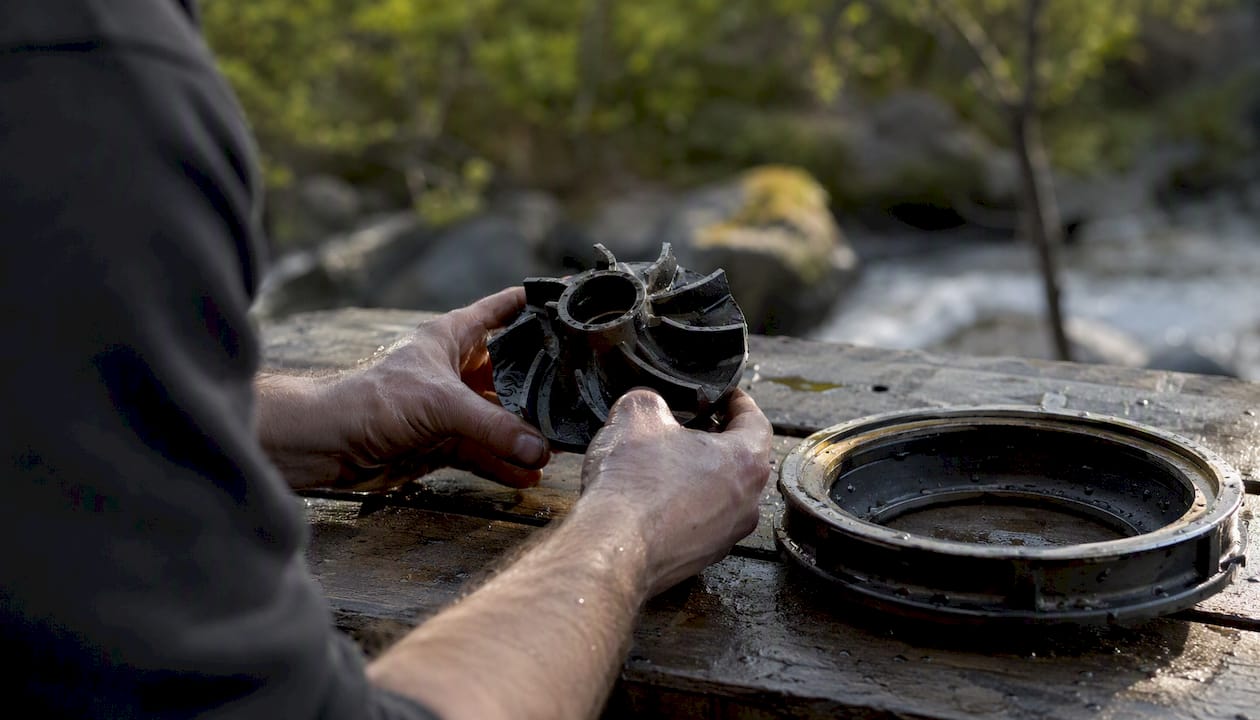
Pump geometry and wear-ring condition are frequently the real cause of perceived engine sluggishness. A worn wear ring allows water to bypass the impeller blades, cutting thrust and creating unpredictable cavitation at speed. Inspect ring play before spending money anywhere else.
Impeller pitch determines whether you favor holeshot or top-end speed. Low pitch increases acceleration and reduces cavitation at lower RPM; high pitch favors top-end but can overstress bearings if the engine spends most of its time below the powerband. Match pitch to your engine tune and your typical riding goal.
Performance intake grates
Aftermarket intake grates improve handling and reduce cavitation by directing water to the top of the pump, but they can add drag in very calm water. Choose grate geometry based on your usual conditions: aggressive multi-bar designs for choppy open water, more conservative profiles for flat-water or mixed-use riding.
Ride plate, sponsons, and hull handling kits

Ride plates change how the hull sits in the water. A lower plate angle reduces porpoising in chop and improves straight-line tracking. Sponsons add lateral grip in corners. Competitive builders swap ride plates and shims between drag and closed-course setups because small plate changes affect handling more than most power additions do. ProWatercraft and Watercraft Werks both produce model-specific handling kits that include plates, sponsons, and mounting hardware.
Exhaust, cooling, and ECU tuning
Supercharged models (Sea-Doo RXP-X, Yamaha SVHO, Kawasaki Ultra) run hot during sustained open-water runs. Intercooler upgrades and freer-flow exhaust systems reduce heat soak and protect the engine. A professional ECU remap with high-flow intake and a matched impeller unlocks measurable top-speed gains and improved throttle response. Dyno-based tuning with wideband data logging is the safest way to change fuel and ignition maps after any hardware modification.
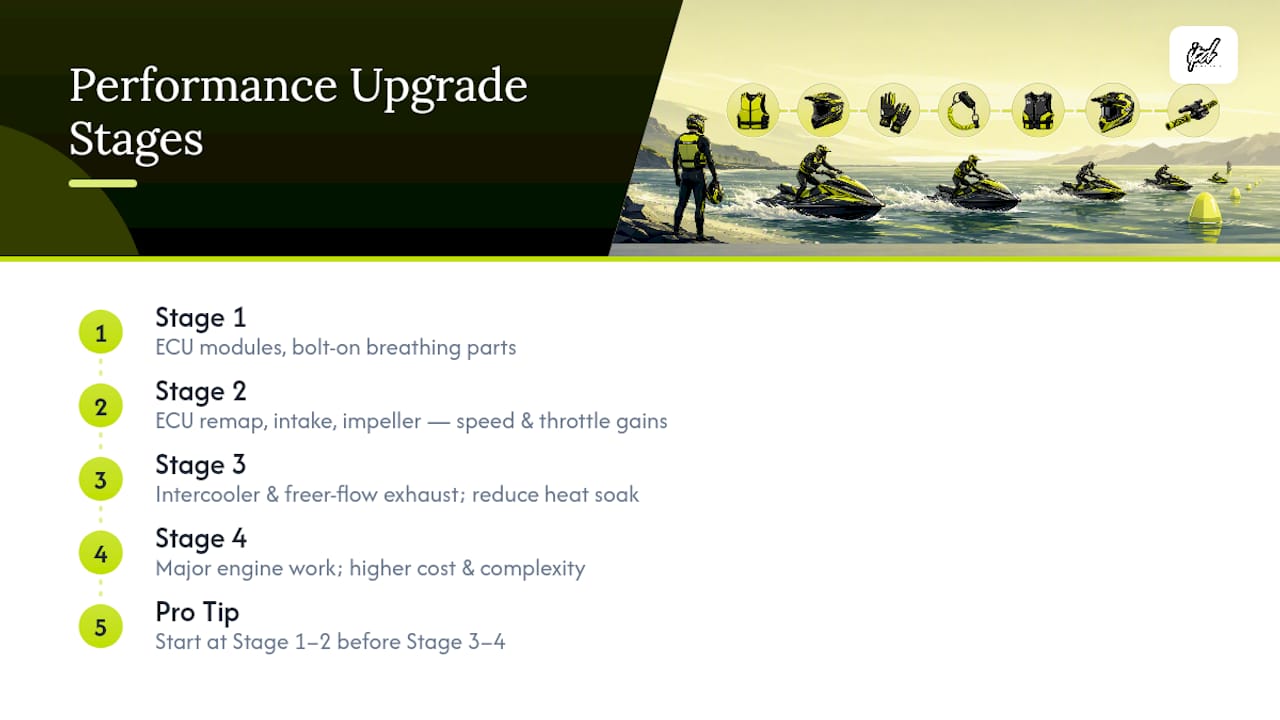
Pro Tip: PWC performance kits are staged from Stage 1 (ECU modules, bolt-on breathing parts) through Stage 4 (major engine work). Start at Stage 1 or 2 before committing to Stage 3–4 costs and complexity.
How do you choose the right open-water parts for your model?
Use this decision flow before placing any order:
- Inspect the wear ring first. Check for play and scoring. If it’s worn, replace it before any other pump work.
- Decide pump vs. hull first. If your ski tracks poorly in chop, hull handling changes come before pump mods.
- Match impeller pitch to your goal. Racing holeshot needs lower pitch; sustained open-water cruising favors higher pitch with a supporting tune.
- Choose your environment. Salt water demands corrosion-resistant stainless or composite parts. Debris-heavy freshwater environments favor grates with tighter bar spacing.
- Plan the tune after hardware. Any pump or intake change on a supercharged model needs a supporting ECU reflash. DIY reflashes without dyno verification risk unsafe air-fuel ratios under sustained load.
- Confirm fitment by serial and engine code. Year, model, and engine variant all affect which impeller, wear ring, and grate fit correctly. Use IPD Racing’s shop by model tool to verify before buying.
Pro Tip: Pairing an intake grate upgrade with an impeller change and ride-plate adjustment yields better results than doing any single mod in isolation. System-level coordination is what produces reliable, repeatable gains.
OEM parts carry full manufacturer warranty coverage and are guaranteed to fit. Aftermarket performance parts from brands like RIVA Racing, JC Racing, WSM, ProForce, and ProWatercraft typically offer better performance at comparable or lower cost, but warranty implications vary. Confirm return and warranty policies before ordering, especially for ECU-related products.
What are the model-specific upgrade priorities?
| Platform | Common Weak Points | First Upgrades to Consider |
|---|---|---|
| Sea-Doo RXP-X / RXT-X | Wear ring wear at high RPM, heat soak on supercharged models | Wear ring, matched stainless impeller, intercooler |
| Sea-Doo GTX / GTI | Stock intake grate limits pump loading | Performance intake grate, ride plate |
| Yamaha SVHO | Stock impeller pitch conservative for open water | Higher-pitch impeller, intake grate, ECU tune |
| Yamaha non-supercharged (EX, VX) | Hull handling in chop | Ride plate, sponsons |
| Kawasaki Ultra | Ride plate and trim for open-water stability | Ride plate shims, sponsons, steering nozzle |
| Polaris (legacy models) | Pump seal and wear ring degradation | Wear ring, pump rebuild kit, intake inspection |
RIVA Racing carries fitment-specific kits for Kawasaki, Sea-Doo, and Yamaha. WSM produces rebuild and wear components for most platforms. For Yamaha-specific parts, IPD Racing’s Yamaha product page lists current fitment-verified inventory.
- Confirm your hull serial number and engine code before ordering any pump part.
- Salt-water riders should specify marine-grade stainless impellers and apply anti-seize to all pump fasteners.
- Polaris legacy models have limited aftermarket support; source OEM wear components through WSM or verified rebuild kits.
What does a pre-ride maintenance checklist look like?
Protecting upgraded parts requires consistent inspection. Use these steps before every open-water outing.
- Wear ring: Grab the impeller shaft and check for radial play. Any detectable movement means replacement is due. Inspect visually for scoring or cracking.
- Intake grate: Look for bent bars, embedded debris, or corrosion at mounting points. A partially blocked grate starves the pump and causes cavitation.
- Ride plate and sponsons: Check mounting hardware for looseness. Saltwater corrosion attacks fasteners faster than most riders expect; re-torque and re-apply anti-seize every 10–15 hours.
- Cooling system (supercharged models): Inspect intercooler hoses for cracks or soft spots. Check oil cooler connections. Confirm coolant flow by running the engine briefly at the dock and watching for steady water discharge.
- Fasteners and hull: Inspect all pump and hull hardware with a torque wrench at the start of each season and after any hard impact. Use stainless fasteners with anti-seize in salt-water environments.
Pro Tip: Keep a maintenance log tied to engine hours, not calendar months. Impeller and wear ring wear correlates with hours under load, not time sitting in the garage.
What do open-water upgrades typically cost?
Stage 1 kits typically sit at the low end of that range; Stage 3–4 packages with dyno time and custom ECU mapping reach $6,000 or more depending on platform. Lead times for model-specific ECU reflashes vary by tuner availability. Budget an extra one to three days for dyno scheduling on supercharged platforms.
- Aftermarket installs may affect OEM powertrain warranty coverage. Check your manufacturer’s policy before ordering.
- Custom dyno sessions add $200–$600 to the total cost of any ECU-related upgrade, but they are the safest way to verify air-fuel ratios after hardware changes.
What experienced riders know that most guides skip
The most common mistake in open-water PWC upgrades is buying horsepower before fixing handling. A mismatched impeller on a ski with a worn wear ring and a stock ride plate will feel slower and less predictable than a properly set-up stock ski. The pump has to be healthy before any other upgrade pays off.
The second mistake is skipping the ECU tune after pump and intake changes. Hardware modifications on modern, electronically restricted PWCs shift the operating parameters the factory map was built around. Running a modified pump setup on a stock map is not a performance strategy; it’s a reliability risk, especially during sustained open-water runs where heat and load accumulate.
Handling-first upgrades consistently deliver the largest real-world gains. Race teams often change only a few parts between formats: ride plate shims, sponson position, and tune. That discipline applies equally to open-water riding. A ski that tracks straight, resists porpoising, and puts power down cleanly is faster and safer than one with more peak horsepower and a loose hull setup.
For a broader look at protective gear and race-day preparation, the jet ski racing safety gear list at IPD Racing covers rider equipment alongside mechanical readiness.
Race-proven open-water parts at IPD Racing
IPD Racing stocks fitment-verified performance parts for Sea-Doo, Yamaha, Kawasaki, Polaris, and other platforms, sourced from race-proven brands including RIVA Racing, JC Racing, WSM, ProForce, ProWatercraft, and Watercraft Werks. Every product category on the site is organized by make, model, and year so you buy the correct part the first time.
Start with the Hot Products performance parts page for high-demand impellers, intake grates, and ride plates, or go straight to the shop by model tool to filter by your specific hull and engine. For tuning resources and dyno-ready upgrade workflows, the PWC tuning best practices guide walks through the full process from wear ring inspection to ECU reflash.
Sources
- Double-Edged Sword: Building a PWC For Both Drags & Closed Course – The Watercraft Journal | the best resource for JetSki, WaveRunner, and SeaDoo enthusiasts and most popular Personal WaterCraft site in the world!
- Throttle Response & Jet Pump Tuning – How to Get the Most Out of Your PWC
- Are the"performance" water intake grates worth it? | Sea-Doo Forum

