
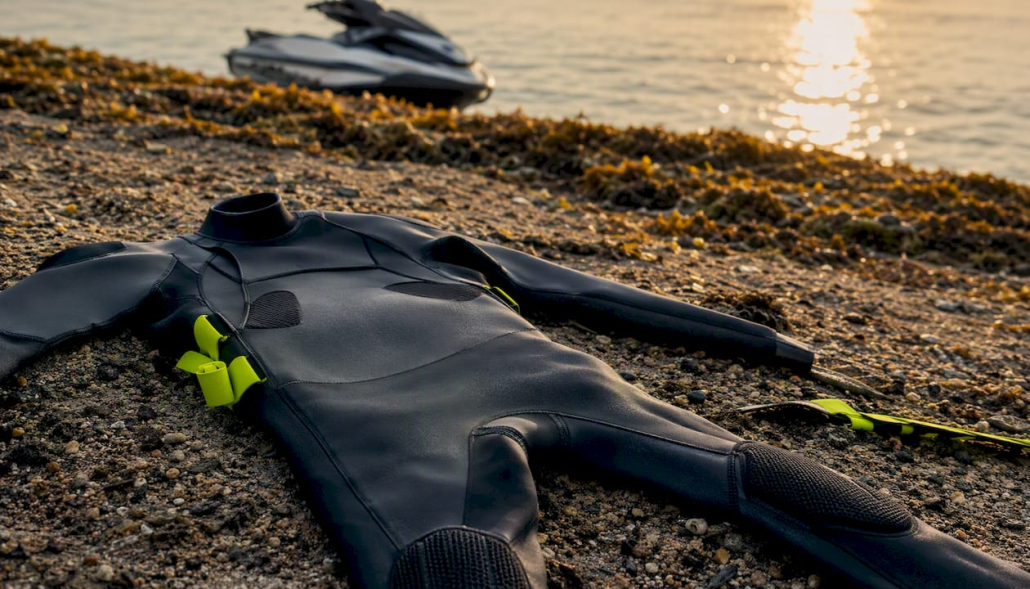
PWC Freeride Wetsuit Options: Rider’s Buying Guide
For freeride PWC riding, the IPD Racing ProForce and ProWatercraft ride-suit lines are top recommendations, built specifically for the mobility, wind-chill protection, and abrasion resistance that high-speed jet ski use demands. If you need a budget entry point, a PWC-specific Long John or 2-piece John-plus-ride-jacket combo under $150 covers the basics. For cold-water or extended sessions, a premium PWC fullsuit above $250 with sealed seams and thermal lining is worth the investment.
When selecting any freeride ride suit, three criteria matter most:
- Fit: Snug across the torso and shoulders without restricting arm rotation or cutting circulation at the wrists
- Targeted neoprene thickness: Thicker panels (3–4mm) at the torso for thermal protection; thinner, high-stretch panels (1.5–2mm) at the arms and shoulders for mobility
- Reinforced panels: Seat, knees, and shins need abrasion-resistant material for repeated contact with the PWC seat and hull
A wetsuit designed for surfing is not a substitute for a PWC-specific ride suit. Wind chill at speed, repeated seat contact, and the need for unrestricted handlebar reach make PWC-optimized design a practical safety consideration, not just a preference.
Table of Contents
- What wetsuit styles work best for freeride PWC?
- Which features matter most in a freeride wetsuit?
- Which specific options should you consider?
- How should a freeride wetsuit fit on a PWC rider?
- How do you care for a PWC wetsuit between sessions?
- Why does PWC-specific wetsuit design change safety and comfort?
- How long does a PWC wetsuit last?
- How do suit materials compare beyond standard neoprene?
- What impact protection features matter for freeride falls?
- Key Takeaways
- The detail most riders skip when buying a freeride suit
- IPD Racing ride suits: built for freeride from the start
- Useful sources and product references
What wetsuit styles work best for freeride PWC?
PWC wetsuits differ from surf suits in one critical way: you spend most of your time seated at speed, exposed to wind, not paddling through water. That changes which style actually performs.
| Style | Coverage | Mobility | Wind Protection | Best For |
|---|---|---|---|---|
| Long John (sleeveless) | Torso + legs | Excellent arm freedom | Moderate | Warm water, short sessions |
| 2-piece (John + ride jacket) | Full body | Good | High | Variable temps, longer rides |
| Full suit | Full body | Moderate | Highest | Cold water, extended freeride |
| Springsuit (short arms/legs) | Partial | Excellent | Low | Hot weather, mild conditions |
Long John / John: The Long John leaves arms fully free, which suits freeride riders who need unrestricted reach for steering and tricks. Core warmth is solid; arm exposure is the trade-off.
2-piece combo: Pairing a John with a ride jacket gives you layering flexibility. You can remove the jacket when temps rise and add it back for early-morning cold. This is the most versatile setup for riders who ride across seasons.
Full suit: Maximum thermal protection and the best wind-blocking coverage. Mobility is reduced compared to a John, but modern high-stretch neoprene narrows that gap considerably. The right choice for water temperatures below 60°F or sessions lasting more than two hours.
Springsuit: Fine for hot summer days in warm water, but avoid it for high-speed freeride in open water. Wind chill at 40–50 mph drops perceived temperature fast, and a springsuit offers almost no protection against it.
- Avoid surf-only springsuits for any freeride session involving sustained high-speed exposure or repetitive falls
- A surf suit’s panel map prioritizes paddle mobility, not seated-position wind blocking or seat-contact reinforcement
Which features matter most in a freeride wetsuit?
Neoprene thickness and placement
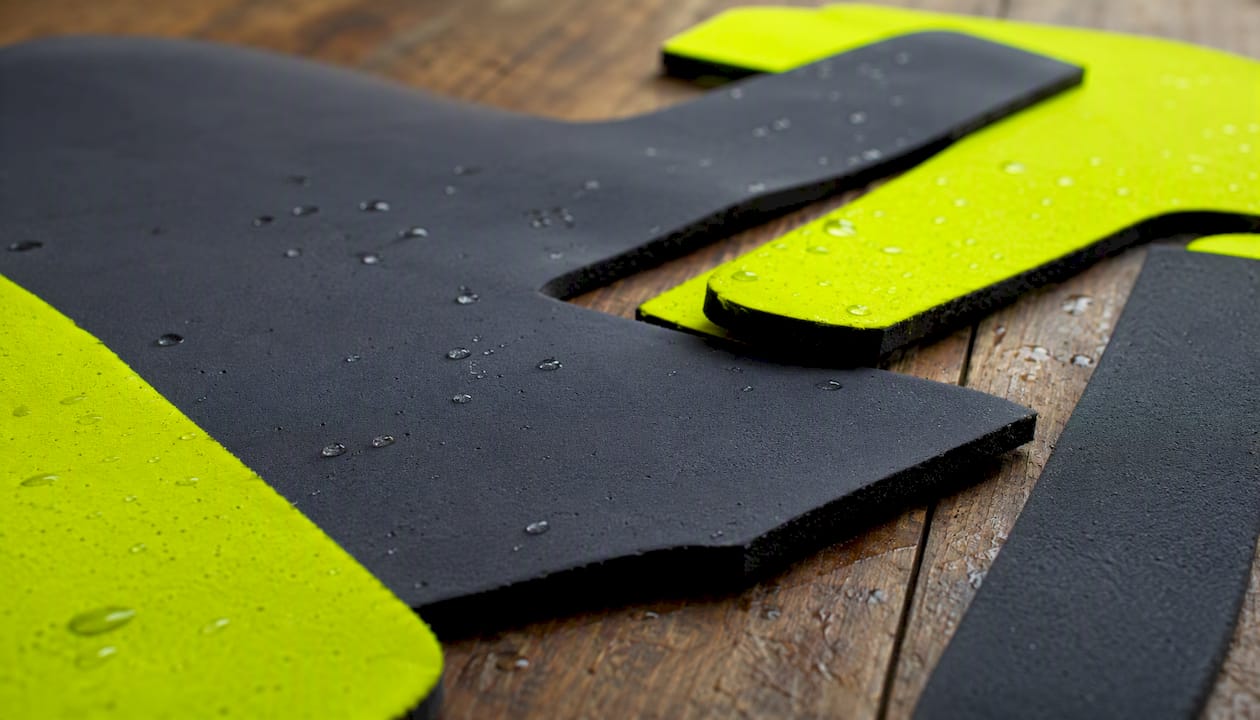
Neoprene traps a thin layer of water that your body warms, so thickness directly controls how much heat you retain. For PWC freeride, the standard recommendation is 2–4mm depending on conditions. The key is where that thickness sits.
| Body Zone | Recommended Thickness | Reason |
|---|---|---|
| Torso (chest/back) | 3–4mm | Thermal core protection, wind blocking |
| Shoulders/arms | 1.5–2mm | Handlebar reach, trick execution |
| Seat/thighs | 3–4mm | Abrasion resistance, impact cushion |
| Knees/shins | 3–4mm reinforced | Repeated hull contact |
Seam construction
Seam type determines both warmth and durability. Glued-and-blind-stitched (GBS) seams are the baseline for PWC suits. Taped or glued-and-fused seams add a layer of waterproofing and structural strength that matters when you’re falling repeatedly or riding in cold water. Advanced seam construction reduces water ingress and adds durability in exactly the conditions freeride riders encounter.
Entry systems
Back-zip suits are easy to get on and off, which matters after a long session. The trade-off is a seam running down the spine that can allow water flushing at speed. Shoulder-entry and zip-free designs improve shoulder mobility and reduce flushing risk, but they require more careful patterning to seal properly. Zip-free and shoulder-entry systems increase stretch and warmth while reducing zipper bulk, making them a strong choice for trick-focused riders.
Reinforced and drainage panels
Seat and knee panels in abrasion-resistant material extend suit life significantly in PWC use. Some suits also incorporate drainage ports or channels in the lower legs to shed water weight after a fall, keeping the suit lighter and more comfortable through a full session.
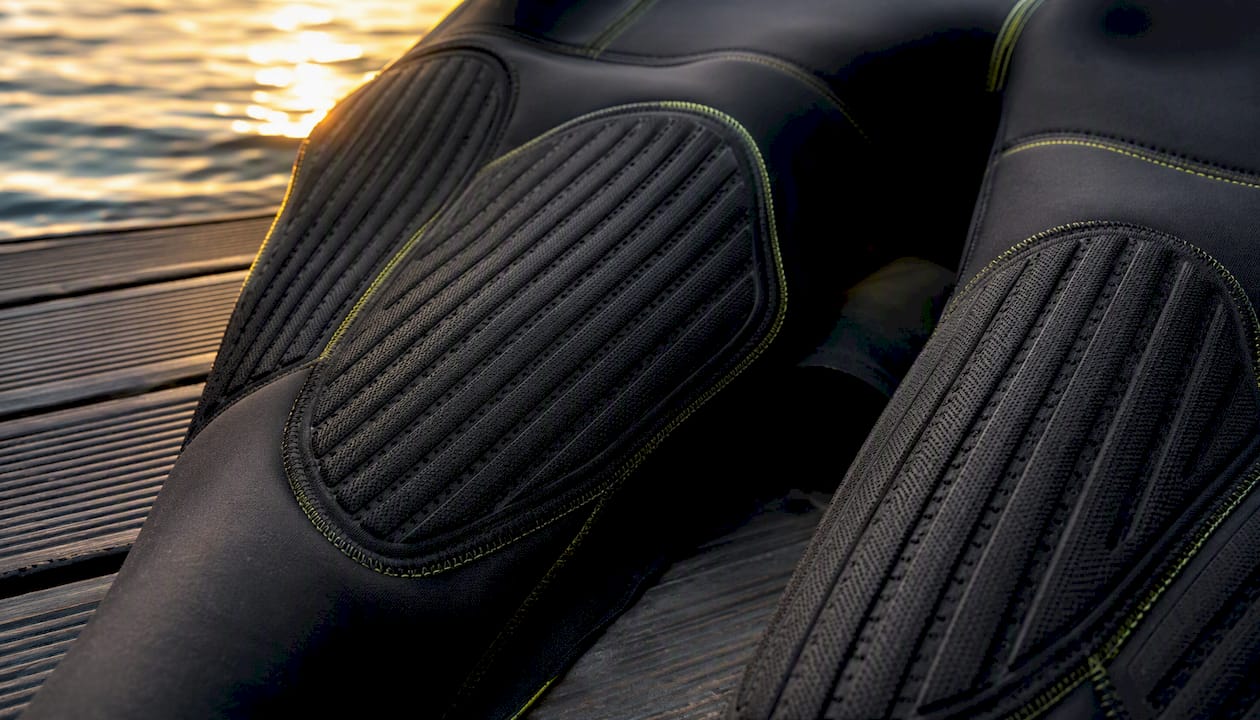
Statistic callout: PWC riders commonly select suits with thicker torso panels and thinner arm panels, reflecting the practical standard for freeride conditions across U.S. water temperatures.
Which specific options should you consider?
IPD Racing ProForce and ProWatercraft ride suits
The IPD Racing ProForce and ProWatercraft ride-suit offerings are built for PWC freeride use from the ground up. The design targets mobility at the shoulders and arms while maintaining core thermal protection and reinforced seat/knee panels for repeated hull contact. These suits sit in the mid-to-premium price band and are the first option to check for riders who want a ride-ready PWC suit without adapting a surf or dive design.
Budget category: PWC John or 2-piece under $150
At this price point, expect standard neoprene (petroleum-based), GBS seams, and basic reinforcement at the seat. Brands like Jettribe and JetPilot offer PWC-specific Johns and 2-piece combos in this range with correct panel maps for seated riding. You get the right style and basic protection; premium stretch and sealed seams are the main upgrades you sacrifice.
Mid-range: PWC fullsuit $150–$250
Suits from Slippery Wetsuits (Breaker Pro) and general surf-brand alternatives like the O’Neill Reactor II fall here. The Reactor II uses FluidFlex neoprene for improved stretch, though it is not PWC-specific in its panel map. The Slippery Breaker Pro is designed for PWC use with reinforced panels and a wind-blocking exterior. At this price, expect better seam construction and more targeted stretch zones than the budget tier.
Premium category: PWC fullsuit above $250
Above $250, suits incorporate thermal linings, firewall-style insulation layers, and fused seam construction that deliver high warmth without a large mobility penalty. Quiksilver’s Syncro line and premium Jettribe fullsuits sit here. These suits extend your riding season into colder months and hold up better under repeated abrasion.
Pair any suit with PWC neoprene boots and gloves to complete your thermal protection system, especially for early-season or late-season riding.
How should a freeride wetsuit fit on a PWC rider?
The rule is snug but not constrictive. A suit that is too loose flushes cold water freely at speed; one that is too tight cuts circulation and reduces grip strength on the handlebars. Most riders size down slightly for a second-skin fit to minimize flushing, but over-tight suits cause their own problems.
Fit checklist before buying or ordering:
- Take chest, waist, hip, and height measurements and compare to the brand’s size chart, not a generic chart
- Perform a shoulder rotation test: raise both arms fully overhead with the suit on
- Simulate the seated riding position: sit down and check that the suit does not pull tight across the lower back or bunch at the knees
- Check wrist and ankle seals for snugness without numbness
- Confirm no excess material bunches at the armpits or behind the knees, which creates pressure points at speed
Common fit red flags:
- Suit gaps at the lower back when seated (water flushing risk)
- Restricted arm raise above shoulder height (handlebar reach problem)
- Numbness in fingers or toes within five minutes of putting the suit on
- Excess neoprene folding at the crotch or behind the knees
How do you care for a PWC wetsuit between sessions?
Rinse the suit with fresh water immediately after every session, inside and out. Salt and chlorine degrade neoprene and seam adhesive faster than almost anything else. Hang it inside out in the shade to dry, then turn it right-side out once the interior is dry.
Storage and maintenance steps:
- Store flat or on a wide padded hanger; wire hangers crease neoprene and stress seam lines over time
- Keep away from heat sources, direct sunlight, and petroleum products
- Lubricate zippers with a silicone-based product after every few sessions; never use petroleum-based lubricants
- Inspect glued seams at the start of each season and apply neoprene cement to any lifting edges before they open further
- Wash with a wetsuit-specific cleaner or very mild soap; no bleach, no standard laundry detergent
Pro Tip: If a seam starts to lift mid-season, a small tube of neoprene cement in your gear bag lets you press it back down and let it cure overnight, preventing a minor separation from becoming a full delamination by the end of the season.
Why does PWC-specific wetsuit design change safety and comfort?
Wind chill at PWC speeds is the factor most riders underestimate. At 40 mph, even 75°F air feels significantly colder on wet neoprene, and sustained exposure without wind-blocking panels accelerates heat loss from the torso. A surf suit’s smooth-skin exterior panels are placed for paddle efficiency, not seated wind exposure, which is why the panel maps differ.
Reinforced seat and knee panels address a separate problem: repeated contact with the PWC seat and hull during tricks, falls, and re-mounting. Material and reinforcement choices directly change abrasion resistance and suit longevity in these high-contact zones. A suit without reinforcement in these areas wears through in a single season of active freeride use.
PWC-specific design is not a marketing distinction. Wind panels, thickness mapping, and reinforced contact zones each address a real physical condition that a standard surf suit does not account for.
IPD Racing’s safety gear guidance positions the ride suit as part of a complete protective system alongside impact vests, helmets, and boots. A wetsuit alone is not a complete safety solution for freeride riding.
How long does a PWC wetsuit last?
A well-maintained PWC suit typically lasts three to five seasons of regular use. The failure points are predictable: seam delamination at high-flex zones (shoulders, knees), zipper failure from salt corrosion, and neoprene compression loss at the seat and torso panels.
PWC conditions accelerate wear compared to surfing because of repeated seat contact, frequent falls, and the abrasive texture of most PWC seat covers. Cover material and reinforcement choices in seat-contact zones are the single biggest factor in how long a suit survives active freeride use. A suit with standard neoprene at the seat may show visible wear within one season; a reinforced panel suit holds up considerably longer.
Zipper care is the other major lifespan factor. A corroded or stiff zipper stresses the surrounding neoprene every time you open and close it. Consistent silicone lubrication after each session extends zipper life by multiple seasons.
How do suit materials compare beyond standard neoprene?
Standard petroleum-based neoprene is the baseline. It is durable, widely available, and cost-effective, but it is heavier and less flexible than newer alternatives.
Limestone neoprene (used in suits like the O’Neill Hyperfreak Fire) is produced from calcium carbonate rather than petroleum. It is lighter, softer, and more flexible out of the box, and it retains those properties longer as the suit ages. The trade-off is a higher price point.
Thermal linings (Firewall, ThermoFlex, and similar proprietary systems) add an insulating layer inside the neoprene that traps heat more efficiently than bare neoprene alone. Thermal linings and sealed seam construction increase warmth while retaining workable flexibility, which is why premium suits can deliver 4/3mm warmth in a suit that moves closer to a 3/2mm.
For freeride riders, limestone neoprene in the shoulder and arm panels is a meaningful upgrade. It reduces the resistance you feel when reaching for the handlebars or executing tricks, and it holds its stretch properties through more compression cycles than standard neoprene.
What impact protection features matter for freeride falls?
Falls at PWC speeds involve water-surface impact, hull contact, and sometimes equipment contact. A wetsuit’s neoprene provides baseline cushioning, but the thickness and panel placement determine how much protection you actually get.
Reinforced panels at the seat, knees, and shins absorb the most common impact zones. Some PWC-specific suits add a thin foam or impact-absorbing layer in the seat panel. This is distinct from a full impact vest, which is a separate piece of gear. The IPD Racing safety gear checklist treats the wetsuit and impact vest as separate, complementary components of a complete protective system.
For freeride riders performing tricks or riding in competitive conditions, wearing an impact vest over or under the wetsuit adds meaningful protection that neoprene alone cannot provide.
Key Takeaways
For freeride PWC riders, the right wetsuit combines a PWC-specific panel map, targeted neoprene thickness (3–4mm torso, 1.5–2mm arms), reinforced seat and knee panels, and an entry system that preserves shoulder mobility.
| Point | Details |
|---|---|
| PWC suits differ from surf suits | Wind panels, reinforced seat zones, and thickness mapping address seated riding conditions a surf suit ignores. |
| Thickness placement matters | Use 3–4mm at the torso and seat; keep arms at 1.5–2mm to preserve handlebar reach and trick mobility. |
| Fit is snug, not tight | Size for a second-skin fit to minimize water flushing at speed; over-tight suits reduce grip and endurance. |
| Maintenance extends lifespan | Rinse with fresh water after every session, lubricate zippers, and repair seams early to reach three to five seasons of use. |
| IPD Racing ProForce/ProWatercraft | IPD Racing’s ride-suit lines are built for PWC freeride use and are the recommended first stop for a ride-ready suit. |
The detail most riders skip when buying a freeride suit
Most wetsuit buying guides focus on thickness and price. Those matter, but the single most overlooked spec in freeride PWC wetsuit selection is the panel cut for the seated position. A suit that passes every standing mobility test can still restrict your lower back rotation and handlebar reach the moment you sit down on the PWC. That restriction is not just uncomfortable; it affects your reaction time and control during high-speed maneuvers.
The surf industry builds suits for a paddling and standing position. PWC freeride is a seated, forward-leaning, high-speed activity. The shoulder yoke angle, the lower-back panel length, and the seat-panel reinforcement are all different requirements. Riders who buy surf suits and wonder why they feel restricted on the water are not buying the wrong thickness. They are buying the wrong pattern.
That is why PWC-specific brands and lines like IPD Racing’s ProForce and ProWatercraft exist as a separate category, not just a marketing distinction. The geometry is genuinely different, and it shows the first time you push the suit through a hard turn or a re-mount after a fall.
IPD Racing ride suits: built for freeride from the start
Riders who want a suit designed around PWC freeride conditions rather than adapted from a surf or dive pattern have a direct option at IPD Racing. The ProForce and ProWatercraft ride-suit lines are built for the seated, high-speed demands of freeride riding, with reinforced seat and knee panels, targeted neoprene thickness mapping, and shoulder mobility that holds up through a full session of tricks and turns.
IPD Racing carries performance apparel and PWC gear across the full range from recreational to competitive freeride. Size guides and product specs are available directly on the product pages. Browse the IPD Racing shop to check current ProForce and ProWatercraft availability, sizing, and specs, and contact the team directly for fit questions before ordering.
Useful sources and product references
These pages cover the specs, sizing, and technical details worth reviewing before you buy:
- Wetsuits for Personal Watercraft (PWC): Why Jet Skiers Need More Than Just a Springsuit – Wetsuit Wearhouse Blog
- Five of the Best Wetsuits for Personal Watercraft Use – Personal Watercraft
- Wetsuit Review: O’Neill Hyperfreak Fire 4/3+ Front Zip
- Dakine Cyclone Zip-Free Hooded Wetsuit Review
- Jet Ski Neoprene Boots Compared: Top PWC Picks 2026
- Jet Ski Racing Safety Gear List: Race-Ready Guide – IPD Racing
- Why PWC Cover Material Matters for Protection – IPD Racing
- Watercraft Accessories for Beginners: 2026 Guide

