

Stock Class PWC Racing: Rules, Specs, and Setup Guide
A stock class PWC is a personal watercraft that competes under strict original equipment manufacturer specifications, with modifications limited to preserve equal competition among all racers. This is the recognized industry term used by governing bodies like the International Jet Sports Boating Association (IJSBA) to define a category where equipment parity drives the outcome, not spending power. Understanding stock class rules matters whether you are preparing for your first race or evaluating which class fits your build budget. This guide covers the core PWC class definitions, what modifications are allowed, how stock compares to other classes, and how to prepare your watercraft for inspection.
What is a stock class PWC: core rules and allowed modifications
A stock class PWC must maintain its original factory configuration across all major mechanical systems. The engine, hull, and jet pump must match OEM specifications. Racers cannot install aftermarket performance components that alter power output or handling beyond factory design.
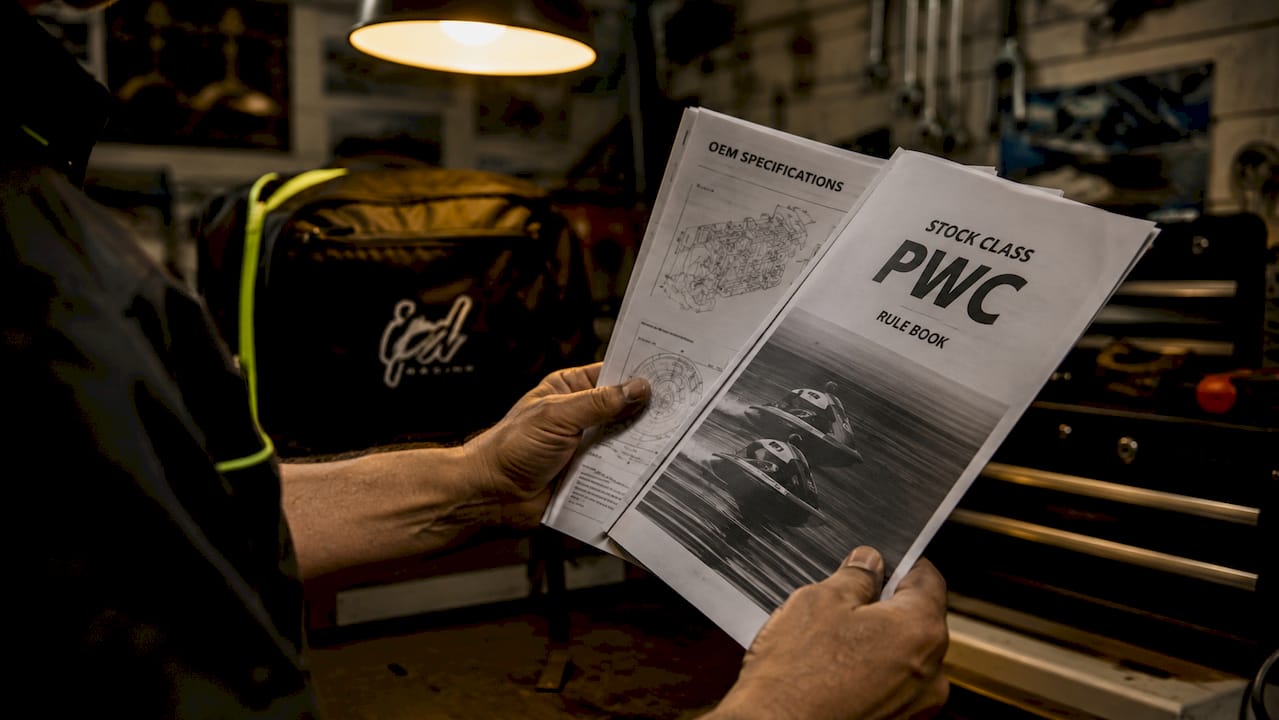
The IJSBA allows only limited modifications on stock class watercraft, such as replacement brackets and structural reinforcements, while keeping OEM specification integrity intact. This rule exists to control costs and prevent wealthier competitors from buying a performance advantage. The result is a class where rider skill and setup knowledge determine the winner.
Allowed modifications typically include:
- OEM replacement parts: Factory-equivalent components that restore worn parts without upgrading performance
- Structural reinforcements: Brackets and mounting hardware that meet OEM dimensions
- Safety equipment: Required flotation, kill switches, and protective gear
- Cosmetic changes: Graphics, seat covers, and non-structural body panels
Prohibited modifications are equally specific. Stock class rules prohibit performance boosting changes like turbochargers unless the OEM originally equipped the model with one. Aftermarket pumps, modified intake grates, and ported cylinders are all disallowed. Any part that increases horsepower, reduces weight beyond OEM spec, or alters handling characteristics falls outside stock class boundaries.
Pro Tip: Read the specific rulebook for your event before purchasing any replacement part. OEM equivalent does not always mean any brand’s version of that part. Some events require the original manufacturer’s part number.
How does stock class compare to other PWC racing classes?
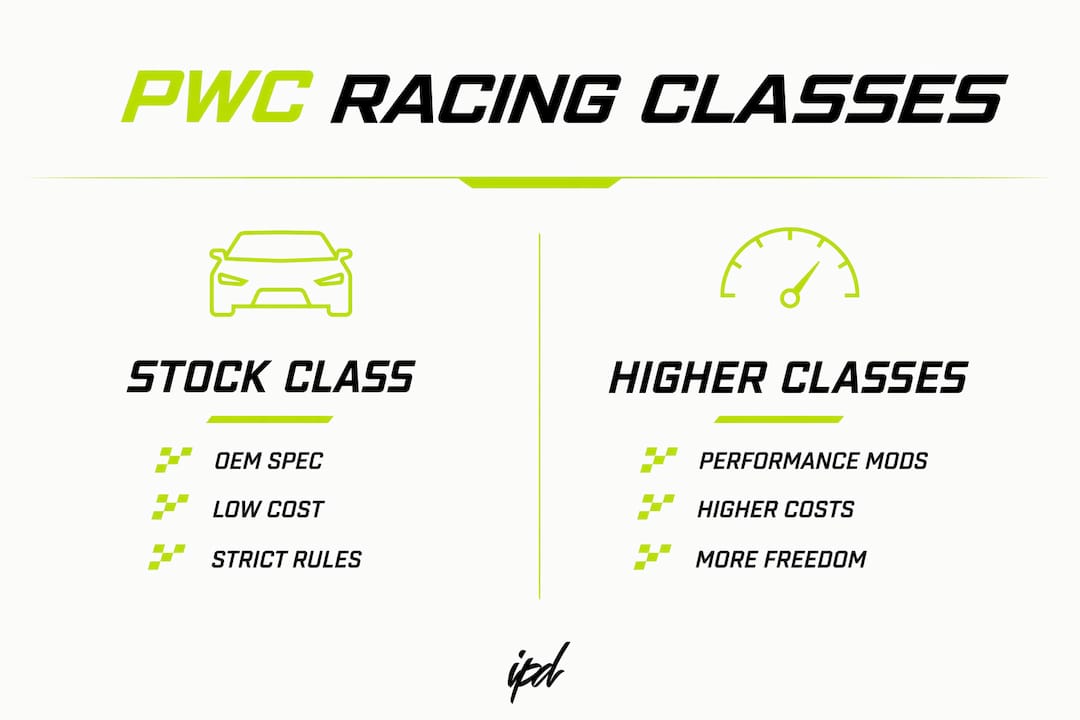
Stock class sits at the entry level of organized PWC competition, defined by the tightest modification limits. Moving up through Limited, Open, and Modified classes progressively relaxes those restrictions and raises the performance ceiling.
Stock class rules vary slightly across organizations and events, but all versions share the same core principle: keep the watercraft as close to factory condition as possible. Limited class allows a defined set of aftermarket components, such as performance exhaust systems or modified intake grates, while still capping engine displacement and major structural changes. Open and Modified classes permit extensive tuning, including aftermarket pumps, ported engines, and custom hulls, which pushes costs significantly higher.
| Class | Modification level | Typical cost range | Key restriction |
|---|---|---|---|
| Stock | OEM spec only | Lowest | No performance parts |
| Limited | Selected aftermarket parts | Moderate | Displacement cap |
| Open | Broad aftermarket allowed | High | Safety rules only |
| Modified | Extensive custom builds | Highest | Minimal restrictions |
Racers choose stock class for three practical reasons. First, the entry cost is lower because you race the watercraft close to how you bought it. Second, the competition is genuinely fair since no racer can buy a mechanical advantage. Third, stock class develops fundamental riding skills that transfer directly to higher classes.
Pro Tip: If you are new to competitive PWC racing, start in stock class for at least one full season. You will learn course strategy and race craft without the distraction of managing a heavily modified machine.
The types of jet ski race classes available at most sanctioned events give racers a clear progression path. Stock class is where most competitive careers begin, and many experienced racers return to it specifically because the level playing field makes every race a genuine test of skill.
What are common misconceptions about stock class PWC?
The biggest misconception is that “stock” means the watercraft must be brand new. Stock class rules require OEM specification compliance, not a factory fresh machine. A well maintained five year old watercraft with all original components qualifies just as well as a new one.
A second misunderstanding involves the term “stock class” itself. Racers searching online sometimes encounter financial content about corporate stock classifications, where terms like Class A and Class B describe voting rights and dividend priority within a company. That concept has no connection to PWC racing. In the racing context, stock class is purely an equipment category defined by modification limits, not ownership rights.
Common misconceptions that cause compliance problems include:
- “OEM equivalent means any aftermarket part of the same size.” False. Many events require the original manufacturer’s part number, not a third party substitute of matching dimensions.
- “Stock class rules are the same everywhere.” False. Rules vary by organization and region, so a part legal at one event may be flagged at another.
- “If the dealer installed it, it counts as stock.” False. Dealer installed performance accessories are still aftermarket modifications under race rules.
- “Stock class is only for beginners.” False. Many experienced racers compete in stock class throughout their careers because the format rewards pure riding ability.
Verifying rules with the specific event organizer before race day is the only reliable approach. Rulebooks are updated annually, and what was legal in a previous season may not be legal now.
How to prepare your PWC for stock class racing
Proper preparation for stock class competition starts with a thorough inspection of your watercraft against the current rulebook for your event. Follow these steps to arrive at the start line compliant and competitive.
-
Download the current rulebook. Obtain the official rules from the governing body running your event, whether that is IJSBA or a regional organization. Rules change between seasons, so always use the current version.
-
Audit every component against OEM specifications. Check the engine, pump, intake grate, exhaust, and hull for any non-factory parts. Document the part number and manufacturer for each major component.
-
Replace worn parts with OEM equivalents. Worn impellers, worn wear rings, and degraded seals all reduce performance legally. Replacing them with OEM parts restores factory output without violating stock class rules.
-
Verify safety equipment meets event requirements. Kill switches, flotation devices, and protective gear requirements are mandatory and inspected separately from performance compliance.
-
Prepare your documentation. Bring your watercraft’s registration, any receipts for replacement parts, and the original owner’s manual to the event. Race inspectors may request proof that components are OEM specification.
-
Schedule a pre-race inspection. Many events offer technical inspection the day before racing. Use this opportunity to identify any compliance issues before they cost you a race day disqualification.
Preparation for stock class racing requires verifying OEM compliance, using approved replacement parts, and understanding what inspectors check at your specific event. Racers who arrive with documentation and clean builds move through inspection faster and spend more time on the water.
Pro Tip: Focus your performance gains on areas that stock class rules do not restrict: body position, throttle control, and course knowledge. A well ridden stock watercraft consistently beats a poorly ridden one regardless of how perfectly the parts are spec’d.
Key Takeaways
Stock class PWC racing is defined by strict OEM specification compliance, and mastering the rules before race day is the single most effective preparation step a racer can take.
| Point | Details |
|---|---|
| Stock class definition | A PWC category requiring OEM specification compliance across engine, hull, and pump systems. |
| Allowed modifications | OEM replacement parts, structural brackets, and safety equipment only. |
| Class comparison | Stock has the tightest limits; Limited, Open, and Modified classes allow progressively more modification. |
| Rule variation | Stock class rules differ by organization and event, so always verify with the specific governing body. |
| Race preparation | Document all components, replace worn parts with OEM equivalents, and attend pre-race technical inspection. |
Why stock class still produces the best racers
Stock class PWC racing gets underestimated. Racers who skip it in favor of higher classes often develop gaps in their fundamental technique that show up later when conditions get difficult. I have watched riders with heavily modified machines lose to stock class veterans on identical courses because the stock racer knew every line and throttle point by feel.
The format also keeps the sport accessible. When modification costs are capped by the rules themselves, a racer with a modest budget can compete on equal terms with someone who spends twice as much. That is rare in motorsport, and it is worth protecting. The PWC racing competition landscape is healthiest when stock class fields are full, because those racers feed every higher class with skilled, experienced competitors.
The future of stock class depends on governing bodies keeping the rules clear and consistently enforced. As OEM manufacturers introduce more electronically controlled systems, the definition of “stock” will need to evolve. A watercraft with factory traction control raises questions that older rulebooks did not anticipate. Racers and organizations need to engage with those questions now, not after the technology is already on the start line.
My advice: compete in stock class with the same seriousness you would bring to any other class. Study the rulebook, know your watercraft’s OEM specifications cold, and treat every inspection as a learning opportunity. The discipline you build there carries into every class above it.
— Casey
IPD Racing has the parts stock class racers need
Stock class compliance starts with the right parts, and IPD Racing stocks OEM and race approved components for PWC racers across all classes.
IPD Racing carries the engine rebuild kits, handling and control parts, and OEM replacement components that keep your watercraft within stock class specifications. The WCOT race proven parts selection includes components verified for competitive use, so you can source what you need without guessing at compliance. IPD Racing also offers tuning resources and racer support to help you get the most performance out of a fully legal stock class build. Visit the IPD Racing shop to find parts organized by model and class, and get your watercraft ready for the next event.
FAQ
What is a stock class PWC in racing?
A stock class PWC is a personal watercraft that competes under rules requiring it to remain at or very close to original factory specifications. Modifications are limited to OEM replacement parts and safety equipment, with no performance enhancements allowed.
Does stock class mean the watercraft has to be brand new?
No. Stock class requires OEM specification compliance, not a new machine. A used watercraft with all original components in good condition qualifies for stock class competition.
Who sets the rules for stock class PWC racing?
The IJSBA publishes stock class rules for sanctioned events, and regional organizations may publish their own variations. Always confirm the specific rules with the event organizer before competing.
What modifications are banned in stock class?
Turbochargers not originally fitted by the OEM, aftermarket pumps, ported cylinders, and any component that increases power output or reduces weight beyond factory specification are all prohibited in stock class.
How is stock class different from Limited class?
Stock class restricts racers to OEM specification parts only. Limited class allows a defined set of aftermarket components, such as performance exhaust systems, while still capping displacement and major structural changes.

