
Best Jet Ski Wave Riding Mods for Peak Performance
The best jet ski wave riding mods are defined by three categories: engine and powertrain upgrades, impeller tuning, and handling modifications built for dynamic wave conditions. These are not generic speed mods. They are purpose-built changes that improve thrust, control, and throttle response in the specific environment where waves, chop, and rapid direction changes demand more from your watercraft. IPD Racing works with riders across recreation, racing, and freestyle disciplines, and the pattern is consistent: riders who match mods to their wave conditions outperform those who chase raw top-speed numbers alone.
1. What are the best jet ski wave riding mods for engine performance?
Engine upgrades form the foundation of any serious wave riding build. The goal is not just more horsepower. It is more usable power across the RPM range where wave riding actually happens.
Stage kits represent the most complete engine upgrade path. A RIVA Racing Stage 3 kit can push a Sea-Doo 325 from roughly 68 mph to 88 mph using advanced ECU tuning and upgraded fuel injectors. That is a 20 mph gain from a single kit, which shows how much headroom stock engines leave on the table.
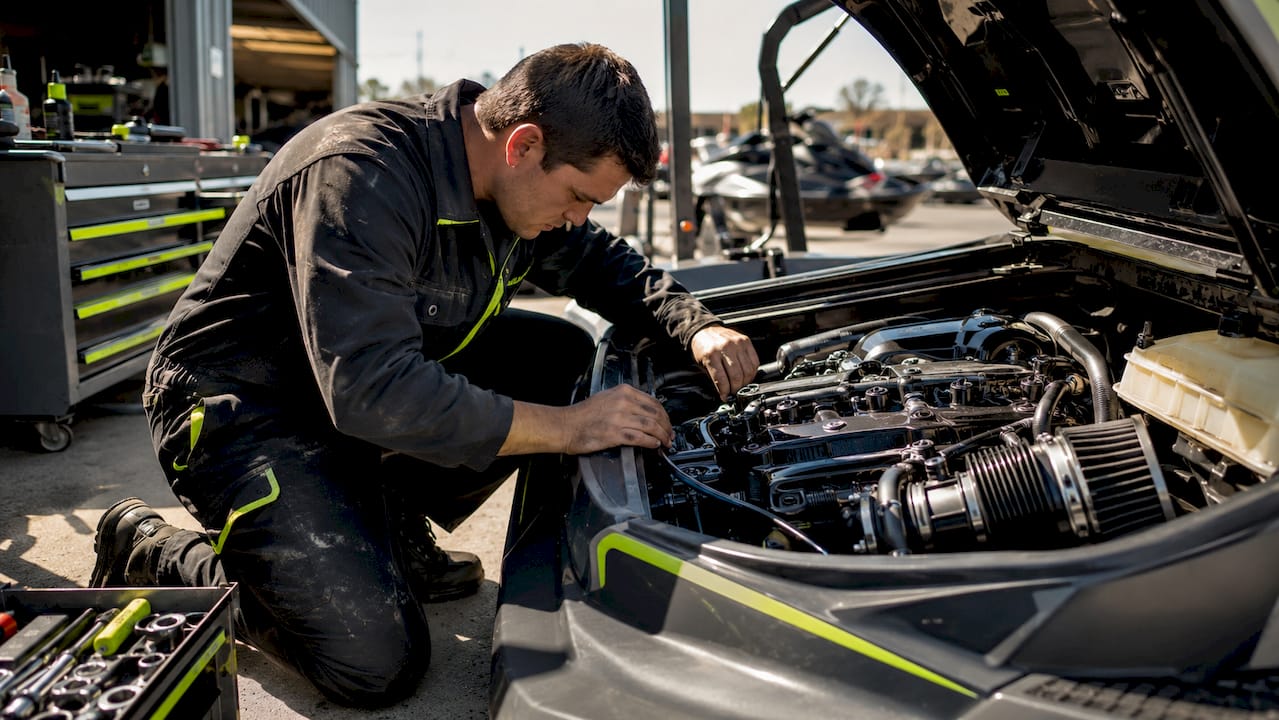
Supercharger upgrades work alongside injector and ECU changes to improve throttle response and torque delivery. Supercharger and injector tuning is especially valuable for wave riding, where quick acceleration out of a trough or off a crest matters more than sustained top speed. The key is balancing peak output with a powerband that stays responsive under load.
Key engine upgrade options for wave riders:
- ECU unlocking and recalibration for full throttle map access
- Upgraded fuel injectors matched to the new power level
- Supercharger kits for torque and mid-range response
- Stage kits that bundle ECU, fuel, and intake upgrades into one tested package
Pro Tip: Advanced stage kits like the RIVA Racing Stage 3 are rated for competition use only. Confirm your riding environment and local regulations before purchasing, and budget for professional installation and dyno tuning.
2. How do impeller upgrades enhance wave riding thrust and control?
The impeller is the single most direct way to change how a jet ski accelerates and responds to throttle input. Most riders underestimate how much pitch selection affects real-world wave performance.
Performance impellers like the Solas Super Duty deliver 10%–15% increases in thrust over stock units. That gain translates directly into faster acceleration off waves and more responsive handling during carving turns. You can explore Solas impeller options at IPD Racing to find pitch configurations matched to your hull and engine setup.
Pitch selection is where most riders make mistakes. Lower pitch favors acceleration and heavy load conditions. Higher pitch suits top speed on modified engines with strong mid-range power. Impeller pitch adjustments in 0.5–1 degree increments let you dial in acceleration versus top speed with precision.
Over-propping reduces usable RPM and engine efficiency in wave riding conditions. A ski that looks fast on paper but bogs in chop or takes too long to recover after a landing is not performing well where it counts. Expert tuners favor slightly under-pitched impellers for faster recovery and better efficiency in dynamic conditions.
Impeller upgrade considerations for wave riders:
- Pitch selection matched to engine output and hull weight
- Balanced impellers for consistent hook-up and reduced vibration
- Repitching services to fine-tune an existing impeller without full replacement
- Solas Super Duty or equivalent for proven thrust gains on stock to mildly modified engines
Pro Tip: Before buying a new impeller, have a qualified tuner assess your current peak RPM under load. If you are already hitting the top of your powerband, a lower pitch may actually improve your wave performance more than a higher one.
3. Which handling and hull modifications improve wave riding stability?
Power without control is a liability in wave conditions. Handling mods are the category most riders skip, and it is the category that most often separates confident wave riders from cautious ones.
Upgraded sponsons increase lateral grip during aggressive turns and carving. They work by extending the hull’s grip surface at the waterline, which reduces the tendency to slide out during hard direction changes. Riders who add sponsons consistently report more predictable behavior in side chop and during tight wave carving.
Adjustable trim nozzles give you real-time control over how the jet thrust vector interacts with the hull. TrimX Stage 1+ nozzle upgrades require both hardware modification and ECU recalibration to function correctly. Skipping the software side causes error codes and lock-neutral issues that make the ski undrivable. You can read more about nozzle modification specifics for freestyle and wave applications.
Hull modifications that channel water more efficiently reduce cavitation and improve directional stability at speed. These changes are most effective when paired with impeller tuning, since both systems work together to control how thrust is generated and directed.
Handling upgrade priorities for wave riders:
- Aftermarket sponsons for lateral grip and carving stability
- Adjustable trim nozzles for fine-tuned thrust vectoring
- Advanced reverse bucket setups for improved deceleration control
- Hull channel modifications to reduce cavitation in chop
Pro Tip: Match your handling mods to your typical wave size and riding style. A rider who carves long open-ocean swells needs different sponson geometry than one who works tight river waves or boat wakes.
4. What riding techniques maximize the effect of your wave mods?
Hardware upgrades only deliver their full benefit when paired with correct riding technique. The mods change what the ski can do. Technique determines whether you actually use that capability.
-
Maintain throttle through turns. Cutting power removes steering control because jet ski steering depends entirely on water thrust through the nozzle. No throttle means no steering. This is the leading cause of accidents for riders transitioning from calm water to wave conditions.
-
Approach waves at a 45-degree angle. Hitting waves at 45 degrees with moderate speed and body weight shifted slightly back prevents nosedives and keeps the hull stable through the impact. For large waves you need to cross directly through, a 90-degree approach is more controlled.
-
Bend your knees when standing. Slightly bent knees act as a suspension system. They absorb wave impact, keep your weight centered, and let the ski move under you without throwing you off balance.
-
Lean gradually into turns. Combining a controlled lean with smooth throttle modulation improves wave carving and reduces flip risk. Sudden weight shifts at speed amplify instability rather than correcting it.
-
Read wave patterns before you ride. Understanding wave conditions and timing lets you position for the best entry points and avoid getting caught by unexpected sets. Physical mods cannot compensate for poor situational awareness.
Pro Tip: Practice throttle control in flat water first after any engine or impeller upgrade. The power delivery will feel different, and building muscle memory in a controlled environment prevents surprises when you hit actual waves.
5. How do you choose the right combination of mods for your riding style?
Modifications should be chosen based on riding style and wave conditions rather than generic speed metrics. A rider who spends most sessions on open-ocean swells needs a different build than one who rides boat wakes or river chop.
Start with your most limiting factor. If your ski feels sluggish off the line, impeller pitch is the first adjustment to make. If it feels unstable in turns, sponsons and nozzle tuning come first. If it simply lacks power across the board, an engine stage kit addresses the root cause.
Pairing power upgrades with handling mods improves safety and control in unpredictable wave environments. Adding 20 mph of top speed without upgrading your handling hardware creates a ski that is faster but harder to manage. The best wave riding builds treat engine, impeller, and handling as a system, not three separate projects.
For riders exploring free-ride modifications, the priority order is typically handling first, then impeller, then engine. That sequence builds a controllable platform before adding power, which is the safer and more effective development path.
Key takeaways
The most effective wave riding builds combine engine tuning, matched impeller pitch, and handling upgrades as a coordinated system rather than isolated changes.
| Point | Details |
|---|---|
| Engine stage kits deliver the largest power gains | A RIVA Racing Stage 3 kit adds up to 20 mph on compatible Sea-Doo models with ECU and injector upgrades. |
| Impeller pitch must match your engine and hull | Over-propping reduces usable RPM; slightly under-pitched impellers recover faster in wave conditions. |
| Handling mods are not optional | Sponsons and trim nozzles keep added power controllable during aggressive wave carving and turns. |
| Throttle control is the most critical riding skill | Cutting power in a turn removes steering entirely, making throttle discipline the top safety priority. |
| Build as a system, not in isolation | Matching engine, impeller, and handling upgrades to your specific wave conditions produces the best real-world results. |
What I’ve learned from building wave-focused jet ski setups
I’ve watched riders spend serious money on stage kits and then wonder why their wave performance only improved marginally. The answer is almost always the same: they upgraded power without addressing impeller pitch or handling. The ski is faster in a straight line, but it is harder to control in the conditions where they actually ride.
The most important lesson I can pass on is this: build for your worst conditions, not your best. If you ride in choppy, unpredictable surf, your impeller pitch and sponson setup matter more than your peak horsepower number. A ski that recovers quickly after a hard landing and holds its line through chop is more useful than one that tops out at 88 mph on flat water.
I also strongly recommend incremental upgrades with real-world testing between each step. Riders who stack a stage kit, new impeller, and nozzle upgrade all at once have no way to isolate what changed or what needs adjustment. One change at a time gives you data. Data gives you a better build.
Professional ECU tuning is not optional for serious wave builds. A dyno-tuned map matched to your specific injectors, impeller, and riding conditions will outperform any off-the-shelf tune. The cost is worth it every time.
— Casey
Performance parts and tuning for wave riders at IPD Racing
IPD Racing stocks race-proven engine, impeller, and handling parts built for wave riding and freestyle performance across Kawasaki, Sea-Doo, and Yamaha platforms.
Whether you need a RIVA Racing stage kit, a matched Solas impeller, or sponsons tuned for your hull, IPD Racing carries the parts and the expertise to help you build a complete wave riding setup. The WCOT race-proven parts catalog includes competition-tested upgrades that translate directly to wave riding performance. For riders who want professional guidance on tuning their full setup, the PWC tuning best practices guide at IPD Racing covers the process from baseline assessment to final dyno verification.
FAQ
What is the single most impactful wave riding mod?
Impeller tuning delivers the most immediate improvement for most riders because it directly affects thrust, acceleration, and throttle response without requiring engine disassembly. Matching pitch to your engine output and hull weight is the fastest way to change how a ski feels in wave conditions.
How much does a full wave riding stage kit cost?
A RIVA Racing Stage 3 kit for compatible Sea-Doo models costs just over $4,000, not including professional installation and tuning. Budget for both the parts and the labor to get accurate real-world performance from the upgrade.
Do handling mods require ECU recalibration?
Advanced nozzle upgrades like the TrimX Stage 1+ require ECU recalibration alongside physical hardware changes. Skipping the software step causes error codes and can lock the ski in neutral, making professional installation necessary for these systems.
What impeller pitch is best for wave riding?
Slightly under-pitched impellers perform better in wave conditions than aggressively pitched ones. They recover faster after hard landings, maintain usable RPM through chop, and deliver more consistent power where wave riding actually demands it.
Can riding technique replace hardware upgrades?
Technique and hardware work together, not as substitutes. Correct body positioning and throttle control maximize the benefit of your mods, but no amount of skill compensates for a stock impeller on a heavily modified engine or a lack of sponsons during aggressive carving.

