

Jet Ski Spin Technique: Beginner Guide for 2026
The jet ski spin technique is a controlled maneuver that combines throttle management, handlebar input, and body lean to rotate a personal watercraft (PWC) in a tight arc on the water. Riders in the PWC community often call this move a “flat spin” or “spin turn,” and both terms describe the same core skill. Mastering this jet ski spin technique beginner guide gives you better control in tight spaces, sharper reflexes in open water, and a real confidence boost that carries over into every other maneuver you attempt. Beginners should start at 20% throttle to build control before attempting any spin.
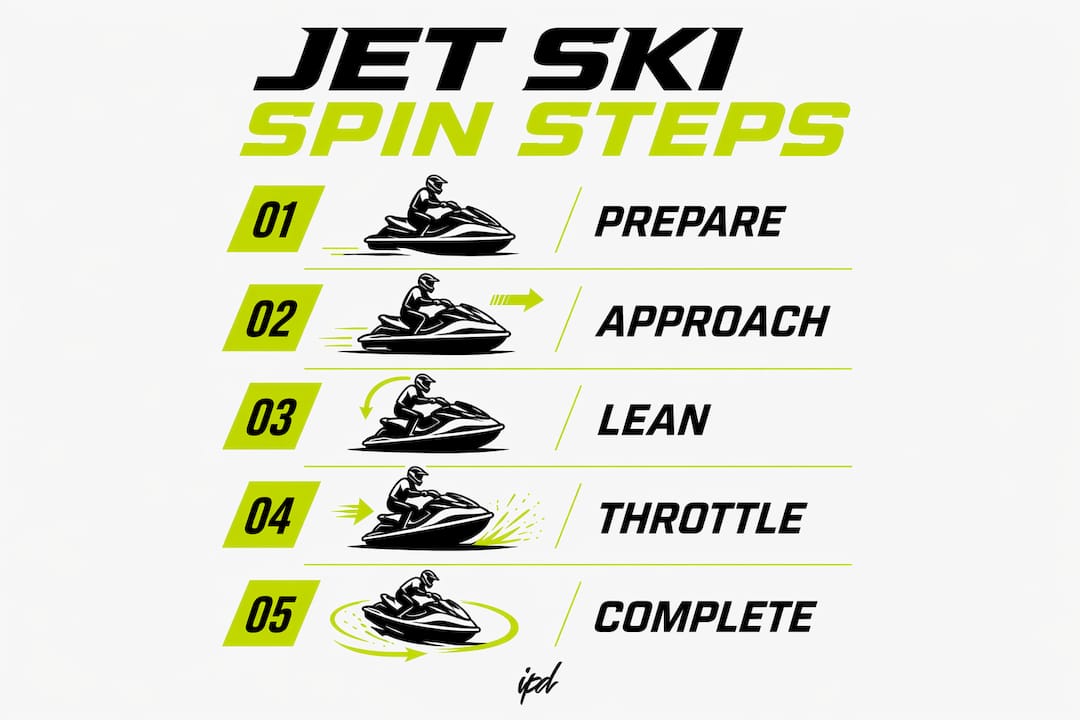
What prerequisites and equipment do beginners need before attempting jet ski spins?
Safe spin practice starts before you ever touch the throttle. The right gear and a basic understanding of your PWC’s controls are non-negotiable.
Essential safety gear
Every rider needs a Coast Guard-approved personal flotation device (PFD), a properly attached engine shut-off lanyard, and eye protection. The lanyard clips to your wrist or vest and kills the engine if you fall off. Without it, a runaway jet ski becomes a serious hazard to everyone nearby. Watercraft accessories for beginners cover the full list of recommended gear for new riders.
Jet ski controls you need to understand
| Control | Function | Spin Relevance |
|---|---|---|
| Throttle lever | Controls engine power and water thrust | Maintains steering during turns |
| Steering nozzle | Directs water jet to steer the craft | Turns the ski left or right |
| iBR (Intelligent Brake and Reverse) | Brakes and reverses using jet thrust | Brakes 30% faster than coasting |
| Handlebars | Rider input for direction | Controls nozzle angle during spin |
The iBR system is a major safety feature on many modern PWCs. It lets you slow down quickly without losing control, which matters a lot when you are learning to spin in a confined area.
Choosing the right conditions
Practice spins in calm, flat water with no boat traffic nearby. Spend the first 2–3 minutes at low speeds of 5–10 mph to feel how the ski responds before attempting any turning maneuver. Open bays, calm lakes, or designated practice areas work best. Avoid choppy water until you have the basics locked in.
How to perform the jet ski spin technique: step-by-step beginner guide
The spin technique relies on three inputs working together: throttle, handlebar turn, and body lean. Drop any one of them and the maneuver breaks down. Here is the full sequence for executing a controlled spin.
Step-by-step spin execution
-
Build to a comfortable entry speed. Ride in a straight line at a relaxed pace. You do not need high speed for a beginner spin. A moderate, steady pace gives the steering nozzle enough water thrust to respond.
-
Set throttle at 20–40%. Beginner throttle usage starts at 20% to maintain steering authority without excessive speed. Holding steady throttle keeps water flowing through the nozzle so you stay in control throughout the turn.
-
Begin turning the handlebars gradually. Do not snap the bars hard to one side. Start with a wide arc and tighten the radius over multiple practice sessions. Gradual input gives you time to feel the ski’s response.
-
Lean your body into the turn. Leaning body weight into the turn helps the jet ski carve effectively. Shift your weight toward the inside of the arc, not away from it. This is the single most common body positioning error beginners make.
-
Hold throttle steady through the full rotation. Do not release the throttle as the ski rotates. Releasing it kills your steering. Keep the throttle consistent until you complete the arc and straighten out.
-
Straighten the handlebars and ease off throttle. Once you complete the spin, bring the bars back to center and reduce speed smoothly. Avoid abrupt stops.
Pro Tip: Practice the spin in one direction first until it feels natural, then repeat on the opposite side. Most riders have a dominant turning side, and training both sides equally builds balanced control.
Wide turns first, tighter spins later. This progression is the fastest way to build real skill. Freestyle body position tips from experienced riders reinforce the same principle: technique before speed, always.
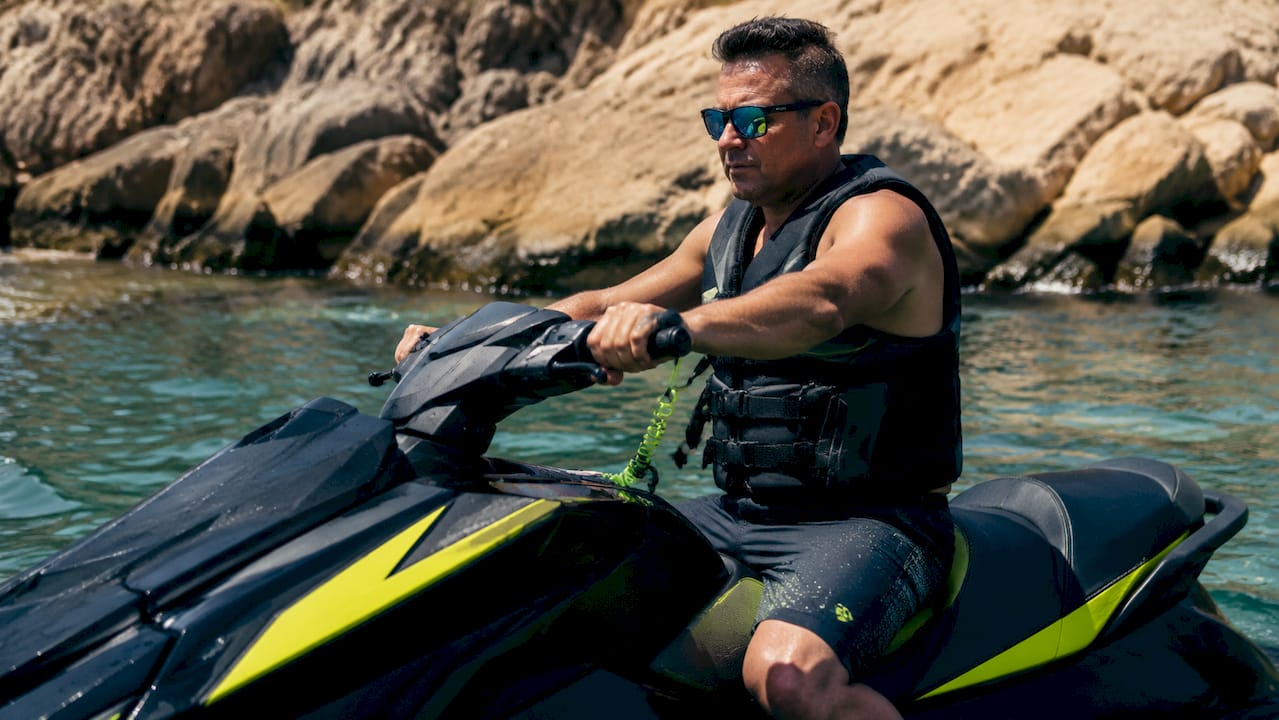
Common mistakes beginners make when learning jet ski spins
Most beginner errors in spin technique come down to two instincts: gripping too hard and backing off the throttle when things feel uncertain. Both reactions make the situation worse.
The most common errors and how to fix them
-
Cutting the throttle mid-turn. Cutting throttle removes steering ability completely. The steering nozzle relies on water thrust. No throttle means no thrust, which means no steering. The ski will continue in whatever direction it was heading with no way to correct it.
-
White-knuckling the handlebars. White-knuckling causes jerky movements and drains your energy fast. A relaxed grip with slightly bent arms lets the hull move naturally under you. Stiff arms transfer every wave impact directly to your shoulders and throw off your balance.
-
Leaning away from the turn. Riders who feel unstable often lean outward instinctively. This works against the ski’s natural carving motion and widens the arc uncontrollably.
-
Stiff, locked knees. Straight legs turn your body into a rigid post. Bent knees absorb movement and keep your center of gravity low and stable.
-
Turning too sharply too soon. Cranking the handlebars hard at the start of a spin creates an abrupt arc the ski cannot handle smoothly at beginner speeds.
Safety warning: Releasing the throttle during a spin does not slow you down safely. It removes your ability to steer. If you feel out of control, maintain light throttle and widen the arc rather than letting go.
Fixing these errors is mostly about overriding instinct. The ski rewards calm, steady inputs. Panic responses, like releasing the throttle or gripping tighter, consistently make things worse.
How to progress from beginner spins to more advanced maneuvers
Skill progression on a jet ski follows a clear pattern. Beginners should follow a phased progression starting with gentle turns, then moderate-speed maneuvers, then dynamic spins. Skipping phases leads to the loss-of-control incidents that account for a large share of PWC accidents.
Phase-by-phase skill development
Phase 1: Slow turns (5–10 mph). Focus on feeling how the ski responds to handlebar input and body lean. A jet ski feels tippy at low speed but stabilizes as it planes. Push through that early instability. It disappears quickly once you build speed.
Phase 2: Figure-eight patterns. Figure-eights force you to alternate turning directions continuously. This builds equal strength on both sides and trains your throttle hand to stay consistent through direction changes. Practice these at moderate speed in open water.
Phase 3: Tighter spin arcs. Once figure-eights feel easy, reduce the radius of each arc gradually. Tighter spins require more precise throttle control and sharper body lean. Combining throttle, handlebar input, and body lean is what separates controlled spins from sloppy ones.
Phase 4: Choppy water practice. Standing with bent knees in choppy water lets your legs absorb impact and keeps your upper body stable for steering. This stance reduces spinal impact and improves overall maneuverability in real-world conditions.
Beginner vs. advanced spin technique comparison
| Element | Beginner technique | Advanced technique |
|---|---|---|
| Entry speed | Low to moderate | Moderate to high |
| Throttle level | 20–40% | 40–70% |
| Turn radius | Wide arc | Tight, controlled circle |
| Body lean | Slight inward lean | Aggressive lean with weight transfer |
| Water conditions | Calm, flat water | Choppy or open water |
| Practice pattern | Straight turns | Figure-eights and linked spins |
Advanced jet ski techniques like linked spins and freestyle tricks build directly on the beginner foundation. Every hour of deliberate beginner practice shortens the time it takes to reach that next level.
Key takeaways
Mastering the jet ski spin technique requires consistent throttle, proper body lean, and phased practice from wide arcs to tighter spins.
| Point | Details |
|---|---|
| Throttle is your steering | Never release the throttle mid-turn; it removes all steering authority. |
| Body lean drives the arc | Lean into the turn, not away from it, to help the ski carve correctly. |
| Start wide, go tighter | Begin with wide arcs at low speed before reducing the spin radius. |
| Relaxed grip beats tight grip | Bent arms and a firm but relaxed hold improve stability and reduce fatigue. |
| Phase your progression | Move from gentle turns to figure-eights to tight spins before adding speed. |
What I have learned watching beginners spin for the first time
The moment most beginners struggle is not the spin itself. It is the instinct to let go of the throttle the second the ski starts rotating. I have watched it happen dozens of times. The rider feels the craft pulling into the arc, gets nervous, releases the throttle, and then has zero steering to correct with. The ski goes wherever physics takes it.
The fix is not courage. It is understanding. Once you know that throttle equals steering on a jet ski, holding it steady through a turn becomes logical, not scary. That knowledge changes everything.
The other thing beginners consistently underestimate is how much stability they gain once the ski planes. That wobbly, uncertain feeling at low speed disappears fast. Persistence through those first few minutes of instability is what separates riders who progress quickly from those who stay stuck at the beginner level for months.
Patience matters more than raw skill here. Riders who slow down, practice wide arcs, and build the habit of steady throttle before chasing tight spins always end up with cleaner technique. The ones who rush to the flashy moves usually develop bad habits that take twice as long to unlearn.
— Casey
Performance parts that support better control on the water
Developing your spin technique is partly about skill and partly about having a jet ski that responds the way you need it to.
IPD Racing carries a curated selection of PWC performance parts built for riders at every level, from beginners working on basic maneuvering to intermediate riders pushing into tighter spins and more demanding conditions. Upgraded handling and control parts make a real difference in how your ski responds to throttle and steering input. Browse the IPD Racing shop to find parts that match your watercraft and your current skill level. Better equipment does not replace good technique, but it does make good technique easier to execute consistently.
FAQ
What is the jet ski spin technique?
The jet ski spin technique is a controlled maneuver that uses steady throttle, handlebar input, and body lean to rotate a PWC in a tight arc. It is the foundation for most beginner jet ski tricks and advanced freestyle maneuvers.
Why does my jet ski not steer when I release the throttle?
Jet ski steering relies on water thrust through the steering nozzle. Releasing the throttle cuts that thrust and removes steering authority completely, which is why maintaining throttle through turns is the single most critical rule in spin technique.
What throttle level should beginners use for spins?
Beginners should hold throttle at 20–40% during spin practice. This level provides enough water thrust for steering control without generating excessive speed that makes corrections harder.
How do I stop feeling wobbly at low speed?
A jet ski feels unstable at low speed but becomes more stable once it planes on the water. Push through the initial instability at 5–10 mph and the handling improves quickly as speed increases slightly.
When should I move from wide arcs to tighter spins?
Move to tighter spins only after wide arcs and figure-eight patterns feel consistent and controlled. Rushing to tight spins before mastering wide arcs is the most common reason beginners develop poor throttle habits.

