
PWC Watercraft Tuning Best Practices for Racers
PWC watercraft tuning best practices are techniques that improve horsepower, throttle response, and handling through precise component maintenance and calibrated modifications. A well-tuned personal watercraft (PWC) delivers measurably better results than a stock unit. Professional ECU tuning alone can yield 10–50% horsepower increases and top-speed gains of +3 to 10 mph. The key is applying upgrades in the right order, starting with pump health and mechanical condition before touching engine management. Balancing power and control is what separates a fast PWC from a reliable, fast PWC.
1. PWC watercraft tuning best practices start with pump health
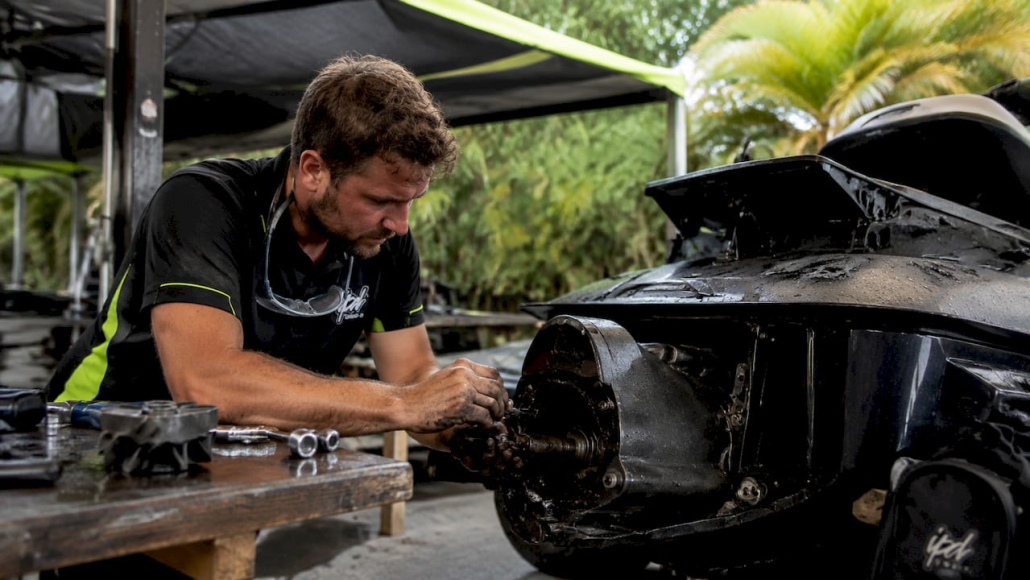
The jet pump is the single most overlooked performance component on any PWC. Most riders chase engine power while ignoring the pump, which directly converts engine output into thrust.
Neglected pump components cause throttle hesitation that riders routinely misdiagnose as engine problems. Replacing worn wear rings and realigning intake grates resolves the issue faster and cheaper than any engine repair.
Key pump maintenance tasks:
- Wear rings: Replace wear rings every two seasons to prevent cavitation and restore thrust.
- Intake grate: Inspect before every ride. Debris restricts water flow and kills acceleration.
- Impeller condition: Check for nicks, chips, or corrosion. Even minor damage reduces efficiency.
- Pump housing: Look for scoring or wear that increases clearance beyond spec.
Pro Tip: Before any tuning session, pull the pump and measure wear ring clearance with a feeler gauge. If clearance exceeds manufacturer spec, no amount of ECU tuning will fix your throttle response.
2. Core mechanical components that directly affect performance
Beyond the pump, several mechanical components control how power reaches the water. Ignoring them makes every other tuning effort less effective.
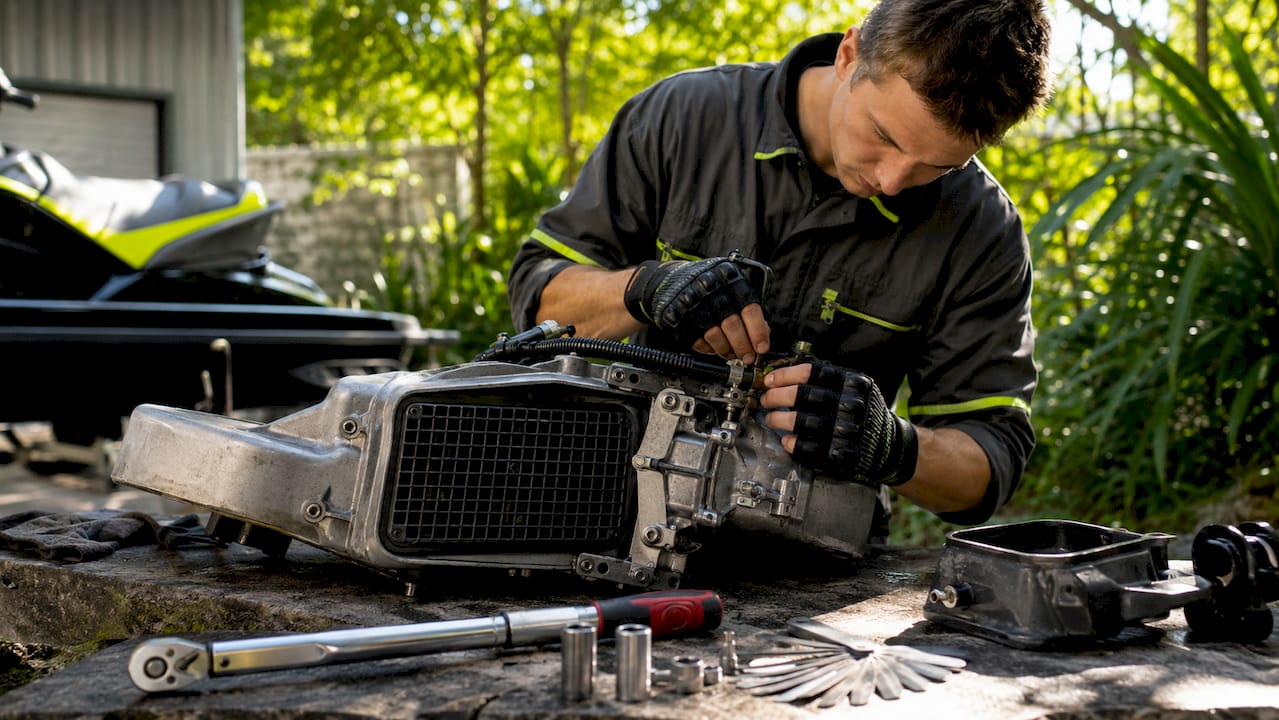
The throttle cable and throttle position sensor (TPS) are the first link in the power chain. A stretched cable or drifting TPS signal creates inconsistent throttle response that no fuel map can compensate for. Check cable tension and TPS voltage output before any tuning session.
The intake grate controls how cleanly water enters the pump. A stock grate works well for recreational riding, but aftermarket grates with tighter spacing improve water capture at speed. Inspecting the intake grate before every ride takes 30 seconds and prevents debris ingestion that can destroy an impeller.
Impeller pitch is the load device of the entire system. A mismatched pitch forces the engine to work outside its power band, reducing both speed and reliability. Pitch selection is covered in detail in section 6.
3. How carburetor and fuel system adjustments optimize performance
Fuel delivery calibration is the foundation of any tuning effort on carbureted PWC engines. Getting the fuel-air ratio right before adding any other modifications prevents rich or lean conditions that damage engines.
Standard fuel-air ratios are 40:1 for two-stroke engines and 14.7:1 for four-stroke fuel-injected models. These are the baseline targets for any carburetor tuning session.
Follow this sequence for carburetor tuning:
- Clean first. Remove, disassemble, and ultrasonically clean the carburetor before any adjustment. Debris in jets skews every reading.
- Set float height. Adjust to 18–22mm as the standard starting point for fuel delivery.
- Synchronize multiple carburetors. Use a manometer to balance vacuum across cylinders to within 2–3 mmHg.
- Adjust pilot screws. Start at factory spec, then make quarter-turn incremental adjustments toward best idle quality.
- Verify under load. Test at full throttle on the water, not just at idle, before finalizing settings.
Pro Tip: Quarter-turn adjustments are the maximum increment for pilot screw changes. Larger adjustments cause flooding or fuel starvation that is difficult to diagnose on the water.
Environmental conditions change the ideal fuel-air ratio. Altitude reduces air density, requiring leaner jetting. High humidity has the opposite effect. Riders who travel between sea level and mountain lakes need to rejet for each location.
4. ECU tuning and modern engine management for PWC
ECU remapping is the highest-leverage tuning tool available for modern four-stroke PWC engines. It adjusts ignition timing, fuel delivery curves, and rev limits to match actual riding conditions rather than global factory defaults.
Factory engine calibrations are conservative by design. Manufacturers tune for global fuel quality variations, emissions compliance, and liability. A professional remap customizes those parameters to the fuel grade and conditions you actually ride in.
Key considerations for ECU tuning:
- Wideband O2 sensors provide real-time air-fuel ratio data during dyno pulls, making tuning precise rather than guesswork.
- Dyno testing before and after a remap confirms actual gains and catches dangerous lean conditions.
- Bluetooth-enabled tuning devices allow map adjustments without removing the ECU, but they require a calibrated base map to be safe.
- Rev limit adjustments unlock power that factory settings suppress, but require verified engine condition first.
- Fuel quality matters. A remap tuned for 91 octane will detonate on 87. Match the map to the fuel you use consistently.
Professional ECU tuning typically delivers 10–50% horsepower increases and 15–20% fuel economy improvement. Those numbers assume a healthy engine as the starting point. Tuning a worn engine amplifies its problems rather than fixing them.
DIY ECU tuning carries real risk. An incorrect ignition timing map causes detonation that destroys pistons within minutes. Professional tuners with marine-specific dyno experience are the correct choice for any ECU work. The cost of a professional tune is a fraction of an engine rebuild.
5. Staged upgrade strategies that minimize risk
The staged modification method is the most reliable approach to performance upgrades. It isolates the effect of each change and prevents component failures caused by uncalibrated power increases.
Handling upgrades precede engine power enhancements in every effective tuning sequence. Adding 30% more horsepower to a hull that cannot handle the existing power creates a dangerous machine, not a faster one.
Recommended upgrade sequence:
- Complete all deferred maintenance (pump, wear rings, TPS, throttle cable).
- Install handling components: sponsons, ride plates, and steering nozzle upgrades.
- Tune fuel delivery to factory spec with clean carburetors or verified fuel injectors.
- Add intake and exhaust modifications for modest power gains.
- Remap the ECU after all mechanical work is complete and verified.
Additional staged upgrade practices:
- Tighten maintenance intervals at each stage. More power means more stress on every component.
- Document every modification with dates, part numbers, and baseline performance data. This record supports Magnuson-Moss Warranty Act protection if a dealer disputes a warranty claim.
- Avoid over-propping. Installing an aggressive impeller pitch before engine modifications are complete is one of the most common and costly mistakes in PWC tuning.
- Test between stages. Ride the craft after each modification before adding the next. This isolates performance changes and catches problems early.
The incremental upgrade approach also protects your budget. Discovering that a handling upgrade alone solved your speed problem saves the cost of an ECU remap you did not need.
6. Impeller pitch and pump tuning for real-world conditions
Impeller selection is where most riders make their biggest tuning mistake. The goal is not the most aggressive pitch available. The goal is the pitch that keeps the engine in its power band under your actual riding conditions.
Over-pitched impellers reduce usable RPM and fuel efficiency. The engine lugs, recovery after chop is slow, and lap times suffer even if top speed appears similar on flat water.
| Riding condition | Recommended pitch approach | Expected result |
|---|---|---|
| Flat water racing | Moderate to aggressive pitch | Higher top speed, strong mid-range |
| Choppy open water | Slightly under-pitched | Faster RPM recovery, consistent thrust |
| Freestyle/recreation | Conservative pitch | Reliable throttle response, lower engine stress |
| Mixed conditions | Mid-range pitch | Balanced performance across scenarios |
Mildly under-pitched impellers that maintain consistent RPM outperform aggressive setups that cause engine lugging in real race conditions. Professional racers confirm this: recovery speed and consistent RPM hook-up matter more than peak top speed numbers.
Pro Tip: Test impeller pitch changes on the same water section at the same throttle position. Conditions vary too much between days to compare results from different sessions.
Key takeaways
The most effective PWC tuning sequence starts with pump and mechanical health, then progresses through fuel calibration, handling upgrades, and ECU remapping in that exact order.
| Point | Details |
|---|---|
| Pump health comes first | Replace wear rings every two seasons and inspect intake grates before every ride. |
| Fuel-air ratio is the baseline | Set 40:1 for two-stroke and 14.7:1 for four-stroke engines before any other adjustments. |
| Stage your upgrades | Install handling components before adding engine power to maintain control and isolate effects. |
| Match impeller pitch to conditions | Under-pitched impellers often outperform aggressive pitches in choppy or mixed conditions. |
| ECU tuning requires a healthy engine | A professional remap on a worn engine amplifies problems rather than delivering gains. |
What I’ve learned from years of watching riders tune wrong
Most tuning mistakes share one root cause: riders skip steps because they want results immediately. I have watched riders spend $800 on an ECU remap while running a wear ring so worn it was causing 15% thrust loss. The remap made the engine faster. The pump still could not deliver that power to the water.
The riders who get the best real-world results are the ones who treat tuning as a system, not a parts list. They document every change. They test between stages. They ride the craft after a pump rebuild before touching the ECU. That discipline is unglamorous, but it is what separates a fast, reliable PWC from an expensive one that spends time in the shop.
The other pattern I see constantly is impeller selection based on what the fastest riders in a class are running. Pitch selection is application-specific. What works on a flat-water course at sea level does not work in choppy conditions at altitude. Match the impeller to your conditions, not someone else’s results.
Tuning is iterative. The riders who accept that get faster every season. The ones who want one big modification to solve everything rarely find it.
— Casey
IPD Racing has the parts and expertise to support your build
Effective PWC tuning requires quality components at every stage of the process. IPD Racing carries performance parts for recreation, racing, and freestyle riders across all major watercraft brands.
Whether you need pump components for a baseline rebuild or are ready to step up to aftermarket performance parts, IPD Racing’s catalog covers the full tuning sequence. The PWC Doctor service provides diagnostic support for riders troubleshooting performance issues before committing to upgrades. For riders ready to source parts, the performance parts catalog covers wear rings, impellers, intake grates, and handling components from trusted brands. IPD Racing’s team understands the full tuning sequence and can help you build the right parts list for your riding style and goals.
FAQ
How often should I tune my PWC?
Perform a full mechanical inspection and pump service at the start of each season. Tighten that interval to every 20–25 hours of ride time once you begin adding performance modifications.
What is the first tuning step for a stock PWC?
Start with pump maintenance. Replace wear rings and inspect the intake grate before any other modification. Pump problems cause throttle hesitation that mimics engine issues and wastes tuning budget.
Is ECU tuning safe for recreational PWC riders?
Professional ECU tuning on a healthy engine is safe and delivers measurable gains. DIY remapping without dyno verification risks detonation and engine damage, making professional tuning the correct choice for most riders.
What impeller pitch should I choose for racing?
Match pitch to your race conditions, not the most aggressive option available. Over-pitched impellers reduce usable RPM and slow recovery after chop, which costs more time than the top-speed gain provides.
Does carburetor tuning apply to modern four-stroke PWC?
Modern four-stroke PWC use fuel injection rather than carburetors, so fuel delivery tuning happens through ECU remapping. Carburetor tuning applies to older two-stroke models and some entry-level current production watercraft.

