
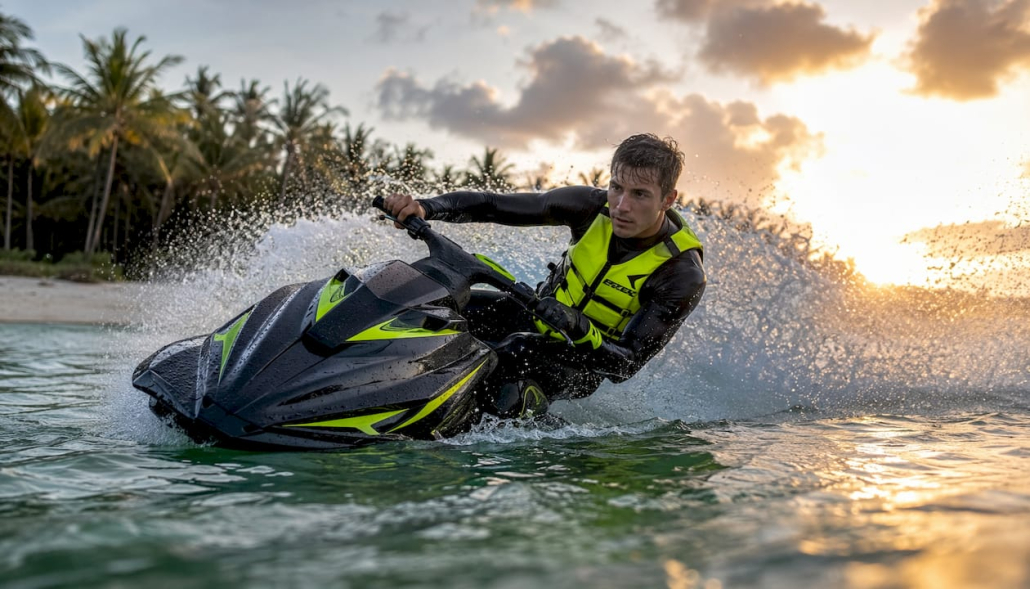
Free-Ride Jet Ski Balance Tips for Advanced Riders
Core balance techniques every free-ride rider must know
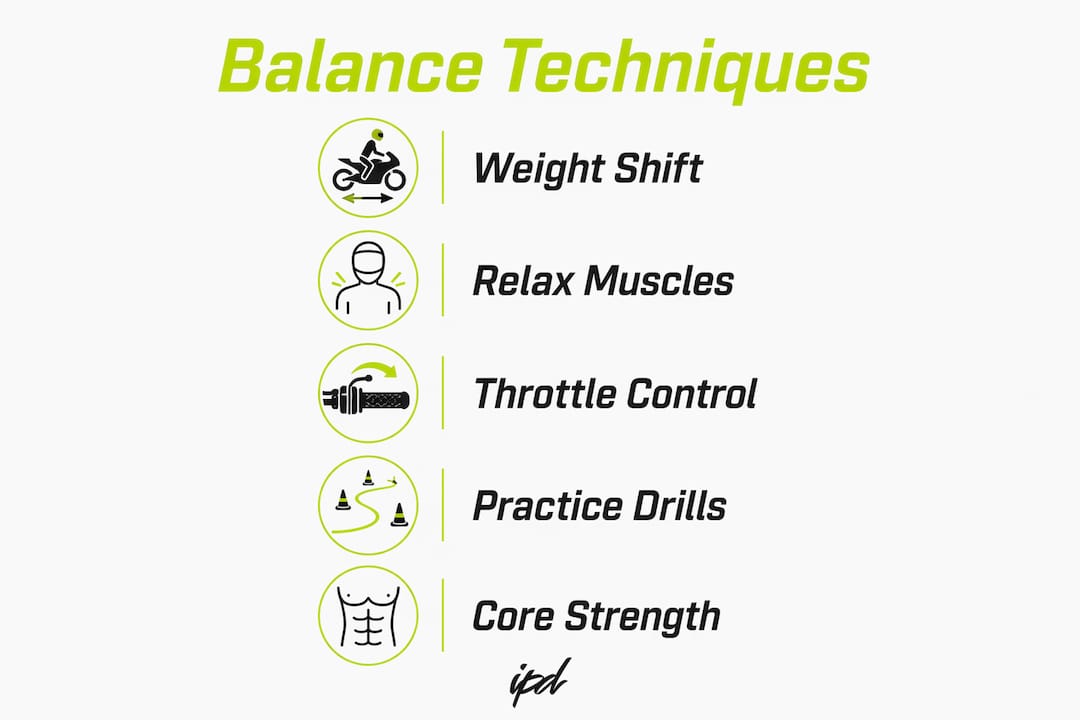
Mastering free-ride jet ski balance comes down to three fundamentals: precise body positioning, relaxed muscle engagement, and refined throttle control. Riders who lock these in gain a measurable edge in both freestyle execution and race performance.
Key balance elements for advanced free-ride riding:
- Weight shift into turns: Move your mass toward the inside of every turn while keeping your lower body anchored to the tray.
- Counter-lean on waves: When crossing wakes or chop, lean slightly against the impact to keep the hull level rather than letting it roll with the water.
- Micro-flex your knees: Treat your knees as constant shock absorbers, never locked rigid.
- Throttle as a dimmer: Maintain impeller engagement through modulated throttle rather than binary on/off inputs.
- Stay loose: Relaxed muscles respond faster than tense ones to sudden water dynamics.
“Staying relaxed and responsive allows riders to ‘dance with the machine,’ while stiffness causes instability.” — ShunAuto freestyle experts
That single principle separates riders who fight the craft from those who flow with it.
Table of Contents
- How body position and weight transfer control your balance
- Why relaxation outperforms stiffness for jet ski stability
- How refined throttle control improves steering authority
- How IPD Racing supports your balance and performance goals
- Exercise routines that build jet ski-specific core strength and balance
- Key Takeaways
How body position and weight transfer control your balance
Body positioning is the foundation of every advanced maneuver. When you shift weight toward the inside of a turn and lean your upper body in that direction while keeping your lower body stable, the craft responds with sharper, more predictable rotation. At higher speeds, that weight shift needs to be more aggressive and lower, dropping your center of gravity closer to the hull.
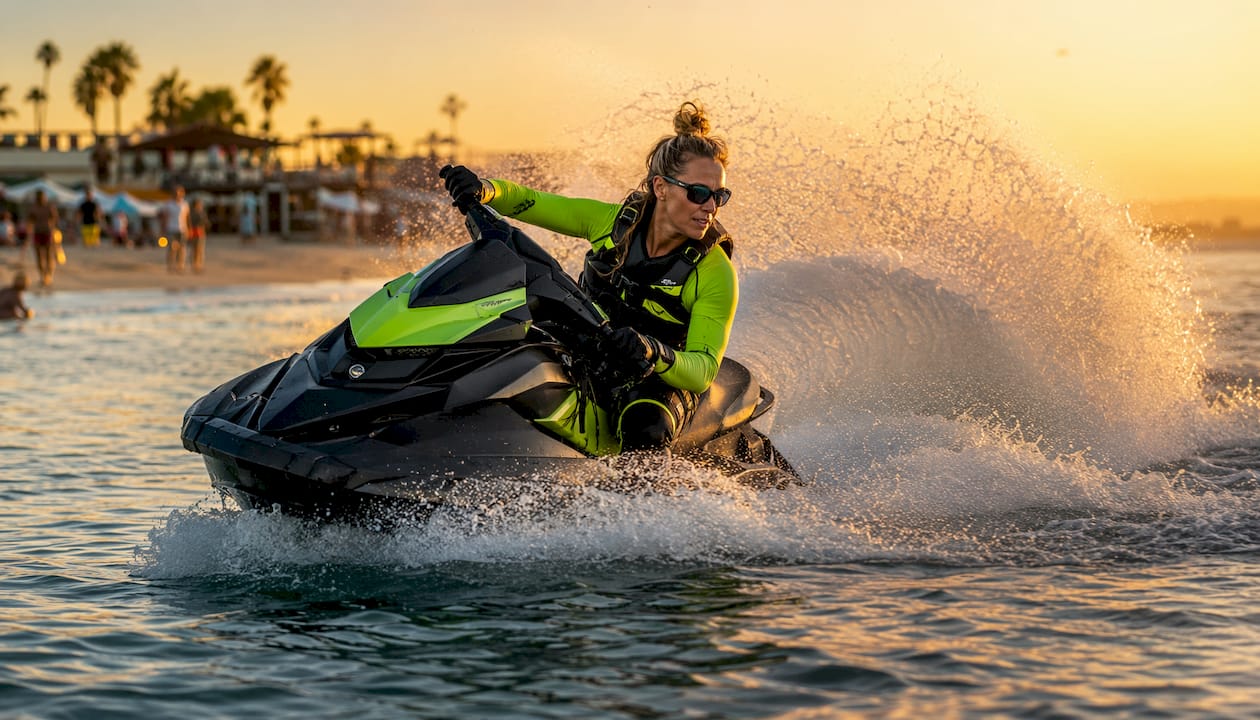
Counter-leaning during wave crossings is a technique advanced riders used to neutralize unwanted hull roll. Instead of bracing against the wave, you lean slightly opposite to the tilt direction, which neutralizes unwanted tilts and keeps the ski tracking straight. This is a reactive skill built through repetition, not instinct.
Foot placement matters more than most riders acknowledge. Place your dominant foot forward, feet roughly shoulder-width apart, with weight distributed evenly across the balls of your feet rather than your heels. Heel-heavy riders lose lateral responsiveness fast.
Step-by-step weight transfer drill:
- Ride a straight line at 20–25 mph on flat water.
- Slowly transfer weight from your right foot to your left, observing how the hull responds.
- Repeat in the opposite direction, keeping your knees slightly bent throughout.
- Progress to gentle turns, increasing lean angle as confidence builds.
- Introduce mild chop once you can hold a consistent tilt without overcorrecting.
Body positioning also interacts directly with throttle. When you shift weight forward during a tight turn and simultaneously apply steady throttle, the craft tightens its arc and holds the line. Pulling weight back while decelerating reduces bow lift and slows the craft predictably.
Pro Tip: Practice weight transfer drills on flat water before attempting them in chop. Muscle memory built in controlled conditions transfers directly to high-pressure freestyle situations.
Why relaxation outperforms stiffness for jet ski stability
Most riders assume that tensing up improves their grip on the craft. The opposite is true. Relaxation enables micro-adjustments and fluid movements necessary to adapt to water dynamics, while stiff riders resist the ski’s motion and destabilize themselves.
“Many riders mistakenly believe that muscular stiffness improves stability, but experts clarify relaxation is key to responsive control.” — ShunAuto, January 2026
The mechanics are straightforward. A tense body transmits every hull vibration directly up through your legs and into your core, disrupting your center of gravity. A relaxed body absorbs those vibrations at the knee and hip joints before they reach your torso.
| Factor | Stiff Rider | Relaxed Rider |
|---|---|---|
| Knee response | Locks, transmits vibration | Micro-flexes, absorbs shock |
| Weight shift speed | Slow, delayed | Fast, fluid |
| Recovery from tip | Overcorrects, falls | Counter-steers instinctively |
| Freestyle execution | Choppy, forced | Smooth, controlled |
Your knees act as shock absorbers; keeping them in a constant state of micro-flex absorbs hull vibrations before they reach your center of gravity. Locking your knees rigid transmits every jolt directly upward, causing loss of control at the worst possible moments.
Practical ways to stay loose under pressure: focus on your breathing before a run, consciously drop your shoulders, and keep your grip on the handlebars firm but not white-knuckled. Mental rehearsal of smooth, fluid movements before a session also reduces the instinct to tense up when conditions get rough.
How refined throttle control improves steering authority
Throttle is not an on/off switch. Treating throttle like a dimmer allows gradual modulation that maintains impeller engagement and stability throughout every maneuver. Riders who snap the throttle fully open or cut it abruptly lose steering authority immediately.
Forward momentum is the primary stabilizer on a stand-up jet ski. Cutting throttle destroys steering authority and causes instability, particularly during high-speed turns or when crossing wakes. The impeller needs consistent water pressure to maintain directional control.
In rough water, use short pulsed bursts of throttle rather than holding a steady open position. This technique, detailed in ShunAuto’s stay-on-a-jet-ski guide, lets you maintain control through chop without over-accelerating into a wave face. During freestyle tricks, throttle modulation at the takeoff point determines both height and rotation speed.
Common throttle mistakes to eliminate:
- Abrupt throttle cuts mid-turn: Causes the nose to drop and the craft to wash out.
- Full-open throttle on wave faces: Launches the nose unpredictably and kills steering.
- Holding throttle steady through chop: Better replaced with pulsed inputs that match the wave rhythm.
Pro Tip: When setting up for a freestyle jump, accelerate to your target speed, then modulate throttle to hold that speed rather than continuing to accelerate. Consistent entry speed produces consistent air time.
How IPD Racing supports your balance and performance goals
IPD Racing builds performance products specifically for freestyle riders and racers who need hardware that matches their technique. From hull modifications to footrests and handlebars, the product catalog addresses the physical contact points where body positioning translates into craft control.
Key resources and product categories available through IPD Racing:
- Handling and control parts: Footrests, grip upgrades, and handlebar configurations that reinforce proper foot placement and upper body stability.
- Hull modifications: Products that affect how the craft responds to weight shifts, directly impacting balance during turns and wave crossings.
- Educational guides: IPD Racing publishes technique-focused content covering free-ride modifications and advanced rider skills, updated through 2026.
- Race-proven parts: The WCOT Watercross of Texas parts lineup includes components tested in competitive conditions, giving freestyle riders access to race-grade hardware.
Integrating equipment upgrades with the techniques covered in this article produces compounding gains. Better footrests reinforce correct foot placement. Upgraded handlebars reduce grip fatigue, which keeps your upper body relaxed longer. Hull mods that improve tracking reduce the corrective weight shifts you need to make, freeing your focus for execution.
Pro Tip: Before upgrading hardware, identify which balance weakness costs you the most in your riding. Target the product category that addresses that specific gap first.
IPD Racing’s technical support and rider resources are available at ipdracing.com/shop for riders ready to match their technique development with the right equipment.
Exercise routines that build jet ski-specific core strength and balance
Off-water training directly transfers to on-water performance. The muscle groups that matter most for free-ride balance are the core stabilizers, hip flexors, and the stabilizing muscles around the knee and ankle.
Balance and stability exercises:
- Single-leg deadlifts: Build the unilateral leg strength and proprioception needed for weight transfers on an unstable surface.
- Bosu ball squats: Simulate the constant micro-adjustments your legs make on a moving hull. Three sets of 15 reps develops the stabilizing muscles around the knee.
- Plank variations (side plank, plank with hip dip): Target the lateral core muscles responsible for counter-leaning during wave crossings.
- Cable woodchops: Replicate the rotational core engagement used during turns and trick setups.
- Jump rope: Builds the ankle and knee responsiveness needed for rapid weight shifts.
Engaging core muscles with a slightly bent knee stance improves shock absorption and maneuverability across all water conditions. Riders who train this position off-water find it becomes automatic on the craft.
Flexibility work matters too. Hip flexor stretches and thoracic spine mobility drills reduce the stiffness that causes the rigid body posture covered earlier. A 10-minute mobility routine before a session keeps your joints responsive and your reaction time sharp.
Key Takeaways
Effective free-ride jet ski balance requires dynamic weight transfer, relaxed muscle engagement, and precise throttle modulation working together as a unified system.
| Point | Details |
|---|---|
| Weight shift into turns | Shift mass to the inside of every turn while keeping your lower body anchored to the tray. |
| Relaxation over stiffness | Relaxed muscles enable micro-adjustments; stiff riders transmit vibrations and lose control faster. |
| Throttle as a dimmer | Gradual throttle modulation maintains impeller engagement and steering authority through all conditions. |
| Knee micro-flex | Constant slight knee bend absorbs hull vibrations before they reach your center of gravity. |
| Off-water training | Bosu ball squats, single-leg deadlifts, and plank variations build the specific stability muscles jet skiing demands. |

