
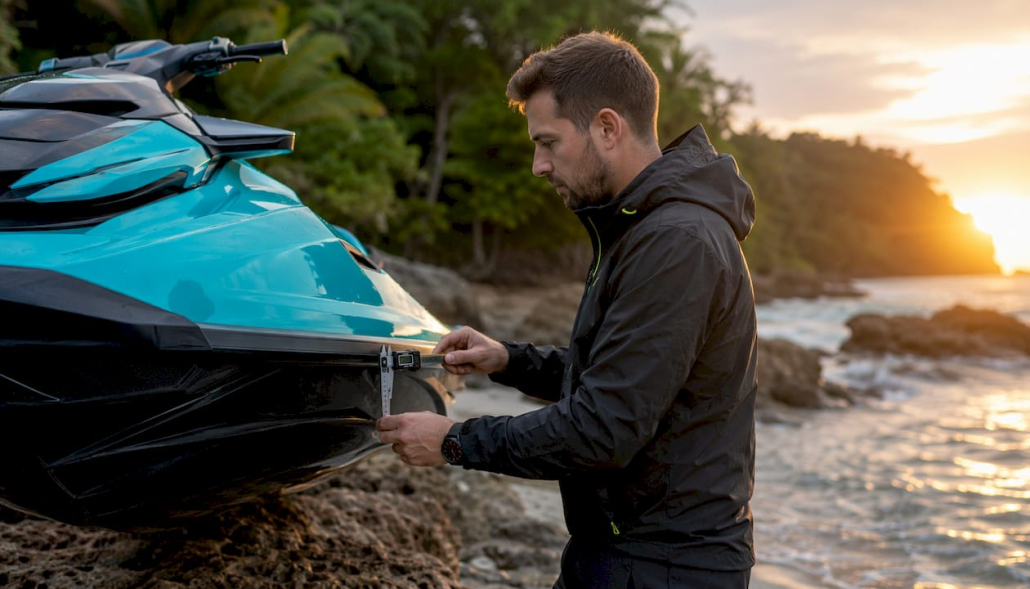
Why PWC Hull Rocker Matters for Performance
Hull rocker is the single most misunderstood variable in personal watercraft design. It refers to the longitudinal curve of the hull bottom from bow to stern, and it directly controls how much of the hull contacts the water at any given moment. More rocker lifts the bow and stern, reducing wetted surface area. Less rocker keeps the hull flatter against the water, maximizing contact and straight-line grip. That one geometric difference cascades into every aspect of how a PWC handles, accelerates, and behaves in rough conditions.
Why PWC hull rocker matters comes down to this: it is the primary lever that determines whether a craft turns tight or tracks straight, planes fast or rides smooth in chop. No other single hull dimension touches as many performance variables simultaneously.
Key aspects of hull rocker every rider should understand:
- Turning radius: Higher rocker reduces the hull’s resistance to pivoting, enabling tighter, quicker turns.
- Top-end speed: Lower rocker keeps more hull surface planing, which generally supports higher top speeds.
- Porpoising risk: Excessive rocker causes a rhythmic bow lift and drop at planing speeds, hurting both fuel efficiency and ride smoothness.
- Chop behavior: Moderate rocker allows smoother transitions over waves, improving stability in choppy conditions.
- Riding style fit: Freestyle and surf riders need high rocker; offshore racers and cruisers typically want less.
Table of Contents
- How hull rocker shapes speed, handling, and stability
- Trade-offs in PWC hull design involving rocker
- Benefits of different rocker profiles for varied riding conditions
- Expert perspective on rocker within the full hull system
- IPD Racing has the performance parts your hull build needs
- Key Takeaways
How hull rocker shapes speed, handling, and stability
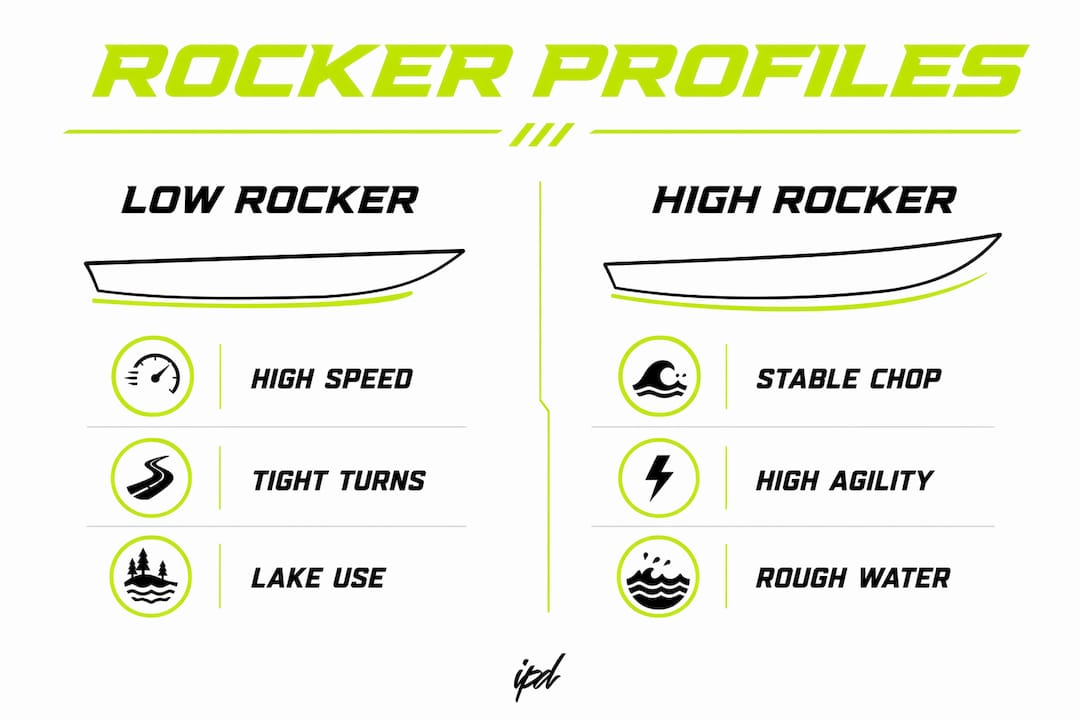
Rocker’s effect on speed is direct and measurable. A flatter hull keeps a larger surface area in contact with the water during planing, which reduces drag and supports higher top-end velocity. Increase the rocker and the bow rises, the stern lifts slightly, and the effective planing surface shrinks. The craft turns more willingly, but the speed ceiling drops. High-speed offshore racing favors less rocker precisely for this reason: straight-line tracking and maximum planing efficiency take priority over cornering agility.
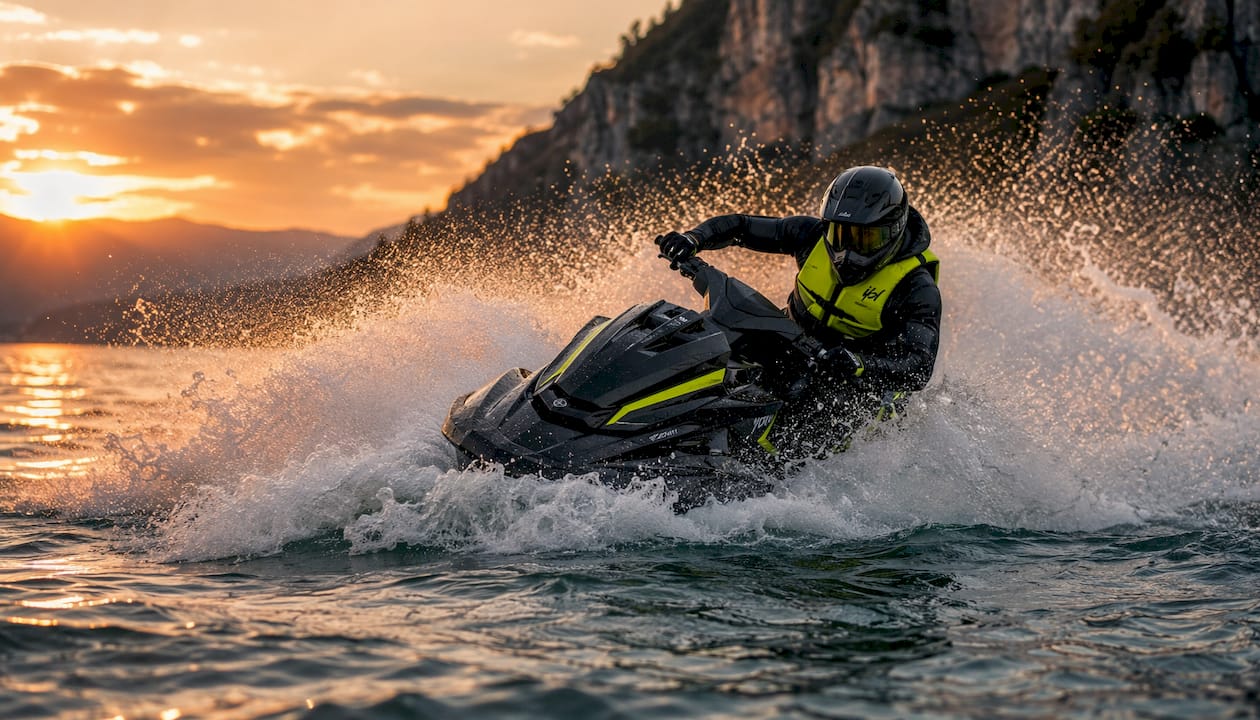
Handling tells the opposite story. A hull with pronounced rocker pivots more freely because less of the hull is locked into the water’s surface at any moment. The craft responds faster to steering input and carves tighter arcs. This is why freestyle hull designs use high rocker to enable the tightest turns possible in flat water and surf conditions.
Stability across water conditions breaks down by rocker level:
- High rocker: Agile in flat water, but can feel loose or unpredictable in heavy chop at speed.
- Moderate rocker: Balances turning response with wave absorption; suits mixed conditions and general recreational riding.
- Low rocker: Planted and fast in a straight line, but demands more physical effort to initiate direction changes.
Pro Tip: If your riding is split between open-water runs and lake sessions, a moderate rocker profile will serve you better than chasing either extreme. The performance gains at the edges come with real trade-offs in the other direction.
Porpoising deserves specific attention. When rocker is excessive relative to the hull’s weight distribution and pump geometry, the bow repeatedly lifts and slaps back down at planing speeds. That rhythmic bounce is not just uncomfortable. It bleeds speed, increases fuel consumption, and puts stress on the hull structure over time. Rocker must be calibrated against the rest of the hull system to avoid it.
| Rocker Level | Speed Potential | Turning Agility | Chop Handling | Best Use Case |
|---|---|---|---|---|
| Low | High | Low | Moderate | Offshore racing, flat-water speed |
| Moderate | Moderate | Moderate | Good | Recreation, mixed conditions |
| High | Lower | High | Variable | Freestyle, surf, tight maneuvering |
Trade-offs in PWC hull design involving rocker
Rocker never works in isolation. PWC hull design combines rocker with deadrise angle, beam width, sponson placement, and running strakes, and each element interacts with the others. Changing rocker without accounting for those relationships produces unpredictable results.
The deadrise angle influences how the hull cuts through waves; a deeper ‘V’ bow helps slice through chop and improves rough-water tracking, but may reduce low-speed stability. That is why most modern PWCs transition from a sharper deep-V entry at the bow to a flatter pad section toward the stern. Rocker works alongside this transition: too much rocker on a deep-V hull can amplify instability at low speeds, while too little on a flat hull makes the craft feel locked in and unresponsive.
Key design trade-offs involving rocker:
- Agility vs. tracking: More rocker improves cornering but reduces straight-line predictability, especially in crosswinds or following seas.
- Rough-water handling vs. low-speed steadiness: Deep-V hulls with rocker handle chop well at speed but feel tippy at idle.
- Planing efficiency vs. wave absorption: Flatter hulls plane faster but bounce harder in chop; rocker softens that bounce at the cost of some speed.
- Sponson interaction: Sponsons act as outriggers at rest and provide cornering grip at speed. Their effectiveness depends partly on how much rocker lifts the hull off the water during turns.
- Pump tunnel geometry: Rocker changes the angle at which water enters the jet pump intake. Altering rocker without retuning the tunnel and sponson setup can introduce pump cavitation and reduce thrust efficiency.
| Hull Feature | Effect on Performance | Interaction with Rocker |
|---|---|---|
| High deadrise | Smooth rough-water ride | Amplifies low-speed instability if rocker is also high |
| Wide beam (45 in.) | Greater resting stability | Partially offsets instability from high rocker |
| Deep sponsons | Strong cornering grip | Most effective when rocker keeps hull partially lifted in turns |
| Flat stern pad | Fast planing | Works best with low to moderate rocker |
| Running strakes | Tracking and pump feed | Placement must account for rocker-induced water flow changes |
Every hull is a compromise between competing priorities. Manufacturers targeting stability for cruising, agility for racing, or maneuverability for freestyle each tune rocker differently, and no single profile wins across all three categories.
Benefits of different rocker profiles for varied riding conditions
Matching rocker to your riding environment is where hull knowledge becomes practical. The three broad rocker profiles each have a clear use case, and understanding them helps you evaluate any hull purchase or modification with real criteria.
High rocker
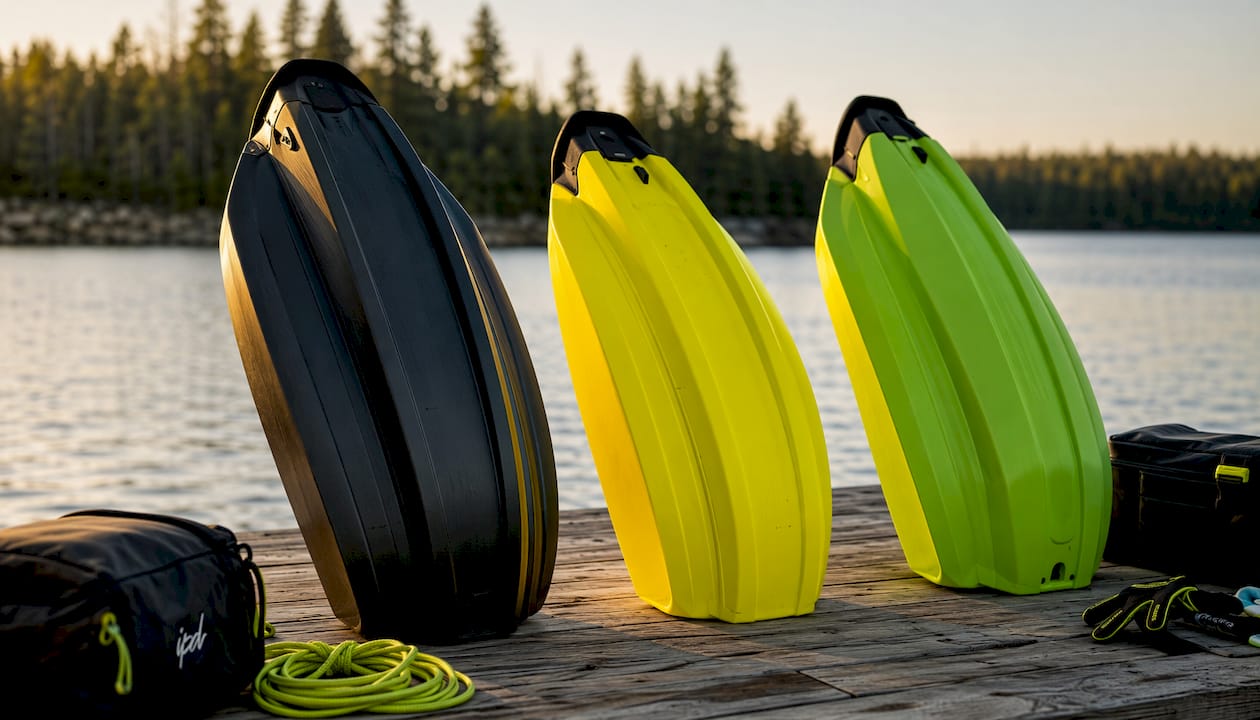
High rocker is the choice for freestyle and surf riding. The Krashindustries JB1 hull illustrates this well: its rocker was developed and tested over two years specifically to enable tight turns in flat water and surf with moderate wave heights. The design targets a hull weight of 45 kg to maximize agility, and the shortened transom makes the craft more responsive during flips and rolls. That combination of high rocker, reduced weight, and a wider tray produces a hull that pivots on demand.
Benefits of high rocker:
- Tightest possible turning radius for freestyle tricks and surf maneuvers
- Faster pivot response to steering input
- Reduced hull resistance when initiating spins and rolls
- Works well with bow and side sponsons that add stability during aggressive maneuvers
Moderate rocker
Moderate rocker suits riders who split time between recreational runs, light chop, and occasional performance riding. It delivers enough turning agility for enjoyable cornering without the speed penalty of a full freestyle profile. Most production sit-down PWCs from major manufacturers use a moderate rocker as the baseline, then tune beam width and sponson depth to adjust the handling character.
Benefits of moderate rocker:
- Predictable handling across a range of water conditions
- Adequate planing efficiency for recreational speeds
- Manageable behavior in both calm lakes and light offshore chop
- Lower learning curve for less experienced riders
Low rocker
Low rocker prioritizes speed and straight-line tracking. Offshore racing hulls use minimal rocker to keep the maximum planing surface in contact with the water. The hull runs flatter, resists porpoising at high throttle, and holds a line through long open-water runs without constant steering correction. For riders investing in PWC offshore racing, low rocker is the starting point for any competitive hull build.
Benefits of low rocker:
- Higher top-end speed potential from increased planing surface
- Better straight-line tracking in open water and crosswind conditions
- Reduced porpoising risk at full throttle
- More predictable pump efficiency at speed
Expert perspective on rocker within the full hull system
Rocker is one lever among many, and experienced hull builders treat it that way. Professional freestyle designs integrate rocker with sponson placement and pump tunnel geometry as a coordinated system, not a single adjustment. Changing one element without rebalancing the others produces a hull that underperforms in ways that are difficult to diagnose on the water.
Rocker angle is measured as the longitudinal curvature from bow to stern, typically quantified through physical template profiles or CAD modeling during the design phase. Builders specify rocker in millimeters of rise from the lowest point of the hull bottom to the bow and stern contact points. That measurement determines the hull’s “personality” before any other variable is introduced.
The pump system is where rocker changes show up in ways riders often do not expect. Altering rocker changes the angle and flow rate of water entering the jet pump intake, which affects thrust, cavitation resistance, and overall pump efficiency. A hull with modified rocker typically needs retuned sponsons and tunnel geometry to recover the performance lost in the pump system. High-performance hull materials and composite layup techniques also factor in: a lightweight rocker design built from double-bias and biaxial woven materials delivers the strength needed for demanding freestyle applications without adding the weight that would undermine the agility the rocker profile was designed to create.
Pro Tip: Before evaluating any aftermarket hull or rocker modification, ask the builder for the specific rocker measurement in millimeters and how the sponson and tunnel geometry were adjusted to match it. A builder who cannot answer that question has not done the full system work.
Riders financing a move into specialized hull builds or performance upgrades should also factor in the total cost of complementary parts. An online powersports financing guide can help riders plan for the full scope of a hull-focused build, including sponsons, pump components, and composite materials, rather than treating the hull as an isolated purchase.
IPD Racing has the performance parts your hull build needs
IPD Racing stocks race-proven PWC performance parts for riders who take hull performance seriously, from recreational upgrades to full freestyle and offshore racing builds. Whether you are tuning sponsons to match a new rocker profile, upgrading your pump components for better cavitation resistance, or sourcing handling upgrade parts that complement your hull geometry, IPD Racing carries the inventory that serious riders rely on.
The difference between a hull that performs and one that frustrates often comes down to the supporting parts. A well-chosen rocker profile needs matched sponsons, a properly tuned intake grate, and a ride plate that works with the hull’s water flow, not against it. IPD Racing’s catalog covers all of it, backed by real racing experience across recreation, freestyle, and competitive offshore disciplines. Visit the PWC tuning guide to start building your setup, or browse the full parts catalog at IPD Racing to find what your hull needs next.
Key Takeaways
Hull rocker is the foundational hull variable that determines turning agility, top-end speed, porpoising risk, and water condition suitability for any PWC.
| Point | Details |
|---|---|
| Rocker controls turning and speed | Higher rocker enables tighter turns; lower rocker supports higher top-end speed and straight-line tracking. |
| Porpoising is a real risk | Excessive rocker causes rhythmic bow lift at planing speeds, reducing fuel efficiency and ride smoothness. |
| Deadrise and beam interact with rocker | Performance hulls typically have moderate deadrise angles; beam width and sponson depth should be matched to the rocker profile. |
| Freestyle hulls aim for lightweight construction | Specialized freestyle designs like the JB1 use high rocker and lightweight construction to maximize agility in surf with moderate wave heights. |
| IPD Racing supports full hull builds | IPD Racing stocks handling parts, pump components, and sponson upgrades matched to performance rocker profiles across all riding disciplines. |
Recommended
- PWC Watercraft Tuning Best Practices for Racers
- PWC Carbon Fiber Parts Benefits for Racers in 2026
- WORX Racing Jet Ski Performance Parts at IPD Racing | Intake Grates, Ride Plates & Handling Upgrades – IPD Racing
- Wossner Jet Ski Pistons at IPDRacing | Forged PWC Pistons for Performance & Engine Rebuilds – IPD Racing

