
Types of PWC Racing Competitions: 2026 Complete Guide
PWC racing competitions are organized into five main categories: closed course, offshore/endurance, freestyle, drag racing, and freeride. Each format tests a different set of skills, attracts a different type of competitor, and demands different equipment. The types of PWC racing competitions covered here range from tight buoy circuits to open ocean endurance runs, giving you a clear picture of where you fit in the sport. Governing bodies like the IJSBA and WGP#1 sanction most major events, and 2026 marks a significant year with the IHRA Pro Watercraft Racing Series launching with a $250,000 prize pool.
1. What are the types of PWC racing competitions?
PWC racing competitions fall into five recognized formats, each with its own rules, course design, and competitive culture. Closed course, offshore/endurance, freestyle, drag racing, and freeride make up the full spectrum. Understanding each format helps you choose the right discipline, prepare the right equipment, and target the right events.
Major PWC race formats are governed by bodies like the IJSBA and WGP#1, which set class structures and safety standards across all competition types. These organizations also define what separates a Stock class entry from a Pro class build. That distinction matters because it determines what modifications are legal and what level of competition you enter.
2. Closed course racing
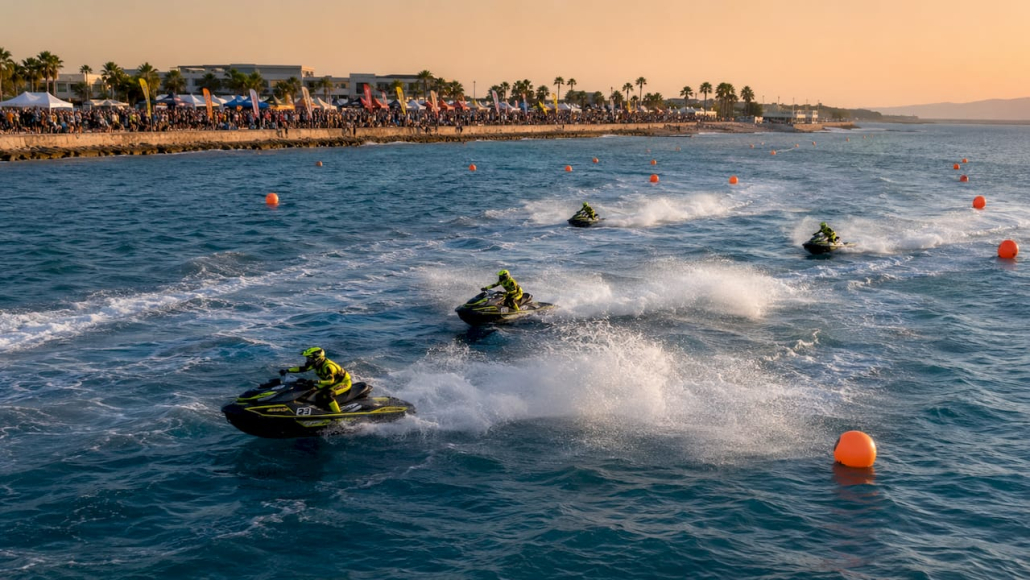
Closed course racing is the most common format in organized PWC competition. Races take place on a marked circuit defined by buoys, typically on flat or mildly choppy water. The format rewards tight cornering, aggressive throttle control, and the ability to hold a line at speed while other riders are inches away.
Professional closed course races reach speeds of 65–70 mph. That speed in a confined circuit means buoy turns are where races are won or lost. Riders who can carry more speed through a turn without losing traction gain a measurable advantage over the course of a multi-lap race.
Key features of closed course racing:
- Short to medium course distances, typically run in heats
- Buoy markers define the circuit and must be navigated cleanly
- Runabout (sit-down) and Ski (stand-up) classes compete separately
- Classes range from Stock to Superstock to Pro Modified
- Events run under IJSBA rules at regional, national, and world championship levels
Pro Tip: Practice your buoy turns at race pace before your first event. Most beginners lose more time in turns than on straightaways. Drill the entry angle and throttle timing until both are automatic.
The jet ski race prep checklist from IPD Racing covers closed course setup in detail, including hull inspection, impeller checks, and pre-race tuning steps.
3. Offshore and endurance racing
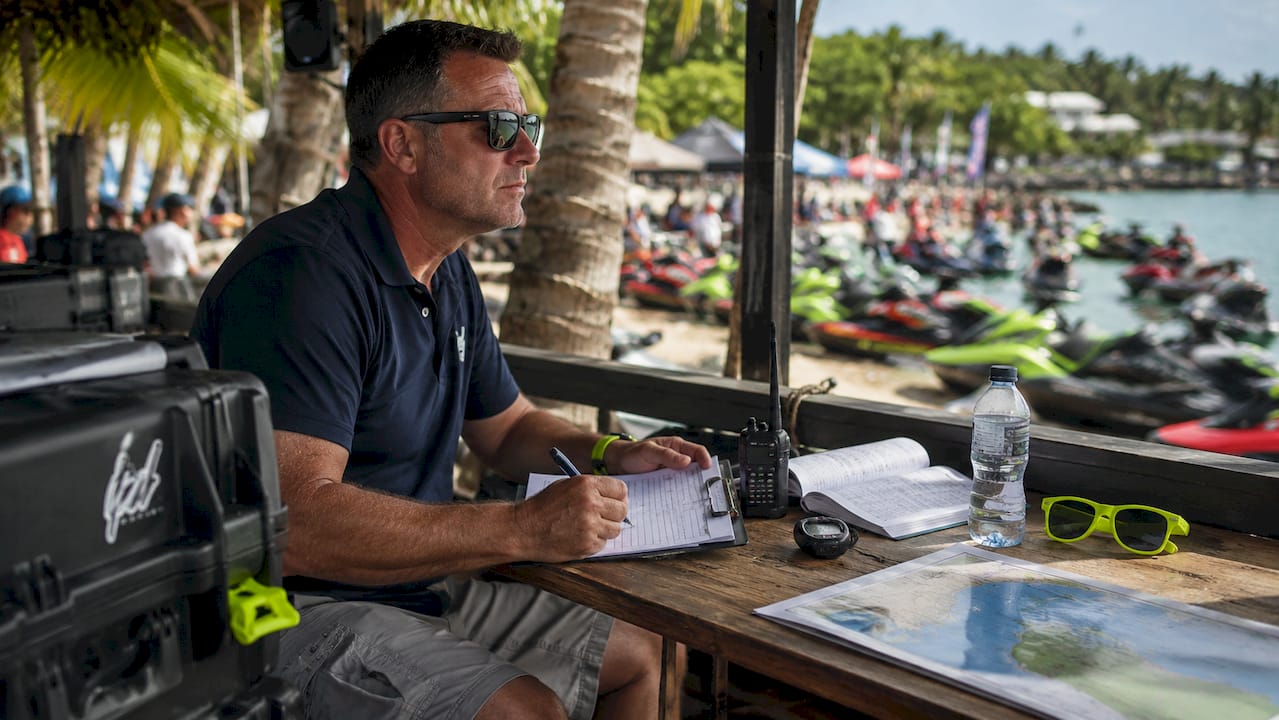
Offshore racing is the most physically demanding format in PWC competition. True offshore races cover at least 40 miles in open ocean conditions, exposing riders to large waves, swells, cross chop, and navigation challenges that closed course racing never presents. The Long Beach to Catalina race is the only true offshore event held annually in the United States.
Offshore PWC racers face physical punishment that goes far beyond fatigue. Repeated impacts from ocean swells at speed stress the lower back, shoulders, and hands over the course of a race that can last well over an hour. Mechanical reliability becomes as important as rider skill because a breakdown in open water has real consequences.
Key differences between true offshore and offshore-style racing:
- True offshore races run in open ocean, far from shore protection
- Offshore-style events run in protected bays or behind break walls
- True offshore demands navigation skills and self-sufficiency
- Offshore-style events are more accessible for intermediate riders
- Both formats reward endurance, but true offshore demands significantly more physical tolerance
“Offshore PWC racing requires a different kind of preparation. The ocean does not care about your lap time. It cares whether you can hold on, stay on course, and keep your machine running for 40-plus miles of open water.” — PWC Offshore Racing community insight
Modified machines used in offshore racing can exceed 80–90 mph depending on tuning. That speed in open ocean conditions makes offshore racing the highest-risk format in the sport.
4. Freestyle and freeride competitions explained
Freestyle competitions are judged events where riders perform aerial tricks and maneuvers scored on creativity, difficulty, and execution. The format has no course to complete and no finish line to cross. Judges score each run based on the variety and quality of tricks performed within a set time window.
Freestyle focuses on judged aerial tricks, while freeride uses natural surf conditions as ramps rather than structured event setups. That distinction is significant. Freeride riders seek out ocean surf or river waves and use the natural environment to launch their machines. Freestyle events are held in controlled settings, often on flat water with purpose-built ramps.
Common elements in freestyle competition:
- Backflips, barrel rolls, and sub-offs (intentional controlled falls)
- Scoring based on height, rotation, and landing quality
- Riders typically use stand-up PWC for maximum maneuverability
- Events are often held alongside closed course races at major IJSBA events
- Freeride sessions are less structured and often filmed rather than formally judged
Pro Tip: If you are new to freestyle, start with sub-offs and basic spins before attempting aerial tricks. Building body positioning and throttle confidence on the water takes time. Rushing aerial attempts without that foundation leads to injury.
Freestyle contributes to the sport’s appeal beyond pure racing. It attracts a younger demographic and generates strong visual content, which helps grow overall PWC competition visibility.
5. Drag racing and its focus on acceleration
Drag racing is a straight-line sprint from a standing start, focused entirely on acceleration and top speed. The format strips away all cornering strategy and replaces it with pure mechanical performance. Two riders launch simultaneously and race to the finish line in the shortest time possible.
Drag racing requires highly tuned engines and offers a competitive dynamic that is completely different from circuit racing. Engine builders and tuners are as important as the riders themselves. A drag-spec PWC may be nearly unrideable in a closed course event because it is built for one thing: maximum straight-line thrust.
Key characteristics of PWC drag racing:
- Courses are short, typically measured in feet rather than miles
- Races last seconds, not minutes
- Engine modifications include ported cylinders, performance impellers, and tuned exhaust
- Riders with mechanical knowledge or strong tuner relationships have a clear advantage
- Events are often held at watercraft festivals and specialty drag meets
Drag racing attracts a specific type of competitor. Riders who enjoy the mechanical side of the sport, the tuning process, and the raw thrill of acceleration tend to gravitate toward this format. It is also one of the most accessible formats to watch as a spectator because the action is immediate and easy to follow.
6. Comparing PWC racing formats: which one fits you?
Choosing the right format depends on your skills, physical condition, budget, and competitive goals. The table below compares the five main formats across the factors that matter most to new and experienced competitors.
| Format | Typical distance | Key skill | Equipment demand | Best for |
|---|---|---|---|---|
| Closed course | Short circuit | Cornering, throttle control | Moderate | Most new competitors |
| Offshore/endurance | 40+ miles | Endurance, navigation | High | Experienced riders |
| Freestyle | N/A (timed run) | Trick execution, body control | Moderate | Creative, athletic riders |
| Drag racing | Short straight | Launch reaction, tuning | Very high | Mechanical enthusiasts |
| Freeride | Varies | Wave reading, aerial skill | Moderate | Surf-oriented riders |
Sanctioning bodies create detailed class structures to match riders with similar skills and equipment. Classes range from Stock to Pro, and that granularity prevents unfair competition between a bone-stock recreational machine and a fully modified race build. Entering the right class is the first decision every new competitor needs to make.
The IHRA Pro Watercraft Racing Series launched in 2026 integrated with offshore powerboat events, creating multi-discipline weekends that expose competitors to different formats in a single event. That structure benefits riders who want to compete across categories. It also raises the overall visibility of PWC racing for fans who may not have followed the sport before.
For riders just starting out, closed course racing offers the most structured entry point. Regional IJSBA events run multiple classes, and the Stock class keeps equipment costs manageable. The PWC sponsorship guide at IPD Racing outlines how competitive riders can attract support once they establish a results record.
Pro Tip: Attend at least one event in each format before committing to a discipline. Watching offshore riders return after a 40-mile run tells you more about what that format demands than any article can.
Key takeaways
The five types of PWC racing competitions each demand distinct skills, equipment, and preparation, making format selection the most important decision a new competitor faces.
| Point | Details |
|---|---|
| Five distinct formats exist | Closed course, offshore, freestyle, drag racing, and freeride each test different abilities. |
| Class structures protect fairness | IJSBA and WGP#1 class systems match riders by skill and equipment level. |
| Offshore demands the most physically | True offshore races cover 40+ miles in open ocean and require endurance and navigation skills. |
| Drag racing is mechanically driven | Engine tuning and build quality determine outcomes more than rider technique alone. |
| 2026 brings new professional opportunities | The IHRA Pro Watercraft Racing Series launched with a $250,000 prize pool to grow the sport. |
Why the diversity of PWC racing formats matters more than most riders realize
I have watched riders get locked into one discipline and miss what makes this sport genuinely interesting. Closed course racing gets most of the attention because it is the most visible format at organized events. But the riders who develop the most complete skill sets are the ones who spend time in multiple formats before specializing.
Offshore racing taught me more about machine reliability and physical preparation than any closed course season ever did. You cannot fake fitness on a 40-mile ocean run. You either prepared or you did not. That reality forces a level of discipline that makes you better in every other format.
The professionalization happening in 2026 is real and it matters. A $250,000 prize pool managed by Dustin Farthing through the IHRA Pro Watercraft Racing Series signals that the sport is serious about attracting and retaining top talent. That kind of investment raises the floor for everyone. Sponsors pay more attention, equipment quality improves, and the competitive field gets deeper.
My honest advice for anyone new to competitive PWC racing: do not pick a format based on what looks exciting on video. Pick the one that matches your current fitness, budget, and mechanical knowledge. Build from there. The sport rewards riders who are honest about where they are starting from.
— Casey
Gear up for your next PWC race with IPD Racing
IPD Racing stocks performance parts and accessories for every PWC racing format, from closed course handling upgrades to drag-spec engine components. Whether you ride a Sea-Doo, Yamaha, or Kawasaki platform, the right parts make a measurable difference in competitive results. Browse the full IPD Racing shop for race-ready components organized by model and discipline. For riders researching high-performance alternatives, the top performance parts guide covers the leading options available in 2026. IPD Racing supports competitors at every level, from first-time entrants to professional series riders.
FAQ
What are the main types of PWC racing competitions?
The five main types are closed course, offshore/endurance, freestyle, drag racing, and freeride. Each format is governed by different rules and tests a different combination of skills and equipment.
How do I start competing in PWC racing?
Closed course racing under IJSBA rules is the most accessible entry point. Stock class events keep equipment costs manageable and provide a structured competitive environment for new riders.
What is the difference between freestyle and freeride?
Freestyle is a judged event held in controlled settings where riders perform aerial tricks. Freeride uses natural surf or wave conditions as the riding environment and is typically less formally structured.
How fast do PWC racers go?
Professional closed course machines reach 65–70 mph. Offshore and drag racing builds can exceed 80–90 mph depending on engine tuning and modifications.
What is the IHRA Pro Watercraft Racing Series?
The IHRA Pro Watercraft Racing Series launched in 2026 with a $250,000 prize pool, managed by Dustin Farthing. It is integrated with offshore powerboat events to create professional multi-discipline race weekends.

