
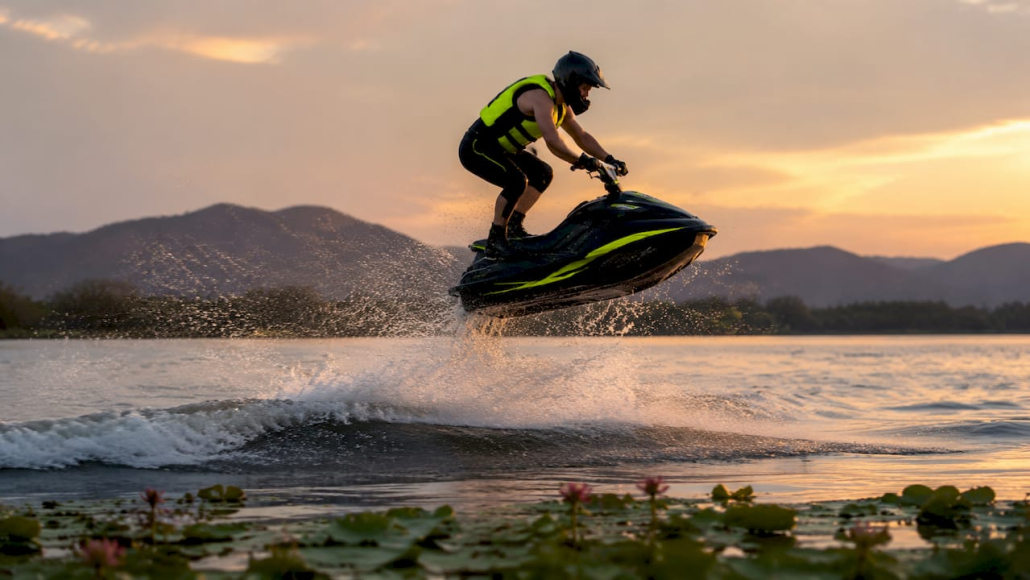
Freestyle Jet Ski Body Position Tips for Riders
Freestyle jet ski body position tips are the foundation of every clean trick, controlled spin, and safe landing on the water. In freestyle PWC riding, the recognized industry term for the discipline is “stand-up freestyle,” and it demands that your body act as an active control system, not a passive passenger. Body-machine synergy means every subtle weight shift you make directly changes how the ski responds beneath you. Get your posture wrong, and even a well-tuned machine will fight you. Get it right, and the ski becomes an extension of your body through every jump, spin, and turn.
What is the foundational freestyle jet ski stance?
The foundational freestyle stance is a tripod of stability built on three points: feet shoulder-width apart, knees bent, and a neutral spine. This combination lowers your center of gravity and keeps your weight centered over the ski at all times. Every advanced maneuver you attempt builds directly on this base position.
Here is what the correct foundational stance looks like in practice:
- Feet placement: Stand with feet shoulder-width apart, parallel to each other, and centered on the footwells. Avoid placing your feet too far forward or too far back.
- Knee angle: Bend your knees 30–45 degrees. This is not a suggestion. Flexing knees 30–45 degrees allows your legs to act as dynamic shock absorbers, absorbing wave impact before it reaches your spine.
- Spine alignment: Keep your spine neutral with a slight forward lean from the hips. Do not round your lower back or hyperextend it.
- Core engagement: Brace your core lightly, as if you expect a small push. This stabilizes your torso without creating tension that slows your reaction time.
- Arm position: Keep your elbows slightly bent and your arms relaxed. Straight, locked arms transfer every vibration directly into your shoulders and neck.
- Eye line: Look forward and slightly down toward the water ahead. Your gaze sets your body’s orientation.
Pro Tip: Never lock your knees straight, even for a moment. Beginners who lock their legs transmit the full force of wave impact directly to the spine, which accelerates fatigue and raises injury risk significantly.
Developing muscle memory for this stance takes deliberate repetition. Spend your first sessions in calm water simply holding the position at low speed, shifting your weight left and right, and feeling how the ski responds. That feedback loop is how the stance becomes automatic before you ever attempt a trick.
How to adjust body position for jumps and 360 spins
Specific freestyle maneuvers require specific body position changes from the neutral stance. The adjustments are not large, but they are exact.
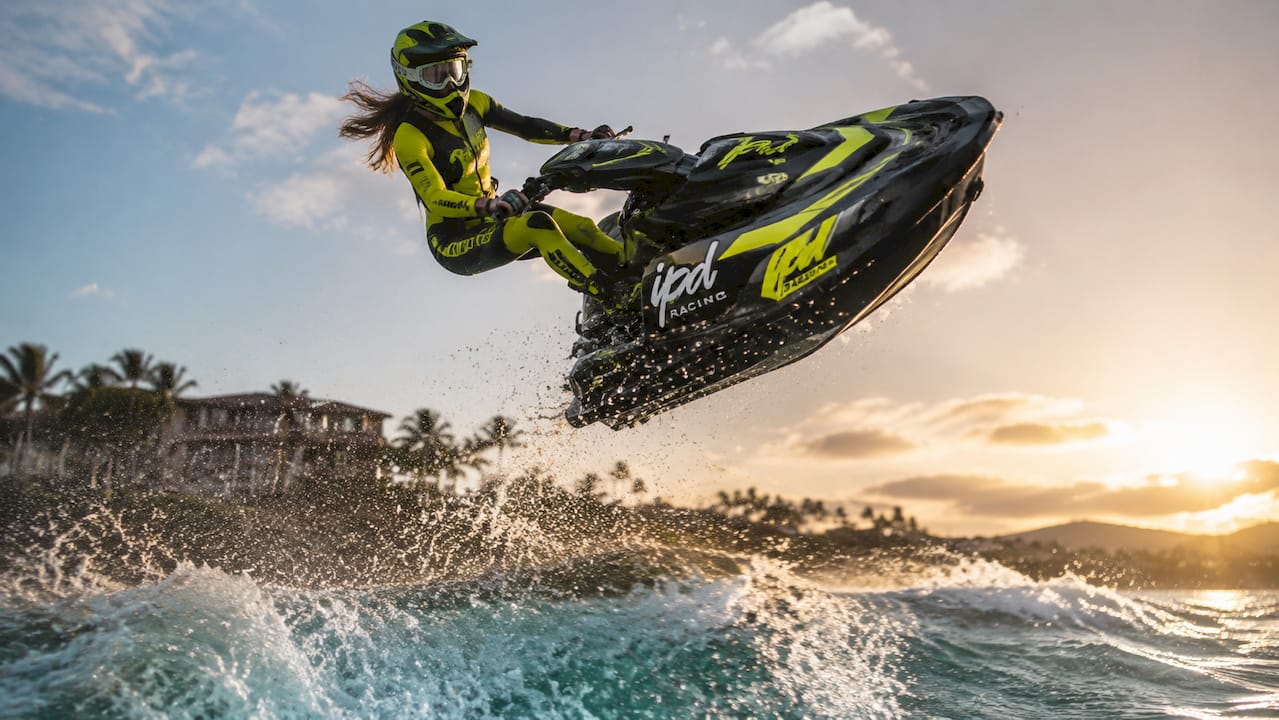
Body position for jumps
Jumping on a stand-up jet ski requires you to load the ski correctly before the wake and absorb the launch with your whole body.
- Approach the wake in your neutral stance. Keep your knees bent and your weight centered as you build speed toward the wake.
- Lean back 10–15 degrees and deepen your knee bend to 45 degrees. A 10–15 degree backward lean with knees at 45 degrees lifts the bow and reduces hull drag at the moment of launch. Too much lean sends the nose skyward and kills control.
- Push through your legs at the lip of the wake. Drive upward with your legs as the ski leaves the water. Think of it as a standing jump, not a passive ride.
- Keep your arms bent and your grip relaxed in the air. A relaxed but firm grip on the handlebars prevents tension from locking your upper body and throwing off your balance mid-air.
- Spot your landing zone with your eyes. Your body follows your gaze. Fix your eyes on where you want to land before you leave the water.
- Absorb the landing with bent knees. Let your legs compress on impact. Never land with straight legs.
Common mistakes on jumps include leaning too far back past 15 degrees, gripping the handlebars with a death grip, and straightening the legs on landing. Each of these errors transfers shock directly to the spine and reduces your ability to control the ski after touchdown.
Body position for 360 spins
A 360-degree spin requires a speed of 20–30 mph with weight shifted rearward and a sharp handlebar turn opposite to the spin direction to initiate rotation cleanly.
Shift your weight to the rear of the ski before initiating the spin. Turn the handlebars sharply in the direction opposite to your intended rotation. As the ski begins to pivot, lean into the turn to counter the centrifugal force pulling you outward. Keep your knees bent throughout the rotation. Your eyes should track the horizon and find your exit point before the spin completes. Riders who lose their landing reference mid-spin almost always over-rotate or fall off balance on exit.
What drills can improve your freestyle body positioning?
Consistent body control on a freestyle ski comes from deliberate practice, not just riding time. These drills build the specific skills that translate directly to trick execution.
- Slow-speed weight shift drill: In calm, flat water at idle speed, practice shifting your weight left, right, forward, and back while holding your neutral stance. Feel how each shift changes the ski’s attitude. Experts recommend practicing slow-speed turns in calm water to master subtle weight shifts before attempting high-speed tricks.
- Wake hopping: Find a small boat wake and ride over it repeatedly at moderate speed. Focus on bending your knees on impact and keeping your spine neutral. This builds the timing and knee flexion that jumps require.
- Lean angle practice: Choose a consistent turn speed and practice leaning into the turn at the same angle each time. Count your repetitions and note when the ski feels most stable. That angle is your balance point for that speed.
- Video analysis: Mount an action camera or have someone film your riding from the dock. Watch your knee angle, spine position, and arm tension. Riders who review video correct posture errors in days that would otherwise take months to identify.
- Grip relaxation check: During every session, pause and consciously release tension from your hands and forearms. A tight grip is a habit that builds without you noticing.
- Core breathing drill: Practice riding while taking slow, controlled breaths. Riders who hold their breath tense their core and upper body, which reduces reaction speed and increases fatigue.
Pro Tip: Progress from small wakes to larger ones incrementally. Attempting big air before you have consistent knee flexion and landing absorption on small wakes is the fastest way to a hard fall.
Keeping your eyes fixed on the landing zone during every trick is a drill in itself. Your body naturally follows your eyes. Train your gaze discipline in low-stakes situations so it becomes automatic in high-speed maneuvers.
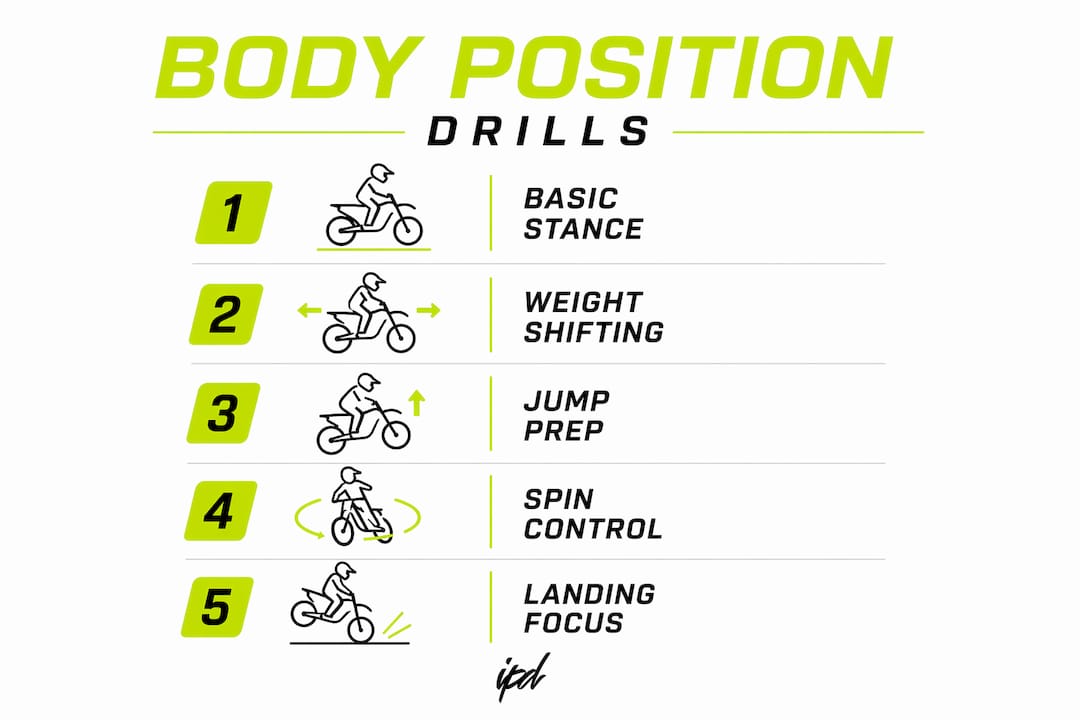
How does proper body positioning reduce injury risk?
Correct body alignment is the primary defense against the two most common freestyle injuries: lower back strain and knee impact trauma.
Knees bent at 30–45 degrees act as active suspension. They absorb water vibration and wave impact before that force reaches the lumbar spine. Riders who lock their knees straight transmit 100% of that impact directly upward through the skeletal system. The result is accelerated spinal fatigue, muscle strain, and a higher risk of acute injury on hard landings.
Ergonomic jet ski features like padded seats and adjustable handlebars reduce lumbar pressure and complement good posture. Equipment that fits your body dimensions makes it easier to hold the correct stance without fighting the machine. Explore Yamaha Superjet options and nozzle modifications that support better body mechanics on the water.
Taking breaks every 15–20 minutes during a freestyle session reduces cumulative muscle fatigue. Continuous riding without rest allows micro-fatigue to accumulate in the stabilizing muscles of the lower back and legs, which degrades posture and raises injury risk in the later part of a session.
| Posture factor | Proper position | Improper position |
|---|---|---|
| Knee angle | 30–45 degrees bent, acts as suspension | Locked straight, transmits full impact to spine |
| Spine alignment | Neutral with slight forward lean | Rounded or hyperextended, increases lumbar strain |
| Grip tension | Relaxed but firm, reduces vibration transfer | Death grip, locks upper body and reduces control |
| Weight distribution | Centered and low over the ski | Too far back or forward, destabilizes the ski |
| Eye focus | Fixed on landing zone or horizon | Looking down at the ski, causes disorientation |
Pro Tip: If your lower back aches after 20 minutes of riding, your knees are probably too straight. Add more bend and the fatigue will drop noticeably within one session.
My take on mastering freestyle body positioning
What I’ve learned from watching riders get body position wrong
Most freestyle riders focus on throttle and trick selection before they have their stance dialed in. That is the wrong order. Every trick I have seen go badly wrong traces back to a posture error, not a throttle error. The rider leaned too far back, locked their knees on landing, or gripped the bars so hard they could not react when the ski moved unexpectedly.
The subtle weight shifts matter more than most riders realize. A two-inch shift of your hips changes the ski’s response dramatically at speed. Riders who understand this stop fighting the machine and start working with it. That shift in thinking is what separates riders who progress quickly from those who plateau.
My advice is to spend at least three full sessions doing nothing but foundational stance work and slow-speed drills before you attempt any aerial maneuver. It feels slow. It is not slow. It is the fastest path to consistent trick execution because you are building the automatic responses that keep you safe when things go wrong at 25 mph over a wake.
Stay relaxed on the water. Tension is the enemy of control. The riders who look effortless are not more talented. They are more relaxed.
— Casey
Upgrade your ride with IPD Racing freestyle gear
Body positioning gets you far, but the right equipment makes every technique more effective. IPD Racing carries performance parts, ergonomic accessories, and safety gear built specifically for freestyle PWC riders. From handlebar setups that support proper arm position to hull components that improve stability during spins and jumps, the right parts reinforce good posture rather than work against it. Visit the IPD Racing shop to browse freestyle-focused parts and accessories. For performance upgrades tailored to freestyle riding, check out the top performance parts available for your specific model. IPD Racing’s team is ready to help you match the right gear to your riding style.
FAQ
What is the correct knee angle for freestyle jet ski riding?
Bend your knees 30–45 degrees during all freestyle riding. This angle allows your legs to absorb wave impact and prevents that force from reaching your spine.
How fast should you go for a 360 spin on a jet ski?
A 360-degree spin requires a speed of 20–30 mph with weight shifted to the rear and a sharp handlebar turn opposite to the spin direction.
Why does eye focus matter during freestyle tricks?
Your body naturally follows your eyes. Keeping your gaze fixed on the landing zone during tricks prevents over-rotation and unstable landings.
How often should you take breaks during a freestyle session?
Take a break every 15–20 minutes to reduce cumulative muscle fatigue and maintain the posture control needed for safe trick execution.
What is the most common body position mistake in freestyle jet skiing?
Locking the knees straight is the most damaging error. It transmits the full force of wave impact directly to the spine and accelerates fatigue and injury risk.

