
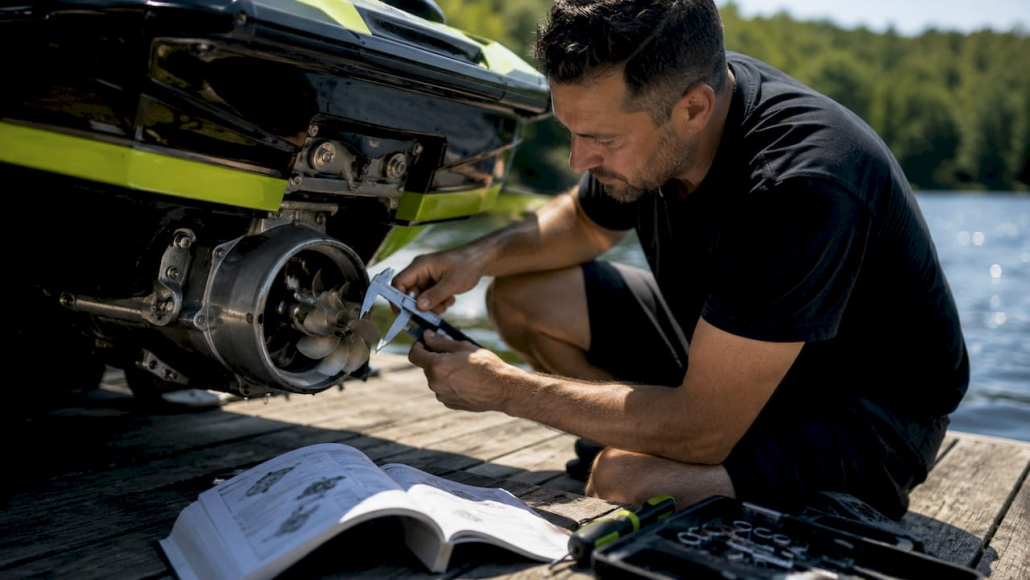
Why Racing Jet Skis Cavitate: Causes and Fixes
Cavitation in racing jet skis is defined as the formation and collapse of vapor bubbles inside the jet pump when localized water pressure drops below the vapor pressure of water. Those collapsing bubbles are not just a noise problem. They erode impeller blades, damage the wear ring, and rob your ski of thrust at exactly the moment you need it most. If you have ever felt a sudden loss of acceleration, heard a rattling grind from the pump, or watched your RPMs spike without a matching speed increase, you have already experienced cavitation symptoms firsthand. Understanding why racing jet skis cavitate is the first step toward eliminating it.
Why racing jet skis cavitate: the core mechanics
Cavitation is the industry term for what happens when your jet pump cannot maintain adequate water pressure around the impeller. The impeller spins at high RPM, accelerating water through a confined housing. When flow is disrupted, pressure in that housing drops. Once it falls below the vapor pressure of the surrounding water, the liquid flashes into vapor bubbles. Those bubbles then collapse violently, releasing energy directly against metal surfaces.
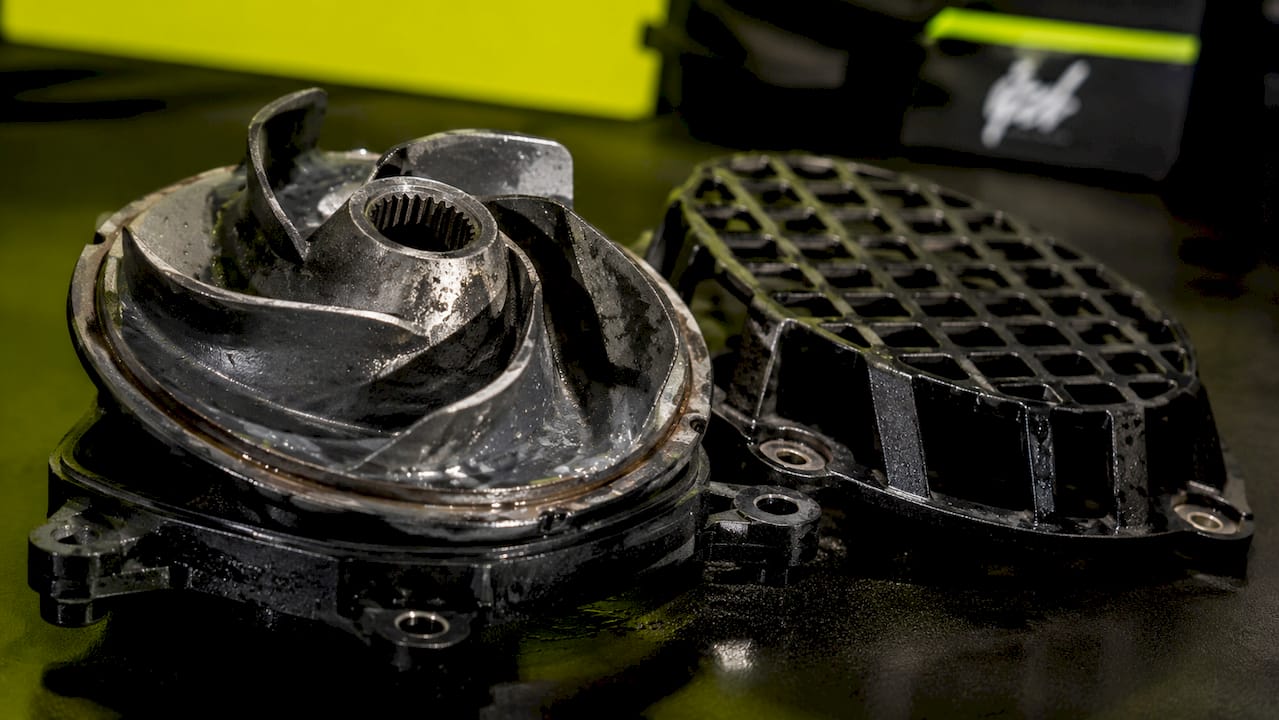
The impeller and wear ring absorb the most punishment. The wear ring seals the gap between the impeller and the pump housing. When that seal degrades, water recirculates instead of accelerating forward, which compounds the pressure drop. Racing conditions make this worse because high RPM and aggressive throttle inputs push the pump to its limits constantly.
Two components define whether your pump cavitates or not: the impeller and the intake grate. A healthy impeller with clean, sharp blade edges moves water in a controlled, laminar stream. A healthy intake grate feeds that stream without restriction. Compromise either one and cavitation follows.
What mechanical factors cause cavitation in racing jet skis?
Mechanical wear is the most common root cause of cavitation effects on racing performance. The pump system has tight tolerances, and small deviations produce large consequences at race speeds.
- Impeller blade damage. Minor imperfections on impeller blades, including nicks, dents, and chips, severely disrupt water flow, creating low-pressure zones that initiate cavitation bubbles and accelerate component wear. A blade that looks only slightly dinged can cut thrust by a measurable margin.
- Worn wear ring. The wear ring maintains the pressure differential that drives thrust. As it wears, the gap between it and the impeller widens. Water leaks backward through that gap, reducing forward pressure and triggering cavitation at lower and lower RPMs.
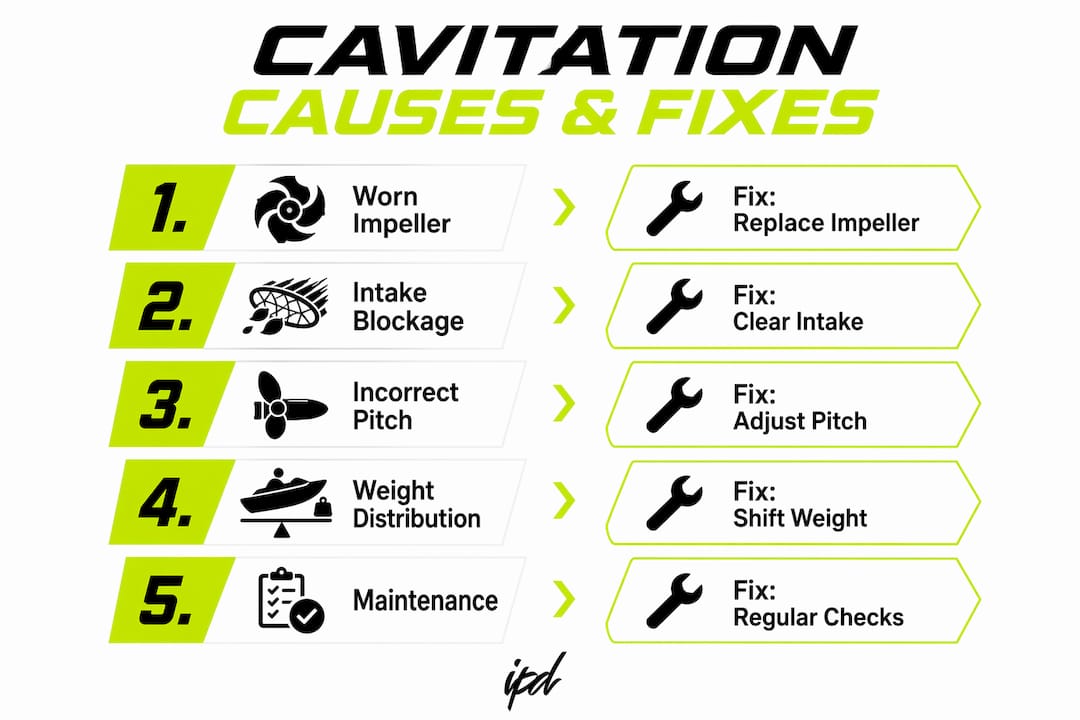
- Incorrect impeller pitch. Pitch determines how aggressively the impeller bites into water. Too steep a pitch for your engine’s power band means the impeller outpaces water supply, dropping pressure instantly. Matching pitch to your specific engine output and race class is not optional.
- Blocked intake grates. Blocked intake grates restrict water flow and induce cavitation under load by creating low-pressure zones. Debris, seaweed, and sand are common culprits, especially in closed-course racing where wakes and chop stir up the water column.
- Damaged ride plate. A clogged or cracked ride plate disrupts the laminar flow entering the pump, causing RPM fluctuations and cavitation symptoms that are easy to misread as engine problems.
Pro Tip: Inspect your impeller every 30–50 hours in sandy or debris-prone racing conditions. Dull or eroded blades disrupt laminar flow and create the exact low-pressure zones that start the cavitation cycle.
Regular mechanical checks are the most cost-effective prevention available. Catching a nicked impeller blade before a race costs far less than replacing a pump housing after one.
How operational practices trigger cavitation during races
Rider behavior drives cavitation just as reliably as mechanical wear. The pump does not know the difference between a worn impeller and a throttle input that outpaces water supply. Both produce the same pressure drop.
- Snap throttle at low speed. Excessive throttle at low speeds causes a mismatch between RPM and water flow, leading directly to cavitation. The engine spins the impeller faster than water can enter the intake, and the pump momentarily runs dry.
- Overloading the ski. Overloading beyond rated capacity reduces buoyancy, causing the impeller to ingest air and triggering cavitation. Even 100 lbs over capacity significantly increases cavitation risk during sharp turns or acceleration. In racing, this applies to gear, fuel load, and rider weight combined.
- Incorrect trim angle. Trim angle controls how the impeller meets the water surface. Too much bow-up angle lifts the intake out of clean water. Too much bow-down buries the nose and creates turbulence at the grate. Both positions feed disrupted water into the pump.
- Ignoring environmental conditions. Warm water and higher salinity lower vapor pressure, making cavitation more likely than in cold freshwater. Racing in warm saltwater venues like coastal Texas or Florida events means your cavitation threshold is already lower before you touch the throttle.
- Aggressive cornering without throttle management. Hard turns expose the intake grate to aerated water and surface chop. Maintaining full throttle through a tight corner feeds air-mixed water directly into the pump.
Pro Tip: Practice progressive throttle application off the line. Smooth, controlled acceleration keeps water supply ahead of impeller demand and reduces cavitation risk at the most vulnerable point in any race start.
Weight distribution matters more than most racers acknowledge. Shifting your body position forward during acceleration keeps the intake submerged in clean, dense water, which directly reduces the pressure drop that starts cavitation.
How to diagnose cavitation and interpret its symptoms
Catching cavitation early saves your pump. The symptoms are distinct once you know what to look for, and they follow a recognizable pattern.
Observable symptoms during a ride:
- Sudden loss of acceleration with no corresponding drop in RPM
- Rattling or grinding noise from the pump area, often described as gravel in a blender
- Vibration through the hull and handlebars during acceleration
- Milky or aerated water exiting the jet nozzle instead of a clean, solid stream
- RPM spikes that do not translate into speed gains
Post-ride inspection checklist:
- Remove the intake grate and check for debris, cracks, or deformation
- Inspect impeller blades for chips, dents, and dullness that reduce propulsion efficiency
- Check the wear ring for scoring, uneven wear, or visible gaps around the impeller
- Examine the ride plate for cracks or buildup that could restrict flow
- Look for discoloration or pitting on the pump housing interior, which signals repeated bubble collapse
| Symptom | Likely cause | Inspection target |
|---|---|---|
| Rattling noise from pump | Impeller blade damage | Impeller blades and wear ring |
| RPM spike, no speed gain | Blocked intake or air ingestion | Intake grate and ride plate |
| Vibration through hull | Worn wear ring or pitch mismatch | Wear ring gap and impeller pitch |
| Milky water at nozzle | Air ingestion from overload or trim | Trim setting and load weight |
| Sudden thrust loss | Severe cavitation or pump damage | Full pump teardown inspection |
A professional mechanical inspection after any race where you noticed these symptoms is the right call. Cavitation damage compounds quickly. What starts as a nicked blade becomes a scored housing if you keep running.
Strategies and modifications to reduce cavitation for better performance
Reducing cavitation is a combination of correct parts selection, proper setup, and consistent maintenance. No single fix covers all causes.
High-performance intake grates are the most direct hardware upgrade for cavitation control. Optimized intake grate design forces laminar flow into the pump, reducing air-induced cavitation under racing stress. Stock grates are designed for general use. Racing grates from manufacturers like Worx Racing Components are shaped to maximize water volume and flow consistency at speed.
Trim and nozzle adjustment is a zero-cost modification with real results. Trim angle adjustments control how the impeller meets the water surface, helping prevent cavitation especially during acceleration. Dial in your trim before each race based on water conditions, not just personal preference.
| Modification | Cavitation benefit | Best for |
|---|---|---|
| High-performance intake grate | Improves laminar flow, reduces air ingestion | All racing classes |
| Correct impeller pitch | Matches blade angle to engine power band | Engine-specific tuning |
| Wear ring replacement | Restores pressure seal around impeller | High-hour or damaged pumps |
| Trim angle optimization | Keeps intake submerged in clean water | Acceleration and cornering |
| Ride plate inspection and replacement | Eliminates flow disruption at pump entry | Sandy or debris-heavy venues |
Impeller and wear ring replacement schedules matter as much as part selection. Running a worn wear ring because it “still works” is a false economy. The gap it allows grows with every hour of use, and cavitation risk grows with it. Set a replacement interval based on your race schedule, not just visible damage.
Impeller pitch selection for your specific race class and engine output is a decision worth consulting a specialist on. The impeller performance relationship between pitch, RPM, and water supply is precise. A pitch that works perfectly at one power level can cavitate constantly at another.
Pro Tip: After any hardware change, run a controlled test pass at moderate throttle before pushing to race pace. Listen for early cavitation signs before they become pump damage.
Casey’s take on what racers consistently get wrong
My take on what racers consistently get wrong
I have watched racers spend serious money on engine work and then lose all of it to a worn wear ring they could have replaced for under $50. Cavitation is not glamorous. It does not show up in dyno numbers. But it shows up on the water, and it shows up in your finish position.
The two most overlooked causes I see consistently are environmental conditions and weight distribution. Racers who train in cold freshwater and then compete at a warm saltwater event are running a different vapor pressure threshold without adjusting anything. That alone can push a pump that was borderline into full cavitation under race load. Warm water and higher salinity lower vapor pressure, and most riders never account for it.
Weight distribution is the other one. Where you sit on the ski during acceleration changes the intake angle. I have seen riders fix a cavitation problem just by shifting their body position forward at launch, no parts required.
My recommendation is to build a pre-race inspection into your standard prep, not just a post-damage response. The race prep checklist at IPD Racing is a solid starting point. Combine that with a scheduled wear ring and impeller check every 30–50 hours, and you eliminate most mechanical cavitation causes before they become race-day problems. Ignore minor symptoms and you will eventually be pulling a scored pump housing at the worst possible time.
— Casey
Stop cavitation before it costs you a race
Cavitation is a mechanical and operational problem with proven solutions. IPD Racing stocks the performance parts that address the root causes directly, including high-performance intake grates, replacement wear rings, and competition-spec impellers matched to your ski’s engine and race class.
Whether you need a full pump rebuild or just the right impeller pitch for your next event, the IPD Racing shop carries parts for Yamaha, Kawasaki, and Sea-Doo platforms across all racing classes. For racers who want a professional eye on their setup, the PWC Doctor service at IPD Racing provides expert inspection and tuning specifically for competition PWCs. If you are sourcing parts by brand or model, the top performance alternatives guide is a strong reference for finding quality components that hold up under race conditions.
Key takeaways
Racing jet skis cavitate when jet pump pressure drops below water’s vapor pressure, and preventing it requires addressing both mechanical wear and rider technique together.
| Point | Details |
|---|---|
| Cavitation definition | Vapor bubble formation in the jet pump causes thrust loss and component damage. |
| Top mechanical causes | Worn wear rings, damaged impeller blades, and blocked intake grates are the primary culprits. |
| Operational triggers | Snap throttle at low speed and overloading beyond rated capacity both induce cavitation directly. |
| Environmental factors | Warm saltwater lowers vapor pressure, raising cavitation risk compared to cold freshwater venues. |
| Prevention priority | Schedule impeller and wear ring inspections every 30–50 hours and match impeller pitch to your engine output. |
FAQ
What is cavitation on a jet ski?
Cavitation is the formation and collapse of vapor bubbles inside the jet pump when water pressure drops below the vapor pressure of water. It causes thrust loss, rattling noises, vibration, and damage to the impeller and wear ring.
What are the most common causes of jet ski cavitation?
The most common causes are worn impeller blades, a degraded wear ring, blocked intake grates, incorrect impeller pitch, and excessive throttle at low speeds. Environmental factors like warm water and high salinity also lower the cavitation threshold.
How do I know if my jet ski is cavitating?
The clearest signs are a sudden RPM spike without speed gain, rattling or grinding from the pump, vibration through the hull, and milky aerated water exiting the nozzle. Post-ride inspection of the impeller and wear ring confirms the cause.
How can I reduce cavitation on a racing jet ski?
Install a high-performance intake grate to promote laminar flow, replace worn wear rings on schedule, match impeller pitch to your engine’s power band, and practice progressive throttle application. Correct trim angle during acceleration also keeps the intake in clean water.
Does water temperature affect cavitation risk?
Yes. Warm water and higher salinity lower vapor pressure, making cavitation more likely than in cold freshwater conditions. Racers competing in warm saltwater venues should account for this when setting up their pump and trim.

