
Jet Ski Top Speed Optimization: A Practical Guide
Jet ski top speed optimization is the process of tuning your watercraft’s engine, fuel system, impeller, and weight distribution to reach maximum velocity. Typical recreational jet skis reach 40–70 mph, while race-tuned machines can push well past 80 mph. Achieving those higher numbers requires more than a single upgrade. It takes a coordinated approach across fuel delivery, propulsion, and rider technique. This guide covers each factor directly, with real-world data from RIVA Racing, SBT, and Dynojet to back every recommendation.
What are the key factors affecting jet ski top speed?
Speed on the water comes down to four variables: engine output, impeller pitch, hull design, and total weight. Change one without accounting for the others and your results will be inconsistent. Understanding how each variable works gives you a clear path to faster, more repeatable runs.
Engine output is the foundation. More horsepower moves more water through the pump, which translates directly to thrust. Factory ECU maps are conservative by design, leaving power on the table that tuning can recover.
Hull design and friction matter more than most riders expect. A hull that sits too deep in the water creates drag. Trim angle controls how much hull contacts the surface, and even small adjustments shift the balance between acceleration and top speed.
The fuel system and impeller pitch work together to deliver that power to the water:
- Fuel injector condition: Dirty injectors disrupt fuel delivery, preventing the engine from reaching top RPM and risking lean burn damage.
- Impeller pitch: Functions like a gear ratio in a car. Higher pitch favors acceleration off the line; lower pitch raises top speed and improves fuel efficiency.
- Weight: Every pound on the craft adds resistance. Rider position also shifts hull attitude, which changes how the intake interacts with water.
- Water conditions: Choppy water disrupts hull contact and causes cavitation, reducing thrust even when the engine is running perfectly.
Addressing all four areas together produces the most reliable speed gains. Fixing only one while ignoring the others leaves significant performance unrealized.
How to tune and maintain your fuel system for top speed performance
Fuel system cleanliness is a performance modification in its own right. Fuel injectors fire hundreds of times per second, and any restriction in flow reduces top-RPM power while increasing the risk of engine damage from lean combustion. Keeping injectors clean is one of the highest-return maintenance tasks available.
Follow these steps to service your fuel system properly:
- Diagnose the problem first. Symptoms of dirty injectors include rough idling, hesitation at full throttle, and failure to reach peak RPM. Confirm the issue before pulling parts.
- Remove the injectors. Follow the service manual for your specific model. Sea-Doo and Yamaha injectors are accessible but require careful handling of fuel rail connections.
- Use ultrasonic cleaning. Ultrasonic cleaning cycles run approximately 30 minutes to remove varnish deposits that fuel additives cannot reach. This method is the most effective available.
- Flow-test after cleaning. Confirm each injector delivers a consistent spray pattern before reinstalling. Uneven flow between cylinders causes power imbalance.
- Use quality fuel. Premium fuel with low ethanol content reduces varnish buildup and supports consistent combustion.
Older carbureted jet skis require jet sizing and needle adjustments instead of injector service. The principle is the same: consistent, correct fuel delivery at all RPM ranges.
For EFI models, Dynojet’s Power Vision tuner allows precise recalibration of fuel delivery and ignition timing. It gives riders direct control over the engine map without requiring a dyno visit for basic adjustments.
Pro Tip: Never rely on fuel additive treatments alone for injector cleaning. They reduce buildup over time but cannot clear varnish deposits already present. Ultrasonic cleaning is the only method that fully restores injector flow.
How to adjust impeller pitch and trim for acceleration vs. top speed
Impeller pitch is the single most direct mechanical lever for tuning the balance between acceleration and top speed. Pitch adjustments typically run in 0.5–1 degree increments, with lower pitch improving top speed and higher pitch sharpening off-the-line acceleration. Getting this right requires methodical on-water testing, not guesswork.
Follow this process to dial in your impeller and trim settings:
- Establish a baseline. Run three timed passes on calm water at neutral trim. Record your average top speed before touching anything.
- Adjust pitch in small steps. Change pitch by 0.5 degrees at a time. Larger jumps make it impossible to identify which change produced which result.
- Set trim to neutral for testing. Neutral trim with controlled conditions produces the most reliable data. Varying trim between runs introduces a second variable that corrupts your speed readings.
- Run multiple passes per setting. Three passes minimum per configuration. Average the results. A single run is not a valid data point.
- Check for cavitation. If the engine revs freely but speed does not increase, the impeller is slipping in the water. Reduce pitch or inspect the pump for wear.
Trim angle affects how much hull rides above the surface. Too much bow rise reduces intake immersion and causes cavitation. Too little creates drag. Most top-speed runs benefit from a slightly nose-down attitude that keeps the intake fully submerged.
Pro Tip: Test on the same stretch of water at the same time of day. Wind, current, and chop all affect speed readings. Consistent conditions are the only way to know whether a mechanical change actually worked.
What performance upgrade kits deliver the best speed gains?
Staged performance kits from RIVA Racing represent the most documented path to measurable speed increases on modern jet skis. RIVA Racing’s Stage 3 kit pushes a Sea-Doo 325 from a factory speed near 68 mph to 88 mph under controlled conditions. That is a 20 mph gain from a single kit, though it requires ECU tuning and upgraded injectors alongside the hardware.
| Stage | Reported Top Speed | Key Components |
|---|---|---|
| Factory | ~68 mph | Stock ECU, stock impeller |
| Stage 1 | ~80 mph | Intake, exhaust, ECU tune |
| Stage 2 | ~83–84 mph | Stage 1 plus impeller, fuel upgrades |
| Stage 3 | ~88 mph | Full kit, upgraded injectors, ECU remap |
The progression matters. Each stage builds on the last. Skipping to Stage 3 without Stage 1 components in place creates tuning conflicts and can damage the engine. Performance upgrade kits require ECU unlocking and advanced mapping tools like the Maptuner Nano to safely manage increased fuel and boost levels.
Beyond staged kits, these upgrades deliver measurable results:
- Aftermarket impellers: Solas and Skat-Trak impellers offer pitch and blade geometry options not available from the factory.
- Exhaust upgrades: Reducing backpressure allows the engine to breathe more freely at high RPM.
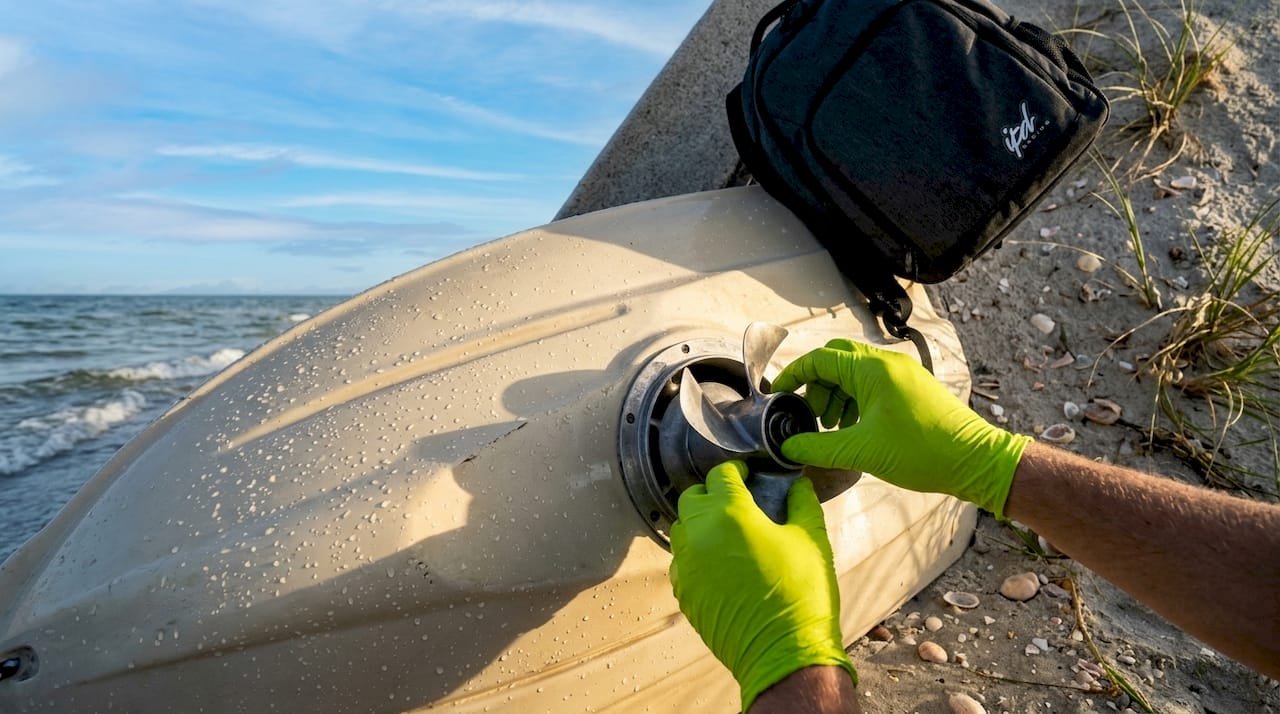
- Pump and wear ring service: A worn wear ring allows water to bypass the impeller, reducing thrust. Replacing it restores full pump efficiency.
- Turbo builds:
Turbocharged builds can reach 135 mph at extreme power levels, though these setups require specialized engineering well beyond recreational tuning scope.
IPD Racing carries RIVA Racing kits for Sea-Doo models and a full range of Yamaha performance parts for riders looking to source staged upgrades in one place.
Weight management, rider technique, and practical speed tips
Weight reduction directly improves both speed and handling. Lightweight materials and mindful gear placement maximize speed potential, but the gains must be balanced against fuel load and safety equipment requirements. Removing unnecessary storage gear and keeping the fuel tank at a working level rather than full are two easy wins.
Rider technique has a measurable effect on hull behavior:
- Body position: Lean slightly forward during acceleration to keep the bow down and maintain intake immersion. Shift weight back as you approach top speed to reduce drag.
- Smooth throttle inputs: Abrupt throttle changes cause the hull to pitch and disrupt water flow through the pump. Gradual, steady throttle application produces faster runs.
- Avoid rough water for speed testing: Changing water roughness impacts hull immersion and cavitation, altering speed outcomes regardless of mechanical setup.
Regular maintenance also preserves the speed gains you have already built. Check the wear ring and pump intake for debris after every session. Inspect spark plugs for signs of lean burn. Keep the hull clean, as fouling from algae and mineral deposits adds friction over time.
Pro Tip: Run your speed tests with the same fuel level each time. A full tank adds significant weight compared to a half tank, and that difference shows up in your top speed numbers.
Key Takeaways
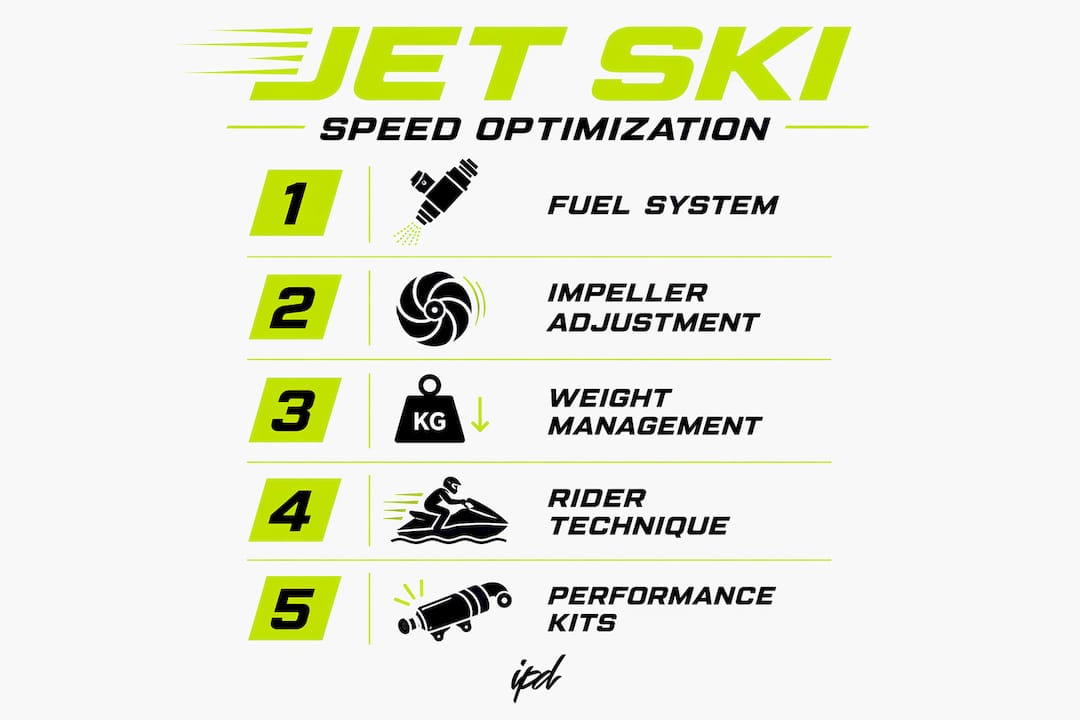
Jet ski top speed optimization requires coordinated changes across fuel delivery, impeller pitch, weight, and rider technique to produce consistent, measurable speed gains.
| Point | Details |
|---|---|
| Fuel system cleanliness | Clean injectors using ultrasonic methods to restore full top-RPM power and prevent lean burn damage. |
| Impeller pitch tuning | Adjust pitch in 0.5–1 degree increments and validate every change with multiple on-water passes. |
| Staged upgrade kits | RIVA Racing Stage 3 kits have pushed a Sea-Doo 325 from 68 mph to 88 mph with ECU tuning. |
| Weight and rider position | Reduce unnecessary weight and lean forward during acceleration to maintain intake immersion. |
| Consistent test conditions | Use neutral trim, calm water, and a fixed fuel level to get reliable data from every tuning change. |
What I have learned from chasing top speed on the water
Most riders make the same mistake: they buy a performance part, bolt it on, and declare the project done. Real speed gains come from treating every run as a controlled test. I have seen riders add a Stage 2 kit and report no improvement because they tested on choppy water the day after a front came through. The kit worked fine. The test conditions were the problem.
The other thing I keep coming back to is that fuel system health is underrated as a speed modifier. Riders spend thousands on impellers and exhaust systems while running injectors that have not been serviced in three seasons. A proper ultrasonic cleaning cycle often recovers more top-end RPM than a bolt-on intake upgrade. It is also a fraction of the cost.
My honest recommendation: start with a full fuel system service and a baseline speed test before spending anything on hardware. Know your actual starting point. Then work through impeller pitch adjustments before committing to a staged kit. The riders who get the most out of expensive upgrades are the ones who already understand how their ski behaves at the mechanical level.
Safety and legal limits are real constraints, not suggestions. Many waterways have posted speed limits, and race-level modifications on a recreational ski create liability exposure. Know the rules for your riding area before chasing 88 mph numbers.
— Casey
Performance parts for every stage of your build
IPD Racing stocks performance parts, tuning devices, and maintenance components for jet ski owners at every level, from first-time upgrades to full race builds.
Whether you are sourcing a RIVA Racing staged kit, a Dynojet Power Vision tuner, or wear ring replacements to restore pump efficiency, the IPD Racing shop carries the parts you need in one place. IPD Racing also supports Sea-Doo and Yamaha owners with model-specific catalogs, so you find parts confirmed to fit your hull. For riders considering a turbo build or exploring the upper limits of speed modification, the jet ski turbo kit overview breaks down power gains and what each build stage actually requires.
FAQ
What is jet ski top speed optimization?
Jet ski top speed optimization is the process of tuning a watercraft’s engine, fuel system, impeller pitch, and weight to reach its maximum achievable velocity. It combines mechanical upgrades with maintenance and rider technique adjustments.
How much speed can a performance kit add to a jet ski?
RIVA Racing’s Stage 3 kit has pushed a Sea-Doo 325 from approximately 68 mph to 88 mph under controlled conditions. Stage 1 and Stage 2 kits deliver progressive gains of roughly 12 and 15–16 mph respectively over factory speed.
Does impeller pitch affect top speed or acceleration?
Impeller pitch affects both, but in opposite directions. Lower pitch raises top speed and improves fuel efficiency; higher pitch sharpens acceleration. Adjustments should be made in 0.5–1 degree increments with on-water testing between each change.
How often should jet ski injectors be cleaned for performance?
Injectors should be inspected and cleaned whenever symptoms appear, including rough idling, throttle hesitation, or failure to reach peak RPM. Ultrasonic cleaning is the only method that fully removes varnish deposits from injector internals.
Can rider position affect jet ski top speed?
Yes. Leaning forward during acceleration keeps the bow down and maintains pump intake immersion. Shifting weight back at top speed reduces hull drag. Consistent body position across test runs also produces more reliable speed data.

