

Jet Ski Exhaust System Role: Functions and Performance
The jet ski exhaust system is defined as the integrated assembly responsible for venting combustion gases, reducing engine noise, regulating backpressure, and circulating cooling water through the engine. Unlike automotive exhaust systems, a personal watercraft (PWC) exhaust operates in a wet, corrosive marine environment where gas management and thermal control are inseparable functions. Brands like Sea-Doo and Yamaha engineer their exhaust systems to handle all four roles simultaneously, because failure in any one area directly threatens engine longevity and rider safety. Understanding the jet ski exhaust system role is the foundation for both smart maintenance and informed performance upgrades.
What are the key functions of a jet ski exhaust system?
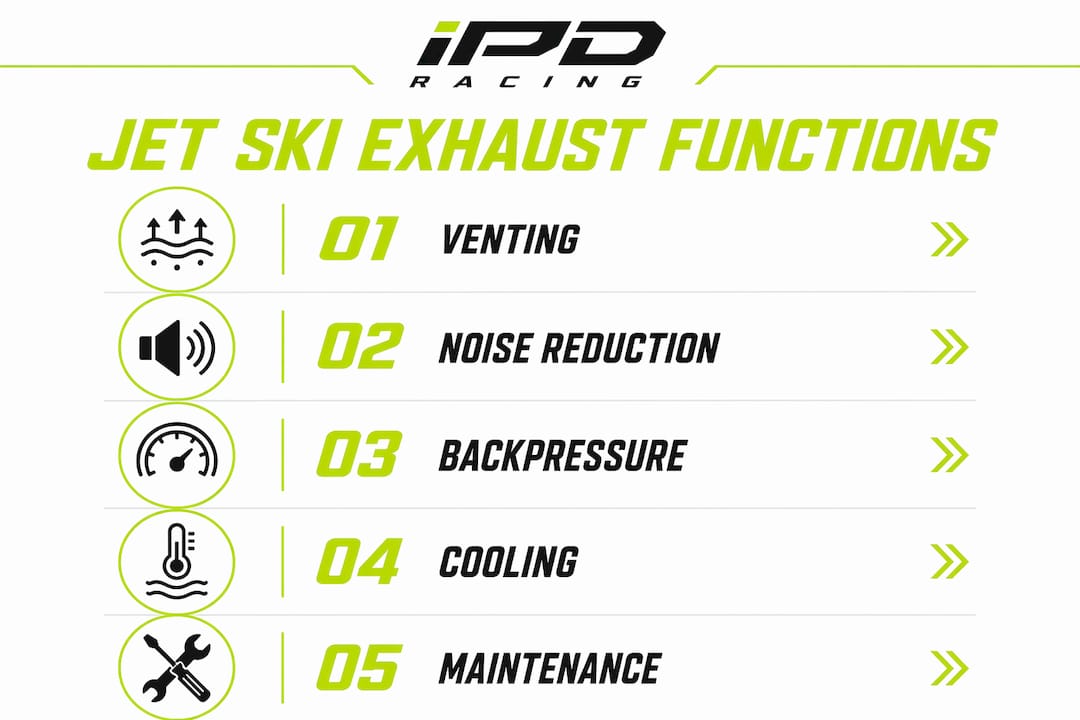
The jet ski exhaust system performs four primary roles: venting combustion gases, reducing noise through water-cooled chambers, maintaining backpressure, and facilitating engine cooling water circulation. Each function is interdependent. Compromise one, and the others degrade in sequence.
1. Venting combustion gases
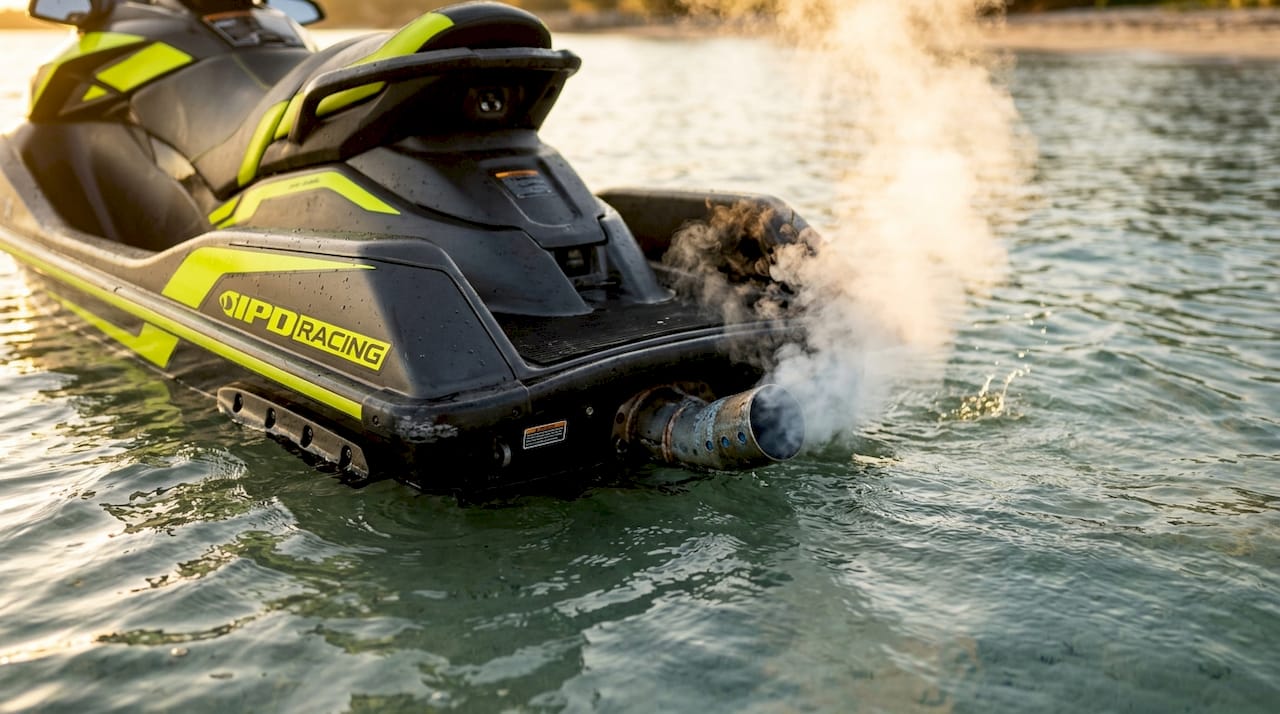
Hot, toxic exhaust gases produced during combustion must exit the engine quickly and safely. In a PWC, the engine sits in a confined hull with minimal airflow, so the exhaust path is the only reliable route for these gases to escape. Delayed or restricted venting raises cylinder temperatures and increases the risk of detonation.
2. Noise reduction via water injection
Water-cooled marine exhaust systems inject cooling water directly into the exhaust pipe to reduce both temperature and sound. This design is a direct response to the wet, corrosive environment of watercraft and has no equivalent in standard automotive exhaust design. The result is a quieter, cooler exhaust stream that exits safely below the waterline or through a transom port.
3. Backpressure regulation
Backpressure is the resistance the exhaust gas encounters as it moves through the system. Too little backpressure reduces low-end torque; too much restricts high-rpm power. The exhaust system on a jet ski is tuned to maintain a specific pressure range that matches the engine’s power band, whether that engine is a recreational 1.0-liter Yamaha or a race-built supercharged Sea-Doo unit.
4. Cooling water circulation
Jet skis do not use traditional water pumps for engine cooling. Instead, they rely on exhaust gas pressure to push cooling water through the engine block and cylinder head. This makes the exhaust system the primary driver of thermal management, not a secondary component.
Pro Tip: If your jet ski runs hotter than normal after a ride, check the exhaust outlet for partial blockage before assuming a thermostat failure. Restricted exhaust flow directly reduces cooling water circulation.
How does the jet ski exhaust system integrate with the engine cooling system?
The integration of exhaust and cooling in PWCs is a unique design that differs significantly from automotive engines. In a car, the cooling system and exhaust system are completely separate. In a jet ski, they share the same pressure source: exhaust gas.
Here is how the process works in sequence:
- The engine fires and produces exhaust gas under pressure.
- That pressure pushes raw water drawn from outside the hull through the cooling jacket surrounding the engine block.
- The now-heated water is injected into the exhaust manifold, where it cools the exhaust gases and reduces noise simultaneously.
- The combined water and gas mixture exits through the exhaust outlet.
This design means the exhaust system is the primary heat exchanger for the engine. As marine experts note, the exhaust path prevents overheating and water ingestion in a space where no conventional cooling fan could function. The practical implication is significant: if the exhaust system is blocked or degraded, the engine loses both its gas venting path and its cooling circuit at the same time.
“Jet skis rely on exhaust pressure to push cooling water through the engine. No engine running means no exhaust pressure, which means no cooling water movement.” This is why flushing a jet ski with the engine off risks hydrolock, as water can flow backward into the combustion cylinders and destroy the engine.
Proper exhaust hose routing is equally critical. Kinks or sharp bends in the exhaust hose create excessive backpressure and can cause water backflow into the engine, a failure mode that is expensive and entirely preventable with correct installation.
What maintenance practices are essential for jet ski exhaust system longevity?
Most engine failures in jet skis result from owner neglect in post-ride maintenance, not mechanical faults. The exhaust and cooling systems are the most vulnerable to salt damage, and the damage accumulates invisibly until a component fails.
Follow this flushing sequence after every saltwater ride:
- Connect a fresh water hose to the flush port with the engine off.
- Start the engine before opening the water supply. The engine must be running to generate exhaust pressure before water enters the system.
- Open the water supply and flush for 90 seconds to 3 minutes. This duration is the minimum required to clear salt from the exhaust passages and cooling jacket.
- Close the water supply before shutting off the engine. Reversing this order allows water to back-flow into the cylinders.
- Use an inline salt-neutralizer in the flush line when available.
Salt crystals bake inside cooling jackets and exhaust paths after every saltwater ride. Plain tap water often cannot dissolve hardened salt deposits, which is why inline chemical salt-neutralizers are recommended. These products break down salt at the chemical level, protecting both the exhaust passages and the cooling jacket from corrosion and clogging.
Salt accumulation acts as a thermal insulator inside the cooling jacket. When the jacket walls are coated in salt deposits, heat transfer drops and the engine runs hotter on every subsequent ride. Left unchecked, this leads to rapid cooling jacket failure and exhaust blockage, two repairs that often require a full engine teardown.
Pro Tip: Add a bottle of salt-neutralizing flush concentrate to your post-ride kit. Running it through the system once a week during heavy saltwater use costs less than $10 per session and extends exhaust and cooling component life by years.
How do exhaust system designs and components affect jet ski performance?
The water box is the most performance-critical component in the jet ski exhaust system. It functions as both a resonator and a flow regulator, muffling sound while shaping the exhaust pulse to optimize engine output. The water box acts as a resonator in the exhaust path, and aftermarket versions can reduce backpressure by up to 20%, directly improving acceleration and top speed. That is a measurable performance gain from a single component swap.
The table below compares stock and aftermarket exhaust component characteristics across the key performance variables:
| Component | Stock configuration | Aftermarket performance upgrade |
|---|---|---|
| Water box | Tuned for noise compliance and durability | Reduced backpressure, optimized flow for higher rpm |
| Exhaust manifold | Cast iron or aluminum, general-purpose design | Ported and polished for improved gas velocity |
| Exhaust hose | Standard rubber, minimal heat resistance | High-temp silicone, reduced restriction |
| Muffler system | Prioritizes noise reduction over flow | Straight-through or chambered design for power gain |
| Cooling water injection point | Fixed factory location | Repositioned for improved thermal management |
For recreational riders on Sea-Doo Spark or Yamaha EX models, the stock system is well-matched to the engine’s output range. For competitive riders running supercharged Sea-Doo RXP-X or Yamaha GP1800R platforms, the stock water box becomes a restriction at high rpm. Aftermarket suppliers design water boxes with larger internal volumes and smoother flow paths to match the increased exhaust gas volume these engines produce at full throttle.
Noise reduction in the muffler system works through a combination of water injection and chamber design. The water absorbs sound energy from the exhaust pulse, and the chamber geometry reflects and cancels specific frequencies. Racing jet skis often run louder systems because the muffler chambers are tuned for flow over noise suppression, a direct trade-off between compliance and performance.
Key takeaways
The jet ski exhaust system controls gas venting, noise, backpressure, and engine cooling simultaneously, making it the single most functionally complex system on a personal watercraft.
| Point | Details |
|---|---|
| Four core functions | The exhaust system vents gases, reduces noise, regulates backpressure, and drives cooling water circulation. |
| Cooling system dependency | Jet skis use exhaust gas pressure, not a water pump, to circulate engine cooling water. |
| Flushing sequence matters | Always start the engine before opening the flush water supply to prevent hydrolock. |
| Salt damage is cumulative | Salt deposits act as thermal insulators; use inline salt-neutralizers to prevent cooling jacket failure. |
| Aftermarket water boxes | Performance water boxes can reduce backpressure by up to 20%, improving acceleration and top speed. |
Why most riders underestimate their exhaust system
I have seen the same pattern repeat across recreational riders and first-time mechanics: the exhaust system gets treated as a passive pipe, something that just moves gas from point A to point B. That assumption leads to skipped flushes, ignored corrosion, and eventually a seized engine that costs three times more to fix than a season of proper maintenance would have.
What surprises most people when they dig into the technical details is how much the exhaust system is doing at any given moment. It is not just venting gas. It is actively cooling the engine, shaping the power curve through backpressure, and suppressing noise through water injection. Remove any one of those functions and the engine either overheats, loses power, or becomes non-compliant with noise regulations.
My practical advice for anyone running a jet ski in saltwater: treat the post-ride flush as non-negotiable, not optional. And if you are building a race setup on a Sea-Doo RXP-X or Yamaha GP1800R, do not overlook the water box as a performance variable. It is one of the highest-value upgrades relative to cost, and most riders leave that gain on the table because they focus on engine internals and ignore the exhaust path. The IPD Racing blog covers component-level performance decisions in detail if you want to go deeper on tuning strategy.
— Casey
Upgrade your jet ski exhaust system with Ipdracing
Ipdracing stocks performance exhaust components and maintenance accessories built specifically for PWC applications, from recreational flushing kits to race-spec water boxes for Sea-Doo and Yamaha platforms.
Whether you are protecting a stock engine from salt damage or extracting maximum output from a supercharged race build, Ipdracing carries the parts that match your build level. The IPD Racing shop includes exhaust system upgrades, inline salt-neutralizer kits, high-temp exhaust hoses, and performance water boxes sourced from trusted manufacturers in the PWC industry. Ipdracing serves riders across recreation, racing, and freestyle disciplines, so the right component for your specific platform is available without guesswork.
FAQ
What does a jet ski exhaust system do?
The jet ski exhaust system vents combustion gases, reduces engine noise through water injection, regulates backpressure for optimal power output, and drives cooling water circulation through the engine block. All four functions operate simultaneously through a single integrated system.
Why must the engine be running during a jet ski flush?
Jet skis use exhaust pressure to push cooling water through the engine. Flushing with the engine off allows water to flow backward into the combustion cylinders, causing hydrolock and catastrophic engine damage.
How long should you flush a jet ski after saltwater use?
Flush for 90 seconds to 3 minutes with fresh water after every saltwater ride. Using an inline salt-neutralizer during the flush provides additional protection against salt crystal buildup in the exhaust passages and cooling jacket.
What is a jet ski water box?
The water box is the exhaust component that functions as a resonator and flow regulator. It muffles exhaust noise and shapes the exhaust pulse to optimize engine efficiency. Aftermarket water boxes are tuned to reduce backpressure, which improves acceleration and top speed on performance builds.
How does the jet ski exhaust system differ from a car exhaust?
A car exhaust only vents combustion gases. A jet ski exhaust system also injects cooling water to manage engine temperature, making it the primary heat exchanger for the engine. This integration is a design requirement for the confined, wet environment of a personal watercraft hull.

