
Jet Ski Nozzle Modifications for Freestyle Riders
Jet ski nozzle modifications for freestyle are defined as aftermarket changes to the jet pump’s nozzle assembly that increase upward trim range, improve bow lift, and sharpen maneuverability for trick-focused riding. The two most recognized upgrade tiers are the TrimX Stage 1 and Stage 1+ nozzles, each targeting a different level of mechanical and electronic commitment. Riders on Sea-Doo models with iBR systems face a specific challenge: physical nozzle changes must sync with ECU limits or the system throws fault codes and locks into neutral. Understanding that distinction before you buy a single part saves time, money, and a ruined session on the water.
1. What are the top jet ski nozzle modifications for freestyle?
Freestyle-specific nozzle mods fall into two broad categories: bolt-on replacements and modification-level upgrades that alter iBR travel limits. The bolt-on versus mod-level distinction is the most important concept in nozzle tuning. Only upgrades that change iBR travel limits require electronic recalibration, making proper diagnosis before installation non-negotiable.
Here are the top nozzle modifications used by freestyle riders today:
- TrimX Stage 1 nozzle. A direct bolt-on replacement that doubles upward trim range using factory iBR limits. No ECU work required. Installs in roughly 20 minutes using stock mounting points. This is the starting point for most Sea-Doo freestyle riders.
- TrimX Stage 1+ nozzle. Extends nozzle travel beyond factory limits by requiring physical filing of the iBR reverse bucket bump stops. This mod unlocks a more aggressive rooster tail and higher bow lift than Stage 1 alone, but it demands ECU recalibration to function safely.
- Nozzle extensions and reducers. These alter the effective nozzle exit area, changing thrust pressure and acceleration characteristics. Smaller exit areas increase water pressure but can reduce top-end speed. Larger areas favor acceleration and control at lower speeds.
- 14-vane stainless steel nozzles. Products like those from GreenHulk use higher vane counts to improve water flow consistency and reduce cavitation. Less cavitation means more predictable throttle response, which matters when you are mid-trick and need the ski to behave exactly as expected.
- Billet aluminum hardware kits. The TrimX Spark Trixx kit replaces factory plastic bushings with billet aluminum components for more stable, longer-lasting freestyle operation. Plastic bushings wear quickly under the stress of repeated wheelies and aggressive trim cycling.
- Interchangeable nozzle rings. These allow riders to swap nozzle diameters between sessions to tune for different conditions or trick sets without committing to a permanent change.
Pro Tip: Start with a Stage 1 bolt-on before committing to Stage 1+ work. Most riders find the doubled trim range alone transforms their rooster tail height and bow lift without touching the ECU.
2. How do iBR system modifications affect freestyle nozzle upgrades?
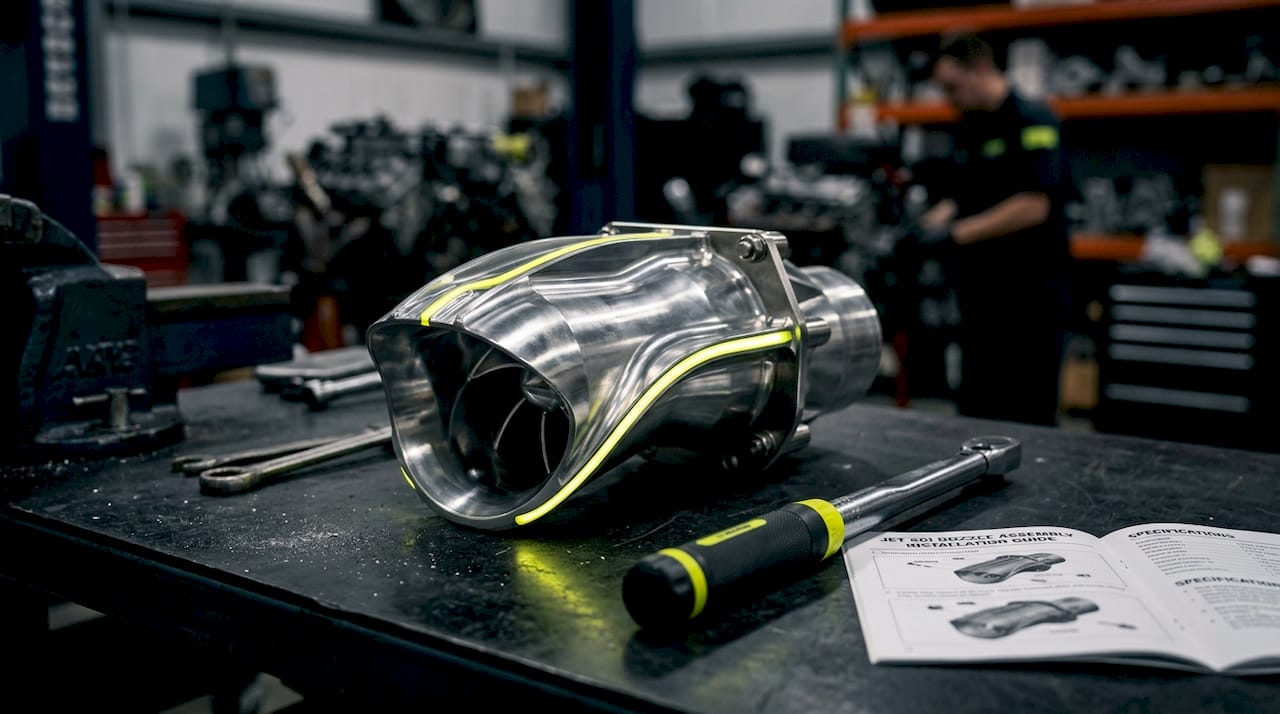
The iBR (Intelligent Brake and Reverse) system on Sea-Doo models is a computer-controlled actuator that governs nozzle position. Factory settings define hard limits on how far the nozzle can travel upward. When a physical nozzle modification pushes beyond those limits, the ECU detects a position mismatch and responds with fault codes, forced neutral, or actuator motor burnout.
The Stage 1 nozzle works within factory iBR limits, so no recalibration is needed. The Stage 1+ is different. Filing the iBR bump stops allows the nozzle to physically travel further, but the ECU still thinks the old limit is the maximum. That mismatch is what causes the system to fault.
The correct workflow for Stage 1+ installation follows three steps:
- Install the TrimX Stage 1+ nozzle and file the iBR reverse bucket bump stops to allow extended travel.
- Connect a dealer-level diagnostic scan tool and reset ECU position limits to match the new mechanical range.
- Perform test rides and validate with fault code checks to confirm the actuator is operating within safe parameters.
Skipping ECU recalibration after filing bump stops does not just risk a fault code. It can burn out the iBR actuator motor entirely, turning a $300 nozzle upgrade into a $1,000+ repair bill.
Riders without access to dealer-level scan tools should not attempt Stage 1+ installation independently. Professional installation from a shop equipped with BRP diagnostic software is the correct path. The ECU recalibration requirement is mandatory, not optional.
3. What nozzle tuning options beyond TrimX improve freestyle performance?
TrimX products dominate the Sea-Doo freestyle segment, but nozzle tuning extends well beyond a single brand. Vane count, nozzle ring size, and material quality each affect how the pump delivers thrust during freestyle maneuvers.
| Tuning Variable | Effect on Freestyle Performance | Trade-off |
|---|---|---|
| Higher vane count (14-vane) | Reduces cavitation, improves throttle response | Higher cost, requires compatible pump housing |
| Smaller nozzle exit area | Increases water pressure and acceleration | Reduces top speed |
| Larger nozzle exit area | Improves control at lower speeds | Less aggressive thrust |
| Billet aluminum bushings | Increases durability under repeated trim cycling | Requires proper fitting and torque specs |
| Stainless steel nozzle body | Resists wear and corrosion longer than plastic | Heavier than OEM plastic components |
RIVA Racing and SOLAS both produce 14-vane stainless stators compatible with high-power Sea-Doo PWCs. These reduce cavitation compared to lower-vane OEM designs, which translates directly to more consistent hookup when you crack the throttle during a trick. Inconsistent hookup mid-maneuver is one of the most common causes of failed freestyle attempts on modified skis.
Nozzle ring swaps are an underused tuning tool. Riders on the Yamaha SuperJet platform, for example, can run interchangeable rings to test different exit diameters between sessions. This iterative approach lets you dial in thrust characteristics for specific trick sets without permanent hardware changes.
Pro Tip: If you are chasing higher rooster tails specifically, prioritize upward trim range over nozzle pressure. A wider exit area with maximum upward travel produces taller, more dramatic rooster tails than a tight nozzle with limited trim.
4. How to select the best nozzle modification for your freestyle riding style
Choosing the right nozzle mod starts with identifying your primary freestyle goal. Riders focused on rooster tail height need maximum upward trim range. Riders focused on bow lift and wheelies need hardware stability and consistent trim response. Riders chasing speed between tricks need to balance nozzle pressure against top-end performance.
Use these criteria to match a modification to your riding goals:
- Rooster tail height. The TrimX Stage 1 delivers double the upward trim range of the OEM nozzle using factory iBR settings. For most riders, this alone produces a dramatic visual improvement without any ECU work.
- Bow lift and wheelies. The TrimX Spark Trixx kit with billet aluminum bushings provides the hardware stability needed for consistent, repeatable wheelies. Plastic bushings flex under load and introduce inconsistency in trim response.
- iBR versus traditional setups. Riders on iBR-equipped Sea-Doo models must account for electronic limits in every nozzle decision. Riders on traditional setups like the Yamaha SuperJet or Kawasaki 650 SX have more mechanical freedom but fewer plug-and-play aftermarket options.
- Budget considerations. Stage 1 bolt-on nozzles represent the best value for most freestyle riders. Stage 1+ upgrades add cost through professional ECU recalibration, which should be factored into the total budget before purchase.
- Iterative testing. No nozzle mod performs identically across all riders and conditions. Plan for at least two to three test sessions after any modification to assess performance and adjust trim settings before committing to a final configuration.
Riders new to freestyle nozzle tuning should treat Stage 1 as the baseline and evaluate results before spending on Stage 1+ or advanced vane upgrades. The performance gap between stock and Stage 1 is significant enough that many riders stop there permanently.
Key takeaways
Effective freestyle nozzle tuning requires matching the right modification tier to your riding goals, your ski’s electronic architecture, and your willingness to invest in professional ECU recalibration.
| Point | Details |
|---|---|
| Stage 1 is the starting point | TrimX Stage 1 doubles upward trim range with no ECU work, making it the best first upgrade. |
| Stage 1+ requires ECU recalibration | Filing bump stops without resetting ECU limits causes fault codes, forced neutral, or actuator burnout. |
| Vane count affects cavitation | 14-vane stainless nozzles reduce cavitation and improve throttle response during freestyle maneuvers. |
| Hardware matters as much as nozzle shape | Billet aluminum bushings replace plastic components and deliver more consistent trim response under repeated stress. |
| Match mod to riding goal | Rooster tail height, bow lift, and speed each call for different nozzle tuning priorities. |
Why most riders get nozzle mods wrong before they get them right
I have seen riders spend serious money on Stage 1+ installations and then immediately fault their ski because they skipped the ECU step. The mechanical side of nozzle modification is straightforward. The electronic side is where most people underestimate the complexity.
The most overlooked upgrade in freestyle nozzle tuning is the hardware kit. Billet aluminum bushings are not glamorous, but they are the reason a Stage 1 nozzle performs consistently on session 50 the same way it did on session one. Plastic bushings wear, introduce slop into the trim mechanism, and quietly degrade the performance you paid for.
My honest recommendation: if you are on a Sea-Doo with iBR and you have never modified the nozzle, start with Stage 1. Ride it for a full season. Most riders I have spoken with find that the doubled trim range fundamentally changes how they approach tricks, and they never feel the need to go further. Stage 1+ is a real upgrade, but it is a commitment that requires professional tools and a shop you trust.
For riders on traditional platforms like the SuperJet or the 4-stroke Superjet, the tuning path is different. Vane count and nozzle ring sizing become the primary levers. Experiment methodically, document your results, and resist the urge to change multiple variables at once. One change per session is the only way to know what actually moved the needle.
— Casey
Upgrade your freestyle setup with Ipdracing
Ipdracing stocks the full range of freestyle jet ski nozzle modifications, from TrimX Stage 1 bolt-on nozzles to complete hardware kits with billet aluminum components. Whether you ride a Sea-Doo, Yamaha, or Kawasaki platform, the product catalog covers nozzle upgrades, pump components, and performance hardware built for freestyle demands.
For riders pursuing Stage 1+ modifications, Ipdracing also connects you with professional calibration support through the PWC Doctor service, where technicians handle ECU recalibration with dealer-level diagnostic tools. Browse the complete freestyle parts catalog to find the right nozzle modification for your ski model and riding goals. Fast shipping and expert support are standard, whether you are building your first freestyle setup or dialing in a competition-ready machine.
FAQ
What is a freestyle jet ski nozzle modification?
A freestyle jet ski nozzle modification is any aftermarket change to the jet pump nozzle that increases upward trim range, improves bow lift, or refines thrust for trick-focused riding. The most recognized products are the TrimX Stage 1 and Stage 1+ nozzles designed for Sea-Doo models.
Does TrimX Stage 1 require ECU recalibration?
No. The TrimX Stage 1 installs within factory iBR limits and requires no ECU recalibration, making it a true bolt-on upgrade that most riders can complete in under 30 minutes.
What happens if you skip ECU recalibration after Stage 1+ installation?
Skipping ECU recalibration after filing the iBR bump stops causes the system to detect a position fault, which triggers forced neutral and risks burning out the iBR actuator motor. Professional recalibration with a dealer-level scan tool is mandatory.
How does vane count affect freestyle jet ski performance?
Higher vane counts, such as the 14-vane stainless designs from RIVA Racing and SOLAS, reduce cavitation and improve throttle response consistency. This matters most during freestyle maneuvers where predictable power delivery is critical to completing a trick cleanly.
Can nozzle modifications work on non-iBR jet skis?
Yes. Riders on traditional platforms like the Yamaha SuperJet or Kawasaki models have more mechanical freedom with nozzle tuning. Interchangeable nozzle rings and vane upgrades from brands like Jet Dynamics apply directly without electronic system constraints.

