
Jet Ski Grip Tape Options: Best Marine Traction Guide
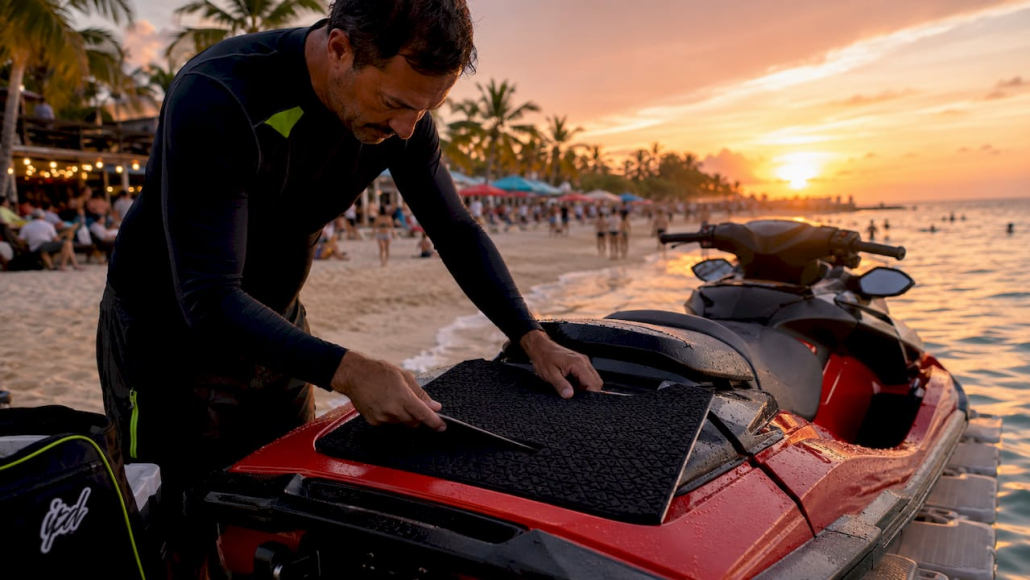
Jet ski grip tape options are marine-grade non-slip products engineered to deliver reliable traction on wet, UV-exposed personal watercraft (PWC) decks. The industry term for these products is “traction mat” or “traction pad,” though grip tape remains the common shorthand. The best solutions use closed-cell EVA foam, urethane pads, or waterproof pressure-sensitive adhesive (PSA) tapes built to survive saltwater, fuel spills, and constant sun exposure. Choosing the wrong material means peeling edges, lost grip, and real safety risk. This guide covers every major option, the materials behind them, and how to match your choice to your riding style.
1. What are the best jet ski grip tape options and materials?
The material a traction product is made from determines everything: how long it lasts, how well it grips when wet, and how comfortable it feels underfoot. Three core materials dominate the market.
Closed-cell EVA foam is the most widely used material for jet ski traction mats. Unlike open-cell foam, closed-cell foam does not absorb water, which prevents mold growth and adhesive failure beneath the mat. Closed-cell foam is required because open-cell foam absorbs water and promotes mold growth. For marine durability, EVA foam should carry a density of 50–60 kg/m³ to resist UV rays, saltwater, and fuel spills.
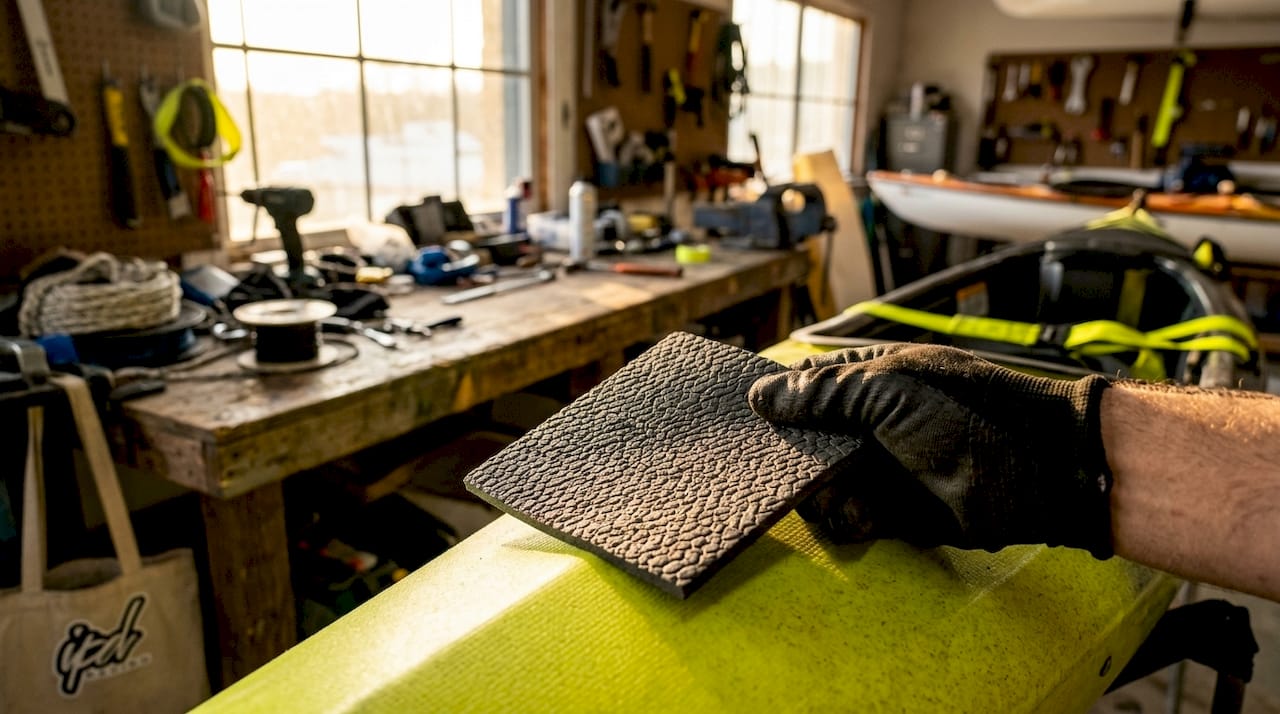
Urethane traction pads represent the premium end of the spectrum. They bond with industrial adhesives, require no cure time, and deliver high UV stability. Products built on this technology have served over 100,000 clients across more than two decades of proven performance.
Waterproof PSA tapes are thinner, lower-profile options suited for targeted grip zones rather than full-deck coverage. They work well on handlebars, footwells, and boarding platforms.
- Closed-cell EVA foam: best all-around durability and comfort
- Urethane pads: highest UV stability and bond strength
- PSA grip tapes: targeted application, lower cost, easier replacement
- Non-skid marine paint: permanent but low comfort underfoot
- Textured epoxy coatings: DIY option with moderate grip performance
Pro Tip: Check the Shore C hardness rating before buying EVA foam mats. A hardness of 60–65° Shore C with a foam density around 160–180 kg/m³ preserves traction pattern geometry under repeated loads. Softer foams flatten their patterns over time without showing visible signs of failure.
2. Why standard skateboard grip tape fails on jet skis
Standard skateboard grip tape is not a viable jet ski grip solution. It uses water-soluble adhesives and paper-based backing that degrade rapidly in marine environments. Skateboard grip tape is unsuitable for jet skis due to lack of water resistance, leading to adhesive degradation and peeling within a single season.
Specialized marine-grade traction products use waterproof, UV-stable adhesives tested over 20 years of field use. That gap in performance is not marginal. A skateboard tape product may look fine on day one but will bubble, peel, and lose grip after the first few outings in saltwater.
The abrasive grit on skateboard tape also causes skin abrasions during aggressive riding, boarding, and re-mounting. Marine traction products balance grip aggressiveness with rider comfort by using textured foam or urethane surfaces instead of sharp mineral grit.
3. How to properly prepare and install grip tape on a jet ski deck
Most traction mat failures trace back to adhesive issues or surface preparation errors, not foam failure. Getting the surface right before installation is the single most important step.
- Wash the deck thoroughly. Remove all salt residue, wax, sunscreen, and fuel film using a marine degreaser. Any contamination under the mat will prevent the adhesive from bonding to the gelcoat.
- Dry completely. Allow the surface to dry for at least two hours in direct sun or use a clean microfiber cloth followed by compressed air on seams and hardware cutouts.
- Sand or scuff the gelcoat lightly. On fiberglass hulls, a light scuff with 220-grit sandpaper improves adhesive contact. Polyethylene hulls may require a primer coat compatible with your adhesive.
- Apply a marine-grade PSA. Marine-grade adhesives like 3M 99786 resist temperature cycling and saltwater exposure, preventing premature mat peeling. Generic adhesives typically fail at edges after one or two seasons.
- Press firmly from center to edges. Work out air pockets methodically. Pay extra attention to cutouts around hardware, which are the primary entry points for water ingress and bond failure.
Pro Tip: Warm the adhesive side of the mat with a heat gun set to low before pressing it down. Warming the adhesive improves bond strength on cold gelcoat surfaces, especially during spring installations when hull temperatures are low.
4. Top traction alternatives for jet skis: an options overview
Riders have more choices than ever when selecting non-slip tape for jet skis or full-deck traction systems. Each option carries distinct trade-offs in cost, durability, and performance.
Custom-cut EVA foam mats are precision-cut to match a specific hull model. Custom-cut mats reduce failure risk by eliminating imprecise field cuts common in universal mats. Edges and hardware cutouts are the main points for water ingress and bond failure, so factory-precise cuts matter.
Universal EVA foam mats ship as flat sheets that riders cut to fit. They cost less upfront but require careful cutting. When DIY cutting, chamfering or radius-cutting edges reduces peel risk by relieving the high-stress sharp corners that fail first.
Urethane traction pads with industrial adhesives provide no cure time and high UV stability. These products apply directly to clean gelcoat and bond immediately under hand pressure.
- Adhesive-backed silicone grip pads: flexible, easy to reposition, moderate grip
- PVC rubberized grip pads: affordable, widely available, shorter lifespan in UV environments
- Non-skid marine paint: permanent, low-profile, minimal cushioning underfoot
- DIY textured epoxy coatings: low cost, high customization, labor-intensive application
For riders who want to understand how traction choices connect to overall speed and control, the jet ski top speed guide at IPD Racing covers how grip and body positioning interact with performance.
5. Comparison of grip tape options by features
Selecting the best grip tape for jet skis requires comparing products across the features that matter most in marine conditions.
| Feature | EVA Foam Mats | Urethane Pads | PSA Grip Tape | Non-Skid Paint | Epoxy Coating |
|---|---|---|---|---|---|
| Durability | 5–10 years | 10+ years | 1–3 years | Permanent | 3–7 years |
| Wet grip level | High | Very high | Moderate | Moderate | Moderate |
| Comfort underfoot | High | Medium | Low | Very low | Low |
| UV/saltwater resistance | High | Very high | Low to medium | High | High |
| Adhesive strength | High (PSA) | Very high (industrial) | Medium | N/A (paint) | N/A (bonded) |
| Installation complexity | Medium | Low | Very low | High | High |
| Best for | All riding styles | Aggressive/racing | Targeted zones | Budget builds | DIY projects |
High-quality marine-grade EVA foam mats with proper adhesive can last 5 to 10 years under saltwater and UV exposure. That lifespan assumes correct installation and regular maintenance. Urethane pads outlast EVA in direct UV exposure but offer less cushioning, which matters on longer rides.
Budget options like PSA grip tape and rubberized pads work for casual riders who replace grip annually. For riders who want longevity and performance, EVA foam or urethane pads are the clear choice.
6. Which grip tape option suits your riding style?
Traction decks are a key upgrade influencing ride control and safety during aggressive maneuvers. Worn factory surfaces lack the locked-in feel needed for high-speed carving and wave jumps. Matching your traction product to your riding intensity prevents both safety issues and unnecessary discomfort.
For aggressive riders and racers:
- Choose deep diamond-groove EVA foam mats or urethane pads. Diamond-groove patterns actively channel water from the contact surface, maintaining friction during high-G turns and wave jumping.
- Prioritize high-density foam (160–180 kg/m³) to preserve pattern geometry under repeated load.
- Custom-cut mats are worth the extra cost for racing applications where edge integrity is critical.
For family outings and casual cruising:
- Softer textures and shallower patterns reduce skin abrasions during boarding and re-mounting. Deeper patterns suit rough water for security; softer textures reduce skin abrasions for cruising.
- Universal EVA mats or silicone grip pads deliver adequate traction without the aggressive bite of racing surfaces.
- Comfort underfoot matters more on longer rides, so prioritize foam thickness over maximum grip aggressiveness.
For rough water environments:
- Select mats with deeper groove patterns and higher-density foam.
- Pair with a marine-grade adhesive rated for repeated water immersion.
Pro Tip: Riders should align pattern aggressiveness with typical water conditions and riding intensity to balance grip and skin comfort. An aggressive diamond-groove mat on a calm-water cruiser will cause unnecessary abrasion on bare legs.
The race prep checklist at IPD Racing outlines surface preparation steps that apply directly to grip tape installation on competition PWC.
Key Takeaways
The best jet ski traction solution combines closed-cell EVA foam or urethane material, a marine-grade PSA adhesive, and a traction pattern matched to your riding intensity and water conditions.
| Point | Details |
|---|---|
| Material determines lifespan | EVA foam lasts 5–10 years; urethane pads exceed 10 years with proper installation. |
| Surface prep is non-negotiable | Clean, dry, degreased gelcoat is required for any adhesive to hold through water immersion. |
| Pattern depth affects comfort | Deep diamond grooves suit aggressive riding; shallow textures reduce abrasion for casual use. |
| Custom-cut beats universal | Precision-cut mats eliminate edge gaps that allow water ingress and bond failure. |
| Skateboard tape does not work | Standard grip tape lacks waterproof adhesive and UV stability required for marine use. |
What I’ve learned about grip tape after years on the water
The single biggest mistake riders make is treating traction mat installation as an afterthought. They spend hours researching engine upgrades and then slap down a universal mat with hardware-store adhesive. Within a season, the edges are lifting and the mat is trapping water underneath.
The material choice matters less than the installation quality. A mid-grade EVA foam mat installed correctly on a properly prepped gelcoat surface will outlast a premium urethane pad stuck down with the wrong adhesive. I have seen expensive mats fail in six months and budget mats hold for four years. The difference was always the adhesive and the prep work.
Pattern selection is also underrated. Riders who do casual lake riding do not need aggressive diamond-groove mats. Those patterns feel great at speed but cause real skin irritation during slow boarding and re-mounting. Match the pattern to how you actually ride, not how you imagine you ride.
Finally, maintenance extends mat life significantly. Regular cleaning and UV protectant sprays prolong grip tape lifespan and maintain traction. Avoid pressure washing directly on mat edges. A soft brush and mild soap after every saltwater session adds years to any traction product.
— Casey
IPD Racing has the traction products your PWC needs
IPD Racing stocks marine-grade traction solutions for recreational riders, freestyle athletes, and competitive racers. Whether you need a full-deck EVA foam mat, urethane traction pads, or targeted grip accessories, IPD Racing carries products built for real water conditions.

The WCOT Watercross of Texas parts store at IPD Racing includes race-approved traction products tested in competition environments. For a broader selection of performance upgrades, the Hot Products performance parts catalog covers grip, engine, and handling upgrades across all major PWC brands. IPD Racing’s product range covers everything from entry-level grip solutions to full custom-cut racing mats, backed by the technical knowledge the PWC community trusts.
FAQ
What is the difference between a traction mat and grip tape?
A traction mat is a full-deck or zone-specific foam or urethane pad bonded with marine-grade adhesive, while grip tape is a thinner adhesive-backed sheet. Traction mats offer more durability and comfort for jet ski use.
How long does jet ski grip tape last?
High-quality marine-grade EVA foam mats last 5–10 years with proper installation and maintenance. Urethane pads can exceed 10 years, while standard PSA grip tape typically lasts 1–3 seasons.
Can I use regular grip tape on a jet ski?
Standard skateboard grip tape is not suitable for jet skis. It lacks waterproof adhesive and UV stability, causing it to peel and lose grip after minimal saltwater exposure.
What adhesive works best for jet ski traction mats?
Marine-grade pressure-sensitive adhesives rated for gelcoat substrates, such as 3M 99786, provide the strongest bond. Generic adhesives typically fail at mat edges after one or two seasons of water immersion.
How do I maintain jet ski grip tape to extend its life?
Clean mats with a soft brush and mild soap after every saltwater session. Apply a UV protectant spray regularly and avoid pressure washing directly on mat edges, which accelerates bond failure.

