
Jet Ski Race Classes Explained: 2026 Competitor Guide
Jet ski race classes are structured divisions that group competitors by rider skill level, craft type, and technical specifications to create fair and competitive racing. The industry term for this system is “class structure,” and it governs every sanctioned event from local club races to world championships. Organizations like IJSBA Europe, AJSA, and Pro Watercross each publish their own class frameworks, but all three share the same core logic: match the rider and machine to the right competitive tier. Understanding jet ski race classes explained through these frameworks is the fastest way to choose the right category, avoid disqualification, and build a credible racing career.
What are the main jet ski race classes and how are they categorized?
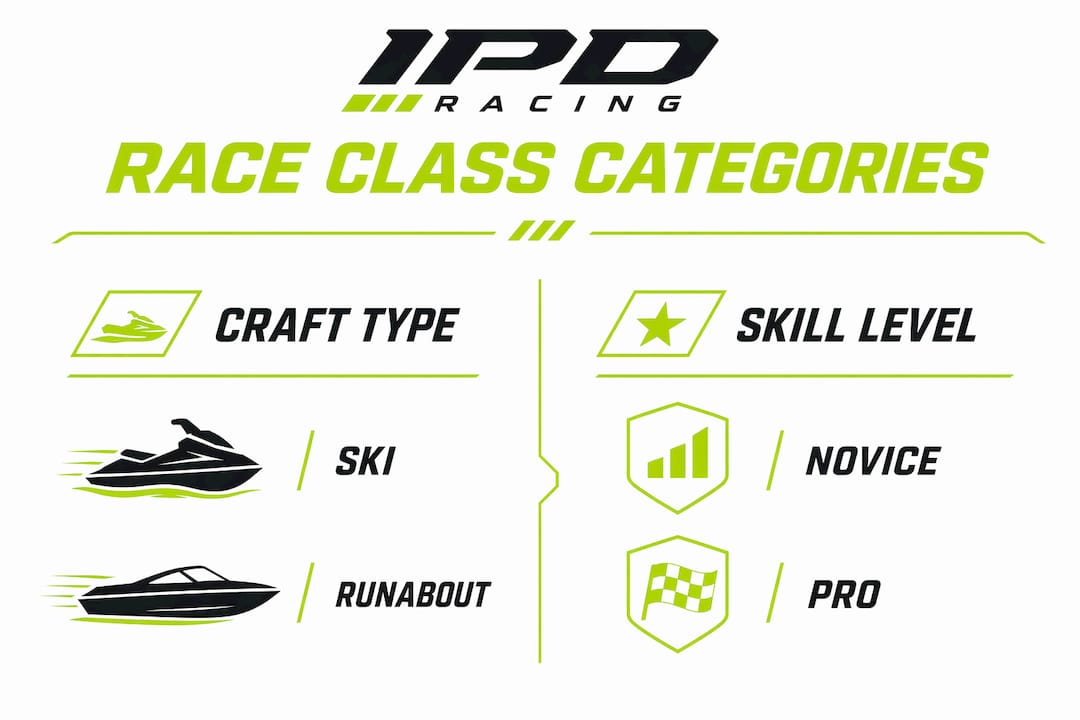
Jet ski competition classes divide first by craft type, then by skill level, then by technical specification. The two primary craft categories are Ski (stand-up) and Runabout (sit-down). Stand-up skis demand more physical skill and balance, while Runabouts prioritize raw speed and cornering precision. IJSBA Europe publishes 29 race categories organized across these dimensions, making it one of the most detailed class systems in the sport.
Skill tiers run from Novice at the entry level through Amateur, Expert, and Pro-Am up to Pro. Each tier reflects prior race results, licensing status, and competitive history. A rider who finishes in the top three at the Novice level cannot re-enter that class, which forces merit-based progression through the ranks.
Technical specification categories add another layer. Stock classes restrict modifications to keep costs low and competition tight. Superstock allows limited upgrades. Lites classes cap engine displacement, typically targeting smaller, lighter craft. Engine size thresholds vary by organization but commonly appear at 800cc, 1050cc, and 1100cc.
| Class Type | Craft | Skill Tier | Key Spec Constraint |
|---|---|---|---|
| PRO Ski Grand Prix | Stand-up | Pro | Engine and moto restrictions |
| PRO-AM Runabout 1100 Open | Sit-down | Pro-Am | 1100cc displacement cap |
| Junior Ski Lites | Stand-up | Junior | Age and displacement limits |
| Stock Runabout | Sit-down | Amateur/Expert | OEM-only modifications |
| Novice Ski | Stand-up | Novice | No prior top-3 finishes |
- Stand-up Ski classes reward technical riding skill and physical fitness
- Sit-down Runabout classes favor high-speed tactics and mechanical setup
- Stock and Superstock categories control costs and keep fields competitive
- Junior classes carry strict age limits and cross-entry restrictions
Pro Tip: If you own a Yamaha SuperJet or similar stand-up model, start by identifying which Ski class matches your engine size before worrying about skill tier. Craft eligibility eliminates options faster than skill level does.
How do race rules and event formats affect jet ski race classes?
Race format directly shapes how you approach each class. Most sanctioned events use a multi-moto structure where each class runs multiple shorter races, called motos, with combined scores determining the final result. IJSBA uses 3 to 4 motos per class, while Pro Watercross combines 2 motos per day across a two-day event. That aggregated scoring means a single crash or mechanical failure does not end your podium chances.
Pro Watercross events like the 2026 Sebring round attract over 100 riders from multiple countries, with stand-up skis reaching speeds above 70 mph and Runabouts exceeding 85 mph. The format rewards consistency as much as outright speed. A rider who finishes second in every moto often beats a rider who wins one and crashes out of another.
AJSA adds an endurance layer on top of standard class formats. The Super Course Endurance Racing format runs at select rounds within the Pro/Am 300 class, testing mechanical reliability and rider stamina alongside sprint speed. This is a meaningful structural difference from IJSBA events, which focus on sprint motos.
- Multi-moto scoring: total points from all motos determine the podium
- Single-day sprint formats favor aggressive, high-risk riding
- Two-day combined formats reward mechanical preparation and consistency
- Endurance formats test craft durability and rider pacing strategy
Pro Tip: Study the specific moto count for your target class before race day. A PRO Ski Grand Prix runs 4 motos while a PRO-AM Sport GP runs 3. That difference changes how hard you push in moto one.
What are the eligibility and registration requirements for entering jet ski race classes?
Eligibility rules exist to protect competitive balance and rider safety. The IJSBA Competition License is the baseline requirement for participation at any IJSBA-sanctioned event. Without it, you cannot enter regardless of skill level or craft type. IJSBA World Finals competitors must also show participation in at least two events during the current season, which means the championship is not open to first-time entrants.
Age restrictions apply most strictly to junior categories. Junior classes carry both minimum and maximum age limits, and cross-entry into adult classes is restricted. Adult classes also carry age floors in some organizations. Checking the specific rulebook for your target sanctioning body before purchasing a race entry is non-negotiable.
Registration timing affects your cost and your options. IJSBA Europe pre-registration runs from May 10 to July 1, 2026, with late fees applying after that window closes. On-site registration carries the highest fees and is not always available. Classes with fewer than five registered participants may be canceled outright, so early registration also protects your race day.
- Obtain the required competition license for your target sanctioning body before registering
- Confirm your age meets the minimum for your chosen class
- Check your prior race results to verify you are not barred from re-entering a lower tier
- Register before the pre-registration deadline to avoid late fees
- Monitor class entry counts to confirm your category will run
Pro Tip: Sanctioning bodies strictly regulate class entry based on prior results. If you placed top-3 as a Novice, that class is permanently closed to you. Know your history before you register.
How do the major sanctioning bodies’ class systems compare?
IJSBA Europe, AJSA, and Pro Watercross each structure their jet ski racing categories differently, and those differences affect which organization suits your goals. IJSBA Europe operates the most granular system, with 29 detailed categories covering everything from PRO Ski Grand Prix to junior Lites classes. The depth of that system means experienced riders find a precise match for their craft and skill level, but newcomers can find it overwhelming.
AJSA takes a different approach. The organization emphasizes OEM-based class platforms to reduce barriers for new racers. Classes like Pro Ski 1050cc, Pro Runabout 1100cc, and Junior Ski Futures allow common retail models without expensive modifications. That philosophy makes AJSA the most accessible entry point for riders coming directly from recreational riding. The addition of Super Course Endurance Racing at select rounds also gives experienced riders a fresh competitive challenge within familiar class structures.
Pro Watercross sits between the two in terms of complexity. Its division structure uses craft type, engine size, and rider skill as primary filters, matching the logic of IJSBA but with fewer total categories. The two-day, four-moto format at events like Sebring gives it a distinct competitive character.
| Sanctioning Body | Class Depth | Craft Focus | Key Feature |
|---|---|---|---|
| IJSBA Europe | 29 categories | Ski and Runabout | Most granular class system globally |
| AJSA | Moderate | OEM platforms | Accessibility for new racers |
| Pro Watercross | Moderate | Ski and Runabout | Two-day combined moto scoring |
| IJSBA World Finals | Full spectrum | All types | World championship, license required |
The IJSBA World Finals draws competitors from 33 countries and covers stand-up, sit-down, freestyle, and crossover WGP-1 divisions. It represents the broadest single-event class offering in the sport. Riders targeting the Finals need to understand that the class list there may differ slightly from regional IJSBA events.
What practical steps should racers take when choosing the right class?
Choosing the right class starts with an honest assessment of your results, not your ambitions. If you have placed top-3 in Novice, you are legally required to move up. If you have never raced, Novice or the equivalent entry tier in your target organization is the correct starting point regardless of how fast you ride recreationally.
Craft eligibility is the second filter. Your engine displacement, modification level, and craft platform must match the class rules. A heavily modified Runabout will not qualify for a Stock class. Check whether your craft qualifies for OEM-based platforms if you want to minimize prep costs while still competing at a credible level.
Event-specific class availability adds a practical constraint that many newcomers overlook. Categories with fewer than 5 registered participants may be canceled before the event runs. If you are targeting a niche class, confirm that enough other riders are registered before traveling to the venue.
- Match your class choice to documented results, not self-assessed skill
- Verify craft eligibility before modifying your machine for a specific class
- Check minimum participant requirements for your target category
- Register early to lock in your spot and avoid late fees
- Plan a two-to-three season progression path from entry tier to target class
Pro Tip: Reviewing race conditions and course formats before selecting your class gives you a clearer picture of whether your craft setup is genuinely competitive in that division.
Key takeaways
Jet ski race classes are defined by craft type, rider skill tier, and technical specifications, and selecting the correct class requires matching all three dimensions to your current situation.
| Point | Details |
|---|---|
| Class structure is multi-dimensional | Every class encodes craft type, skill tier, and spec constraints simultaneously. |
| Sanctioning bodies differ meaningfully | IJSBA Europe offers 29 categories; AJSA prioritizes OEM accessibility for newcomers. |
| Multi-moto formats reward consistency | Combined scoring across 3 to 4 motos means one bad race does not end your podium run. |
| Eligibility rules are strict and permanent | A top-3 Novice finish bars re-entry to that class, so progression is mandatory. |
| Early registration protects your race day | Classes with under 5 entrants get canceled, and late fees apply after pre-registration closes. |
Why most newcomers pick the wrong class first
I have watched a lot of riders show up to their first sanctioned event in the wrong class, and the pattern is almost always the same. They pick based on what sounds right rather than what the rulebook actually requires. A rider who has been running a modified Runabout on a local lake assumes they belong in an Expert class because they feel fast. Then they discover their craft does not meet the Stock spec, or that their prior results from an unsanctioned event do not count toward IJSBA eligibility.
The other common mistake is ignoring the sanctioning body differences. AJSA and IJSBA Europe are not interchangeable systems. A class name that sounds identical can carry different engine rules, moto counts, and eligibility criteria. Riders who do their homework on one organization and then enter an event run by another often get caught off guard by format differences, especially the endurance layers that AJSA has introduced.
Multi-moto scoring also changes how you should race, and most newcomers do not account for it. Treating a four-moto event like a single sprint race is a strategic error. The riders who consistently podium in multi-moto formats are the ones who manage risk across the full day, not just the first race. That mindset shift takes time to develop, but understanding it before your first event puts you ahead of most of the field.
The best advice I can offer is to read the full rulebook for your target organization before you register, not after. The IJSBA Europe participation guide and the AJSA season preview both contain the specific details that determine whether your entry is valid and whether your class will actually run.
— Casey
Get race-ready with Ipdracing
Whether you are preparing for your first Novice class or building a Pro Ski setup, having the right parts makes a measurable difference in competitive performance. Ipdracing stocks performance upgrades, engine rebuild kits, and handling components for both Ski and Runabout classes across all major sanctioning body platforms. From OEM replacements that keep Stock class eligibility intact to top performance parts alternatives for riders pushing into higher tiers, the catalog covers the full range of race prep needs. Browse the Ipdracing shop to find parts specific to your craft model and class requirements, or use the brand filter to locate components for your exact platform.
FAQ
What are the main jet ski race classes?
Jet ski race classes divide by craft type (Ski or Runabout), skill tier (Novice through Pro), and technical specification (Stock, Superstock, Lites, or engine displacement). IJSBA Europe alone publishes 29 distinct categories covering this full range.
Do I need a license to enter jet ski competition classes?
An IJSBA Competition License is required to participate in any IJSBA-sanctioned event, including regional rounds and the World Finals. AJSA and Pro Watercross have their own licensing or registration requirements that must be confirmed before entry.
Can I re-enter a Novice class after finishing in the top three?
No. Experienced riders who placed top-3 in a Novice class cannot re-enter that tier. This rule prevents sandbagging and enforces merit-based progression through the skill tiers.
How does multi-moto scoring work in jet ski racing?
Multi-moto formats run 3 to 4 shorter races per class, with points from each moto combined to determine the final podium. Pro Watercross uses 2 motos per day over 2 days, rewarding consistency across the full event rather than a single fast run.
What happens if my class does not have enough entrants?
Classes with fewer than 5 registered participants may be canceled before the event runs. IJSBA Europe specifically notes this threshold for categories 26 through 29, so early registration and monitoring entry counts is critical for niche class competitors.

