
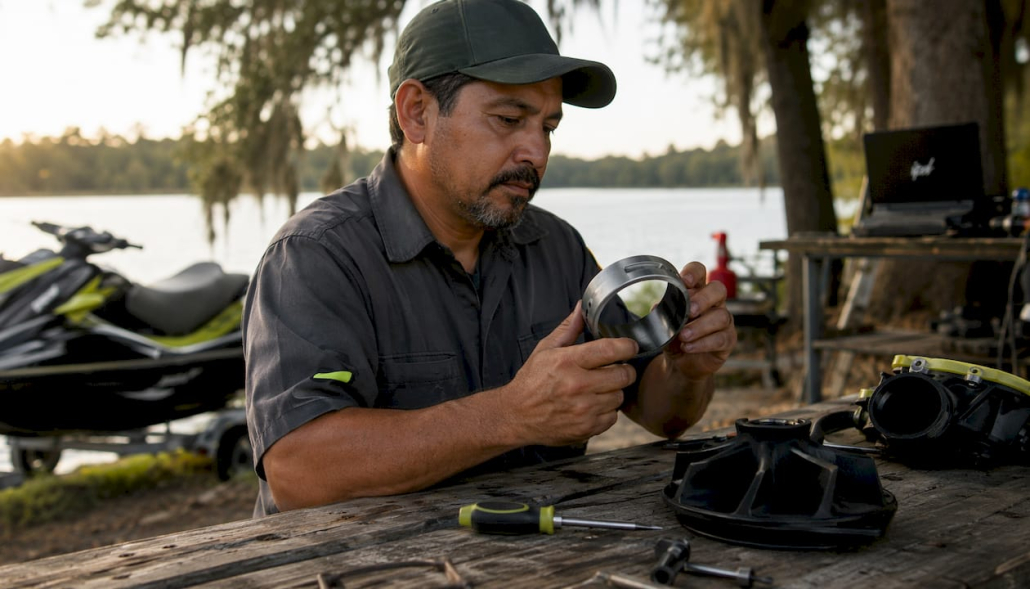
Jet Ski Pump Wear Ring Role: What Riders Must Know
The jet ski pump wear ring is defined as the cylindrical sleeve that surrounds the impeller inside the jet pump, maintaining a tight clearance to convert engine power into thrust. Understanding the jet ski pump wear ring role is the difference between a machine that performs at full capacity and one that quietly loses speed, efficiency, and reliability with every ride. This component is sacrificial by design. It absorbs wear so the impeller and pump housing do not. When it degrades, the entire propulsion system suffers, and the costs compound fast.
How does the wear ring impact jet ski propulsion efficiency?
The wear ring acts as a dynamic pressure barrier that must maintain tight tolerance. Without that barrier, engine RPM does not translate into thrust effectively. Water recirculates inside the pump instead of being expelled rearward, and the result is cavitation: a condition where pressure drops so sharply that water vapor bubbles form and collapse against pump surfaces.
Cavitation is not just a performance problem. It physically erodes the impeller and pump housing over time. The wear ring prevents this by keeping the gap between the impeller blade tips and the pump wall narrow enough to sustain pressure. When that gap widens through wear, water slips back past the impeller with every rotation.
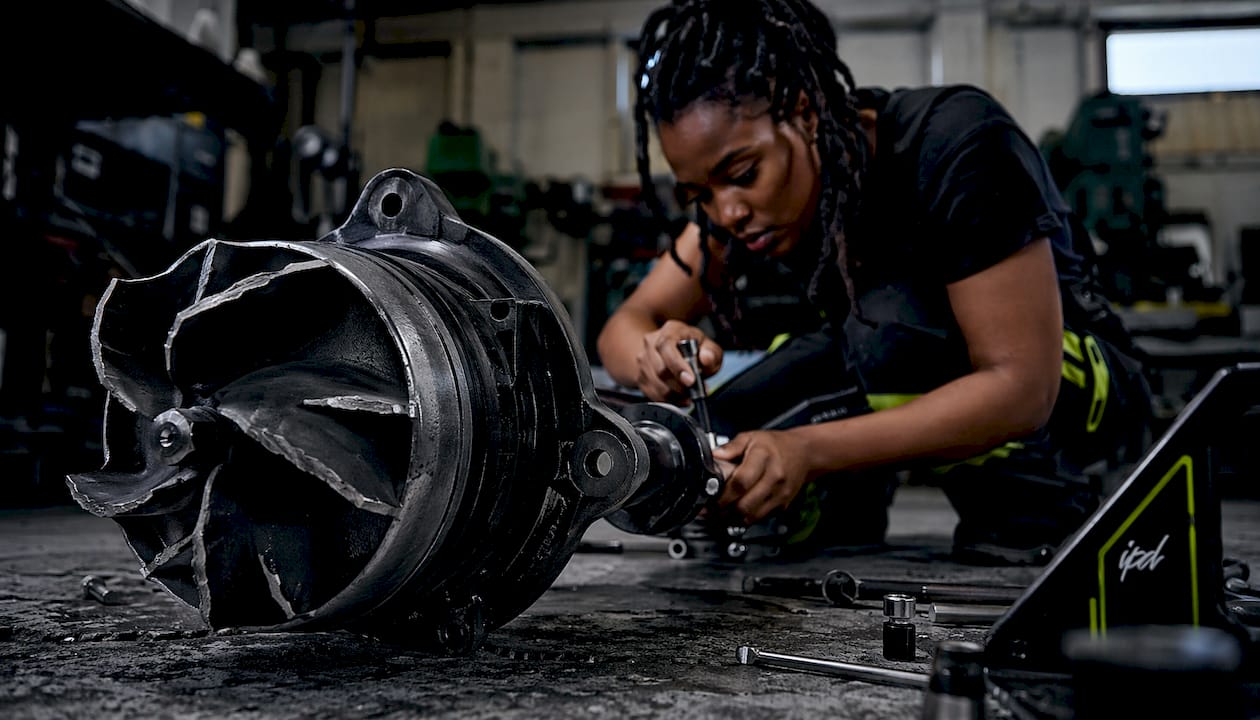
The wear ring also provides a hydrodynamic bearing function that stabilizes the impeller rotor during operation. A worn ring increases vibration and accelerates bearing wear throughout the driveline. This is the detail most riders miss: the wear ring is not just a seal. It is a stabilizer.
| Clearance condition | Performance impact |
|---|---|
| Within design spec | Full thrust, no cavitation, stable impeller |
| Slightly worn | Minor speed loss, mild vibration at high RPM |
| Approaching 0.005 in. | Noticeable acceleration lag, increased fuel use |
| Exceeds 0.005 in. | Severe cavitation, power loss, bearing stress |
Pro Tip: If your jet ski feels slower than usual but the engine sounds healthy, check the wear ring clearance before assuming the engine needs attention. Performance loss with age is often due to wear ring wear, not engine decline.
What are the signs of wear and how to inspect the pump wear ring?
Reduced speed, sluggish acceleration, vibrations, and unusual grinding sounds are the four primary warning signs of a damaged wear ring. Each symptom points to the same root cause: the impeller is no longer operating in a controlled pressure environment. Riders often attribute these symptoms to fuel quality or engine condition, which delays the correct diagnosis.
Visual inspection is the first step, but it is not sufficient on its own. A wear ring can look acceptable on the surface while its clearance has already exceeded the replacement threshold. Surface marring and minor scoring do not always impair function. The clearance measurement is what matters.
Signs to watch for
- Noticeable drop in top speed during normal operation
- Sluggish throttle response, especially from a standing start
- Vibration felt through the hull at mid to high RPM
- Grinding or rattling sounds from the pump area
- Engine revving higher than expected without matching speed gain
How to inspect the wear ring
- Remove the pump intake grate to access the impeller and wear ring.
- Shine a light into the pump tunnel and visually check for deep grooves, cracks, or chunks missing from the ring surface.
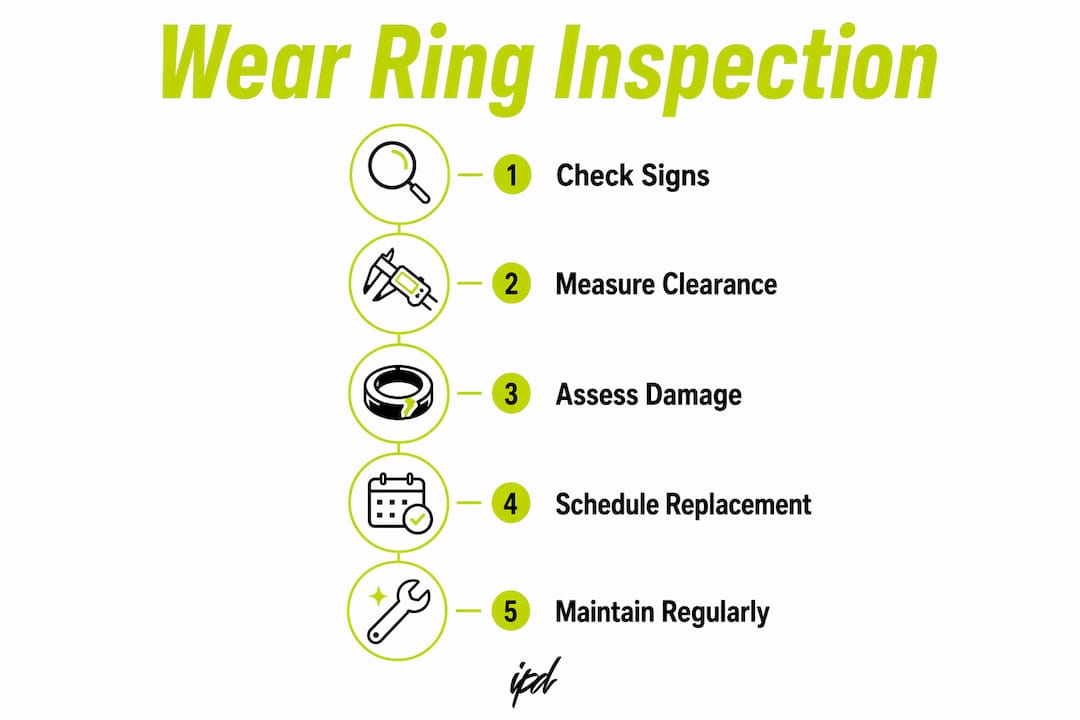
- Use a feeler gauge to measure the clearance between the impeller blade tips and the wear ring inner surface.
- Replace the wear ring when clearance exceeds 0.005 inches or doubles the original design specification.
Pro Tip: Feeler gauges provide better accuracy than visual inspection alone. Measure at multiple points around the impeller circumference, since wear is rarely uniform.
Riders should inspect annually or every 50 hours of operation, whichever comes first. Saltwater and silty conditions accelerate wear and call for more frequent checks. Connecting wear ring inspection to your broader pump maintenance schedule keeps the process consistent and easy to track.
How to maintain and extend the life of your jet ski pump wear ring
Consistent maintenance is the most cost-effective way to protect the wear ring and the components it shields. Most wear ring damage is preventable with a few disciplined habits.
- Flush with freshwater after every saltwater ride. Salt crystals are abrasive. Flushing after every outing removes those crystals before they grind against the ring surface. Freshwater riders should flush every 5–10 hours of operation.
- Avoid shallow or debris-filled water. Sand, gravel, and small rocks enter the pump intake and score the wear ring rapidly. Riding in water deeper than 3 feet protects the pump from ingesting abrasive material.
- Change pump oil every 50 hours. Neglecting pump oil changes causes bearing degradation, which destabilizes the impeller and accelerates wear ring damage regardless of the ring’s material quality. Pump oil is inexpensive. Bearing replacement is not.
- Schedule wear ring inspections every 20–50 hours depending on operating conditions. Saltwater, competitive racing, and high-RPM use all shorten inspection intervals.
- Install the replacement ring correctly. A misaligned wear ring creates uneven contact with the impeller, producing accelerated wear on one side. Use the manufacturer’s installation guide and confirm the ring seats fully before reassembling the pump.
The jet dynamics of the pump system depend on every component working within tolerance. The wear ring is the most wear-prone part in that system, and it is also the cheapest to replace. Treating it as a scheduled consumable rather than a reactive repair is the mindset that separates riders who maintain performance from those who chase it.
What is involved in replacing the pump wear ring?
Replacing the wear ring is one of the most cost-effective performance upgrades available for any personal watercraft. A worn wear ring is the usual cause of sudden cavitation or power loss, and a new ring restores pump efficiency without touching the engine.
What the replacement process involves
- Pump removal: Disconnect the driveshaft, unbolt the pump assembly from the hull, and remove it as a unit.
- Wear ring extraction: Use a wear ring removal tool or a wooden dowel and mallet to press the old ring out of the pump housing. Avoid metal tools that can score the housing bore.
- New ring installation: Press the replacement ring in evenly, confirming it is fully seated and flush with the housing face.
- Reassembly and test: Reinstall the pump, reconnect the driveshaft, and verify clearance with a feeler gauge before the first water test.
Cost comparison
Replacing the wear ring is far less expensive than repairing the impeller or pump housing damaged by neglect. Major repairs can cost hundreds to over a thousand dollars. Wear rings are relatively inexpensive and user-replaceable with basic tools. Pump and driveline maintenance overall averages $500–$1,000 annually, which is a minor investment compared to the cost of major component failure.
Delaying replacement after the clearance threshold is exceeded risks impeller blade contact with the pump housing. That contact destroys both parts in seconds. The repair bill for an impeller and housing replacement dwarfs the cost of a wear ring by a wide margin.
DIY replacement is realistic for riders comfortable with basic mechanical work. For those without experience, a qualified PWC technician can complete the job quickly. Either way, the wear ring should never be left beyond its service limit. Understanding how the exhaust and pump systems interact also helps riders see why pump efficiency affects the entire performance profile of the craft.
Key Takeaways
The wear ring is the single most cost-effective component to maintain in a jet ski pump, directly controlling thrust efficiency, impeller stability, and long-term driveline health.
| Point | Details |
|---|---|
| Wear ring function | Maintains tight impeller clearance to prevent cavitation and maximize thrust output. |
| Replacement threshold | Replace when clearance exceeds 0.005 inches or doubles the original design specification. |
| Inspection interval | Inspect annually or every 50 hours; more frequently in saltwater or racing conditions. |
| Maintenance priority | Flush with freshwater after every saltwater ride and change pump oil every 50 hours. |
| Cost advantage | Wear ring replacement costs far less than impeller or pump housing repair caused by neglect. |
Why riders underestimate the wear ring until it’s too late
Most riders I talk to treat the wear ring as an afterthought. They know it exists, but they assume it will announce itself loudly when it fails. It rarely does. The degradation is gradual. Speed drops a few miles per hour. Acceleration feels a little soft. The engine sounds fine, so the pump gets ignored for another season.
The uncomfortable truth is that many owners see the wear ring as just a spacer rather than the dynamic pressure barrier it actually is. That misunderstanding is expensive. By the time the symptoms are obvious, the clearance has often been out of spec for dozens of hours. The impeller may already show contact marks.
What I have found actually works is building wear ring inspection into every annual service, not as an optional check but as a required one. Pair it with the pump oil change. Pull the intake grate, grab a feeler gauge, and take a measurement. The whole process takes under 10 minutes. That 10 minutes has saved more than one rider from a repair bill that ran into the hundreds.
The other thing worth saying: surface appearance is misleading. A ring that looks fine can still be out of tolerance. Riders who rely on visual checks alone miss the actual failure mode. Measure the clearance. That number tells you everything the visual does not.
— Casey
Pump parts and performance upgrades at IPD Racing
IPD Racing stocks wear rings, impellers, and pump service components for personal watercraft across recreation, racing, and freestyle disciplines.
Whether you are restoring a worn pump to factory spec or pushing performance further with upgraded components, IPD Racing carries parts built for real-world use. The WCOT Watercross of Texas parts catalog includes race-proven pump components selected for durability and performance under competition conditions. For riders looking at broader engine and pump upgrades, the Hot Products performance catalog covers engine, exhaust, and PWC upgrades backed by IPD Racing’s technical expertise. Every part ships with the quality assurance that competitive riders depend on.
FAQ
What does the wear ring do in a jet ski pump?
The wear ring surrounds the impeller inside the jet pump and maintains a tight clearance that prevents water from recirculating. This tight seal converts engine RPM into forward thrust efficiently.
How do I know when to replace the wear ring?
Replace the wear ring when feeler gauge measurement shows clearance exceeding 0.005 inches or double the original design specification. Symptoms like reduced speed, sluggish acceleration, and vibration also indicate the ring needs replacement.
Can a worn wear ring damage other pump components?
A worn wear ring allows the impeller blades to contact the pump housing, which destroys both parts rapidly. Neglecting replacement also accelerates bearing wear throughout the driveline.
How often should I inspect the wear ring?
Inspect the wear ring annually or every 50 hours of operation. Saltwater riding, racing, and high-RPM use require more frequent checks, closer to every 20 hours.
Is wear ring replacement a DIY job?
Wear ring replacement is achievable for riders with basic mechanical skills and the correct removal tool. A qualified PWC technician can complete the job quickly for those who prefer professional service.

