

Jet Ski Intake Grate Upgrade Guide for Better Performance
Upgrading your jet ski’s intake grate is one of the most cost-effective performance modifications available. A stock OEM intake grate functions primarily as a debris filter, doing little to maximize water delivery to the pump. Aftermarket options like the Top Loader intake grate and the double-scoop intake grate change that equation by increasing water volume, reducing cavitation, and delivering a locked-in feel that translates directly to faster acceleration, higher top speed, and more predictable handling. For riders on models like the 2021+ Yamaha SuperJet, real-world testing shows top speed gains exceeding 1.5 mph with a same-day comparison against stock equipment.
- Improved pump loading efficiency
- Reduced air ingestion (cavitation)
- Better hook-up in turns and under acceleration
- More controlled braking off-throttle
- Increased confidence in rough water and chop
What does the intake grate do and where is it located?
The intake grate sits on the underside of the hull, directly over the jet pump inlet. Water flows up through the grate and into the impeller, which converts that flow into thrust. Without the grate, rocks, weeds, and other debris would reach the impeller and cause serious damage.
Beyond debris protection, the grate’s blade geometry and scoop design directly influence how much water the pump receives. A grate with deeper runners and more aggressive blades pulls a larger, cleaner column of water into the pump, especially when the hull is heeled over in a turn or bouncing through chop.
“Intake grate design can significantly improve pump efficiency, water ingestion, and traction, radically improving performance, handling, and predictability. For those looking to modify their PWC, this relatively inexpensive part offers the biggest bang for the buck.” — Watercraft Journal
- Located on the hull’s underside, forward of the pump tunnel exit
- Bolted directly to the hull with stainless steel fasteners
- Blade and runner geometry varies by design and intended use
How do OEM, Top Loader, and double-scoop grates compare?
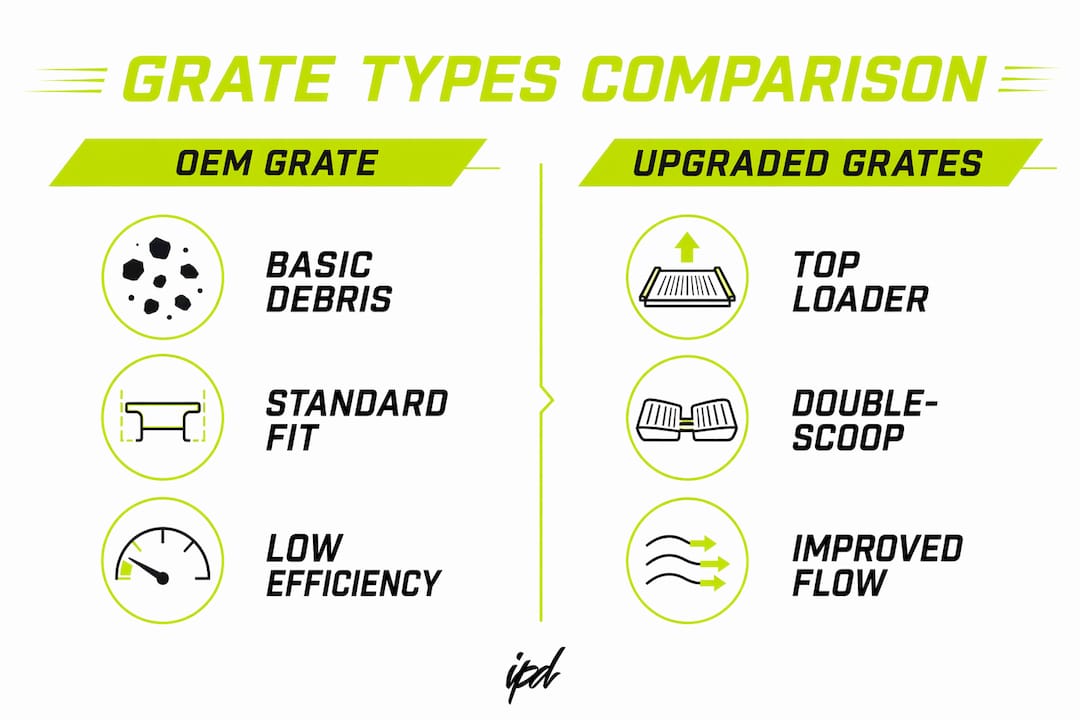
| Feature | OEM Stock Grate | Top Loader Grate | Double-Scoop Grate |
|---|---|---|---|
| Primary function | Debris protection | Max water flow + traction | Traction + braking response |
| Blade design | Basic, minimal | Deep runners, aggressive blade | Dual scoops below hull line |
| Cavitation reduction | Low | High | High |
| Cornering hook-up | Minimal | Strong | Strong |
| Braking off-throttle | Standard | Improved | Notably improved |
| Best for | Stock riding | Racing, performance | Freestyle, rough water |
The OEM grate ships with every production jet ski and handles basic debris filtering. It rarely does anything meaningful for pump efficiency. The Top Loader design removes the center runner to allow more water into the pump, pairs that with a more aggressive blade angle, and produces a noticeably locked-in feel. The double-scoop grate extends two large scoops below the hull line, keeping water moving into the pump even when the ski is heeled hard in a turn or skipping through rough chop.
What are the pros and cons of upgrading your intake grate?
Performance gains:
- Faster acceleration in and out of corners
- Higher top speed through better pump loading
- Stronger hook-up under hard throttle
- Improved braking response when you lift off the throttle
- More predictable handling in rough water
Potential drawbacks:
- Scoops that extend below the hull can increase drag at low speeds
- Model-specific fitment means you must confirm compatibility before ordering
- Aggressive designs may feel abrupt to riders accustomed to stock behavior
- Added braking response requires an adjustment period
Suitability depends on your riding style. Racers and freestyle riders benefit most from Top Loader and double-scoop designs. Casual recreational riders will still notice improvement but may prefer a less aggressive blade profile.
How to remove and maintain your jet ski intake grate
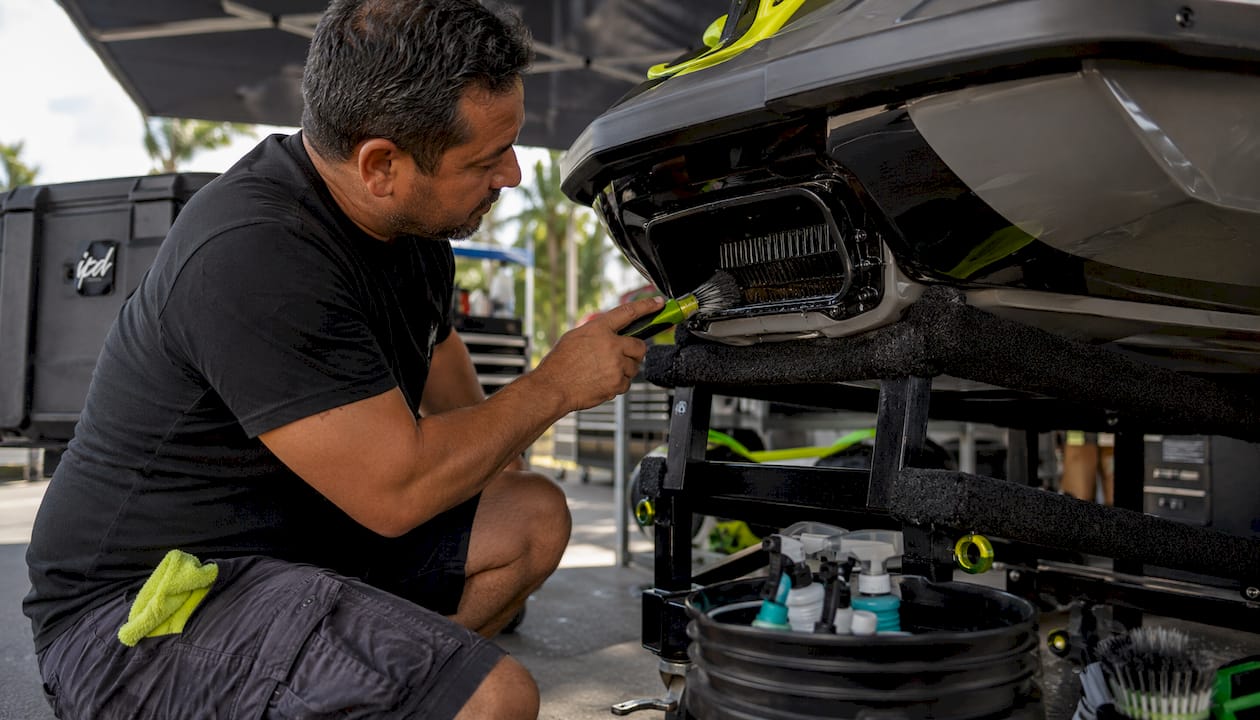
- Gather tools: socket set or Allen key set (typically 4mm and 5mm), torque wrench, marine-safe cleaner, lint-free cloth, and gloves.
- Flip or use a powered motorized boat trailer dolly to access the hull underside safely.
- Locate the stainless steel bolts securing the grate, usually 6 fasteners arranged around the perimeter.
- Loosen and remove each bolt carefully, keeping them organized for reference.
- Lift the grate free and inspect the housing for cracks, corrosion, or debris buildup.
- Clean the intake housing with a marine-safe solution, then flush with fresh water to clear any remaining particles.
- Inspect the grate itself for bent blades, cracks, or worn edges before deciding whether to reinstall or replace it.
Pro Tip: Run your fingers along the inside of the housing after cleaning. Sand or small gravel trapped in the housing can damage a new grate within the first few rides.
Regular cleaning of the intake area prevents debris buildup that restricts water flow and accelerates wear on the impeller.
How to install an upgraded intake grate correctly
Getting the installation right protects your investment and keeps the grate secure under racing loads.
- Hold the new grate against the mounting points before applying any thread-locker to account for hull molding tolerances and confirm alignment.
- Apply a small amount of blue Loctite to each bolt before threading it in.
- Do not reuse stock washers; use the hardware supplied with the aftermarket kit, as bolt length affects clamping force and fit.
- Tighten grate bolts to 15–25 ft-lbs using a torque wrench.
- Tighten related pump assembly bolts to 20–30 ft-lbs.
- After all bolts are seated and aligned, do a final torque pass in a cross pattern.
Pro Tip: Install all bolts finger-tight first, confirm the grate sits flush with no gaps around the perimeter, then apply final torque. Forcing a misaligned grate tight strips threads and warps the housing.
Model-specific fitment is critical. Manufacturers produce grates for specific Kawasaki, Sea-Doo, and Yamaha platforms, and a grate designed for one hull will not seat correctly on another. Confirm part numbers against your model before ordering. IPD Racing’s SuperJet grate shootout covers fitment details for Yamaha riders specifically.
What IPD Racing’s testing reveals about intake grate performance
“The intake grate not only boosts top speed but also enhances acceleration in and out of corners by improving pump loading efficiency.” — Watercraft Journal, 2021+ SuperJet review
Pairing an intake grate upgrade with a ride plate upgrade multiplies the handling benefit. The ride plate adds hydrodynamic downforce behind the pump, reducing porpoising and keeping the hull planted. The intake grate feeds the pump more efficiently. Together, they address both ends of the performance equation.
| Upgrade | Primary benefit | Best pairing |
|---|---|---|
| Top Loader grate | Pump efficiency, traction | Ride plate, impeller |
| Double-scoop grate | Cornering, braking | Ride plate, sponsons |
| Ride plate | Stability, trim control | Any grate upgrade |
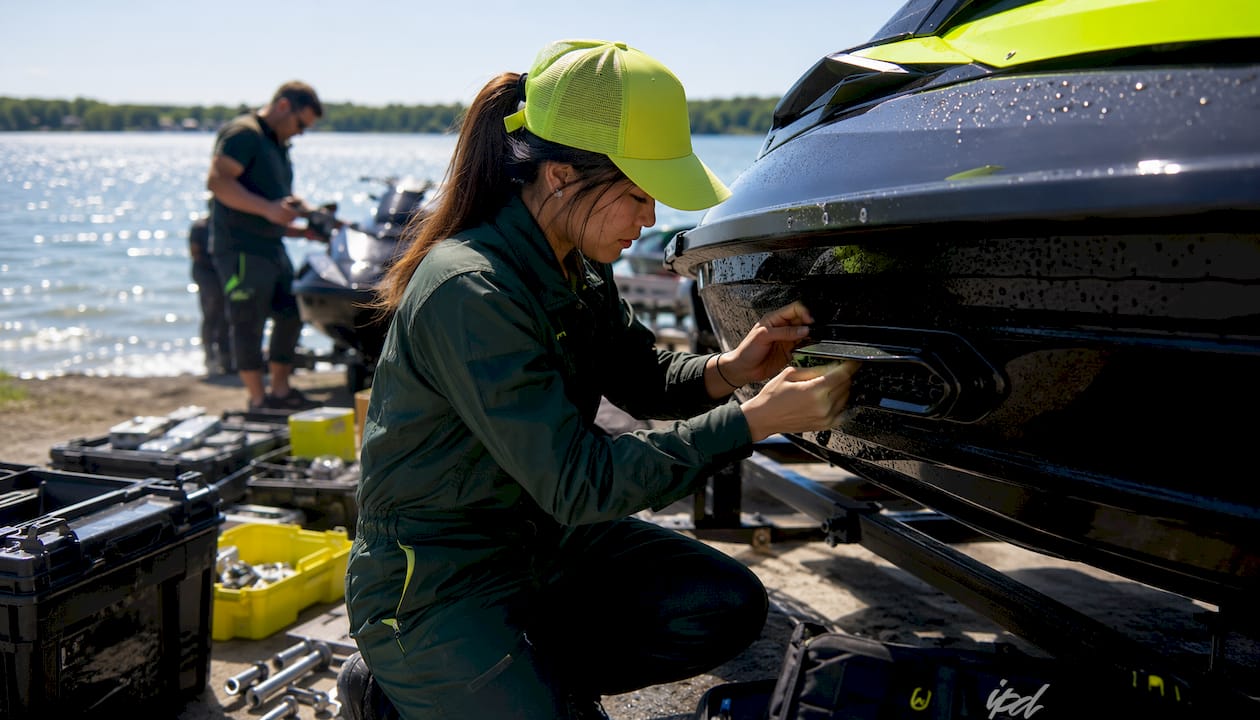
IPD Racing stocks WCOT performance parts including double-scoop grates tested by racers and recreational riders across varying water conditions.
Common issues and troubleshooting after upgrading
Vibration or rattling: Usually caused by a loose bolt. Re-torque all fasteners and confirm blue Loctite was applied correctly.
Reduced top speed after installation: Check for debris lodged under the grate or a misaligned blade blocking water flow. Remove the grate, clean the housing, and reinstall with proper alignment.
Grate feels loose or rocks side to side: Stock washers may have been reused with longer aftermarket bolts, preventing full clamping. Replace with the supplied hardware kit.
Excessive braking response: Normal with double-scoop designs. Riders transitioning from stock grates need a few sessions to adjust throttle timing.
Cavitation persists after upgrade: Confirm the grate model matches your hull. A grate designed for a different platform may not seat flush, allowing air ingestion around the edges.
Key Takeaways
An upgraded intake grate is the single highest-impact handling modification you can make without touching the engine, delivering measurable speed and traction gains on the water.
| Point | Details |
|---|---|
| Top speed gains are real | Same-day testing on the 2021+ SuperJet showed measurable top speed gains over stock. |
| Grate type determines benefit | Top Loader designs maximize pump flow; double-scoop grates add cornering traction and braking. |
| Torque specs protect your install | Tighten grate bolts to 15–25 ft-lbs and pump assembly bolts to 20–30 ft-lbs. |
| Use supplied hardware | Aftermarket kits include correct-length bolts; reusing stock washers causes fitment problems. |
| Pair with a ride plate | Combining a grate upgrade with a ride plate delivers synergistic gains in stability and control. |
IPD Racing carries race-proven intake grates and handling upgrades for Kawasaki, Sea-Doo, and Yamaha platforms, from recreational riders to competitive racers. Browse the full catalog at ipdracing.com to find the right fit for your model and riding style.

