

Jet Ski Trick Rotation: What Every Rider Must Know
A jet ski trick rotation is a controlled maneuver where the rider spins the watercraft around its vertical axis by coordinating body movements, handlebar inputs, and throttle control to achieve spins like 180s or 360s. Understanding what is a jet ski trick rotation separates riders who can execute clean, repeatable spins from those who rely on luck. The industry term for these maneuvers is “freestyle rotations,” and they form the foundation of competitive PWC freestyle events. Three core elements drive every successful rotation: weight shifting, throttle timing, and steering input.
What is a jet ski trick rotation and how does it work?
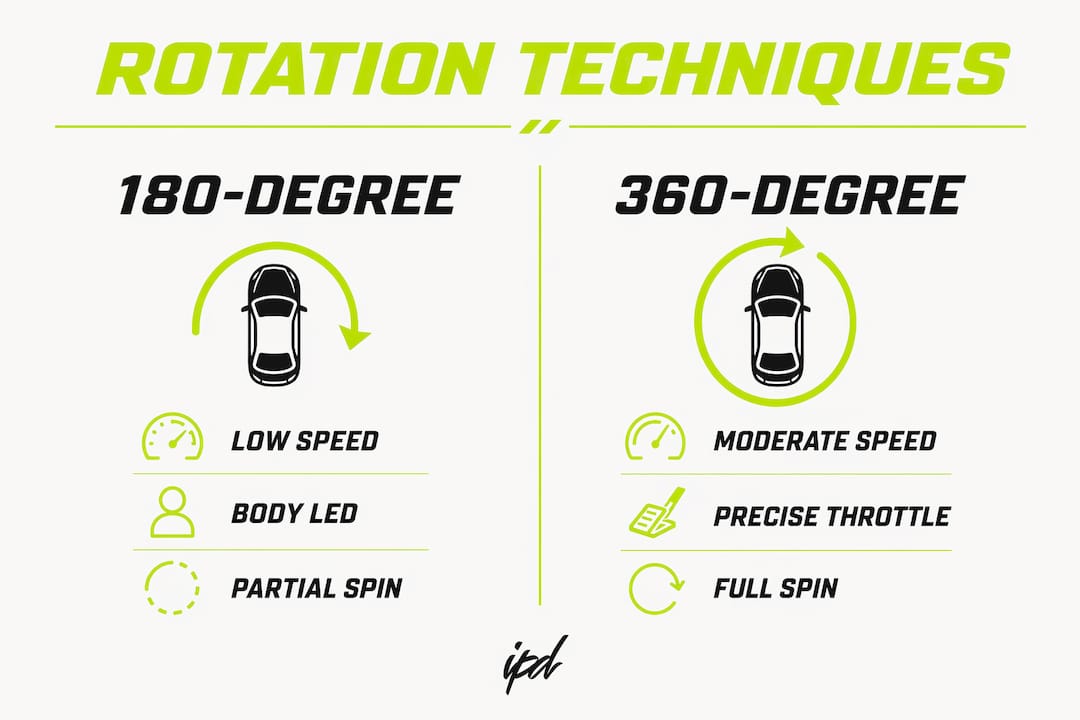
A 360-degree rotation is a full-circle maneuver requiring precise coordination of weight shifting and steering. The rider accelerates to a moderate speed, leans the body into the spin direction, and turns the handlebars to initiate and maintain momentum. The watercraft pivots around its own axis rather than carving a wide arc through the water.
Body weight is the primary steering mechanism in spins. Handlebars serve mainly for fine-tuning the rotation radius after the hips and shoulders initiate the spin. This distinction overturns the most common misconception beginners carry onto the water: that steering the handlebars hard is what creates the spin.
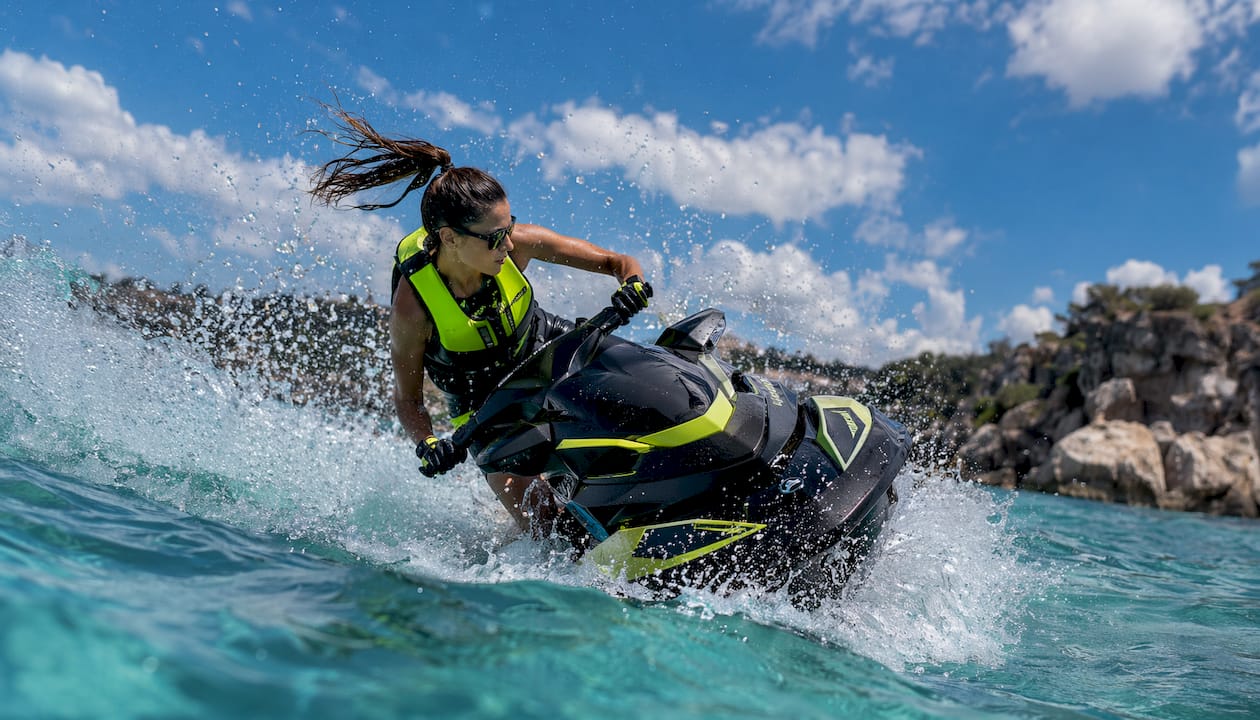
A 180-degree rotation is the partial version of the same movement. It stops the watercraft facing the opposite direction and requires less momentum than a full 360. Both rotations belong to the broader category of jet ski freestyle tricks, and both demand the same fundamental skill set before any rider should attempt advanced variations.
How to perform a basic jet ski trick rotation
Executing a clean rotation follows a repeatable sequence. Skipping any step produces a sloppy or incomplete spin.
- Build moderate speed. Approach the spin zone at a controlled pace. Too fast and the watercraft becomes hard to control; too slow and there is not enough momentum to complete the rotation.
- Shift your weight to the inside. Lean your hips and shoulders toward the direction of the spin. This body lean initiates the rotation before the handlebars do anything.
- Apply a quick throttle burst. A 90-degree throttle twist within half a second generates the centrifugal force needed to carry the spin through. Slow or jerky inputs kill the rotation.
- Turn the handlebars to guide the arc. After the body lean starts the spin, use the handlebars to fine-tune the radius. Do not lead with the handlebars.
- Press your outside leg into the footwell. Active leg engagement stabilizes the spinning watercraft and prevents tipping. This is the step most beginners miss entirely.
- Ease off the throttle to complete the spin. Reduce power as the watercraft approaches the target heading. This lets the craft settle without overshooting.
Pro Tip: Keep your outside knee bent and pressed firmly into the footwell throughout the entire rotation. That leg acts as your anchor point and gives you far more control than any handlebar input.
Common mistakes include leading with the handlebars instead of the hips, applying throttle too slowly, and forgetting leg engagement entirely. Each of these errors reduces centrifugal force and throws off balance at the worst possible moment. For a deeper look at freestyle body positioning, the fundamentals apply directly to rotation technique.
How do you progress from 180 to 360 rotations?
Skill progression in jet ski rotations follows a clear path. Beginners should master 180-degree turns before attempting full 360-degree spins. A 180 requires less momentum and creates a safer environment for learning weight transitions and timing.
The table below shows the key differences between beginner and advanced rotation technique.
| Feature | Beginner (180-degree) | Advanced (360-degree) |
|---|---|---|
| Entry speed | Low to moderate | Moderate, precisely controlled |
| Weight shift timing | Slower, deliberate | Fast, committed |
| Throttle input | Single burst, short | Sustained burst through the arc |
| Leg engagement | Learning phase | Active throughout |
| Wake use | Avoided | Used strategically at 45-degree angles |
| Recovery margin | High | Low |
Timing is the biggest variable separating a clean 360 from a chaotic one. Successful trick rotations rely on timing, not raw speed. Waiting for the right moment to initiate the weight shift is what produces a controlled spin. Water’s wake or natural resistance provides the cue.
Experienced riders study water texture and wake angles before attempting rotations. Approaching a wake at a 45-degree angle can amplify the rotation and reduce the effort needed to complete the spin. Flat, calm water demands more body commitment to generate the same result.
Pro Tip: Practice your 180 until it feels automatic before adding the second half of the spin. The 360 is just two 180s linked by sustained commitment. If the first half feels uncertain, the second half will fall apart.
What safety measures apply to jet ski trick rotations?
Safety is non-negotiable when practicing any rotation maneuver. The risk of collision, loss of control, and injury increases significantly during spins because the rider’s attention is focused on the maneuver rather than the surrounding environment.
Performing any trick rotation requires a USCG-approved life jacket and open, obstacle-free water. These two conditions are the baseline before any practice session begins. Riding in crowded areas or near docks eliminates the margin for error that rotations demand.
A reliable power source matters too. An AGM battery that fails mid-session creates real risk. Riders who want to understand battery safety for powersports should check their watercraft’s electrical system as part of pre-ride inspection. For a full gear overview, the watercraft accessories guide covers what to carry on every session.
Safety gear checklist before every rotation practice session:
- USCG-approved life jacket, properly fitted and fastened
- Wetsuit or impact vest for additional protection
- Helmet rated for water sports use
- Lanyard kill switch attached to the wrist or vest
- Fully charged battery and fuel check completed
- Visual inspection of handlebars, throttle, and footwells
- Designated spotter or riding partner on the water
Avoid practicing at night, in heavy boat traffic, or in areas with submerged obstacles. Weather conditions matter too. Choppy water increases the difficulty of rotations and reduces control, especially for riders still developing their technique.
What are the most common challenges in mastering jet ski rotations?
Most riders struggle with the same set of problems when learning rotations. Identifying the specific issue is faster than repeating the same attempt and hoping for a different result.
Common challenges and how to fix them:
- Over-relying on handlebars. Professional riders emphasize that hips and shoulders initiate the spin. If the rotation feels forced, shift focus to body lean first.
- Slow throttle application. Jerky or gradual throttle inputs fail to generate enough centrifugal force. Practice the quick burst in isolation before combining it with the full sequence.
- Forgetting leg engagement. Pressing the outside leg into the footwell is a non-obvious technique that prevents tipping. Most beginners discover this only after their first tip-over.
- Ignoring water conditions. Flat water and choppy water require different entry approaches. Riders who treat all water the same produce inconsistent results.
- Under-rotating or over-rotating. Both problems trace back to throttle timing. Under-rotation means the burst was too short; over-rotation means it was too sustained.
- Rushing to 360s. Skipping the 180 phase creates bad habits that become harder to correct at higher speeds.
Pro Tip: Film your rotation attempts from the shore or a chase boat. Watching the footage reveals body position errors that you cannot feel in the moment, especially hip lean and leg engagement.
Recovery from a failed rotation follows a simple rule: release the throttle, straighten the handlebars, and let the watercraft settle before attempting again. Fighting the spin with counter-steering at speed makes the situation worse. For riders building toward competitive freestyle, the jet ski race prep checklist covers the full skill and equipment baseline needed before entering events.
Key Takeaways
Mastering jet ski trick rotations requires body-led initiation, precise throttle timing, and active leg engagement working together on every spin.
| Point | Details |
|---|---|
| Body weight leads every spin | Hips and shoulders initiate the rotation; handlebars only fine-tune the arc. |
| Throttle timing is critical | A quick 90-degree burst within half a second generates the centrifugal force needed. |
| Leg engagement prevents tipping | Pressing the outside leg into the footwell stabilizes the craft throughout the spin. |
| Master 180s before 360s | Beginners build timing and weight-shift skills safely at lower momentum. |
| Safety conditions are non-negotiable | USCG-approved life jacket and open water are required before any rotation practice. |
Why most riders plateau at the 180 and never move past it
Most riders I have watched get stuck at the 180 for one reason: they treat it as a steering maneuver instead of a weight maneuver. They crank the handlebars and wonder why the spin feels stiff and unpredictable. The fix is always the same. Get the hips moving first. The handlebars follow.
The other pattern I see constantly is impatience with conditions. Riders pick a day with choppy water, get frustrated that their 360 falls apart, and blame their technique. Water texture changes everything. A calm, glassy surface lets you feel every weight shift clearly. Choppy water masks the feedback you need to learn from. Practice in good conditions until the movement is automatic, then test it in harder conditions.
Patience with the 180 phase pays off faster than rushing to the 360. Every hour spent on clean 180s builds the muscle memory that makes 360s feel natural rather than forced. Riders who skip that phase spend twice as long correcting bad habits later.
Tracking progress matters too. Keep a simple log of what worked and what did not after each session. Note the water conditions, your entry speed, and which part of the rotation broke down. Patterns show up quickly, and fixing one specific variable at a time produces faster improvement than changing everything at once.
— Casey
Performance parts that support better rotation control
Riders serious about improving their rotation technique need a watercraft that responds predictably to every input. Handling upgrades, throttle controls, and freestyle-specific components make a measurable difference in how the craft responds during spins.
IPD Racing carries performance parts built for freestyle and competitive PWC riding, including handling and control upgrades designed to sharpen responsiveness during rotations. For riders looking at engine and exhaust performance, the Hot Products performance parts lineup covers upgrades that improve throttle response and overall power delivery. Browse by your specific model at IPD Racing to find parts matched to your watercraft and riding style.
FAQ
What is a jet ski trick rotation?
A jet ski trick rotation is a freestyle maneuver where the rider spins the watercraft around its vertical axis using coordinated body weight shifts, throttle input, and handlebar steering. Common rotations include 180-degree and 360-degree spins.
How do I start learning jet ski rotations?
Start with 180-degree rotations before attempting full 360-degree spins. The 180 requires less momentum and teaches the weight-shifting and throttle timing skills needed for more advanced maneuvers.
What is the most common mistake in jet ski rotations?
The most common mistake is leading with the handlebars instead of the hips and shoulders. Body weight initiates the spin; handlebars only adjust the radius after the rotation has started.
Do I need special gear to practice jet ski rotations?
A USCG-approved life jacket is required, along with an impact vest, a helmet rated for water sports, and a lanyard kill switch. Practice in open, obstacle-free water away from boat traffic.
How does throttle control affect a jet ski rotation?
Throttle timing directly determines whether the rotation completes cleanly. A quick 90-degree throttle twist within half a second generates the centrifugal force needed. Slow or jerky inputs cause the spin to stall before completion.

