
Watercraft Trailer Buying Guide: 2026 Edition
Choosing the right trailer comes down to five factors: your watercraft’s length and beam, total loaded weight, hull shape, launch conditions, and how often you ride. Get all five right and every trip to the ramp is smooth. Miss one and you risk hull damage, trailer failure, or a tow vehicle that can’t handle the load.
Before you buy, confirm these criteria:
- Watercraft length and beam: Measure both accurately, including any accessories mounted to the hull.
- Total loaded weight: Add watercraft dry weight, a full fuel tank, gear, and the trailer itself.
- GVWR margin: Select a trailer whose Gross Vehicle Weight Rating exceeds your loaded total by a meaningful buffer to protect suspension and tires.
- Hull support type: Match bunks or rollers to your hull shape to prevent stress damage.
- Tow vehicle compatibility: Confirm your vehicle’s tow rating and hitch class before committing to a trailer size.
How do you determine the right trailer size and weight capacity?
Sizing a watercraft trailer starts with two measurements: overall length and beam (width at the widest point). Both determine which trailer frame fits your craft without overhang or pinch points. From there, calculate total transport weight by adding the watercraft’s dry weight, a full tank of fuel, safety gear, and any accessories stored aboard.
The key rating to understand is the Gross Vehicle Weight Rating (GVWR), which is the maximum the trailer can carry including the boat, motor, fuel, gear, and the trailer’s own weight. The Gross Axle Weight Rating (GAWR) breaks that number down per axle. Never buy a trailer where your loaded weight closely approaches the GVWR; give yourself a sufficient margin to protect suspension and tires.
Tongue weight also matters. Proper tongue weight should be balanced to avoid sway and maintain steering control, recommended at 10–15% of total loaded trailer weight. Too little and the trailer sways at highway speed. Too much and it overloads the hitch, lifting the rear wheels of your tow vehicle and reducing steering control.
Pro Tip: Weigh your fully loaded watercraft at a truck scale before trailer shopping. That single number makes every capacity decision straightforward and removes guesswork from the GVWR calculation.
Bunk trailers vs. roller trailers: which one fits your launch conditions?
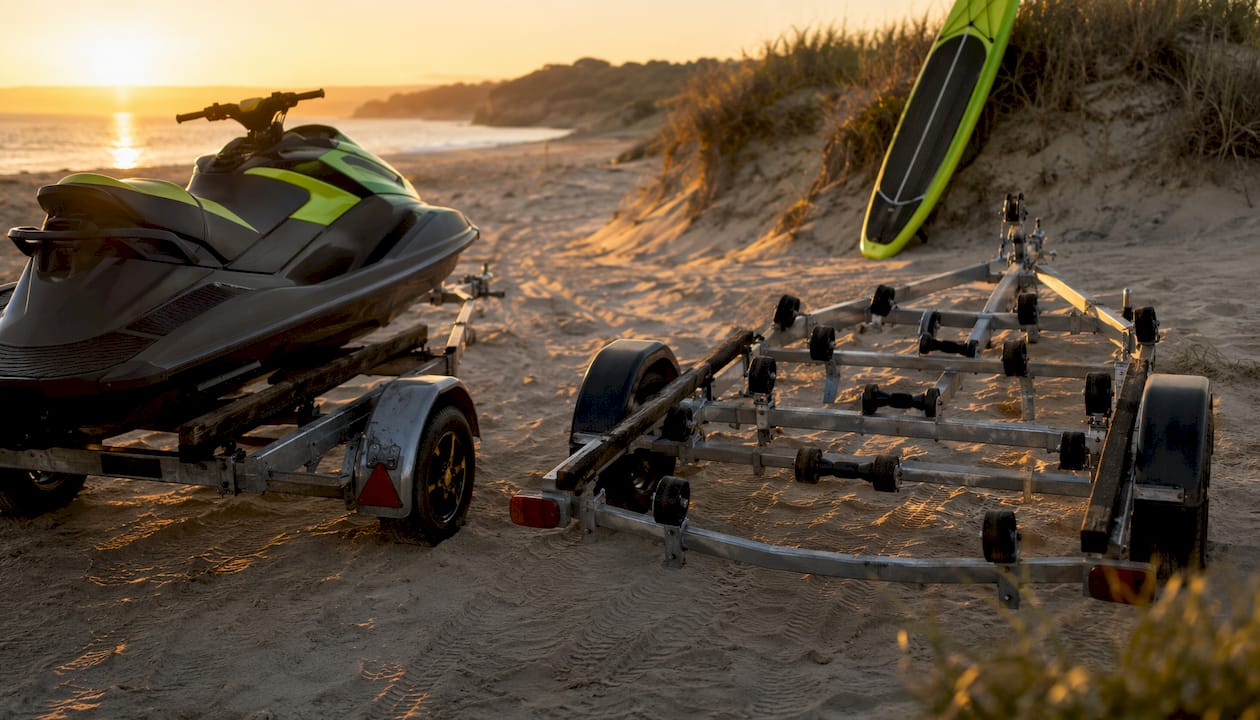
The support system under your hull affects both daily usability and long-term hull health. Bunk trailers cradle the hull along carpeted boards that run lengthwise, distributing load evenly across the hull’s structural sections. Roller trailers use a series of small rollers that let the craft roll on and off with minimal water contact, making them practical at shallow ramps.
| Feature | Bunk trailers | Roller trailers |
|---|---|---|
| Hull support | Broad, even contact | Multiple small contact points |
| Launch depth needed | Deeper ramp required | Shallow water capable |
| Maintenance level | Low | Higher, rollers shift over time |
| Hull stress risk | Low for most hulls | Can stress thin or older hulls |
| Typical cost | Generally lower | Slightly higher |
| Best for | Standard public ramps | Shallow lakes, back-country ramps |
For most recreational riders on standard public ramps, bunks are the practical choice. Riders who frequently hit shallow lakes or low-water ramps get real value from rollers, provided they stay on top of roller adjustment and maintenance.
Aluminum vs. galvanized steel: which frame material lasts longer?
Frame material is the single biggest factor in long-term trailer durability, and the right choice depends almost entirely on where you ride.
- Aluminum: Superior corrosion resistance makes aluminum the standard for frequent saltwater use. It’s lighter than steel, which reduces tongue weight and eases towing. The trade-offs are higher upfront cost and harder repairs; aluminum welds require a skilled fabricator. Oxidation and pitting can develop in highly corrosive environments over time.
- Galvanized steel: The zinc coating provides real protection against corrosion, and galvanized trailers hold up significantly better in saltwater than painted steel. Cost sits between painted steel and aluminum, making it a practical choice for mixed freshwater and occasional saltwater use. If the galvanized coating is damaged, the exposed steel will rust.
- Painted steel: The most affordable option and fine for strictly freshwater use with consistent maintenance. Saltwater accelerates corrosion through any paint layer; avoid painted steel if there’s any chance of saltwater exposure. Suitable for riders who trailer infrequently and prioritize upfront cost.
Heavy users who ride in saltwater regularly should go straight to aluminum. Galvanized steel covers most mixed-use scenarios at a lower price point. A towball-mounted carrier follows similar material logic for corrosion environments, so the same thinking applies across towing accessories.
Torsion suspension vs. spring suspension: what’s the difference on the road?
Suspension type affects ride quality, trailer height, and how much water depth you need at the ramp.
- Torsion axles:
provide a smoother ride, better load management, and a lower trailer profile. That lower height means less water depth is needed to float the craft off the trailer, which simplifies launching and retrieval. Torsion axles also require less routine maintenance than spring systems and handle the demands of high-performance watercraft better.
- Leaf spring suspensions: More common and generally less expensive upfront. The ride is rougher, which translates to more vibration transferred to the hull over long highway trips. Springs are easier to replace in the field and widely available at most trailer shops.
For PWC riders who launch frequently or use shallow ramps, torsion axles deliver a clear advantage. Spring suspensions remain a solid, cost-effective choice for occasional freshwater use where ramp depth is not a concern.
Essential trailer maintenance tips for long service life
Consistent maintenance prevents the kind of failures that strand you at the ramp or damage your watercraft in transit. Focus on these areas:
- Frame inspection: Check welds and structural members for rust, pitting, or cracks. Surface oxidation on steel is manageable; rust at welds signals a structural problem.
- Tires: Inspect sidewalls for cracking, not just tread depth. Tires over six years old should be replaced regardless of appearance, because sidewalls crack with age even when tread looks fine.
- Wheel bearings: Spin each wheel by hand and check for grinding or lateral movement. Repack or replace bearings on any used trailer before its first trip.
- Lighting and wiring: Test brake lights, turn signals, and running lights before every season. Wiring repairs are inexpensive but catch them before they cause a roadside stop.
- Brake system: Inspect brake function annually and after any hard use. Brake failure on a loaded trailer is a serious safety risk.
- Saltwater rinse: Rinse the trailer thoroughly after every saltwater outing. Salt attacks frame, bearings, winch hardware, and lights simultaneously.
For a complete maintenance reference, IPD Racing’s maintenance and repair resources cover PWC-specific upkeep that pairs with trailer care.
Expert insights on matching trailer support to protect your hull
Most buyers accept whatever trailer comes bundled with a boat purchase. That default approach leads to poor fit and, over time, hull stress cracks from point loading on unsupported fiberglass sections. Conscious trailer-to-hull matching is the single most overlooked step in the buying process.
Bunk angles and roller positions must follow the hull’s actual contours. A bunk that sits flat under a deep-V hull contacts only the keel area, concentrating load instead of distributing it. Adjustable bunks and a movable winch post let you dial in fore-aft positioning so the hull sits level or very slightly bow-high. A bow-low attitude stresses the forward hull sections during transport and makes the trailer handle worse on the road.
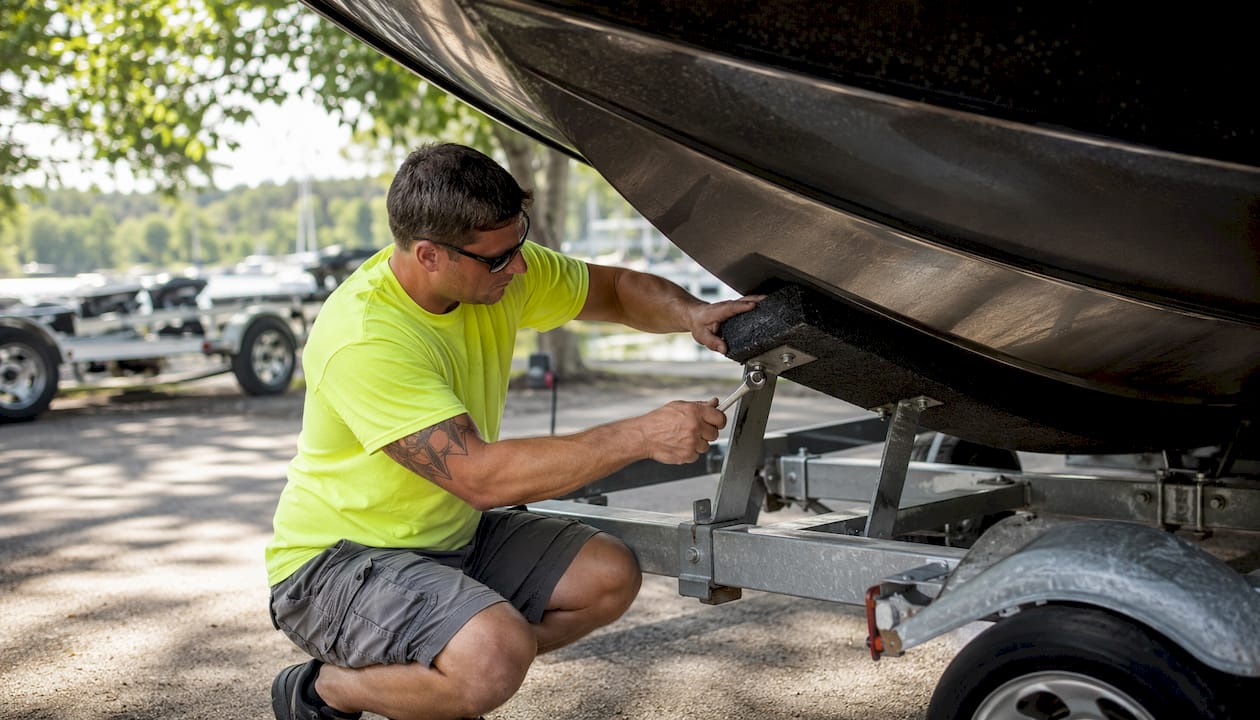
Pro Tip: Before finalizing any trailer purchase, place your actual watercraft on the trailer and check every bunk and roller contact point. Adjust until support aligns with the hull’s structural ribs, not just whatever happens to be in the right spot.
Understanding your PWC model’s specifications before trailer shopping makes this matching process faster and more accurate.
What braking system does your trailer require?
Braking requirements depend on loaded trailer weight and vary by state. Most states require surge brakes or electric brakes on trailers above a specific weight threshold, commonly 1,500 lbs or 3,000 lbs depending on jurisdiction. Check your state’s DMV regulations before purchasing.
Surge brakes activate automatically when the tow vehicle decelerates, using the trailer’s forward momentum to engage the brake master cylinder. They require no electrical connection beyond lights, making them simple and reliable for most recreational trailers. Electric brakes use a brake controller mounted in the tow vehicle cab to apply trailer brakes independently, offering more precise control, especially on tandem-axle setups. For heavier watercraft on tandem-axle trailers, electric brakes with a quality brake controller provide better stopping performance and reduce wear on the tow vehicle’s braking system.
What are the legal requirements for watercraft trailers in the US?
Every state requires trailer registration and a license plate. Beyond that, requirements vary, but several rules apply broadly across the US. Trailers must have functioning brake lights, turn signals, and running lights that match the tow vehicle’s signals. Reflectors are required on the rear and sides. Safety chains connecting the trailer to the hitch are mandatory in all 50 states.
Width limits typically cap at 8.5 feet for most states, and length limits for the combined vehicle and trailer vary. Some states require a breakaway brake system on trailers above certain weight thresholds. Always verify your state’s specific rules through your state DMV before your first trip, and carry your trailer registration and proof of ownership in the tow vehicle.
How much should you budget for a watercraft trailer?
Trailer cost tracks directly with frame material, axle configuration, and features. Painted steel single-axle trailers for a single PWC represent the entry point. Galvanized steel options cost more but deliver meaningfully better corrosion protection. Aluminum trailers carry the highest price but the lowest long-term maintenance burden, particularly for saltwater riders.
Factor in costs beyond the purchase price: registration fees, insurance, wheel bearing repacks, tire replacement (plan for every 5–6 years), and brake maintenance. Used trailers offer savings upfront but require a thorough inspection of frame welds, bearings, tires, and lights before purchase. A used trailer with deep rust at the welds or tires past six years old will cost more in repairs than the savings justify.
Heavy users who ride weekly should prioritize heavier-duty axles and a stronger frame from the start. Occasional riders can reasonably focus on upfront cost and accept lighter-duty construction. IPD Racing covers the full spectrum of watercraft accessories that complement a well-chosen trailer setup.
Once your trailer is sorted, the next step is making sure your watercraft performs at its best. IPD Racing carries race-proven PWC performance parts for riders across recreation, racing, and freestyle disciplines.
Key Takeaways
The right watercraft trailer matches your hull’s shape, loaded weight, and launch environment precisely, with a GVWR that exceeds your loaded total by a meaningful margin.
| Point | Details |
|---|---|
| Size and weight first | Measure length and beam, then calculate total loaded weight including fuel and gear before selecting a trailer. |
| GVWR margin | Never buy a trailer where your loaded weight comes within 10% of the GVWR; maintain a real buffer. |
| Support type matters | Bunks suit standard ramps with broad hull support; rollers enable shallow-water launching but need more maintenance. |
| Frame material by environment | Aluminum for frequent saltwater use, galvanized steel for mixed use, painted steel for freshwater-only and infrequent riders. |
| Tongue weight balance | Keep tongue weight at 10–15% of total loaded trailer weight to prevent sway and maintain steering control. |

