
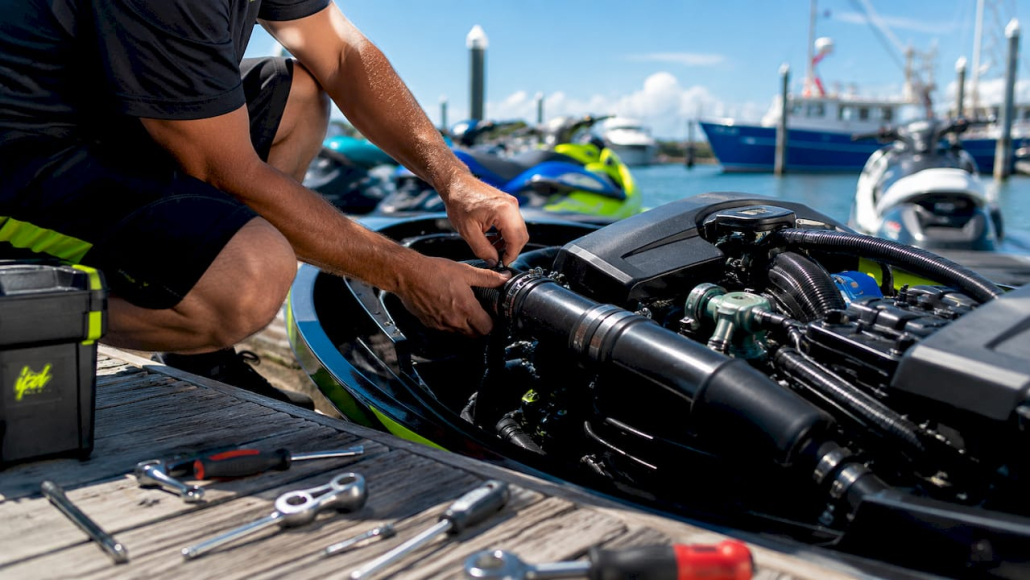
Jet Ski Cooling System Overview: Owner’s Guide
A jet ski cooling system is defined as the network of components that removes excess heat from the engine by circulating water or coolant through the powerplant during operation. Every personal watercraft (PWC) relies on this system to maintain engine temperatures within the safe operating range of 160°F to 180°F. Two fundamental designs exist: open-loop systems that pull raw water directly from the body of water, and closed-loop systems that circulate sealed coolant through a heat exchanger. Neglecting either system leads to overheating, accelerated wear, and costly repairs. This jet ski cooling system overview covers how each type works, how to maintain it, and how to keep your engine running reliably all season.
How does a jet ski cooling system work?
A jet ski water cooling system moves water or coolant through the engine block to absorb heat, then routes that heated fluid away to release the heat before recirculating. The process starts the moment you fire up the engine and continues as long as the craft is running.
Water intake and filtration
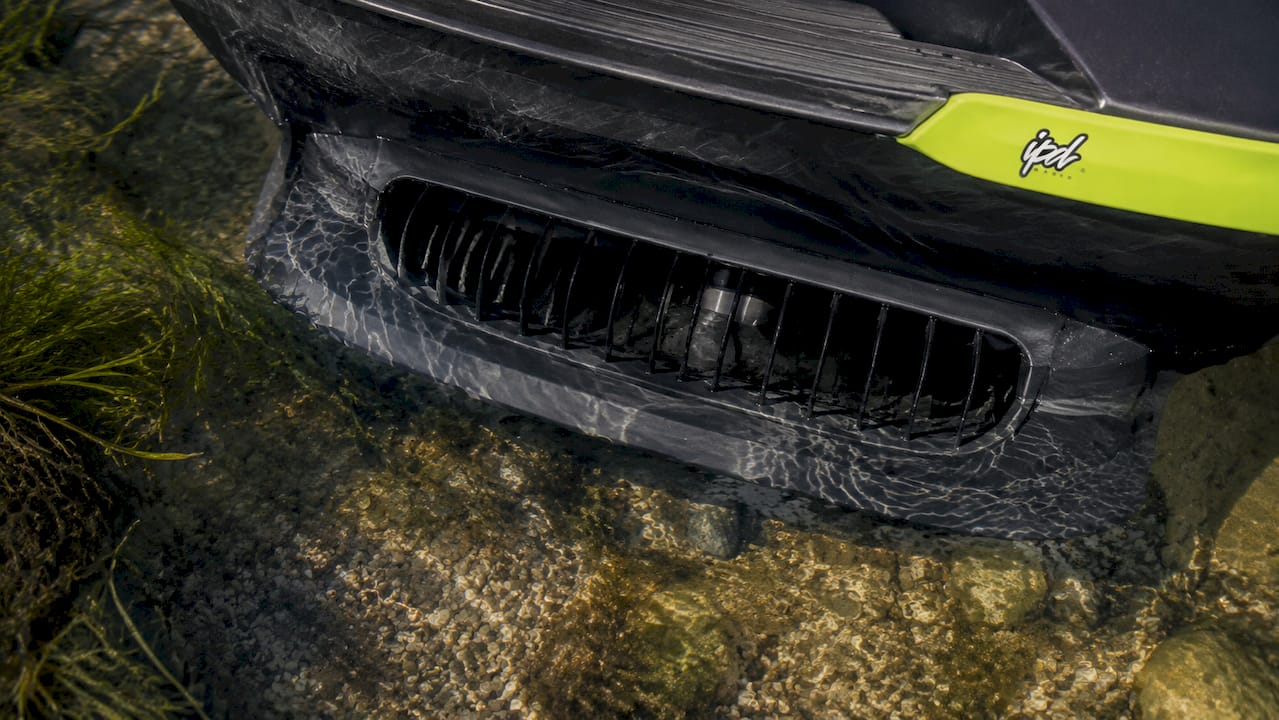
Water enters through a grate on the hull bottom. That grate acts as a first filter, blocking large debris like weeds, rocks, and sand. The water then travels through an intake hose toward the pump assembly. A secondary screen inside the intake housing catches finer particles before they reach the engine.
The impeller’s dual role
The impeller drives both propulsion and cooling water flow simultaneously. As engine RPM rises, the impeller spins faster and pushes more water through the cooling circuit. This means cooling efficiency is directly proportional to engine speed. At low RPM under high load, such as towing a rider or idling in shallow water, the cooling flow drops and overheating risk climbs.
Thermostat and heat exchange
A thermostat sits between the engine and the cooling circuit. It stays closed when the engine is cold, allowing the engine to reach operating temperature quickly. Once the engine hits the target range, the thermostat opens and allows full coolant flow. In open-loop systems, heated raw water exits through the exhaust. In closed-loop systems, the heated coolant passes through a heat exchanger, where external water absorbs the heat before the coolant recirculates.
Pro Tip: If your jet ski spits a steady stream of water from the tell-tale outlet while running, the open-loop cooling circuit is working correctly. No stream means a blockage worth investigating immediately.
Key components in any jet ski cooling circuit include:
- Hull intake grate: First line of defense against debris
- Intake hose and screen: Secondary filtration before the pump
- Impeller: Drives water flow proportional to RPM
- Thermostat: Regulates temperature by controlling coolant flow
- Heat exchanger (closed-loop only): Transfers heat from coolant to external water
- Tell-tale outlet: Confirms active water flow in open-loop systems
What are the differences between open-loop and closed-loop cooling systems?
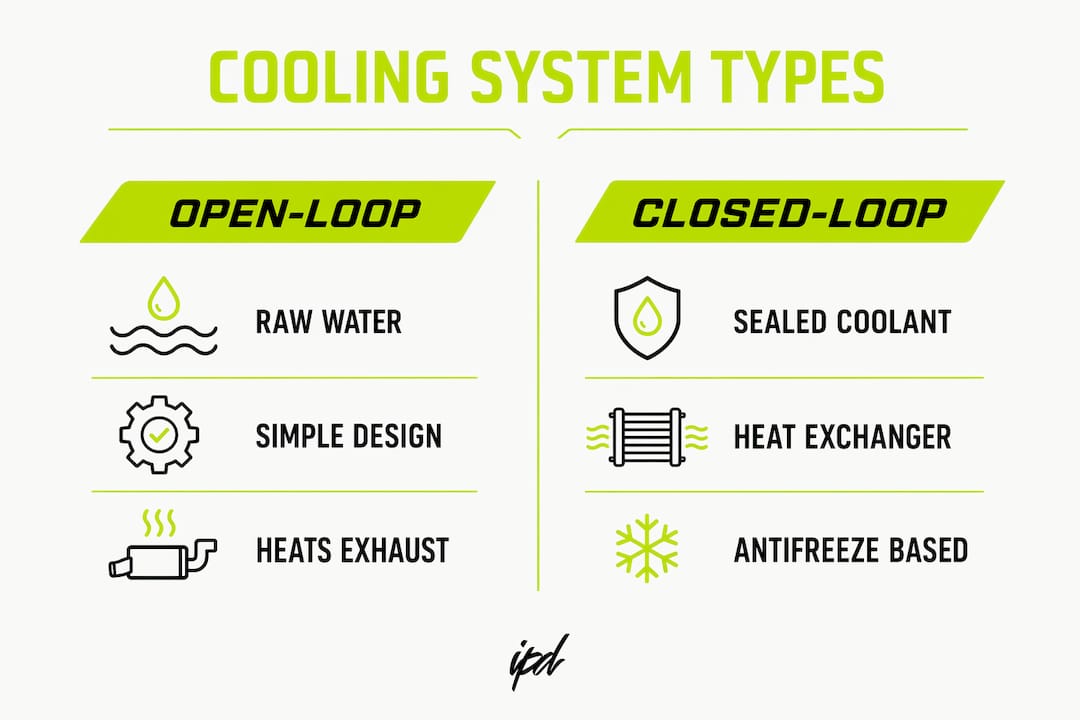
Open-loop systems use raw water pumped directly from the riding environment through the engine, while closed-loop systems circulate a sealed coolant mix through the engine and release heat through a separate heat exchanger. The choice between them affects corrosion resistance, maintenance demands, and long-term engine health.
Open-loop system
Raw water enters the engine, absorbs heat, and exits through the exhaust. The design is mechanically simple and inexpensive to produce. The trade-off is direct exposure of internal engine passages to whatever is in the water. Salt, minerals, and fine silt accumulate inside the engine over time. Saltwater riding accelerates corrosion on metal surfaces, gaskets, and hose fittings.
Closed-loop system
A sealed coolant loop circulates antifreeze-based fluid through the engine. That fluid never contacts the external water supply directly. Instead, it passes through a heat exchanger where raw water from outside absorbs the heat and carries it away. The engine passages stay protected from salt and debris. Closed-loop designs cost more to manufacture and require monitoring coolant levels, but they deliver significantly better corrosion protection.
Pro Tip: Closed-loop systems still need flushing after saltwater rides. The heat exchanger’s external water side is exposed to raw water, and mineral scaling reduces cooling efficiency if you skip that step.
| Feature | Open-loop | Closed-loop |
|---|---|---|
| Coolant type | Raw water from environment | Sealed antifreeze/coolant mix |
| Corrosion risk | High (saltwater exposure) | Low (sealed internal circuit) |
| Mechanical complexity | Simple | More complex |
| Cost | Lower | Higher |
| Flushing requirement | After every saltwater ride | Heat exchanger side after every ride |
| Coolant level checks | Not applicable | Required regularly |
| Best environment | Freshwater lakes and rivers | Saltwater and mixed environments |
How to maintain and service your jet ski cooling system
Cooling system maintenance follows a clear schedule. The initial break-in service happens at 10 hours of operation, followed by full service every 50 hours or once per year, whichever comes first. Sticking to that schedule protects the engine and extends its service life well beyond what neglected machines achieve.
Follow these steps to keep the cooling system in top condition:
-
Flush after every saltwater ride. Connect a garden hose adapter to the flush port and run fresh water through the system for 3 to 5 minutes. This removes salt, sand, and mineral deposits before they bond to internal surfaces.
-
Flush after silty freshwater rides. Fine silt from rivers and shallow lakes clogs intake screens and coats internal passages just as effectively as salt. Treat silty freshwater sessions the same as saltwater rides.
-
Inspect the intake grate and screen. Remove any visible debris after each ride. A partially blocked grate reduces water flow to the cooling circuit and raises engine temperature during the next session.
-
Check hose condition at every service. Cooling hoses crack and stiffen with age and heat cycling. Squeeze each hose along its length. Any hose that feels brittle, shows surface cracking, or has soft spots near the clamps needs replacement before the next ride.
-
Monitor coolant levels in closed-loop systems. Check the coolant reservoir at every service interval. A drop in level without visible leaks signals a slow internal leak worth diagnosing before it becomes a full failure.
-
Inspect the impeller. A worn or chipped impeller reduces water flow through the entire system. Check blade edges for damage and confirm the impeller spins freely without wobble. The impeller’s role in cooling makes it a critical inspection point.
-
Winterize before cold-weather storage. Use compressed air to purge water from cooling and exhaust lines completely. Any water left in the lines can freeze, expand, and crack the engine block or exhaust manifold.
Pro Tip: Run the engine for no more than 15 seconds on land during flushing without a water supply connected. Jet ski engines rely on water flow for cooling from the first second of operation, and dry-running causes rapid heat buildup.
Common problems and troubleshooting tips for jet ski cooling systems
Overheating is the most common cooling system failure, and it almost always traces back to one of three causes: a clogged intake, a worn impeller, or a failed thermostat. Catching these problems early prevents engine damage.
Watch for these warning signs and their likely causes:
- Engine warning light or alarm: Most modern PWCs trigger an audible alarm and warning light when coolant temperature exceeds the safe range. Stop the engine immediately and investigate before restarting.
- Rough idling or vibration: Symptoms of overheating include rough idling and unusual vibration, which signal that the engine is running hotter than normal.
- Weak or absent tell-tale stream: No water from the tell-tale outlet on an open-loop system means the intake is blocked or the impeller is not moving water. Check the hull grate first, then the intake screen.
- Milky or discolored coolant (closed-loop): White or milky coolant indicates water contamination inside the sealed loop, which points to a failed head gasket or cracked heat exchanger.
- Mineral deposits on the ride plate: White crusty buildup on the ride plate or around the exhaust outlet signals mineral scaling inside the heat exchanger. Flush more frequently and consider a descaling treatment.
- Overheating at low speed only: If the engine runs hot at idle or low RPM but cools down at speed, the thermostat is likely stuck partially closed. Replace it before the next ride.
Troubleshooting steps follow a logical order. Start with the simplest check: clear the intake grate and screen. If the tell-tale stream returns, the problem is solved. If not, move to the impeller and check for damage or debris wrapped around the shaft. A thermostat test requires removing the component and testing it in hot water to confirm it opens at the correct temperature. When symptoms persist after those checks, consult a qualified PWC technician. For performance-focused riders, reviewing cavitation causes and fixes alongside cooling diagnostics often reveals related propulsion issues.
How does cooling system performance affect engine reliability?
Cooling efficiency directly determines how long a jet ski engine lasts under real riding conditions. An engine that consistently runs at the correct temperature wears evenly and predictably. An engine that runs hot accelerates wear on piston rings, cylinder walls, and head gaskets, shortening its service life significantly.
Cooling flow is proportional to engine RPM. At low speed under high load, cooling water flow drops and heat builds faster than the system can dissipate it. Riders who spend extended time at low throttle in warm water face the highest overheating risk.
The relationship between the impeller and cooling means that RPM directly controls heat management. High-speed riding keeps the cooling circuit fully active. Slow-speed maneuvering, beach launches, and shallow-water operation reduce flow and increase thermal stress. Riders who frequently operate at low speeds should keep those sessions short and allow the engine to cool between runs.
Poor cooling also causes unexpected shutdowns. Most PWCs have a thermal protection system that cuts engine power when temperature exceeds a threshold. That shutdown protects the engine but strands the rider. Consistent maintenance and attention to cooling system condition prevents those situations entirely. For riders focused on top speed performance, a fully functional cooling system is not optional. It is the foundation that makes sustained high-performance operation possible.
Key takeaways
A jet ski cooling system requires consistent flushing, scheduled service at 10-hour and 50-hour intervals, and attention to impeller condition to maintain safe operating temperatures and long engine life.
| Point | Details |
|---|---|
| Two system types | Open-loop uses raw water; closed-loop uses sealed coolant with a heat exchanger. |
| Safe temperature range | Jet ski engines operate optimally between 160°F and 180°F. |
| Flushing is non-negotiable | Flush after every saltwater or silty freshwater ride for 3 to 5 minutes. |
| Service intervals matter | Perform initial service at 10 hours, then every 50 hours or annually. |
| Winterization prevents cracks | Purge all water from cooling and exhaust lines with compressed air before cold storage. |
What most owners get wrong about cooling maintenance
Most jet ski owners treat flushing as optional. They ride in saltwater all weekend, rinse the hull with a garden hose, and call it done. That approach leaves salt and mineral deposits bonding to internal engine passages where no garden hose ever reaches.
The part that surprises even experienced riders is that closed-loop systems are not immune. The heat exchanger’s external water side is fully exposed to raw water on every ride. Skip flushing on a closed-loop machine and you will see mineral scaling reduce cooling efficiency just as surely as on an open-loop setup. I have seen riders assume their closed-loop system was “self-cleaning” and end up with a scaled heat exchanger that required professional descaling after a single season.
The other overlooked issue is low-speed operation. Riders who spend a lot of time idling near docks, launching in shallow water, or doing slow-speed maneuvers are running their cooling systems at minimum flow. That is exactly when thermal stress is highest. Short bursts at higher RPM during those sessions help flush heat through the system and keep temperatures stable.
My recommendation: treat every post-ride flush as a 5-minute investment that buys you hundreds of hours of engine life. Check your impeller condition at every service. And if your craft has a closed-loop system, verify coolant levels before every season. These habits separate owners who get 400-plus hours from their engines from those who face a rebuild at 150.
— Casey
Performance parts and maintenance gear from IPD Racing
Keeping your cooling system in top shape starts with quality parts and the right maintenance tools.
IPD Racing stocks performance-grade impellers, cooling hoses, and flush kits built for PWC owners who take maintenance seriously. Whether you ride recreationally or compete, the right components make the difference between a reliable season and an unexpected repair bill. Browse the IPD Racing shop for cooling system parts, impellers, and maintenance accessories. For riders looking at broader performance upgrades alongside cooling system care, the top performance parts guide covers compatible options across the full drivetrain. IPD Racing also offers specialized support through PWC Doctor for engine and cooling system diagnostics.
FAQ
What is a jet ski cooling system?
A jet ski cooling system is the network of components that circulates water or coolant through the engine to absorb and remove heat, keeping operating temperatures between 160°F and 180°F.
How often should I flush my jet ski cooling system?
Flush the cooling system after every saltwater ride and after any ride in silty freshwater, running fresh water through the system for 3 to 5 minutes each time.
What causes a jet ski to overheat?
Overheating most commonly results from a clogged intake grate, a worn or damaged impeller, or a failed thermostat that restricts coolant flow through the engine.
Do closed-loop systems still need flushing?
Yes. The heat exchanger’s external water side contacts raw water on every ride, and skipping the flush allows mineral scaling to build up and reduce cooling efficiency over time.
When should I service my jet ski cooling system?
Perform the first full service at 10 hours of operation, then every 50 hours or once per year, including cooling system inspection, flushing, and hose condition checks.

