

Jet Ski Surf Fin Role: What Every Rider Must Know
Surf fins on a motorized watercraft are the primary mechanism for directional control, stability, and handling responsiveness. The jet ski surf fin role is to interact with hydrodynamic forces beneath the board, directing water flow to prevent tail slide and maintain tracking through turns. Without fins, a motorized surfboard loses grip on the water surface and becomes unpredictable at speed. Understanding how fin design, type, and position affect your ride is the difference between a controlled session and a frustrating one.
How does surf fin design influence jet ski performance?
Fin geometry directly determines how a jet ski board holds through turns, accelerates down the line, and responds to rider input. Three dimensions define that geometry: depth, base length, and rake. Each one produces a distinct effect on handling.
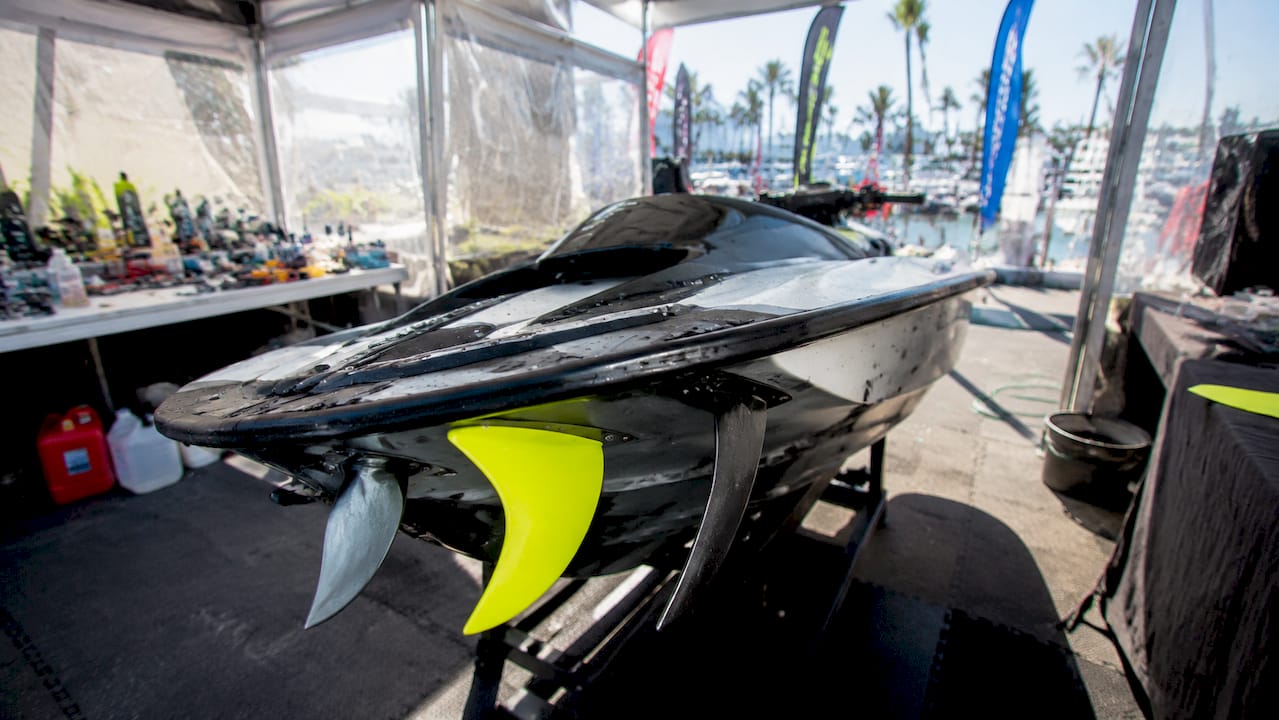
Fin depth is the measurement from the board’s hull to the fin tip. Deeper fins increase hold and stability by reducing tail slide when leaning into turns or riding powerful waves. This means a rider pushing hard through a carve on a motorized surfboard gets more grip and less washout. Shallow fins release faster, which suits riders who want a looser, more reactive feel.
Base length controls how much surface area contacts the water along the rail line. Longer bases distribute hold across a wider footprint, producing smoother, more drawn-out turns. Shorter bases concentrate pressure at a single pivot point, enabling sharper direction changes. For jet ski applications where speed is constant and wave conditions vary, base length selection directly shapes how the board transitions from one turn to the next.
Rake, also called sweep, describes the angle at which the fin curves back from its base. High rake produces flowing, arcing turns because the fin flexes and releases gradually. Low rake creates a more upright fin that pivots quickly. Riders who prioritize tight, technical maneuvers favor low rake. Those who prefer speed and flow choose higher rake profiles.
Hydrodynamic lift and drag operate on fins the same way they operate on aircraft wings. The fin generates lateral lift that resists sideways movement, keeping the board tracking forward. Drag is the cost of that lift. Fin designers balance these two forces by adjusting foil shape, thickness, and surface area. A thicker foil generates more lift but also more drag. A thinner foil reduces drag but sacrifices grip at high lean angles.
- Fin depth: controls hold and tail stability
- Base length: determines turn radius and smoothness
- Rake: sets the balance between pivot and flow
- Foil thickness: trades lift for drag
Pro Tip: When testing a new fin setup, change only one variable at a time. Swapping depth, rake, and position simultaneously makes it impossible to identify which change produced the handling difference you felt.
What jet ski surf fin types exist and how do they compare?
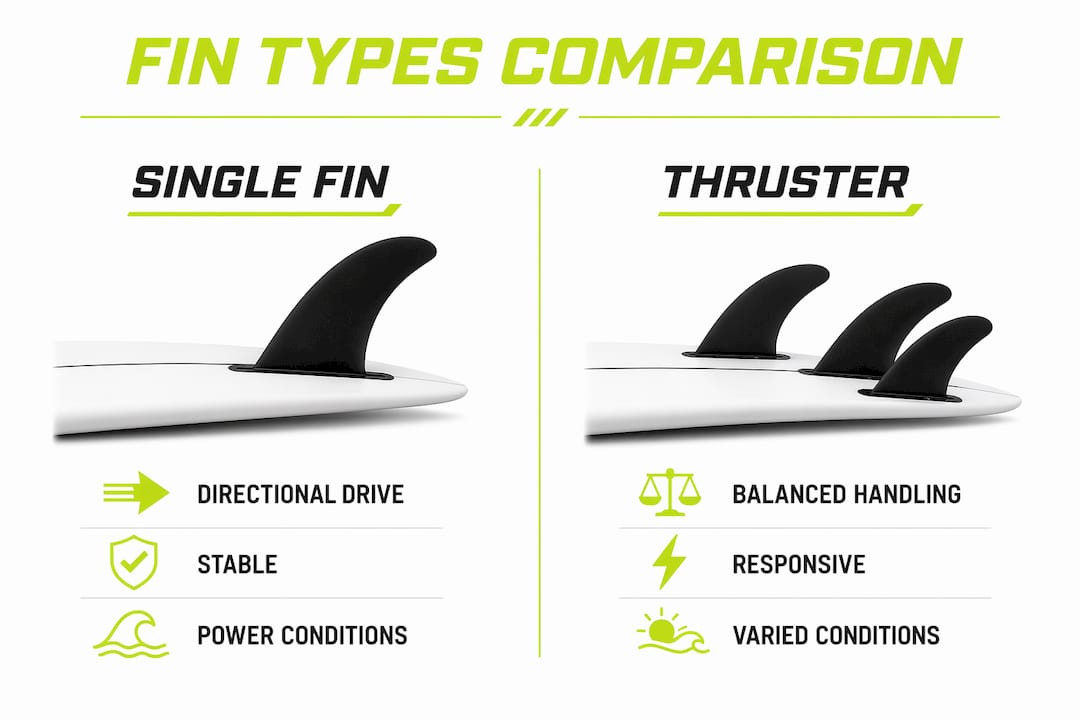
Fin type refers to the configuration of fins installed on the board, not just the shape of a single fin. Each configuration produces a distinct ride character suited to specific conditions and riding styles.
| Fin type | Primary strength | Best conditions | Riding style |
|---|---|---|---|
| Single fin | Directional drive and control | Clean, lined-up waves | Long, flowing lines |
| Twin keel | Speed and rail engagement | Small to medium waves | Drawn-out, fast turns |
| Thruster (3-fin) | Balance of response and stability | Variable conditions | Aggressive, technical |
| Quad | Speed with added hold | Hollow, fast waves | Power surfing |
Single fins deliver maximum directional drive. The single fin channels water flow directly off the tail, producing strong forward projection. This setup suits riders who want predictable tracking and minimal lateral drift. On a motorized surfboard, a single fin works well when the goal is straight-line speed with controlled, wide-radius turns.
Twin keel fins generate speed and drive by maximizing surface area along the rail line, favoring smooth, drawn-out turns. Typical twin keel bases range from 130 to 170 mm long, producing strong forward projection and a flow-oriented surfing style. Keel-style fins focus control on rail surface area rather than fin height, which explains why they feel stable and smooth rather than snappy. For jet ski riders who prioritize speed and carving rhythm, twin keels are a strong default choice.
Thruster configurations place two side fins and one center fin to balance responsiveness with stability. The center fin adds hold and drive while the side fins allow the tail to release and pivot. This three-fin setup is the most versatile option for variable water conditions, which makes it the most common configuration on motorized surfboards used in mixed sessions.
- Single fin: best for predictable tracking and speed
- Twin keel: best for smooth, fast carving
- Thruster: best for all-around versatility
- Quad: best for hollow, high-speed waves
How do modern fin adjustment systems enhance ride customization?
Fixed fin setups force riders to choose one configuration before a session and commit to it regardless of how conditions change. Modern adjustment systems eliminate that constraint entirely.
JetSurf’s FCS click-on fin system enables quick tool-free fin installation with a click on/click off mechanism. This eliminates the need for a screwdriver and makes fin setup changes between sessions faster. A rider who starts a session in flat water and moves to choppier conditions can swap fin configurations in under a minute without leaving the water’s edge. That speed matters when conditions shift quickly.
The Fins Adjuster Base from JetSurf goes further by letting riders precisely adjust fin convergence and position for customized ride characteristics. This system allows changing performance and handling beyond what fin swapping alone achieves. Convergence refers to the angle at which paired fins point toward each other. Tightening convergence increases tracking speed and directional stability. Opening convergence loosens the tail and makes the board more responsive to quick direction changes.
Small geometry shifts in convergence and position tune the board’s bite and tracking speed versus looseness, influencing ride aggression and control precision. Advanced riders use adjuster bases to dial in handling traits that match their technique rather than adapting their technique to a fixed setup. This is a meaningful shift in how riders interact with their equipment.
- FCS click-on systems: tool-free swaps between sessions
- Adjuster bases: fine-tune convergence and fin position
- Convergence tuning: tighter equals more tracking, looser equals more pivot
- Position shifts: move fins forward for drive, back for release
Pro Tip: Start with fins positioned slightly forward of center for more drive and stability. Move them back incrementally only after you have a baseline feel for the board’s default behavior.
The FCS fin system treats fin swaps as an integrated session workflow rather than a pre-session ritual. Riders who use this approach adapt to varied water conditions dynamically rather than guessing the right setup before launching. For jet ski enthusiasts who ride in locations where conditions change between morning and afternoon, this adaptability translates directly into better sessions.
What practical tips optimize your surf fin setup?
Getting the most from your fin setup requires matching fin selection to conditions, making incremental adjustments, and avoiding the most common setup mistakes.
-
Match fin depth to wave power. Deeper fins hold better in powerful, fast-moving water. Fin hold is closely linked to fin depth rather than fin count or overall size. In small, weak waves, a shallower fin releases more freely and keeps the ride lively. In overhead surf or fast motorized conditions, deeper fins prevent the tail from washing out under load.
-
Adjust convergence before changing fin type. Many riders swap fins when a simple convergence adjustment would solve the handling issue. Tighten convergence if the board feels loose and unpredictable. Open it if the board feels stiff and resistant to direction changes. This takes less time than a full fin swap and often produces the exact result needed.
-
Account for safety gear in tow-in conditions. Tow-in surfing with jet skis requires additional safety gear including dive fins, a knife, and tow ropes as regulated by Hawaii’s Division of Boating and Ocean Recreation. Surf fin setup in tow-in scenarios must account for the forces generated at higher tow speeds, which typically favor deeper, more stable fin configurations over loose, pivot-oriented setups.
-
Test one variable per session. Change fin depth, or rake, or position. Never all three at once. This discipline builds a reliable mental database of how each variable affects your specific board and riding style.
-
Check fin condition before every session. Nicks, cracks, or delamination on fin edges disrupt water flow and reduce hold unpredictably. A damaged fin can feel like a handling problem when it is actually a maintenance issue. Inspect fins as part of your pre-launch routine.
-
Use jet dynamics resources to cross-reference fin compatibility with your specific board model before purchasing. Not all fin systems fit all boards, and an incompatible fin base creates play that undermines the precision adjustments described above.
Key takeaways
Surf fin depth, type, and position are the three variables that determine jet ski board handling, and adjustable fin systems make it possible to tune all three without tools between sessions.
| Point | Details |
|---|---|
| Fin depth drives hold | Deeper fins reduce tail slide and increase stability in powerful or fast conditions. |
| Fin type sets ride character | Twin keels favor speed and flow; thrusters balance response and stability for varied conditions. |
| Convergence tuning matters | Adjusting fin convergence changes tracking precision without requiring a full fin swap. |
| Tool-free systems save time | FCS click-on systems allow mid-session fin changes that adapt to shifting water conditions. |
| Safety gear pairs with fin choice | Tow-in surfing at jet ski speeds requires deeper, stable fin setups alongside required safety equipment. |
Why fin geometry deserves more attention than most riders give it
Most riders I talk to focus on engine output and hull shape when they think about performance upgrades. Fins are treated as an afterthought, something that came with the board and probably works fine. That assumption costs real performance.
The shift that changed my perspective was watching how differently the same board handled after a convergence adjustment of just a few degrees. No new fins, no hardware changes. The board went from feeling vague in turns to tracking with real precision. That experience made it clear that fin geometry is not a fixed property of the board. It is a tunable variable, and riders who ignore it are leaving performance on the table.
For new riders, my recommendation is to start with a thruster setup at the manufacturer’s default position. Get comfortable with how the board responds before making any changes. Once you have a baseline, experiment with convergence first. It produces noticeable results with minimal risk of making the board feel unfamiliar. Fin depth changes come next, matched to the conditions you ride most often.
The powersports industry in 2026 is moving toward more rider-adjustable systems across all watercraft categories. Fin technology is part of that trend. Riders who understand how to use these systems will get more out of their equipment than those who treat fins as fixed hardware.
The most underrated aspect of fin setup is consistency. Riders who document their adjustments and the conditions they rode in build a personal reference that makes future tuning faster and more accurate. A simple note on your phone after each session is enough.
— Casey
Upgrade your jet ski fin setup with Ipdracing
Ipdracing carries performance parts for riders at every level, from recreational sessions to competitive racing. Whether you ride a Sea-Doo, Yamaha, or a dedicated motorized surfboard, the right fin setup starts with quality components.
Browse the Ipdracing shop for fin systems, adjuster bases, and handling control parts matched to your watercraft. The catalog covers everything from entry-level fin upgrades to advanced FCS-compatible systems used by competitive riders. If you need guidance on which components fit your specific model, the PWC Doctor service connects you with technical support to get the right parts the first time.
FAQ
What is the primary role of a surf fin on a jet ski?
A surf fin stabilizes the board and provides directional control by interacting with water flow beneath the hull. It prevents tail slide and keeps the board tracking through turns at speed.
How does fin depth affect jet ski handling?
Fin depth controls hold more than fin count or overall size. Deeper fins grip harder and reduce tail slide in powerful conditions, while shallower fins release more freely for a looser ride.
What fin type works best for variable water conditions?
A thruster configuration, which uses two side fins and one center fin, delivers the best balance of responsiveness and stability across changing conditions. It is the most versatile setup for riders who encounter varied water on a single session.
Can I adjust fins without removing the board from the water?
Yes. Systems like JetSurf’s FCS click-on mechanism allow tool-free fin swaps at the water’s edge in under a minute. Adjuster bases also allow convergence and position tuning without full fin removal.
Are there safety requirements related to fins during tow-in surfing?
Hawaii’s Division of Boating and Ocean Recreation requires specific safety gear for jet ski tow-in surfing, including dive fins, a knife, and tow ropes. Fin setup in tow-in conditions should favor deeper, more stable configurations to handle the higher speeds involved.

